Sunday morning in Osaka. Adam threw on the backpack, we grabbed the local loop train and headed to one of the most historically significant sites in all of Japan.
We had spent the night at the Hotel Kinki — situated at the end of what we will diplomatically call a lively nightlife area — and were ready to trade the neon for something a little more ancient. Osaka Castle did not disappoint.
What followed was an afternoon that took us from 1583 all the way to the present — through moats, massive stone walls, a surprise sword fighting competition and one of the most striking views of old meeting new we have ever seen anywhere in the world.
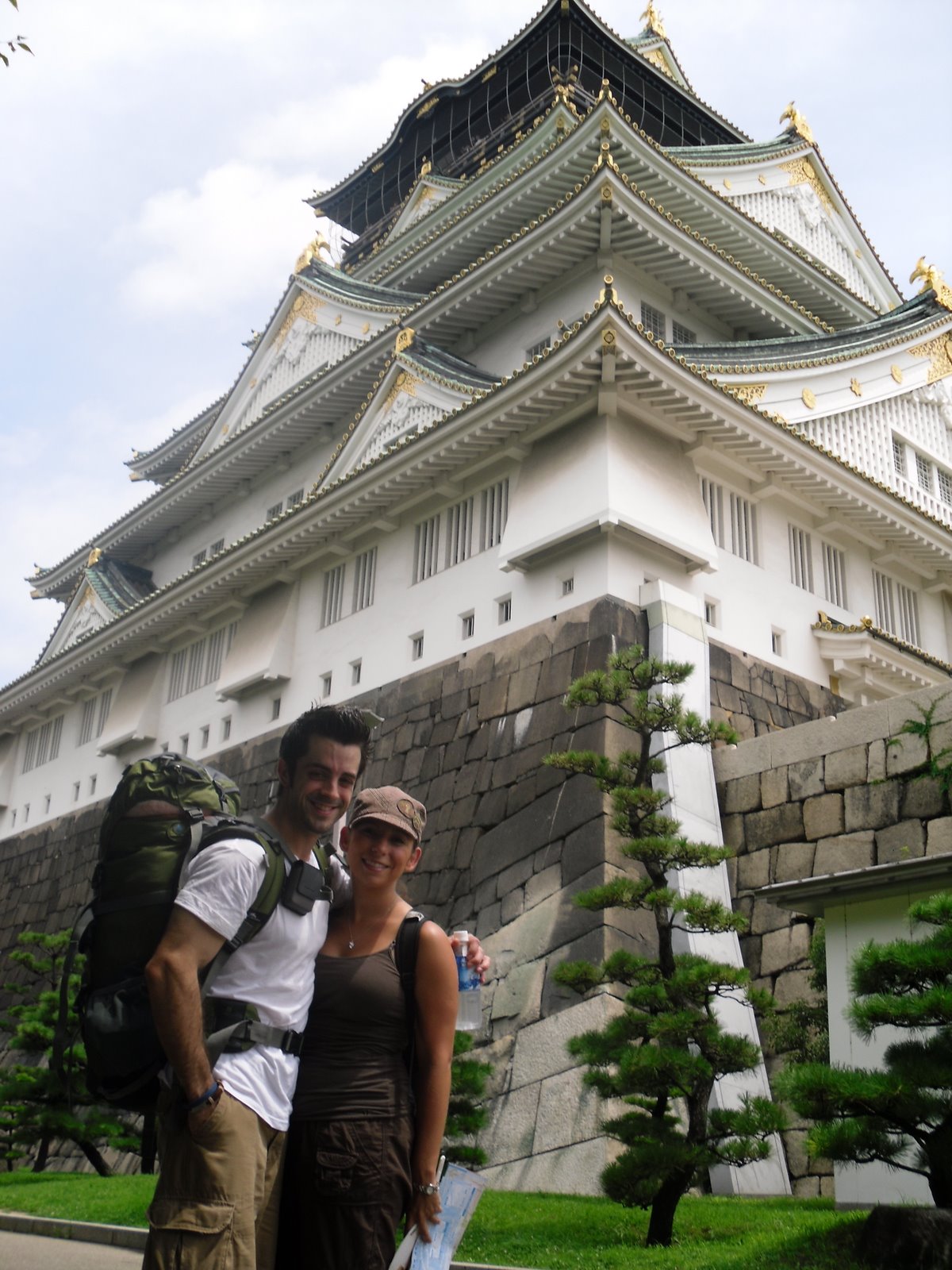
We stayed the night in the Hotel Kinki which was located at the end of a sketchy nightlife area in Osaka. On Sunday morning we woke up early, Adam threw on the backpack and we took the local loop train to the Osaka Castle.
The Osaka Castle is widely known as an emblem of the power and fortune of Hideyoshi Toyotomi.
In 1583, Hideyoshi began construction at the former site of Honganji Temple and completed the magnificent castle, which was reputed as being unparalleled in the country.
Hideyoshi, having employed the castle as his stronghold, succeeded in quelling the wars which had continued for more than one century, thereby unifying the entire nation.
After Hideyoshi’s death, Ieyasu Tokugawa, who worked for Hideyoshi as his chief retainer, was appointed to the Shogun and he established the shogunate (government) in Edo (Tokyo). In 1615, Ieyasu ruined the Toyotomi family and destroyed Osaka Castle (in the Summer War of Osaka).
Thereafter, the Tokugawa shogunate reconstructed Osaka Castle. It held the castle under its direct control until 1868, when the Tokugawa shogunate lost power and the castle fell.
In 1931, the Main Tower of the Castle was reconstructed in the center of Osaka Castle, which was used as a military base, with funds raised by the citizens.
The present-day Main Tower is the third generation. It follows the Main Tower from the Toyotomi period, which was destroyed by fire during the Summer War, and the tower from the Tokugawa period, which was struck by lightning and was burned down.
Since its construction, Osaka Castle repeatedly featured as the battleground of the major wars in Japanese history.
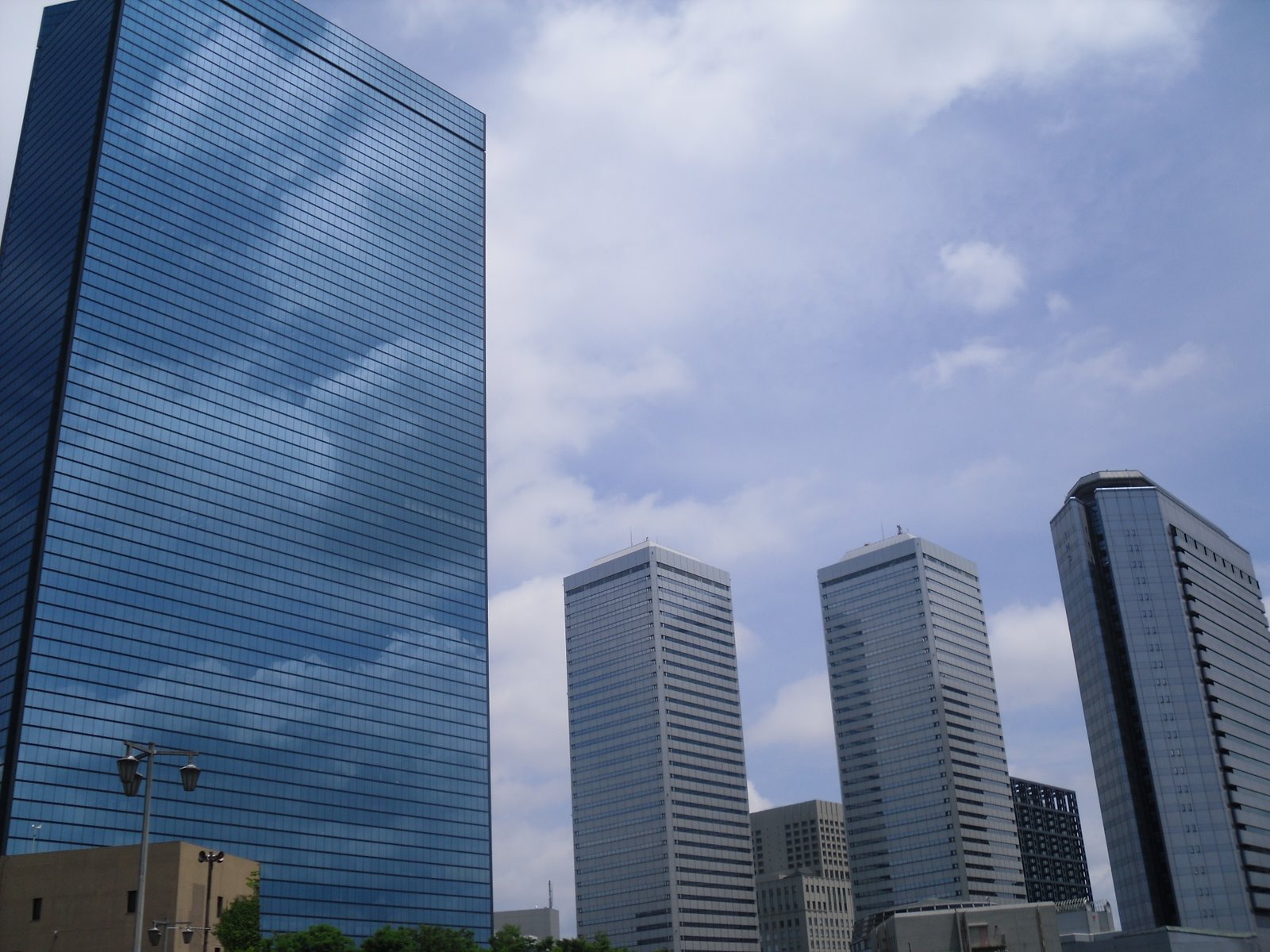
Osaka Castle has been popular with both domestic and overseas tourists as a historic site which has been handed down through the above-mentioned historical dramas to today.While we were walking on the grounds we were lucky enough to see a sword fighting competition. The grounds for the castle wove in an around moats and huge walls. It must have been well guarded back in the day. The Osaka business park was right across the street and to see the contract of old and new was beautiful. We spent the afternoon walking across all of Osaka from North to South and then catching a train at the Namba station headed toward the airport.
This trip has assured us that we can do anything with a map and some clothes and a camera of course. Enjoy the pictures of Osaka and Adam will be sure to blog soon, his work hours have changed and he leaves early in the day now.
 |
| Japan- Osaka |
Japan’s most iconic landmarks and the grounds alone are worth several hours of exploration. The contrast of the ancient castle walls against the modern Osaka business park skyline right across the street is genuinely breathtaking.
Q: What is the history of Osaka Castle? A: Construction began in 1583 under the powerful warlord Hideyoshi Toyotomi who used it as his stronghold to unify Japan after more than a century of civil war. The castle has been destroyed and rebuilt multiple times — the current Main Tower is the third generation, reconstructed in 1931 with funds raised by Osaka citizens.
Q: How do you get to Osaka Castle from central Osaka? A: Take the JR Osaka Loop Line to Morinomiya or Osaka Castle Park Station — both are a short walk to the castle grounds. The loop train is affordable, easy to navigate and stops at most of Osaka’s major attractions.
Q: How long do you need at Osaka Castle? A: Plan for at least two to three hours to explore the grounds, moats and main tower properly. We spent a full morning there and could easily have stayed longer especially after stumbling upon a live sword fighting competition on the grounds.
Q: What else can you do near Osaka Castle? A: The surrounding Osaka Castle Park is beautiful for walking and the nearby Osaka Business Park offers a striking architectural contrast to the historic castle. Namba Station to the south is a great afternoon destination for food and shopping before heading to the airport.

Discover more from Adventures We Seek
Subscribe to get the latest posts sent to your email.

