Someone asked me about bibimbap on Facebook and I realized — one dish is not enough. Here is your complete guide to the Korean food that completely changed the way we eat.
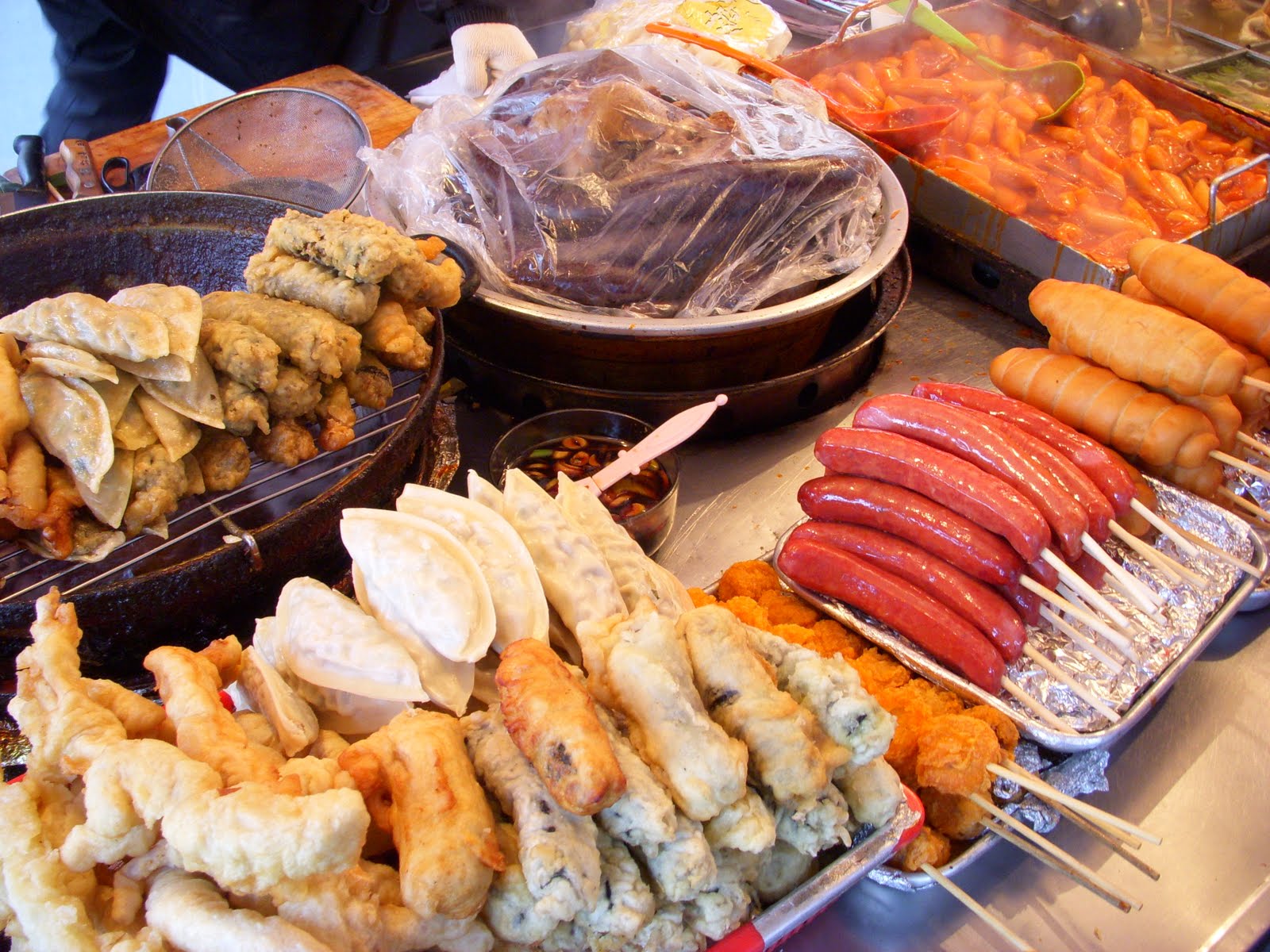
The other day I posted on facebook that I love bibimbap and a few people asked me about it, so I thought I would fill you in on some of the greatest main dishes in Korea, side dishes will have to be a different entry. Pictured above is Street food: Although I havent had the chance to try all of it, it is basically everything you can imagine placed on a stick and deep fried for your enjoyment…vegetables, potatoes, meat, rice cakes, fish cakes, hot dogs…you name it.
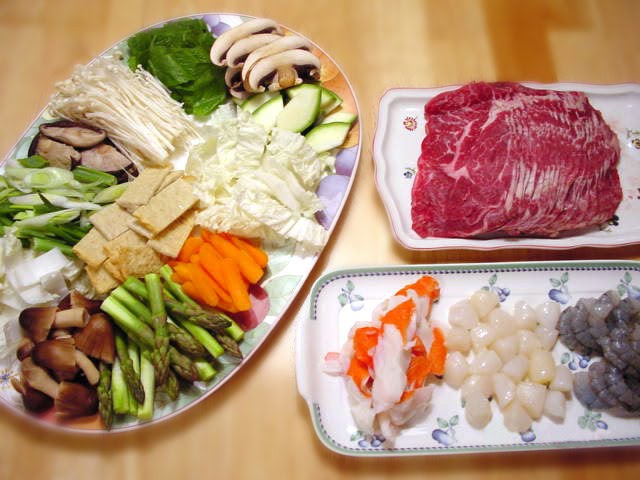 This is by far my favorite…Shabu Shabu. There are many different kinds but basically you put a ton of veggies in a boiling pot of water in the center of your table, along with some meat…let it cook, then wrap it up in rice paper (you know that clear stuff they wrap things in at the chinese take out place) add some fresh veggies inside along with a ton of different sauces and eat away. After you are done…the meal is not, they then add big fat udon noodles to the pot to cook…when the noodles are finished…one more course…homemade fried rice, right inside the same pot to soak up all the juices and flavors that have been cooking.
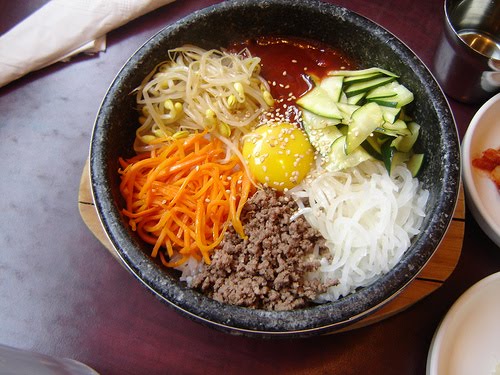
This my friends, is bibimbap. There is rice below and it can be served hot or cold, I like the cold version better. Ontop are all different types of veggies (depending on the restuaurant) some meat, sometimes imitation krab, some egg and nice hot thick red sauce. You then take your spoon and chop sticks and mix it up into one big mush and enjoy (those of you who have eaten Thanksgiving Dinner with me know how much I love everything all mashed up together)
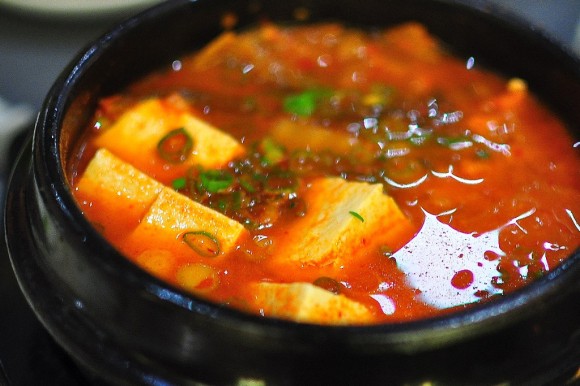
This is Kimchi Zzige soup, it can be spelled many different ways. It is a spicy red soup with cabbage, tofu, scallions and whatever else the cook wants to put inside.
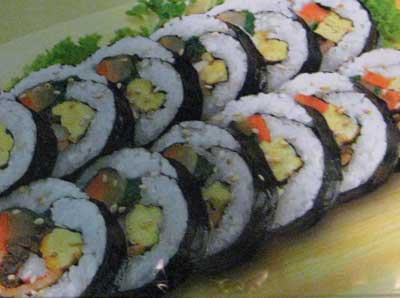 A nice cheap alternative is always gimpab. It may look like sushi, but is much less complicated and much less expensive. Inside is egg, a sesame leaf, carrot, krab, egg,sometimes ham, sometimes kimchi, sometimes tuna..from a can.. (my favorite) It runs you abour $1.50
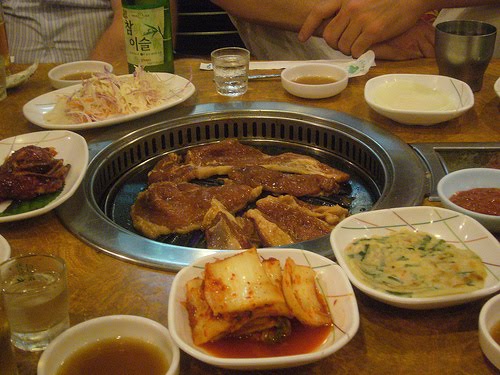 Galbi is always a favorite and super innexpensive…as little as $4.00 a person. Galbi is meat cooked on a plate in the middle of the table either by gas or wood. It cooks up quick and then you wrap it in lettuce leafs with a ton of sides..yum yum. Chun is the yellow pancake thing on the right. They call it a korean pancake..yum!
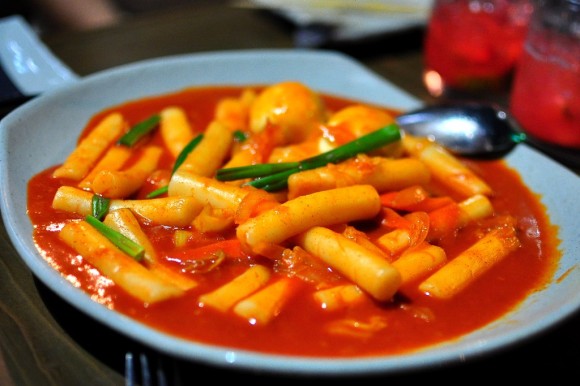
This is dukbogi. I was definitely not a fan when I got here…but now love it. The consistancy is weird and it is really chewy. It is rice…rice rolled and mixed until it forms a kind of dough. (they also fry this on the side of the road, or fill it will different things and serve it as a dessert) It is cooked inside of a really spicy thicker red sauce. The first time I ate it, i thought it was spaghetti, which may be why at first I thought it was gross.
🇰🇷 The ultimate Korean food guide — this one is going to get SO much traffic! Here we go:
🏷️ New Title:
The Ultimate Guide to Korean Food — Every Dish You Need to Try Starting With Bibimbap
✏️ One Line Intro — Add at the Very Top:
Someone asked me about bibimbap on Facebook and I realized — one dish is not enough. Here is your complete guide to the Korean food that completely changed the way we eat.
❓ 5 Q&As — Add at the Bottom:
Q: What is bibimbap and how do you eat it? A: Bibimbap is one of Korea’s most beloved dishes — a bowl of rice topped with seasoned vegetables, meat, egg and a generous dollop of gochujang red pepper sauce. The key is mixing everything together with your spoon and chopsticks into one gloriously messy mush before eating. It can be served hot or cold and is found everywhere from street stalls to high end restaurants.
Q: What is shabu shabu in Korea? A: Korean shabu shabu is one of the most satisfying dining experiences you will ever have. You cook vegetables and meat in a boiling pot of broth at your table, wrap everything in rice paper with fresh vegetables and dipping sauces, then finish the meal with udon noodles cooked in the remaining broth and finally a round of fried rice made right in the same pot. Three courses in one pot — it is extraordinary.
Q: What is the difference between Korean gimbap and Japanese sushi? A: Gimbap looks similar to sushi rolls but is its own thing entirely. It is filled with egg, sesame leaf, carrot, crab, sometimes ham or tuna and wrapped in seaweed and rice. There is no raw fish and no wasabi. It is simpler, heartier and at around $1.50 per roll one of the best value meals in all of Korea.
Q: What is tteokbokki and why do people love it? A: Tteokbokki — or dukbogi as we called it — is chewy rice cake cooked in a thick spicy red sauce. The texture is genuinely unlike anything in Western cuisine which can take some getting used to. We were not fans at first but it completely won us over and is now one of our most missed Korean foods. Try it at least twice before making your judgment.
Q: What is Korean street food like? A: Korean street food is one of the great joys of living in Korea. Virtually anything you can imagine gets skewered on a stick and deep fried — vegetables, meat, fish cakes, rice cakes, hot dogs and more. Markets and street corners are lined with vendors and the prices are incredibly affordable. It is impossible to walk past without stopping.
Discover more from Adventures We Seek
Subscribe to get the latest posts sent to your email.


ooh delicious! I love Korean food too!
LikeLike