Living in Korea means occasionally stumbling into conversations that the culture itself considers too private to have publicly — and the birth rate crisis is one of the most important of them all.
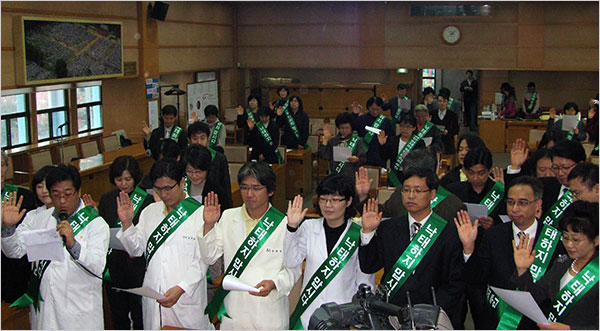
While this is a very touchy subject for most I must share this article I found in the New York Times. (click here for the full article)
In Korea, abortion is completely against the law…very few exceptions, and the most common form of birth control is the morning after pill (information from a korean friend). The picture above shows doctors holding a news conference and asking for forgivess for conducting illegal abortions in their clinic for money. One doctor said that she realized things were really bad when she was performing double the amount of abortions as she was births in her office. In America, where abortion is discussed openly and often in Korea, “Abortion has never become a hot issue here because the society considers it a family issue, and there is a strong taboo against discussing a family matter in public.” According to the article, women after having one healthy baby will demand an abortion because they drank cold medicine or had a drink while pregnant and don’t want to have any complications.
The issue is much larger than just abortion, the infertility rate in Korea is the lowest in the world, 1.19 child per kid, down from 4.5 30 years ago, women are aging, not wanting to marry (see my earlier post) and with so many abortions taking place…the birth rate is drastically declining. President Lee-Myung Bak is calling for bold steps to increasing the birth rate. The government’s new message “with abortion, you’re aborting the future.”
I know this is a very controversial topic and I wanted to share with you Korea’s side.
Q: Is abortion legal in South Korea? A: At the time of this post abortion was illegal in South Korea with very limited exceptions. Despite this illegality the procedure was widely practiced with some clinics reportedly performing more abortions than births. The topic remained largely undiscussed publicly due to a strong cultural taboo around treating reproductive decisions as private family matters rather than public policy issues.
Q: What is South Korea’s birth rate and why is it declining? A: South Korea has one of the lowest birth rates in the world at approximately 1.19 children per woman — dramatically down from 4.5 just thirty years earlier. Contributing factors include women delaying or avoiding marriage, high cost of raising children in an intensely competitive education system, economic pressures on young people and cultural shifts in attitudes toward family and career among younger generations.
Q: Why are South Korean women choosing not to get married? A: A growing number of South Korean women are opting out of marriage entirely — a phenomenon driven by dissatisfaction with traditional gender role expectations, the enormous financial and emotional burden placed on mothers in Korean society and increasing career opportunities that make marriage feel like a constraint rather than a benefit. It is one of the most significant social shifts happening in modern Korea.
Q: What is the South Korean government doing about the declining birth rate? A: The government has implemented various financial incentives to encourage families to have more children including cash payments, extended parental leave and subsidized childcare. Despite these efforts the birth rate has continued to fall making South Korea’s demographic challenge one of the most pressing policy issues the country faces.
Q: How does Korean culture approach discussions of reproductive health? A: Korean society traditionally treats reproductive and family decisions as intensely private matters not appropriate for public discussion. This cultural taboo has meant that issues like contraception access, abortion policy and declining birth rates have been slow to enter mainstream public debate despite their enormous implications for the country’s future population and economy.

Discover more from Adventures We Seek
Subscribe to get the latest posts sent to your email.


So true, Nicole. I saw 4 abortion cases in a week while I was working in a local OBGY clinic. There were more cases that I didn't see. From my perspective as a nursing student and Korean, the government should take this issue seriously and they need to educate kids well about contraception to keep people from not killing unnecessary babies.Wow I didn't expect this would be so long!!
LikeLike
It is so controversial in the states…but i totally agree. everytime i go buy my pill at the pharmacy she is always a little confused, and i dont think it is because i don't speak good korean 🙂 im glad you are reading!
LikeLike