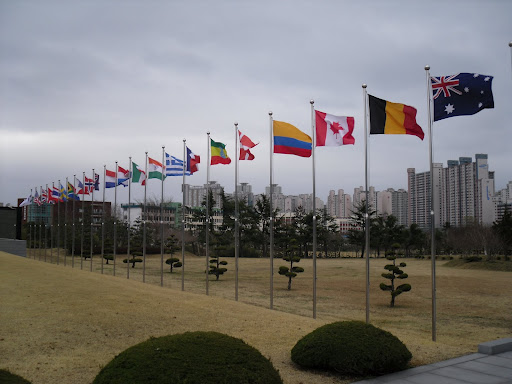
 While in Busan we found our way to the UN Korean War Memorial. Nestled right inside the city is a huge, well manicured and somber cemetery dedicated to the men and women of the world who gave their lives during the Korean War. When walking into the cemetery you are welcomed by two armed and handsome Korean soldiers. When we entered they asked us what nationality we were and marked it down and then we wondered around the cemetery. The grounds were beautifully kept, even in winter.
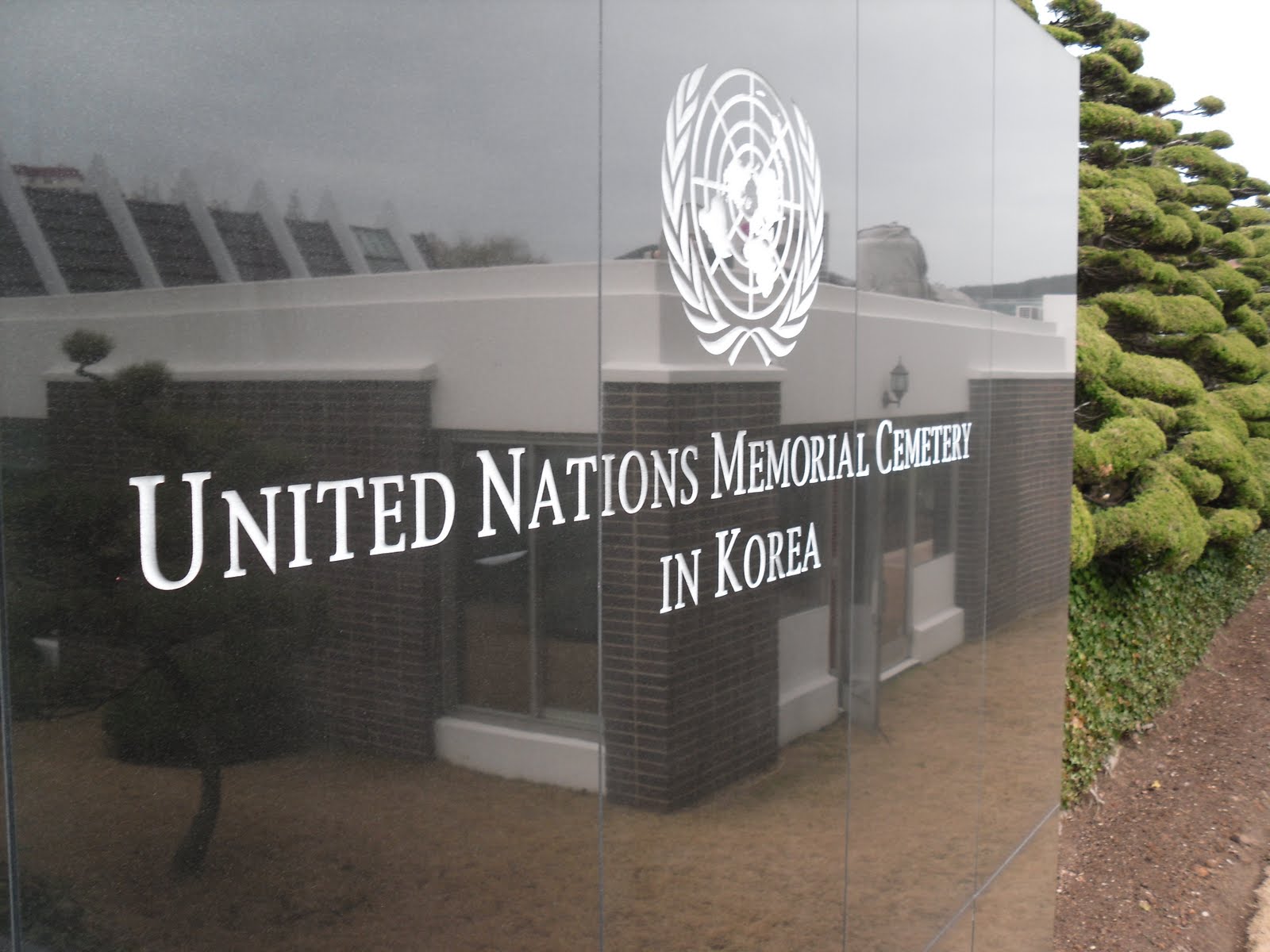
The Cemetery covers over 35 acres and was established by the United Nations Command on January 18, 1951, when interments were begun. Remains were transferred from six other cemeteries located at Gaeseong, Incheon, Daejeon, Daegu, Miryang, and Masan. The dedication ceremony was held on April 5, 1951. The Korean government granted the land to the United Nations without charge, in perpetuity, as a permanent tribute to all those who gave up their lives in resisting aggression in Korea and in upholding the cause of peace and freedom from 1950-53.
The Cemetery contains the bodies of 2,300 men from Australia (281), Canada (378), France (44), the Netherlands (117), New Zealand (34), Norway (1), South Korea (36), South Africa (11), Turkey (462), the United Kingdom (885), and the United States of America (36), as well as unknown allied soldiers (4) and non-belligerents (11). During 1951 to 1954, remains of about 11,000 men of the UN Forces were gathered here, and remains of soldiers from Belgium, Colombia, Ethiopia, Greece, India, the Philippines, and Thailand (as well as the majority of those from the U.S.A., France, and Norway) were repatriated to their home countries. Plaques bearing particulars of the deceased covers each grave.
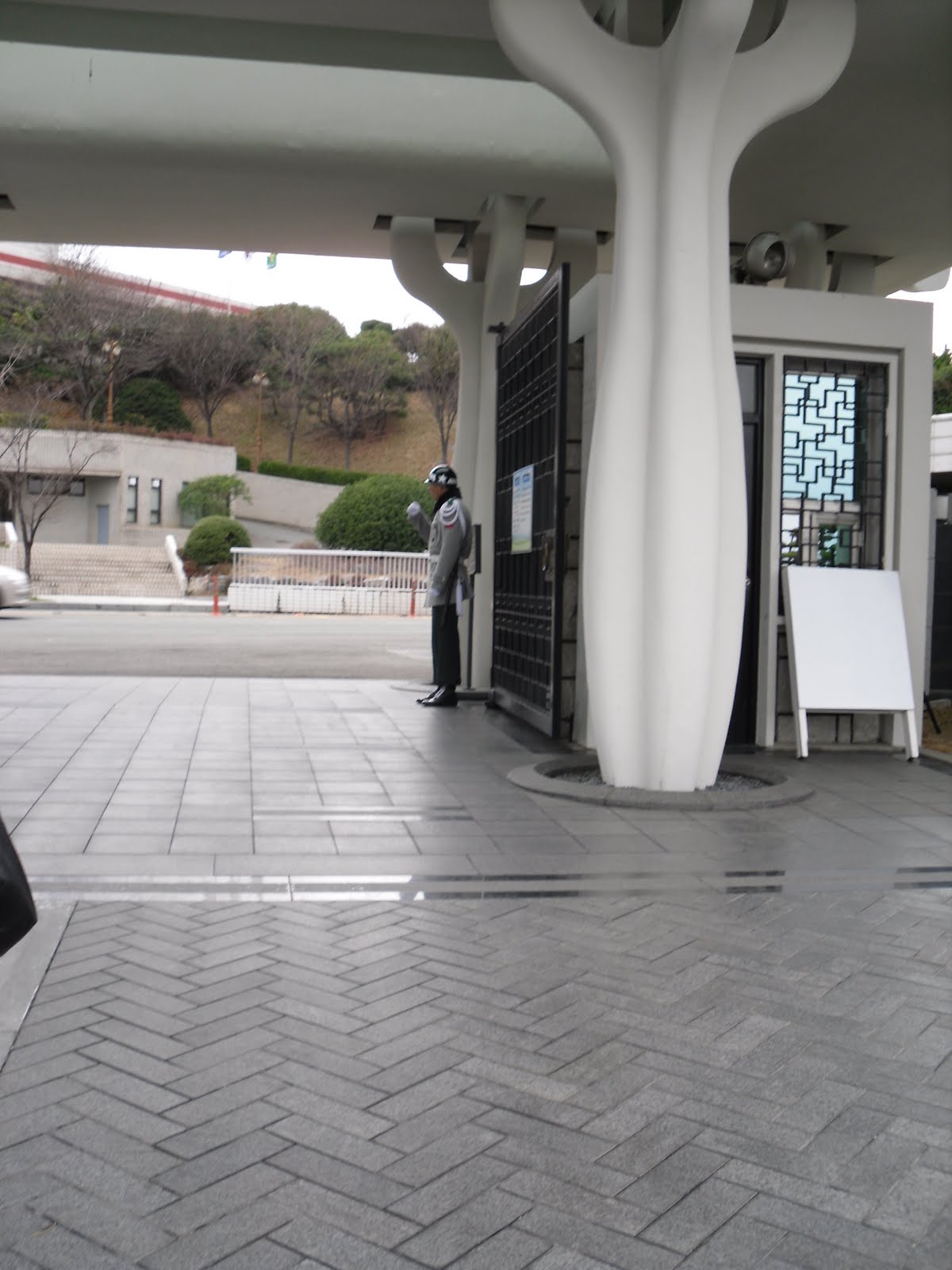
Main Gate
The Main Gate, designed by Kim Chungup, was dedicated on November 30, 1966, to honor the fallen UN Forces in the Korean War by the citizens of Busan. While the stable roof line symbolizes Heaven, the support columns in the shape of trees signify the life of earth growing towards Heaven. The sunlight shining through the ceiling down on the columns brilliantly animates the trees and brings them to life. It is famed for its unique and abstract design. The roof, columns, and attached guard-house never quite seem to meet.
Memorial Service Hall
The Memorial Service Hall was built as a tribute to the sacrifices rendered by the UN Forces in Korea and was inaugurated on August 21, 1964. Modern in its design, the Memorial Service Hall incorporates a novel feature of six hinged reinforced concrete beams that appear to be clamping the building to its foundation. The triangular outline represents eternity in the abstract and symbolically conveys various religious faiths represented within the Cemetery.
🇰🇷 Such a moving and deeply personal post — your Uncle Mel detail makes it unforgettable. Here we go:
🏷️ New Title:
The UN Korean War Memorial in Busan — A Visit That Brought History Heartbreakingly Close to Home
✏️ One Line Intro — Add at the Very Top:
We went to the UN Korean War Memorial in Busan knowing it would be moving — we did not know it would bring us to our knees.
❓ 5 Q&As — Add at the Bottom:
Q: What is the UN Korean War Memorial in Busan? A: The UN Korean War Memorial Cemetery in Busan is the only UN cemetery in the world and one of the most sobering and beautifully maintained memorials we have ever visited. Established on January 18th 1951 it covers over 35 acres and is dedicated to the men and women from 11 countries who gave their lives during the Korean War. The Korean government granted the land to the United Nations permanently and without charge as a tribute to all who fought for peace and freedom between 1950 and 1953.
Q: How many soldiers are buried at the UN Memorial Cemetery in Busan Korea? A: The cemetery contains the remains of 2,300 soldiers from 11 countries including Australia, Canada, France the Netherlands, New Zealand, Norway, South Korea, South Africa, Turkey, the United Kingdom and the United States. During 1951 to 1954 approximately 11,000 UN soldiers were gathered here before many were repatriated to their home countries including more than 30,000 Americans.
Q: Where is the UN Korean War Memorial Cemetery located? A: The UN Memorial Cemetery is located right in the heart of Busan South Korea — surprisingly accessible and nestled within the city in a way that makes its presence feel both peaceful and profoundly important. Two armed Korean soldiers greet visitors at the entrance and record the nationalities of all who visit which is a touching detail that stays with you.
Q: Is the UN Korean War Memorial worth visiting in Busan? A: Without question — it is one of the most powerful and important sites in all of South Korea. The scale of sacrifice represented across those 35 acres is genuinely difficult to absorb. The wall of names similar to the Vietnam Memorial in Washington DC is particularly moving — three full walls dedicated to American names alone with ages inscribed that remind you just how young so many of them were.
Q: What should you know before visiting the UN Korean War Memorial in Busan? A: Entry is free and the grounds are open to visitors year round. The cemetery is beautifully maintained in all seasons. Bring your passport as soldiers at the gate record visitor nationalities. Allow at least two hours to walk the grounds properly and read the plaques — rushing through would not do justice to what is honored here.
Discover more from Adventures We Seek
Subscribe to get the latest posts sent to your email.

