- Home
- About Nicole
- Explore the World
-
Travel Library ▾
Proud affiliate of Favorite Grampy Travels

Sydney Harbour from the water. Almost every American family trip to Australia starts here, and there are good reasons for that
Australia — Everything We Know
“The flight is the whole problem. Solve the flight honestly and Australia is one of the easiest countries in the world to travel with children. Pretend the flight is not a problem and you will spend a week of a two week trip watching your kids fall asleep at lunch.”

We have not been to Australia.I want that on the record before you read another word, because this page is not a trip report and I am not going to pretend it is. What follows is what I know as an advisor who has priced, planned and talked families out of this trip more than once.
Australia is the destination I get asked about most by families who have never done a long haul trip. It is also the one I talk people out of most often. Not because it is a bad country. Because they want to do it in ten days.
So the honest version of my advice is short. Go for three weeks or do not go. If you can only take ten days, spend them somewhere closer and save Australia for a year when you can do it properly. That is not me being precious. That is me doing the arithmetic on how many of those ten days you would actually be awake for.
Australia Place by Place
Eight places worth naming. You are not going to see all eight and you should not try. Read this as a menu you pick two regions from, not a list you tick off.

Sydney
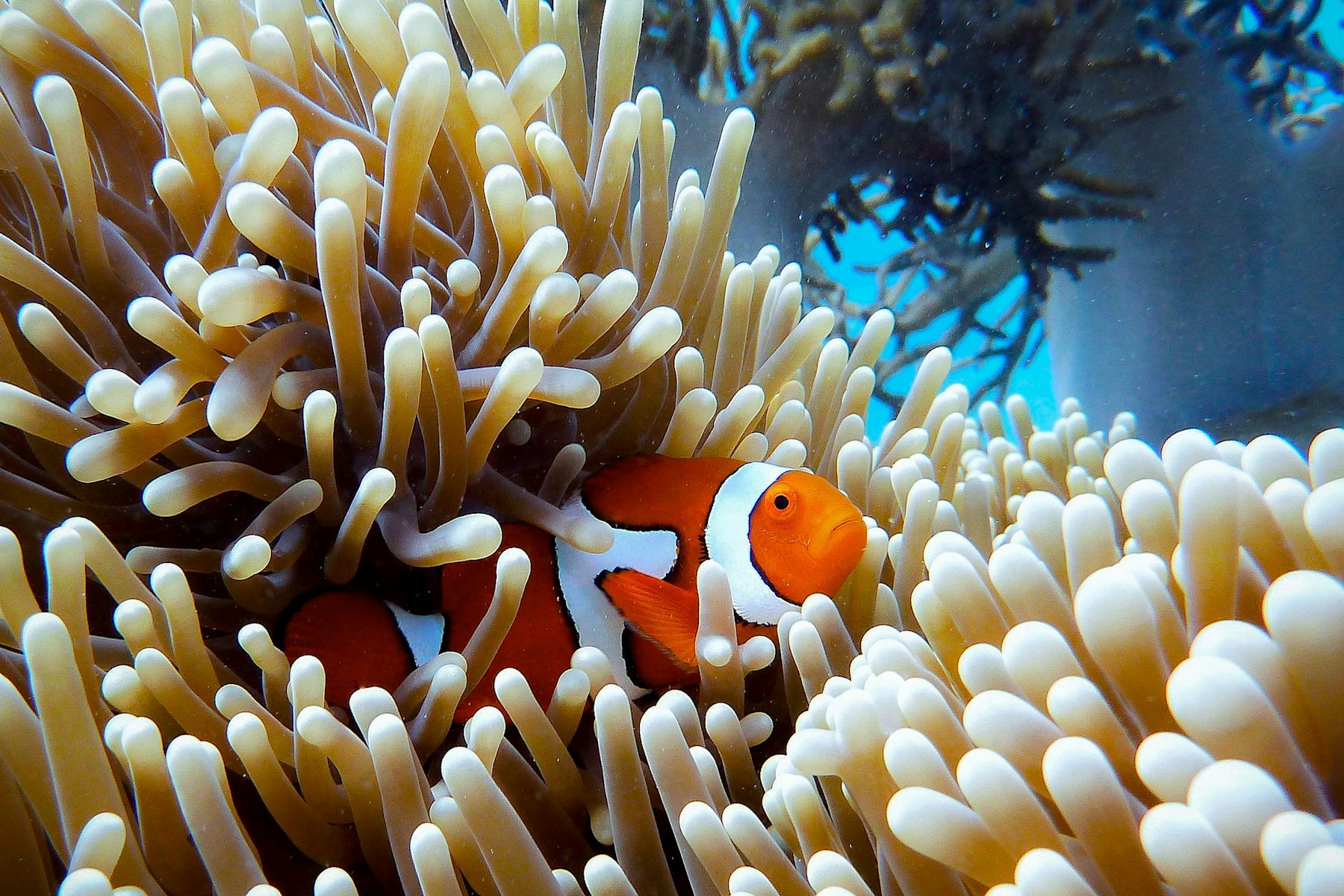
Great Barrier Reef

Melbourne
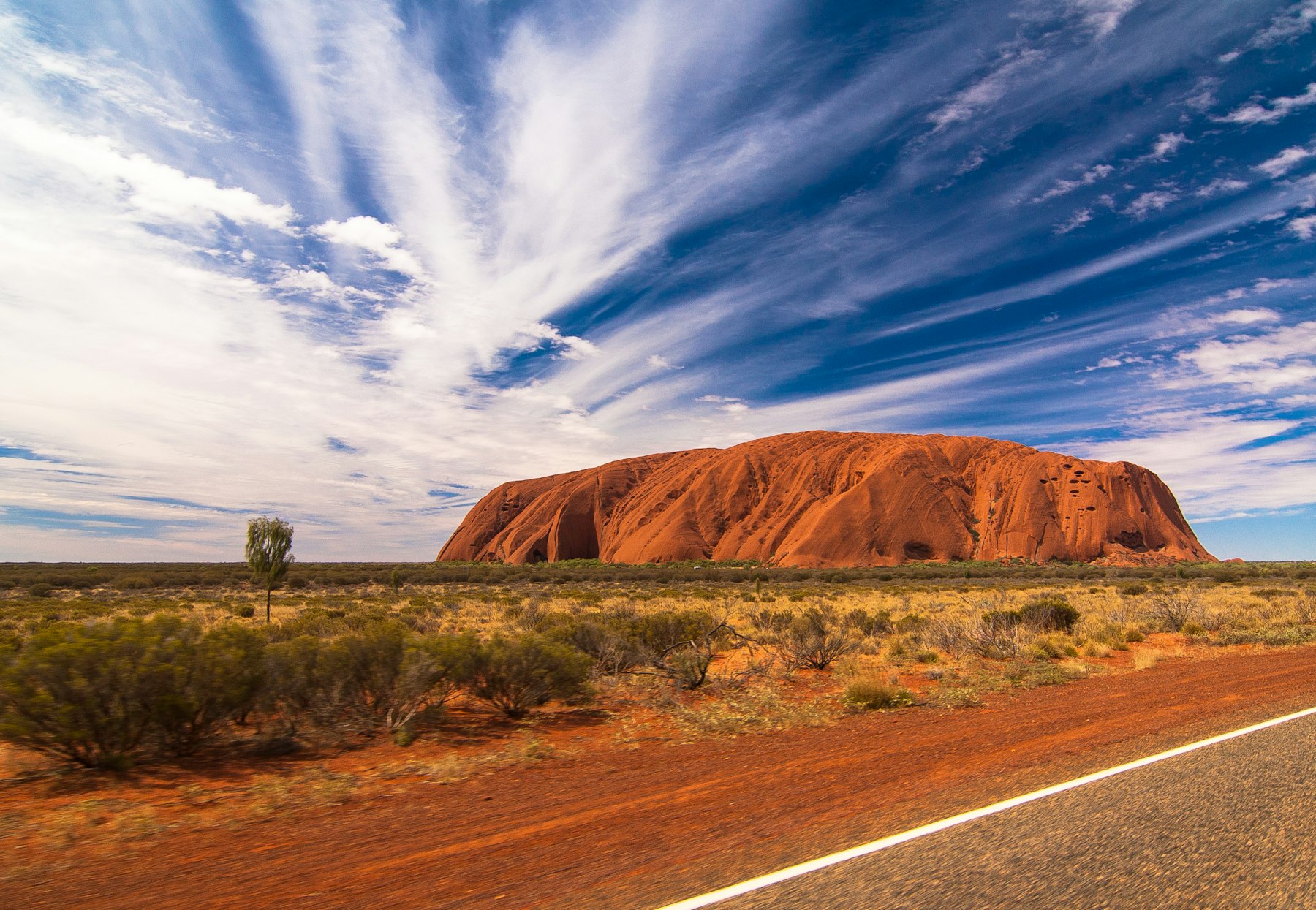
Uluru

Gold Coast

Tasmania

Perth

Cairns
The Flight Is the Whole Problem
Every other decision about Australia is downstream of this one. Sort it first.
Fifteen to seventeen hours in the air, and that is only the long leg.From the west coast you are looking at roughly fifteen hours to Sydney or Melbourne, around seventeen to Brisbane depending on the routing. From the middle of the country add a domestic hop and a connection. Twenty four hours door to door is normal. Thirty is common.
You lose a day going and get one back coming home.Leave on a Monday night and land Wednesday morning. Tuesday never happened. Coming home you land before you left, which sounds fun and is actually the harder direction for children.
Jet lag with kids is real and it is not one bad night.Adults take three or four days to right themselves on a twelve to sixteen hour shift. Children take longer and they do it loudly. Plan the first two days to be nothing. A park, a pool, a walk, an early dinner. Do not book the reef for day two.
Premium economy is the upgrade that actually changes this trip.I do not say that about most flights. On a fifteen hour leg with children it is the difference between arriving tired and arriving broken. If the budget only stretches one way, buy it for the outbound.
Three weeks or do not go.Two weeks means roughly ten usable days after the flying and the fog. Three weeks means seventeen. That is not a small difference, it is the difference between a trip and an ordeal.
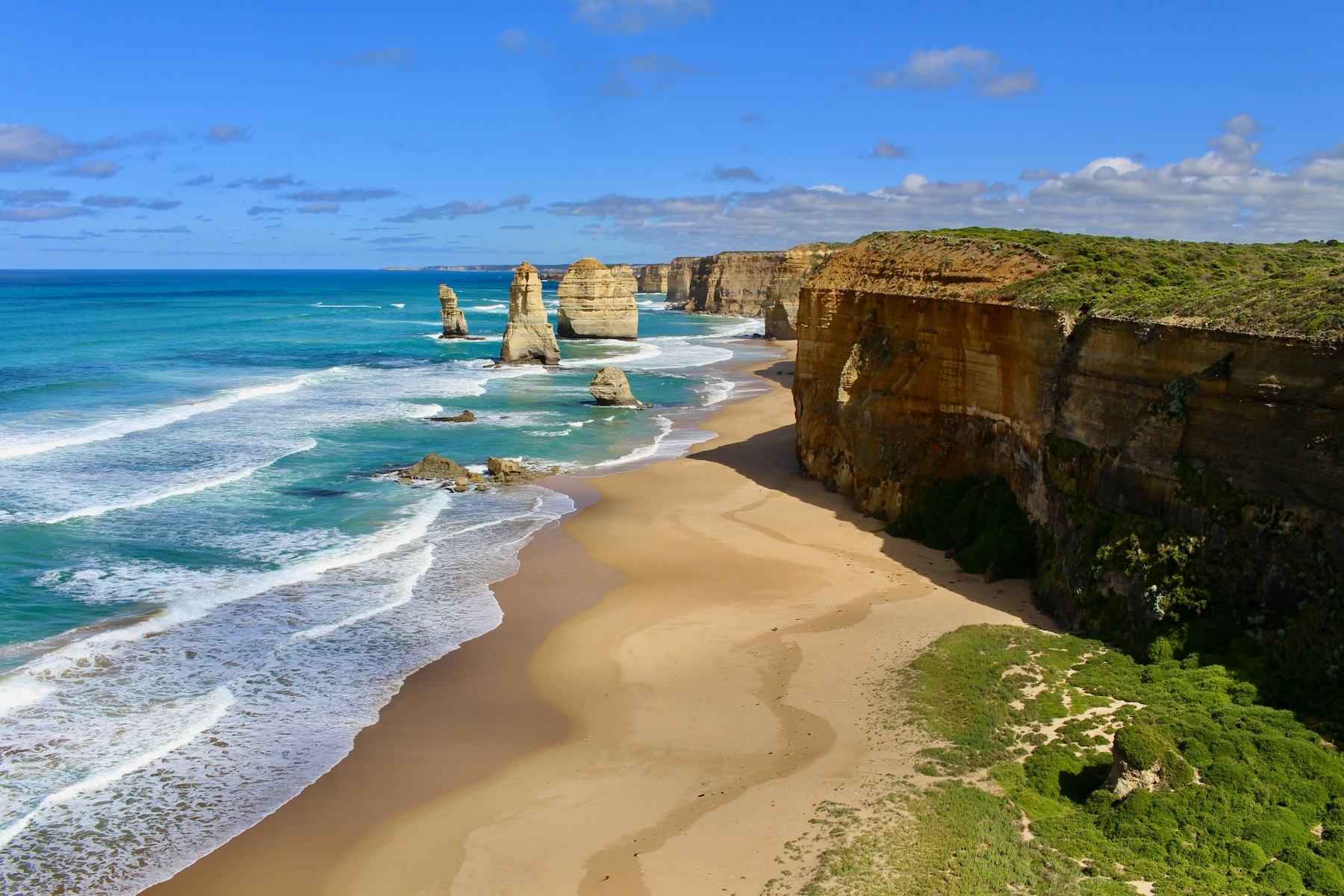
The Twelve Apostles on the Great Ocean Road, a few hours out of Melbourne. This is the kind of thing you get if you pick Victoria as one of your two regions and stop trying to also see the reef
Australia Is the Size of the Continental US. Pick Two Regions.
This is the single most useful sentence on this page, so I am going to be blunt about it.
Sydney to Perth is roughly the same flight as New York to Los Angeles. Sydney to Cairns is about three hours in the air. Sydney to Uluru is three and a half. Melbourne to Cairns is four. Nobody plans a first trip to America that includes New York, Miami, the Grand Canyon and Seattle, and yet families plan exactly that shape of trip in Australia because the map looks like one country and one country feels small.
So pick two regions and let the rest go. The pairings that actually work are these. Sydney and the tropical north, which is the classic and I will come back to it. Sydney and the red centre, which is the one for families with older kids who want the country rather than the coastline. Melbourne and Tasmania, which is the cool climate food and wilderness trip and is wildly underrated for families with teenagers. Or the whole east coast run from Sydney up through Byron and the Gold Coast to the reef, which is the one to pick if your children are small and you want beaches and short drives rather than aeroplanes.
What does not work is Sydney, Uluru, the reef and Melbourne in fourteen days. I have seen that itinerary come across my desk a dozen times. It is four internal flights, four hotel changes and roughly six real days on the ground. You will spend more of that holiday in airports than in Australia.
Sydney Plus the Reef Is the Classic First Trip, and It Earns It
Sometimes the obvious itinerary is obvious because it is right.
Five to six nights in Sydney, then a flight north to Cairns or Port Douglas for five or six more, then home. Add a few days on the Gold Coast or in Byron in the middle if you have the third week. That is the trip, and there is a reason it is the one every advisor recommends for a first visit.
Sydney works for children in a way most big cities do not. The harbour ferries are public transport and they are also the best sightseeing in the city for the price of a bus fare. Manly and Watsons Bay are a boat ride with a beach at the end. Taronga Zoo is on the water and is the easiest introduction to Australian animals your kids will get. Bondi to Coogee is a coastal walk you can do in pieces. The Blue Mountains are ninety minutes on a train. You can fill six days without a single hard travel morning, which after that flight is exactly what you want.
Then the north gives you the other half. Warm water, rainforest, the reef, and a completely different climate and pace. Port Douglas is the softer base and I usually push families there over Cairns. It is a small town, you can walk to dinner, Four Mile Beach is right there, and the reef and the Daintree are both day trips.
If you want a third region, add the red centre and go to Uluru. But understand what it is. It is a two or three night stop, it is hot, it is remote, and it is the part of the trip your children will either remember forever or complain about the entire time. Nine and up, in my experience. Younger than that and the heat and the driving outweigh it.
The Reef, Honestly
Families ask me two things about the Great Barrier Reef. Is it dying, and is it still worth going. Both deserve a straight answer.
The reef is not what it was. That is not activism, it is the record. There have been repeated mass bleaching events over the last decade, including several in recent years, and the sections that took the worst of it have lost a lot of hard coral. Anyone who tells you the reef is untouched is selling you something. Anyone who tells you it is dead is also wrong, and is doing real damage to the towns whose livelihoods depend on people still coming.
What is true is that the reef is enormous. It runs about fourteen hundred miles. Damage is patchy. There are sites that are struggling and sites that are still extraordinary, and which one you see depends almost entirely on which operator you book and how far out they go. The day trips that run to the same handful of pontoons closest to Cairns are the most heavily used sections. The smaller boats that go to the outer reef, or that run from Port Douglas out to the Agincourt ribbon reefs, generally show you healthier coral and fewer people.
So my answer is yes, go, and pay for the better boat. This is not the place to book the cheapest option. Ask the operator which reef sites they visit and how many passengers they carry. Under fifty is a different day than two hundred.
The Wildlife Question, Answered Calmly
Every parent asks. The internet answers badly. Here is the boring, accurate version.
Spiders and snakes are a near non issue for visitors.Australia has genuinely dangerous species and Australians treat them with respect rather than panic. Deaths are extremely rare and almost never involve tourists. Shake out shoes left outside, do not put your hands into holes in rocks, wear closed shoes on bush walks. That is the whole protocol.
Crocodiles are the one to actually take seriously.North of about Rockhampton, saltwater crocodiles live in rivers, estuaries and sometimes beaches. The rule is simple and absolute. Swim where the signs say you can swim, and nowhere else. No paddling in a creek because it looks fine. This applies in Port Douglas, the Daintree and the whole tropical north.
Stingers are seasonal and managed.From roughly November to May the tropical north has box jellyfish and irukandji. Beaches have netted swimming enclosures, boats supply stinger suits, and locals simply wear them. This is a plan around it problem, not a cancel the trip problem.
The sun is the thing that will actually hurt your family.The UV in Australia is brutal in a way Americans consistently underestimate. Slip, slop, slap is a national campaign for a reason. Rash guards for kids, hats, shade in the middle of the day, and reapply. More visitors get wrecked by sunburn than by every animal on this list combined.
Swim between the flags.Australian surf beaches have rips that kill strong adult swimmers every year. The patrolled area between the red and yellow flags is where the lifesavers are watching. Teach your children this on day one and enforce it like a rule about seatbelts.
Food
Australian food is better than its reputation and much better than the joke version of it. The coffee in particular is a genuine national obsession and your morning is going to be good. Two things I have not put a photo to because I could not find an honest one. Lamingtons, which are squares of sponge dipped in chocolate and rolled in coconut and are in every bakery counter in the country. And Vegemite, which your children will hate, which is the correct reaction, and which you should still make them try once.





The Whitsundays, further south than the Cairns reef trips and a completely different kind of week. Sailing, beaches, and the reason some families skip Cairns entirely
Getting Around
Fly between regions, drive within them. Do not try to drive between them.
Within a region, hire a car. Australia drives on the left, which takes a day to stop feeling wrong and then stops being a problem. The roads are excellent, the signage is clear, and outside the cities there is very little traffic. Roundabouts are everywhere. The one habit to build immediately is looking right first at every junction.
Two warnings. Driving distances in the outback are much longer than they look and fuel stops are far apart, so fill up when you can rather than when you need to. And do not drive at dawn or dusk in rural areas if you can help it, because kangaroos on the road are the most common serious accident visitors have. Every hire car company will tell you this and most visitors ignore it.
What It Costs
Australia is expensive. Not shocking, but consistently more than families expect.
The flights are the big number. For a family of five in economy from the middle of the US, budget seriously and watch for sales, which do happen, usually for travel in the shoulder months. Premium economy roughly doubles it, which is why I say buy it one way if you buy it at all.
On the ground, expect city hotels to run high and to be small. Family rooms in Australian city hotels are genuinely hard to find, and this is one of the countries where an apartment rental usually beats a hotel on both space and price. Outside the cities, motels and holiday parks are good value and holiday parks in particular are a very Australian answer to travelling with children. Cabins, a pool, a camp kitchen, other kids.
When to Go
The seasons are flipped and the country is big enough to have several climates at once, so there is no single right month. There is a right month for your two regions.
September to November
My default answer. Spring in the south, dry and warm in the north, the stingers are mostly done, and it sits outside the Australian school holidays for most of it. Sydney is beautiful and the reef is at its best.
March to May
The other good window. Autumn in Sydney and Melbourne, the wet season finishing in the north, fewer crowds and lower prices. Late April and May in the tropics is excellent.
December to February
Summer, and also cyclone season in the tropical north. Sydney and Melbourne are hot and lively and this is when Australians take their own holidays, so prices and crowds peak. Up north it is humid, wet, stinger season, and cyclones do close things. If your family can only travel in this window, do the southern half of the country and leave the reef for another year.
June to August
Winter in the south, which means Melbourne is cold and grey. But it is the dry season in the tropical north and Uluru is pleasant rather than punishing. This is the window for a red centre and reef trip, and it is the one time of year I would skip Melbourne.
Doing It With Children
Once you are there, Australia is one of the genuinely easy countries. That is the payoff for the flight.
It is English speaking, which removes a whole layer of friction that our family is used to managing. Playgrounds are everywhere and they are good. Public toilets and change facilities are common and clean. Restaurants are relaxed about children in a way that some European countries are not. Beaches are patrolled. Tap water is drinkable everywhere. Medical care is excellent and pharmacies are easy to deal with.
The friction points are the flight, the distances, the sun and the cost. That is the list. None of them are cultural and all of them are solvable with planning.
Who Australia Suits, and Who Should Skip It
I would rather talk you out of this trip now than have you spend that much money on the wrong year.
Go if you have three weeks, your children are past the stage where a disrupted night wrecks the following day, and you want a long haul trip that is culturally easy once you land. Go if your family likes beaches and animals and being outside more than it likes museums. Go if you have teenagers, because Australia is very good for teenagers. And go if you can put it in September or October.
Skip it for now if you have a toddler. I will say that plainly. Fifteen hours in the air and a sixteen hour time shift with a two year old is a specific kind of misery and the child will not remember any of it. Skip it if you only have ten days. Skip it if the budget is already stretched, because Australia will not surprise you cheaply. And skip it if what you actually want is culture shock, because Australia will feel more familiar than you expect.
Compared to the neighbours. New Zealand is the better trip if you want scenery, driving and adventure over cities and reefs, and it is smaller so a two week trip actually works there. Fiji is the better trip if what you want is a resort week where the kids are looked after. Australia is the one you pick when you want a bit of everything and you have the time to do it properly. Many families combine two of the three, and the smartest version of that is Australia or New Zealand with a Fiji stopover on the way home, because Nadi sits directly on the route and breaks the flight in half.
Things That Surprise First Timers
Biosecurity at the border is serious.Declare food, wooden items, hiking boots with dirt on them. Australians do not treat this as a formality and the fines are real. Declaring something is never the problem, not declaring it is.
Pairs Well With
Three hours from Sydney and a completely different country. The obvious add on, and the one I would only do if you have four weeks rather than three.
Directly on the flight path home and the single best way to break up the return leg. Four nights in Fiji turns the worst part of this trip into the part your kids talk about.
The continent overview, including how these three countries fit together and which one to do first.
More Oceania Guides
The rest of the region, written the same way.


