When Typhoon Sanba was making its way toward Busan our Korean friends picked us up and took us straight toward the coast — and it was one of the best days we had in Korea.

Last Sunday as Typhoon Sanba was making its way towards Busan, we were invited out for a day of exploration by my students and friends Soon Chul and Elin. Chul picked us up in his very cool hybrid and we headed off to the coast. Taejongdae
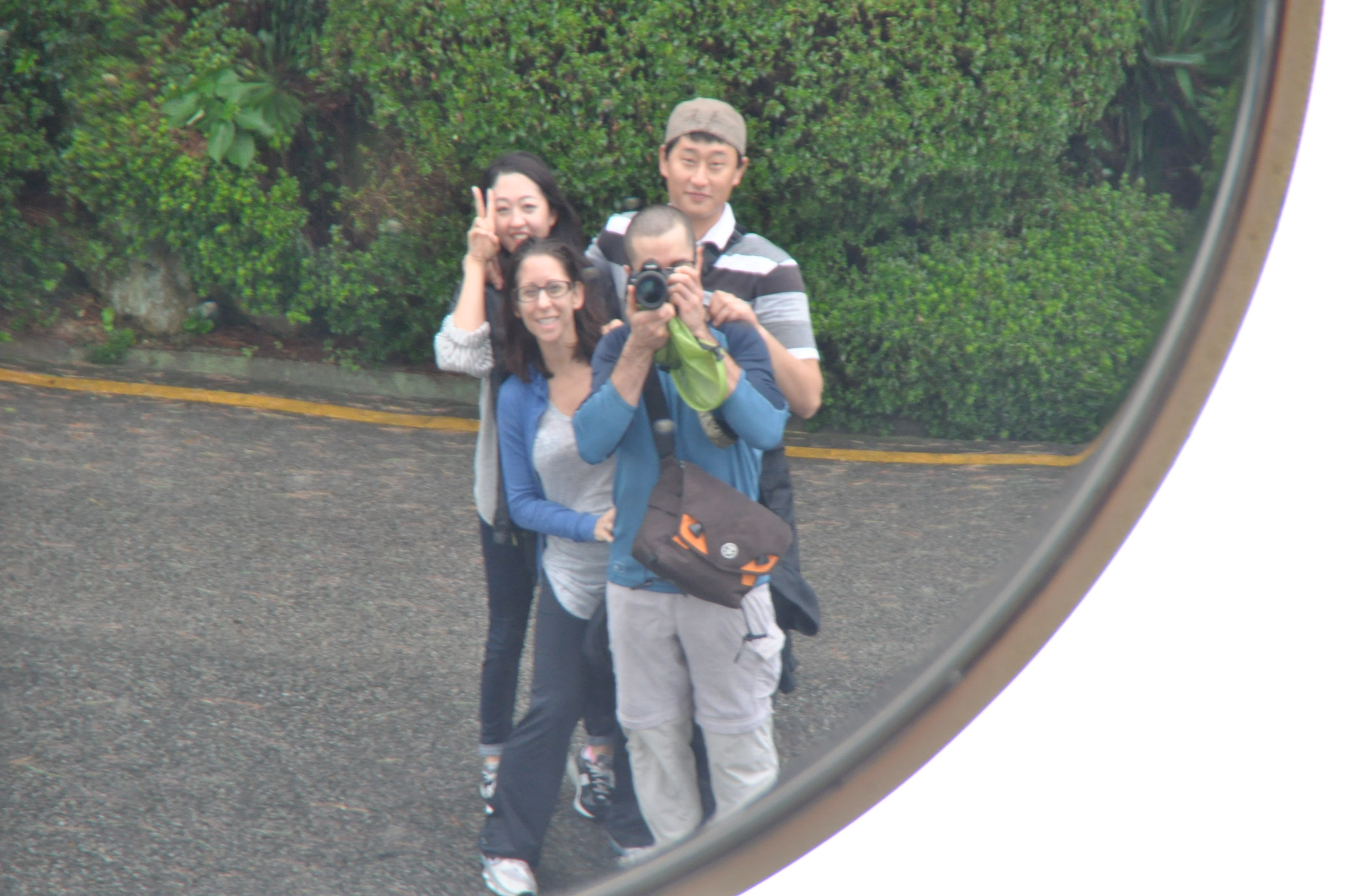
We had quite the hike up a paved path, in the rain. Elin and I struggled (I swear Lil’ is taking so much of my energy away from me). We made it up and around the coast and eventually spotted the lighthouse in the distance.
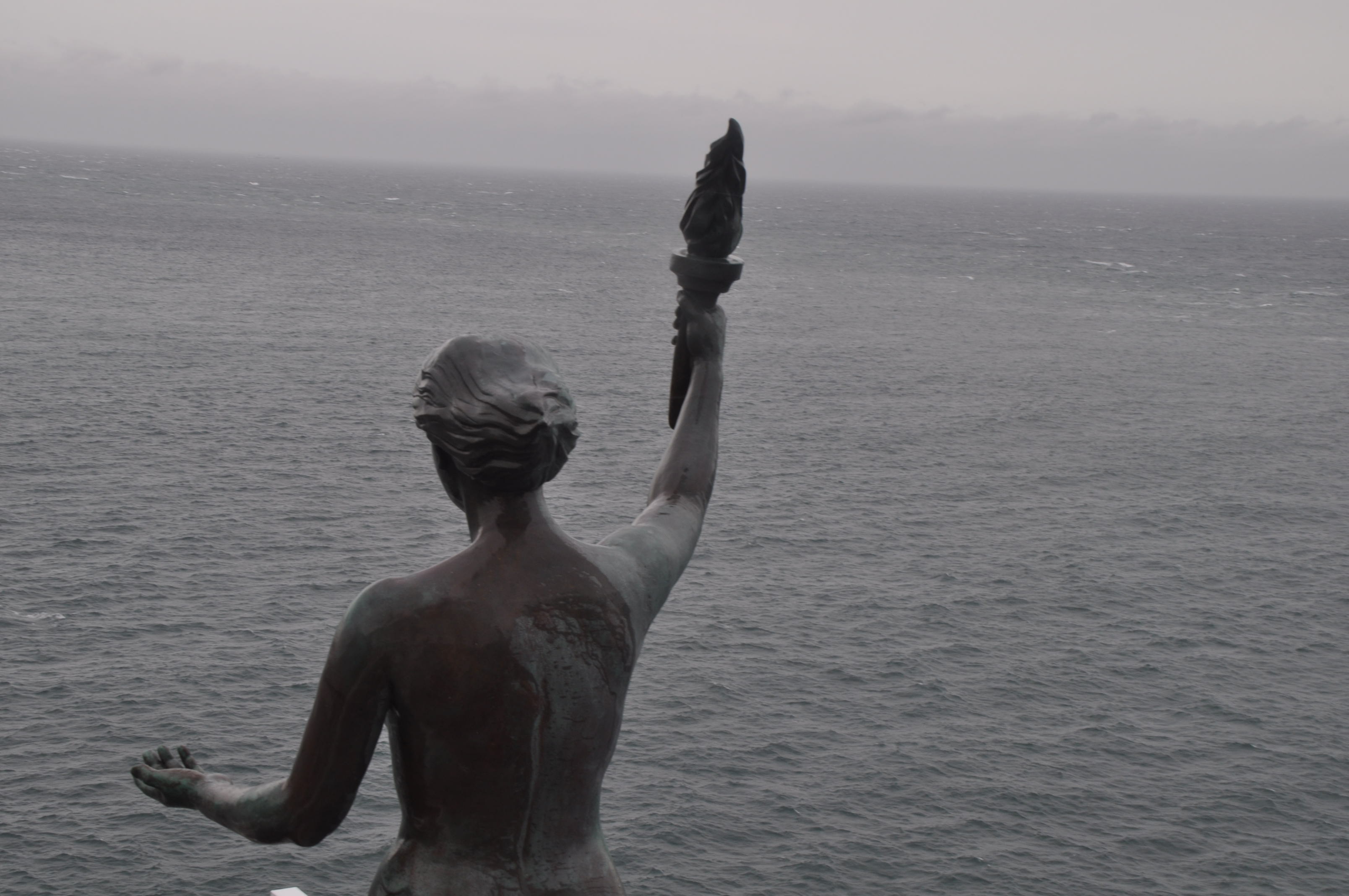 As we climbed out to the light house the winds picked up and I felt like we were in some sailor movie awaiting “the big one.” I felt like I needed one of those long skinny binoculars to look for whales and pirate ships.


After braving the storm we headed indoors to the new National Maritime Museum. It was a pretty awesome place. It definitely had a kids “wing” and an adults “wing. The kids wing was full of fun things like a small walk through aquarium, a place where you can virtually drive sail boats, a hands on pond where you can pick up star fish, and a boat racing area.
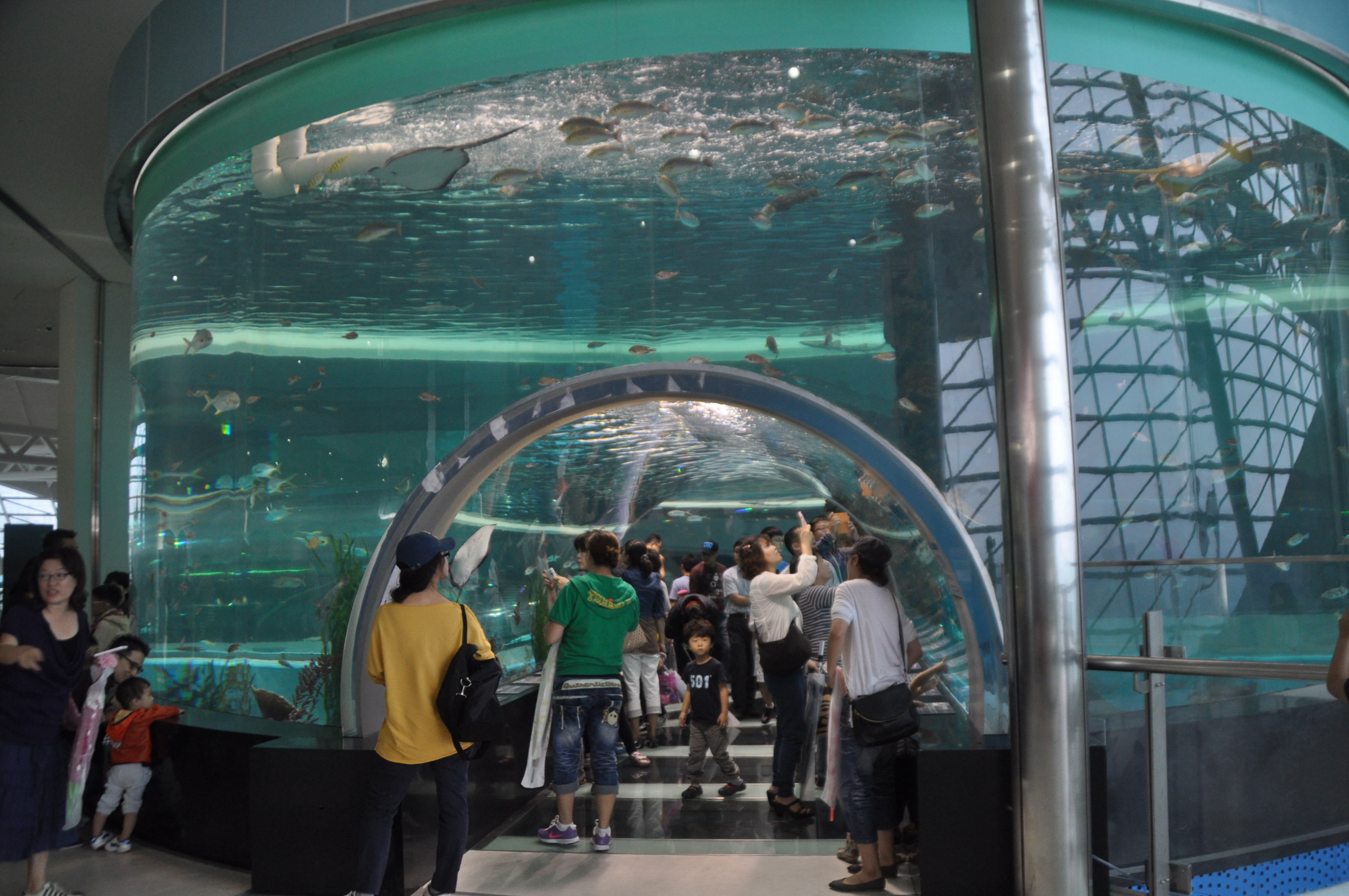
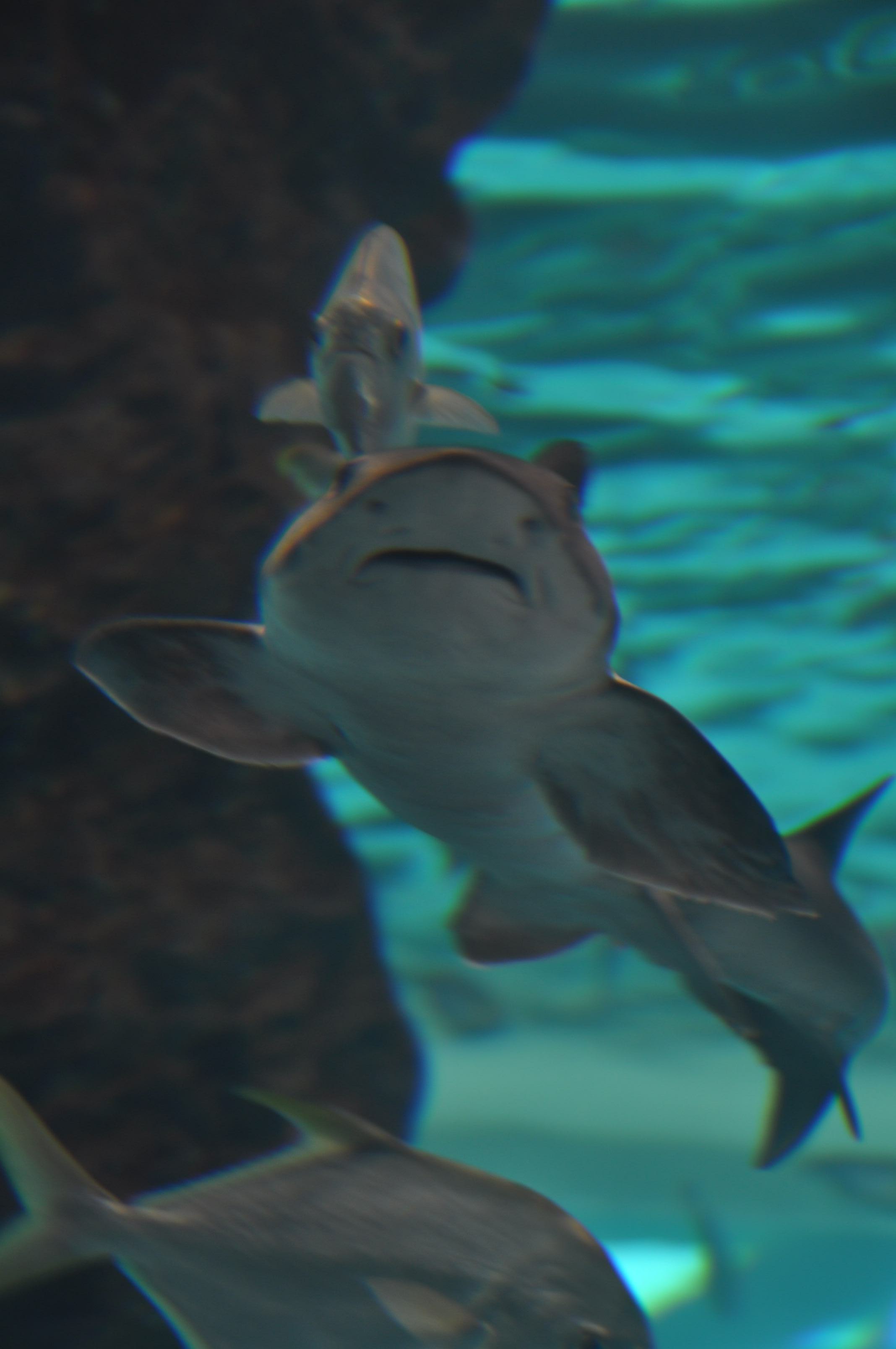
The adults side had tons of Korean history, almost all with English translations. And, I think the coolest part was the models. Busan is a huge export/import city with shipping as a major industry. Here you could see models of all the different types of carrier ships. The museum is free and is a really nice stop in Busan, especially on a rainy day


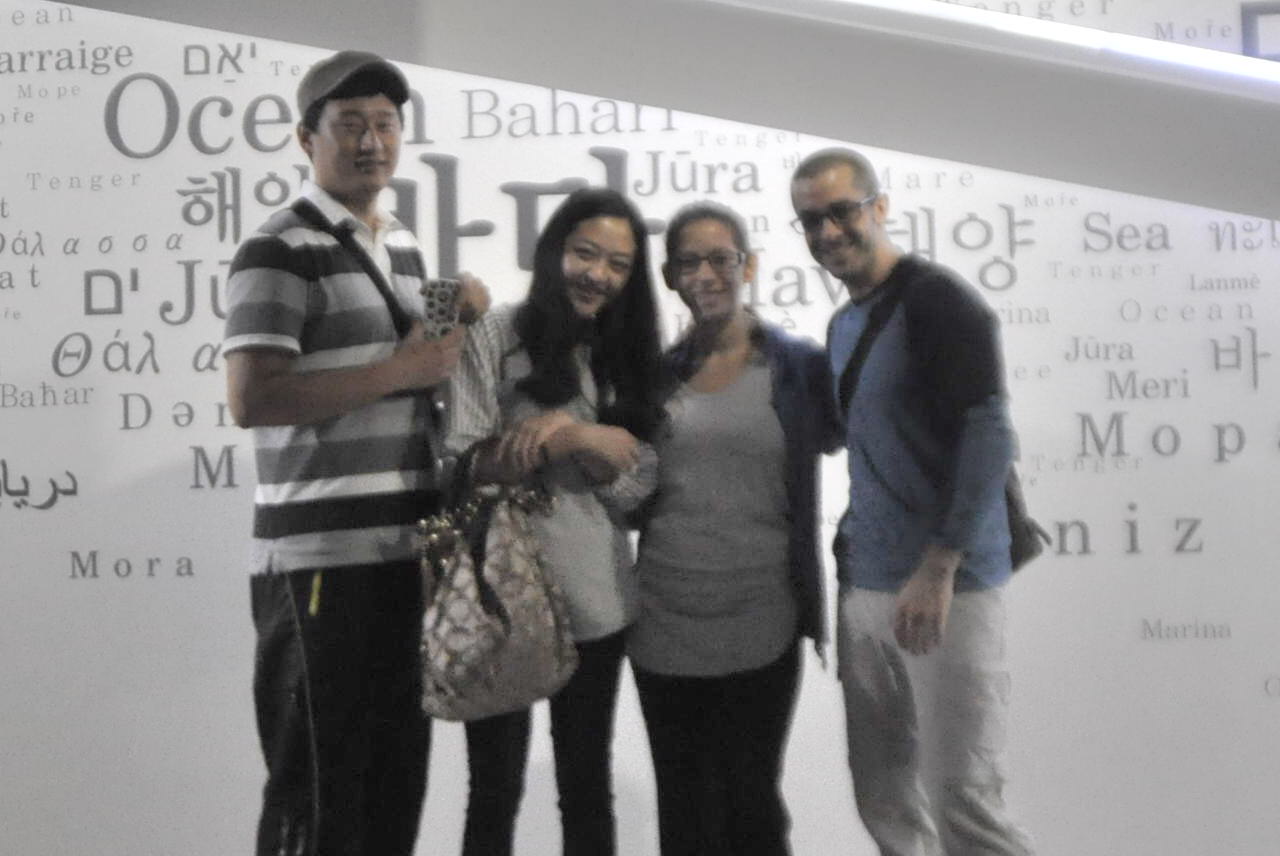 (anytime a stranger so graciously helps us by taking our picture, it always comes out blurry)
⏱️ Typhoon adventure and a free maritime museum in Busan — great travel content! Here we go!!
🏷️ New Title:
Exploring Busan in a Typhoon — Taejongdae Lighthouse and the Free National Maritime Museum
✏️ One Line Intro — Add at the Very Top:
When Typhoon Sanba was making its way toward Busan our Korean friends picked us up and took us straight toward the coast — and it was one of the best days we had in Korea.
❓ 5 Q&As — Add at the Bottom:
Q: What is Taejongdae in Busan South Korea? A: Taejongdae is one of Busan’s most dramatic natural landmarks — a rocky coastal park on the southern tip of Yeongdo Island featuring stunning cliff views over the Korea Strait and a historic lighthouse perched at the edge. The paved hiking path winds along the coastline through forested trails with ocean views at every turn. We hiked it in the rain during an incoming typhoon which made the whole experience feel genuinely cinematic.
Q: Is the National Maritime Museum in Busan worth visiting? A: Absolutely — and it is completely free which makes it one of the best value attractions in the city. The museum has two distinct wings. The children’s section features a walk through aquarium virtual sailboat simulators a hands on starfish pond and boat racing activities that kids genuinely love. The adult section covers Korean maritime history almost entirely in English and features extraordinary scale models of the enormous carrier ships that make Busan one of the world’s most significant port cities.
Q: What is there to do in Busan on a rainy day? A: The National Maritime Museum is our top recommendation — free fascinating and entirely indoors. The children’s wing alone could occupy a family for hours. Busan’s covered markets indoor food courts and the many coffee shops tucked throughout Seomyeon and Haeundae are also excellent rainy day refuges that give you a genuinely local experience without requiring good weather.
Q: How do you explore Busan like a local as an expat? A: Let your Korean friends and students take the lead. Our best days in Busan were always the ones organized by Soon Chul and Elin and others who knew exactly where to go and what was worth seeing. Accepting invitations generously saying yes to everything and trusting the people who know the city intimately will always produce better days than any guidebook can plan.
Q: What is it like visiting Taejongdae during a typhoon? A: Dramatic and completely unforgettable. The winds coming off the Korea Strait felt genuinely powerful and the lighthouse visible through the rain and mist looked like something from a sailor’s adventure story. We felt simultaneously ridiculous and exhilarated which is honestly our favorite way to feel while traveling.
More from Korea
More from Korea
Planning a trip to Asia? Check out plan your Asia trip with Nicole.
More from Asia
Remarkably livable once the initial adjustment passes. Korea is safe, efficient, and genuinely welcoming to families. The food culture is extraordinary. Kids adapt faster than adults to the language and social norms. Most expat families describe Korea as having raised their standard for what a city should offer.
The children’s museums in Seoul are world class. Korean street food is an adventure for kids of all ages. Palaces and traditional villages give history a physical form that works for children. Jjimjilbang family spas are a uniquely Korean experience worth trying. And the playgrounds and outdoor spaces in Korean cities are genuinely excellent.
Korea is excellent for adventurous young eaters. For picky eaters it takes adjustment. Korean fried chicken is universally beloved. Kimbap rice rolls are approachable for most kids. The spice level can be managed by ordering milder dishes. Street food culture especially tteokbokki corn dogs and hotteok pancakes is a huge hit with children.
Apps like Duolingo and Pimsleur help with the alphabet and basics. Language exchange partners are available and Koreans are generally patient and appreciative of any effort. Formal classes exist in every major Korean city. Kids pick up Korean in school environments much faster than adults do in language classes.
Pros: extraordinary safety, excellent public transport, amazing food at every price point, strong medical system, and a culture that genuinely values family. Cons: language barrier for adults, high academic pressure culture that affects international kids in local schools, air quality issues especially in spring, and the social insularity that can make deep friendships with Koreans slow to develop.
Share this:

Discover more from Adventures We Seek
Subscribe to get the latest posts sent to your email.