- Home
- About Nicole
- Explore the World
-
Travel Library ▾
Proud affiliate of Favorite Grampy Travels
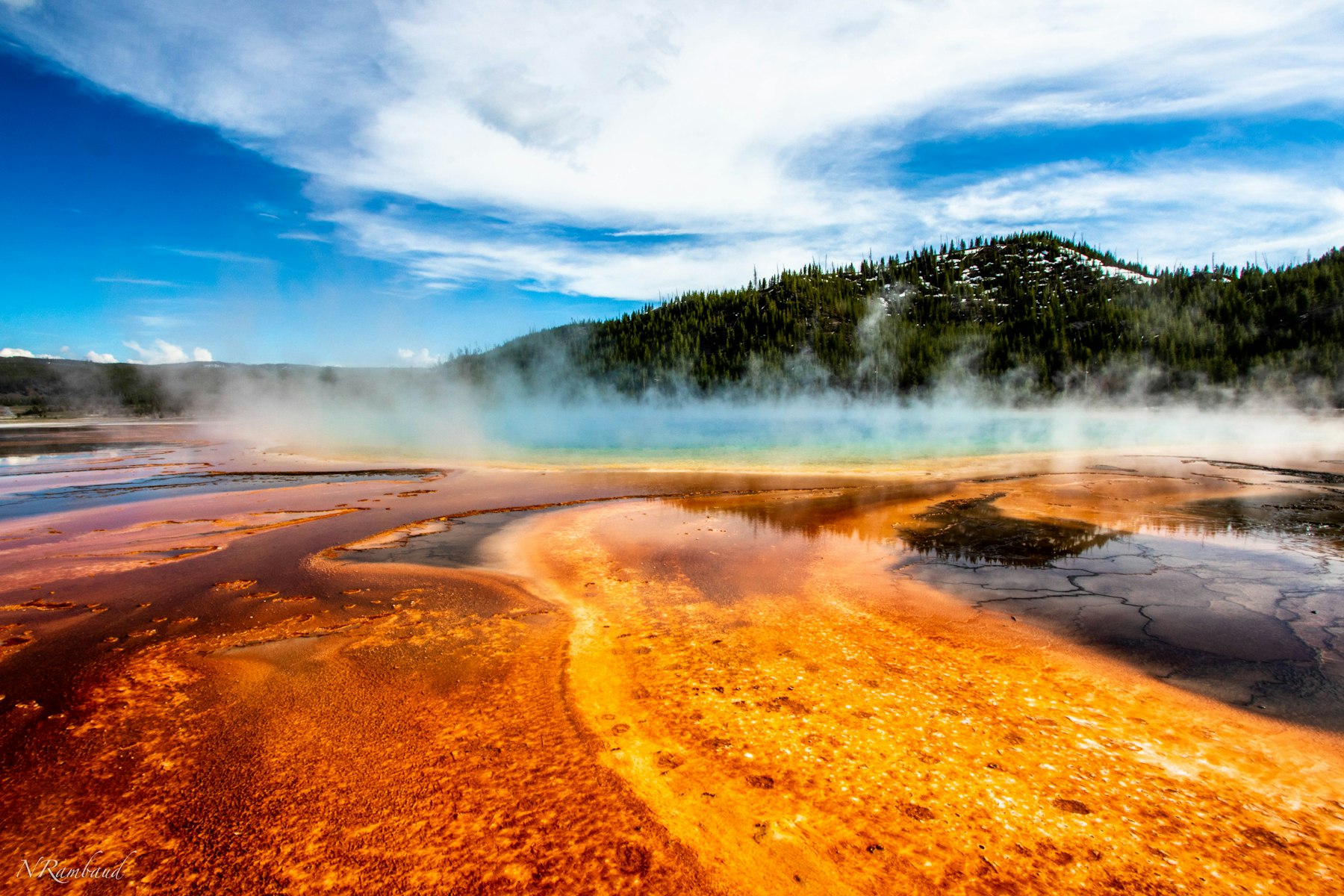
Yellowstone holds more than 10,000 hydrothermal features. The ground here is genuinely thin in places, and that is not a figure of speech
Yellowstone With Kids — Everything We Know
“Most families give Yellowstone two days. The road through it is a figure eight and the drive between two of its best bits is an hour on its own. Two days is not a visit. It is a car journey with scenery.”
I have not been to Yellowstone, and I am going to say that once, clearly, at the top. We drove a long loop of the United States in 2017 with all three children in the back and Wyoming was the state we cut. I have regretted it since. So nothing on this page is me telling you what the light was like at Artist Point. It is me doing the job I actually get paid for, which is reading the primary source properly and turning it into decisions you can make at a kitchen table.
Here is what changed my mind about how to write this. Yellowstone is the park people most consistently underestimate, and they underestimate it in a specific way. They think of it as a place, and it is a road system. Two point two million acres with one figure of eight road running through the middle, and the distance between the geysers and the wolves is most of a morning. Families book two nights, drive four hundred miles inside the park, see everything through a windscreen and come home saying it was crowded. It was not crowded. It was too big for the time they gave it.
The other thing I will not soften. People die in the thermal areas. The Park Service says plainly that burns from thermal features are a common cause of serious injury and death in the park, and the water at the Old Faithful vent has been measured at 204 degrees Fahrenheit. That is a sentence I want every parent to read before they arrive, not after. The Wyoming state guide carries the wider picture, the road calendar and the new fee arithmetic. This page is the park itself, in detail.
Yellowstone Place by Place
Eight places, and the order matters less than the geography. The first four sit on the lower loop and are thermal. The next two are the northern half and are wildlife. Learn which loop a thing is on before you book a bed, because that single fact decides if your week is calm or if you spend it driving.
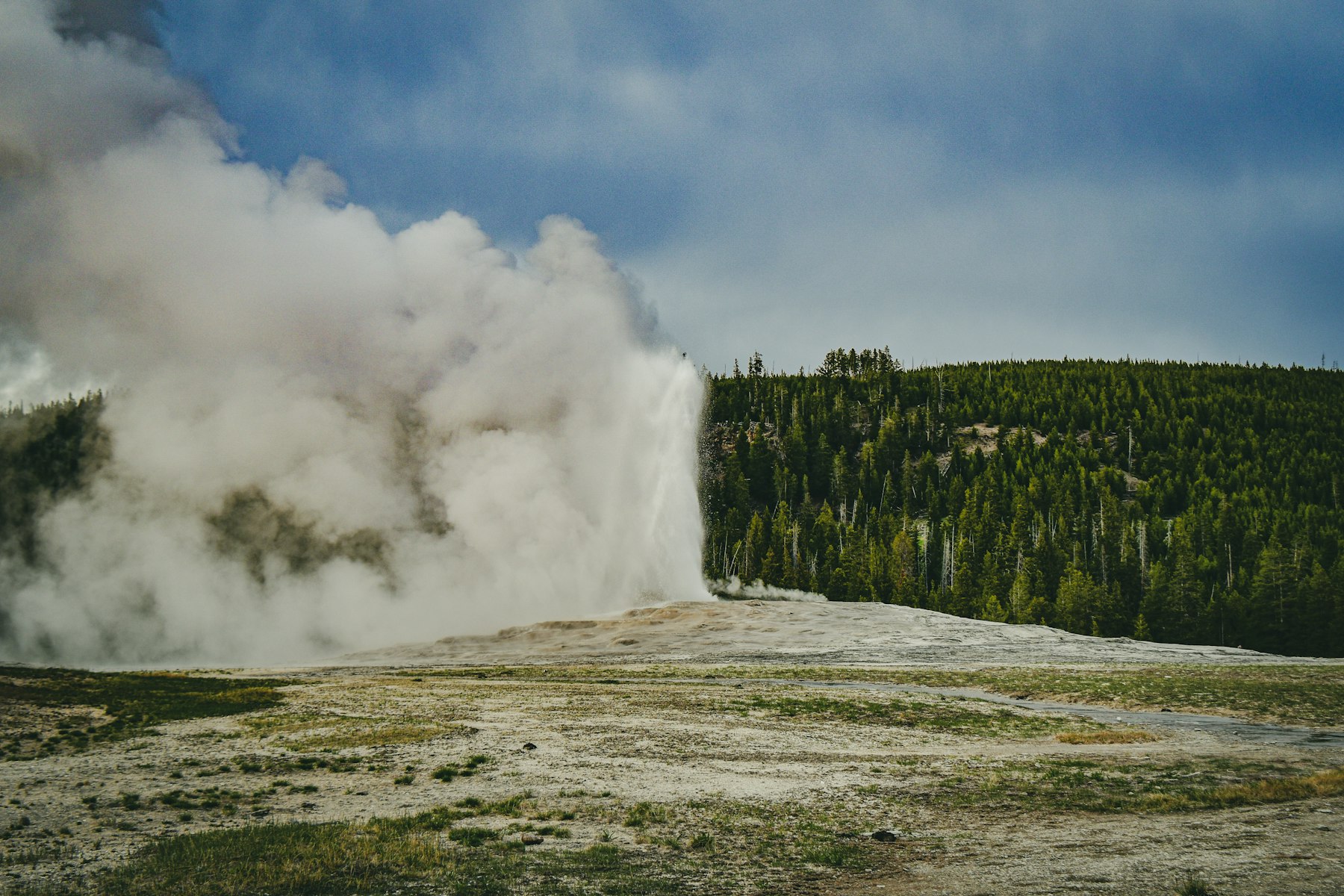
Old Faithful
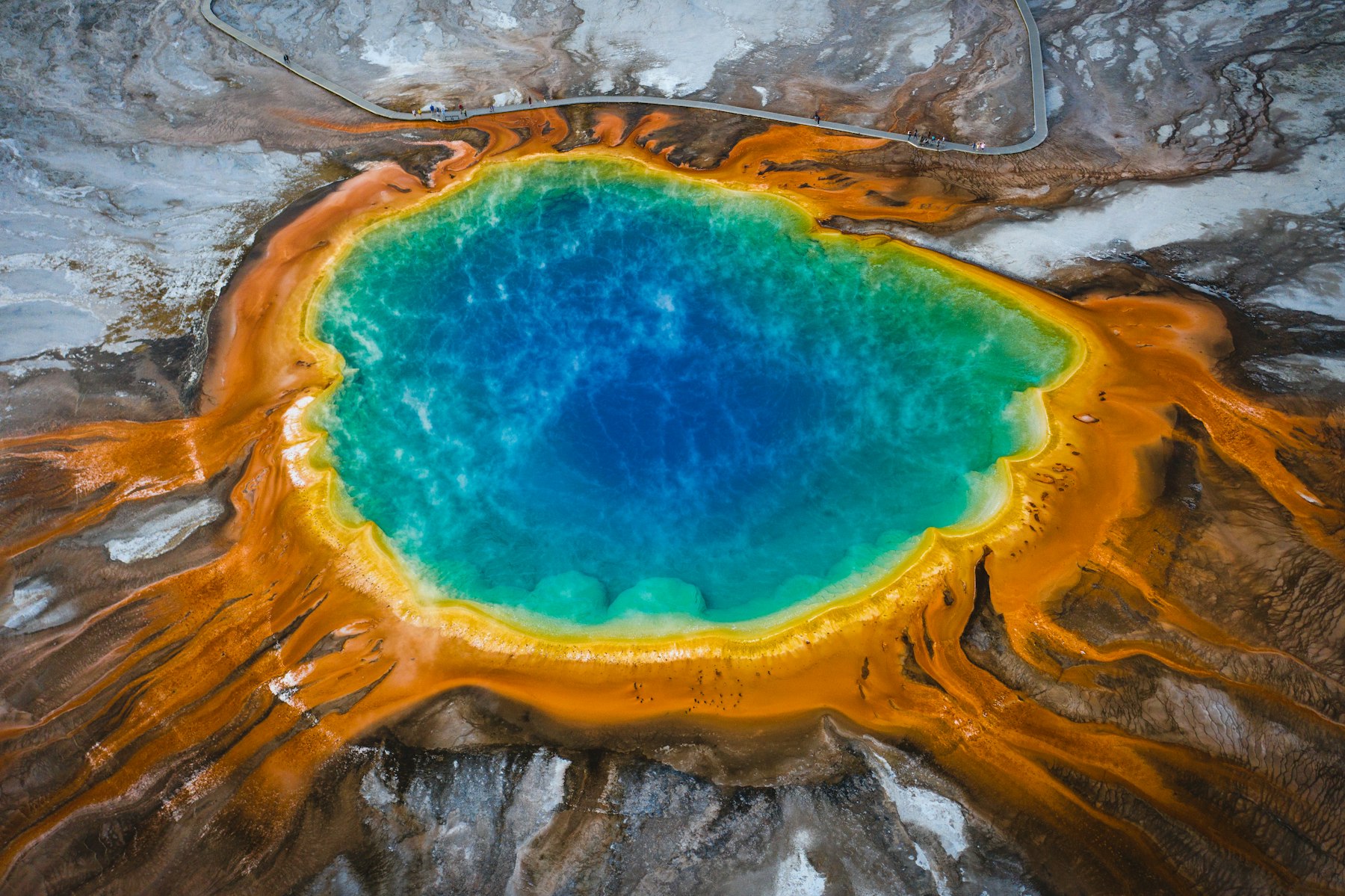
Grand Prismatic
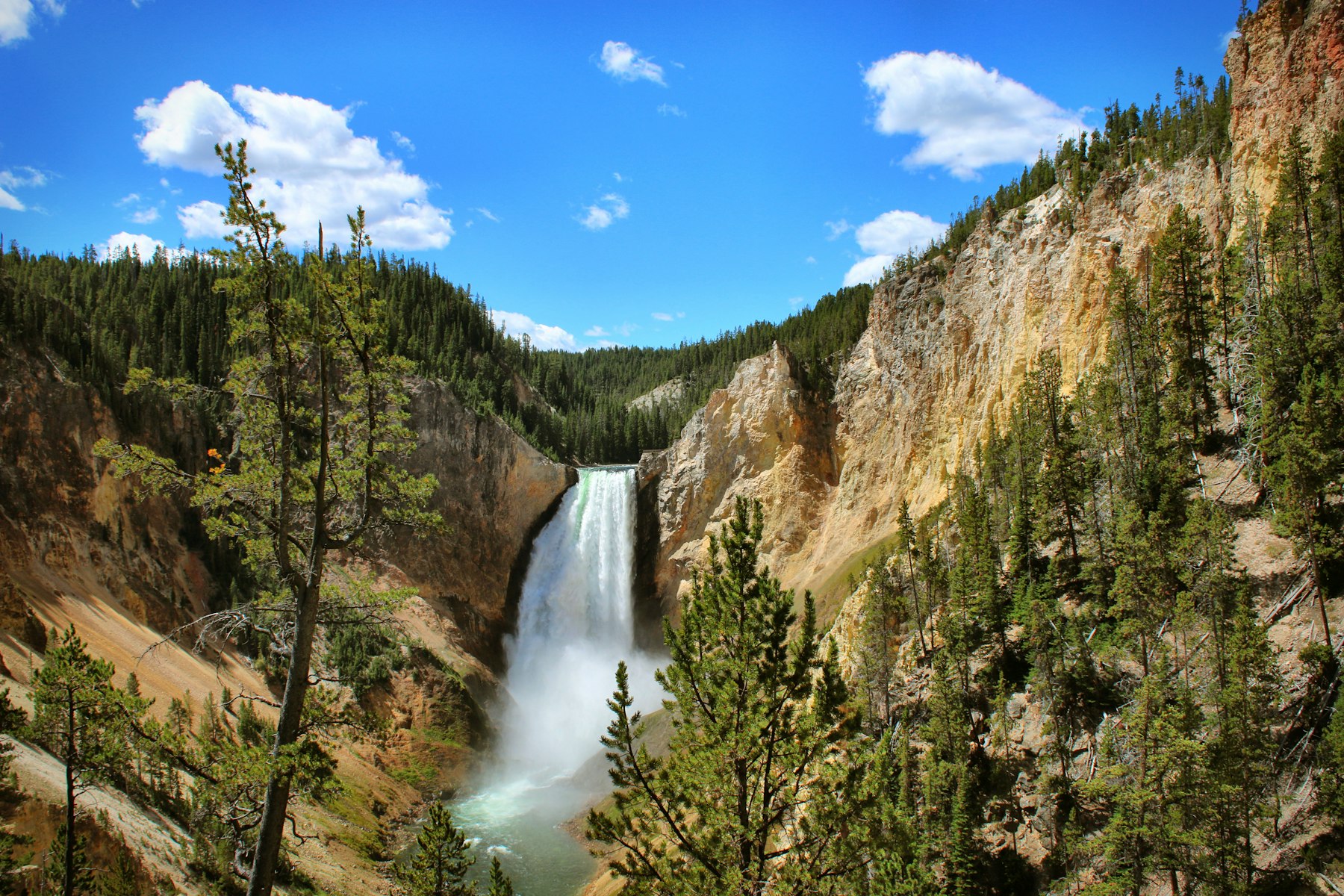
Grand Canyon of the Yellowstone
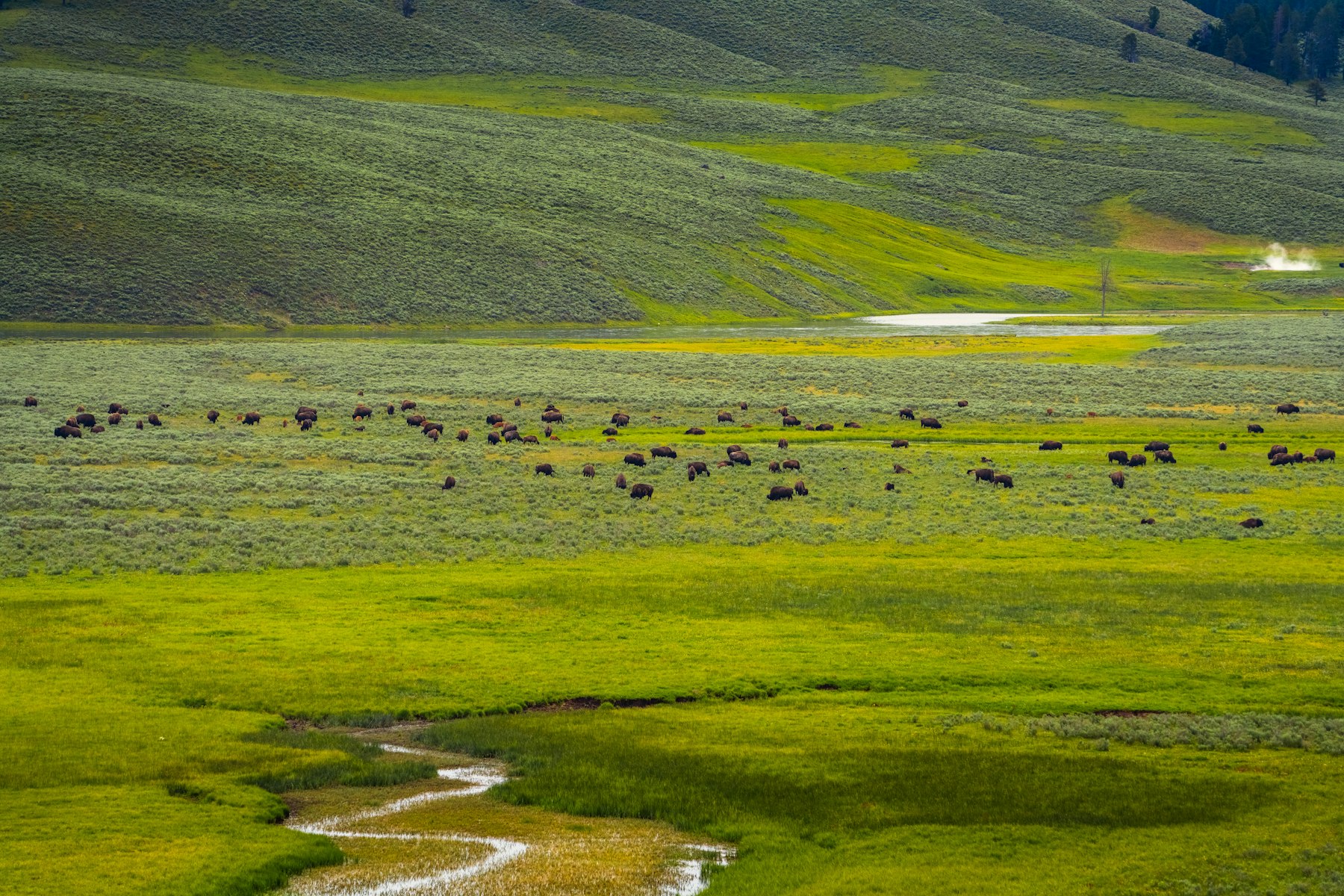
Lamar Valley

Mammoth Hot Springs

Hayden Valley
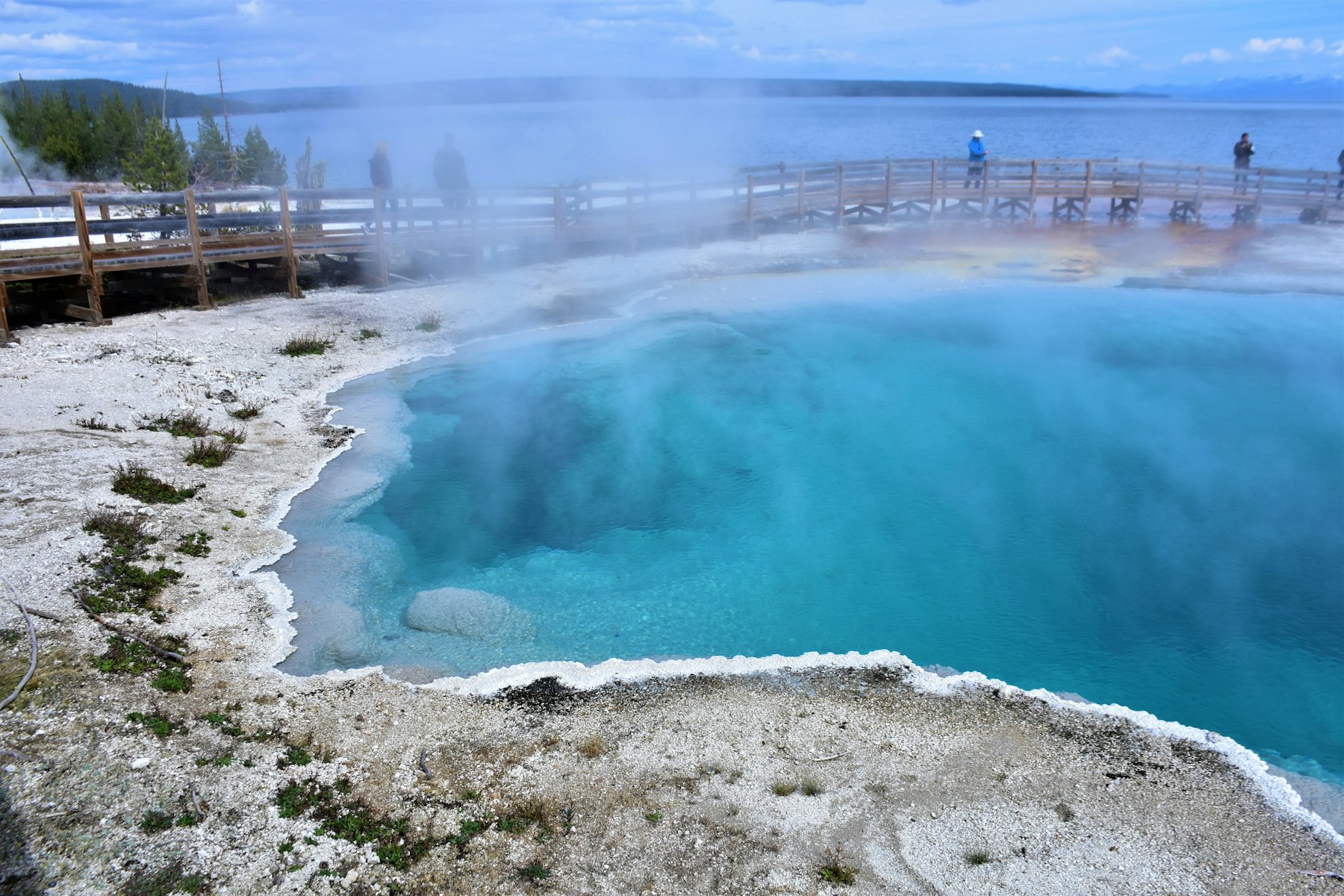
West Thumb

Norris Geyser Basin
If you only have three days, take 01, 02, 03 and 04 and leave the rest for a second trip. Those four are the park at its most different from anywhere else on earth, and they split neatly into two thermal days and one wildlife morning.
Must See and Do
Six things, named, with what they cost where a cost exists. Most of the best of Yellowstone is included in the entrance fee, which is unusual and worth saying out loud.
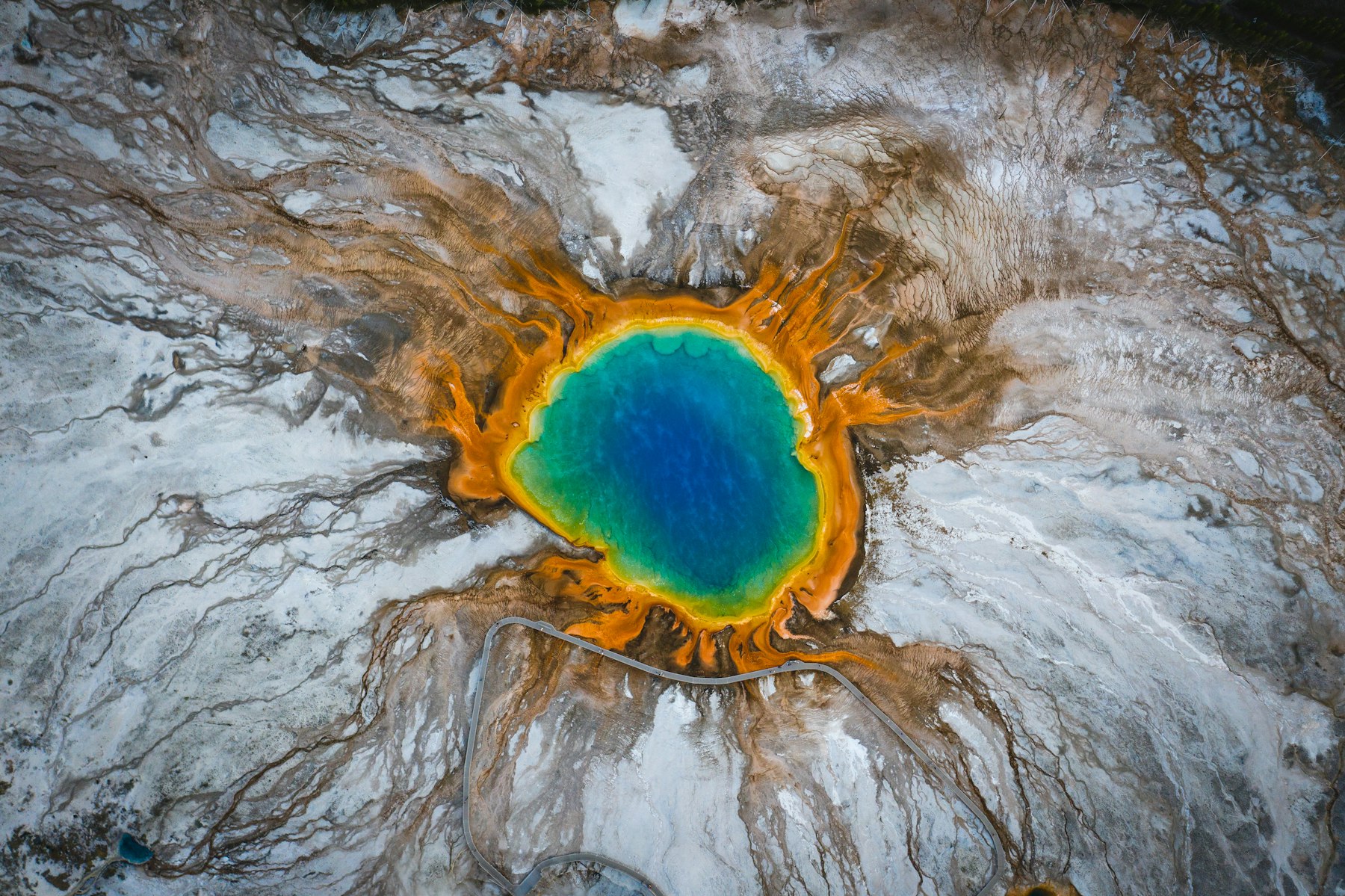
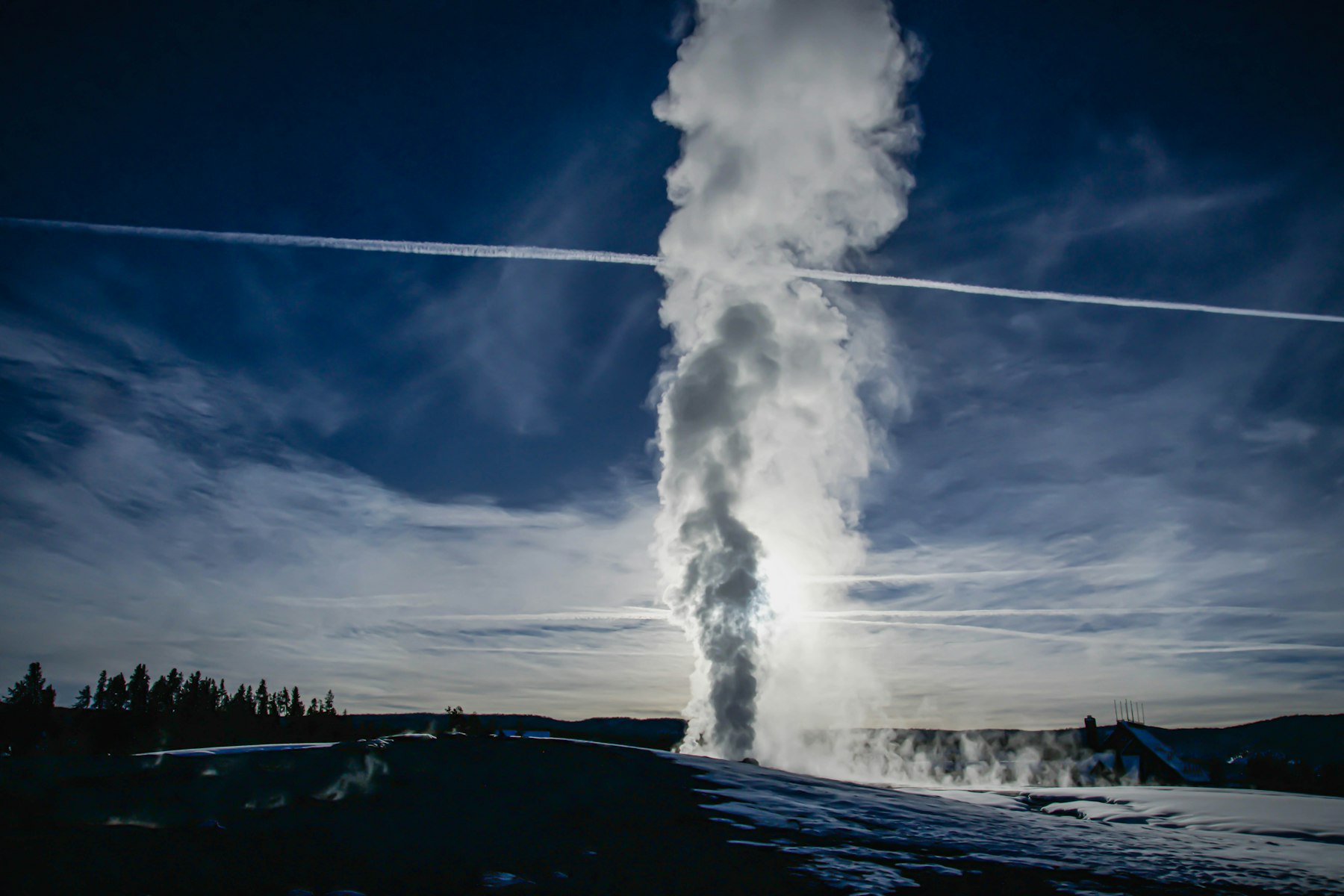
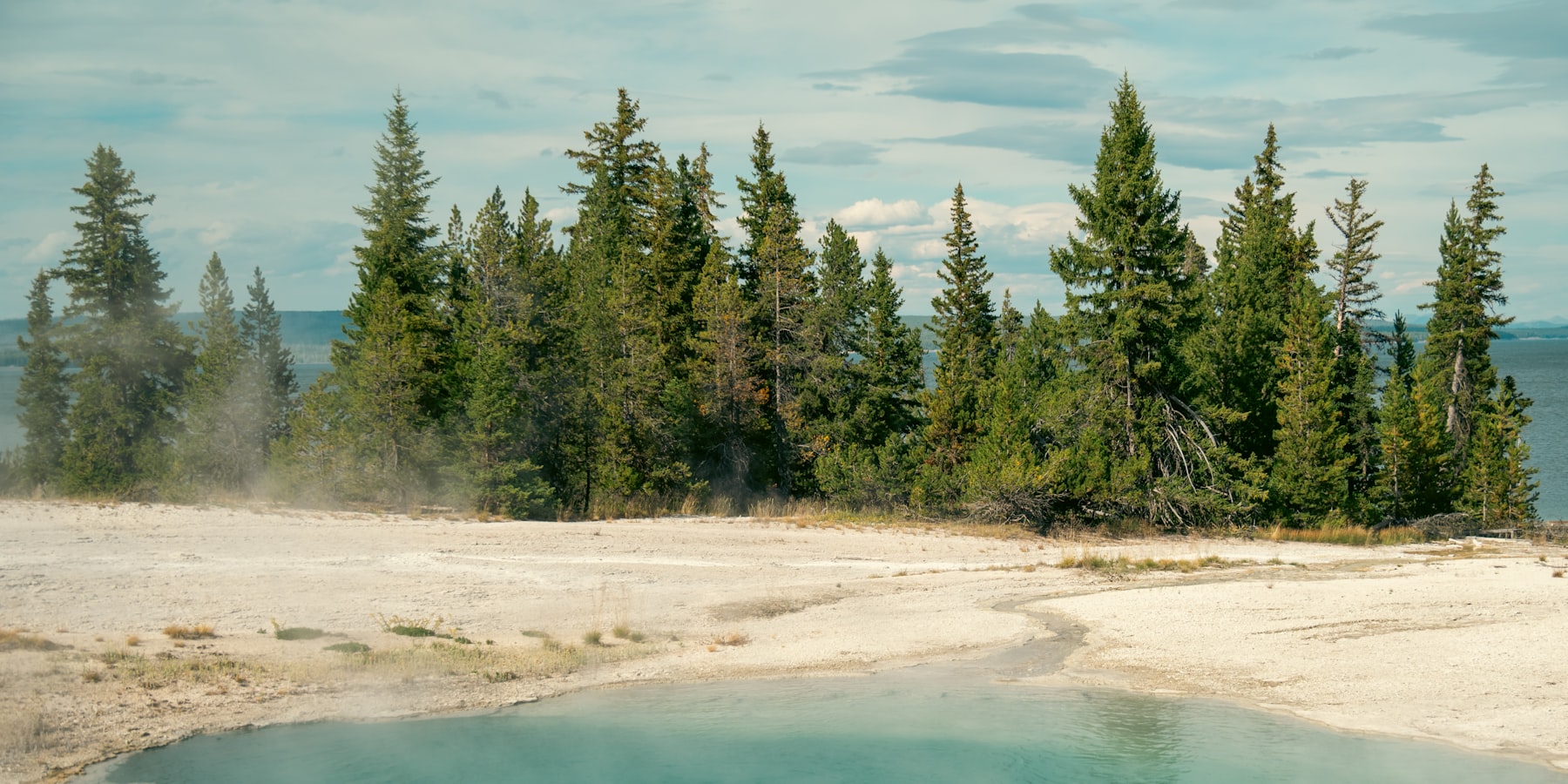
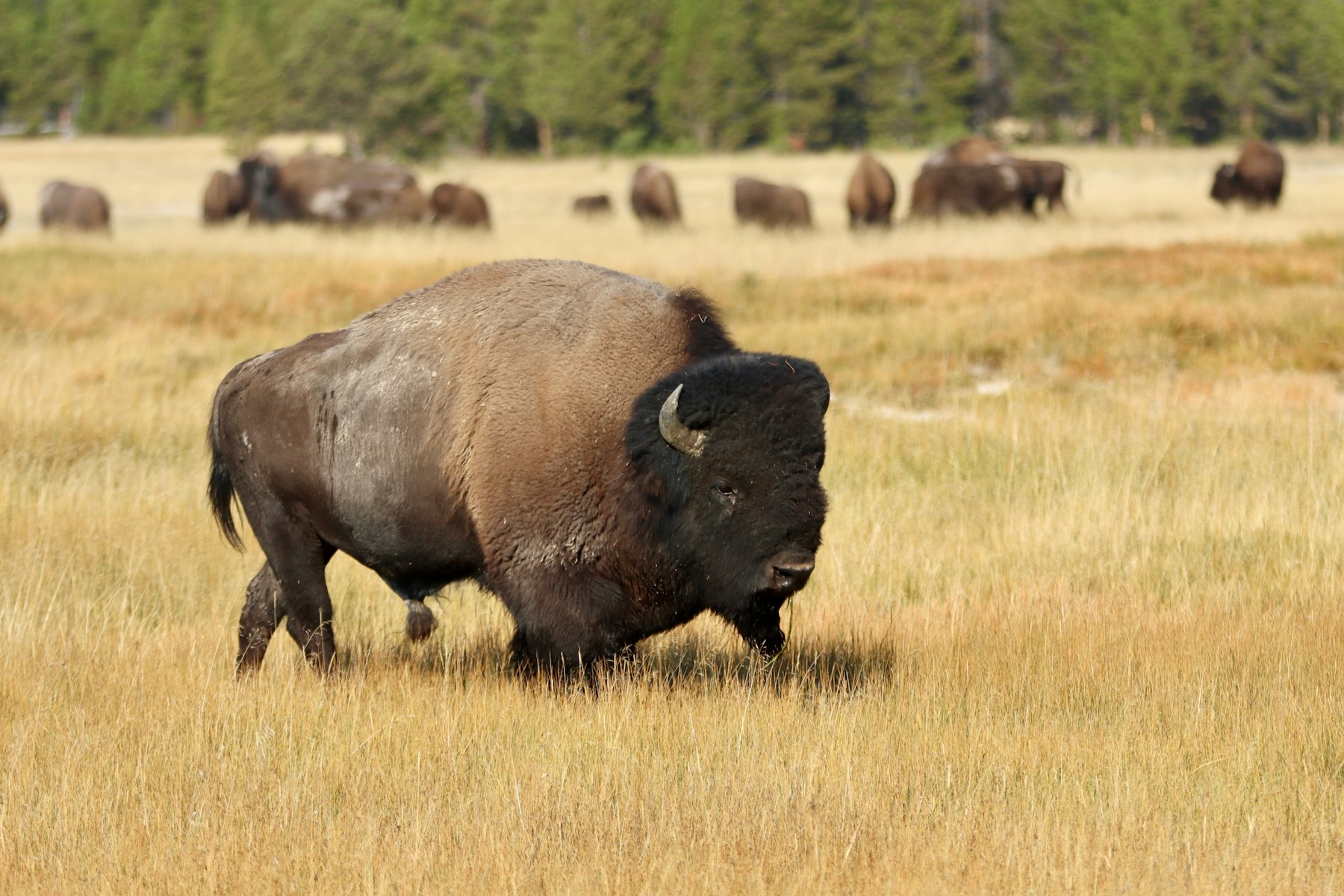

The boardwalk is not a suggestion or a scenic route. It is the only ground anyone has checked. The crust beside it can be a thin shell over water hot enough to kill
The Figure Eight, and How Many Days It Honestly Takes
Yellowstone is 2.2 million acres and it is served by one road in the shape of a figure of eight. Every planning mistake families make here comes from not understanding that shape before they book.
The road is two loops joined in the middle, not a circle. The upper loop runs Mammoth to Tower to Canyon to Norris and back to Mammoth. The lower loop runs Norris to Canyon to Fishing Bridge to West Thumb to Old Faithful to Madison and back to Norris. Canyon and Norris are the pinch points where the two loops meet. That means you can drive one loop in a day, but you cannot drive both in a day, and a bed in the wrong loop costs you two hours every morning before you have seen anything.
The drive times are the real constraint, and they are longer than the map suggests. East Entrance to Lake Village is 60 minutes. Canyon Village to Tower Junction is 50 to 60. Northeast Entrance to Tower Junction is 60. Mammoth Hot Springs to Norris is 45. South Entrance to Grant Village is 50. None of those include a wildlife jam, and in July most of them will have one. Add a third again to every number between 10am and 4pm.
Three days is the honest minimum and five is the number I would actually book. One day for the geyser basins on the lower loop. One day for the canyon and Hayden Valley. One early morning for Lamar and the northern range. That is three, and it is tight, and it assumes you slept inside the park. Four gives you a rest day, which with children under ten is not a luxury. Five lets you do a morning twice, and doing a place twice is how you actually see it.
Do not try to add Grand Teton to a three day Yellowstone trip. They are next door and they are separate parks with separate gates and separate fees. The Park Service is explicit that each park charges its own entrance fee. Going south through Yellowstone towards Jackson takes you through Grand Teton whether that was the plan or not. If both parks are on the list, that is a seven night trip, not a four night one.
The park is open 24 hours a day, 365 days a year, and the hours nobody uses are the good ones. Roads open at 8:00 a.m. on the first day of the season, but once a road is open it stays open through the night. Between about 6am and 9am the boardwalks are close to empty, the animals are moving and the light is worth the alarm. By eleven the Grand Prismatic car park is full and stays full. The single highest return decision on this whole page is getting up early.
Which Entrance to Use, and Where to Sleep
There are five main entrances into three states, and only one road inside the park is open all year. Picking the wrong gate for your dates is the most expensive mistake available, because it is the one you cannot fix once you have flown.
Only one road runs year round, and it is in Montana. The Park Service is specific. The road from the North Entrance at Gardiner, Montana, through the park to Cooke City, Montana, via Tower Junction is the only road generally open year round to regular vehicles. Everything else closes. If your trip falls outside roughly May to October, that road is your entire park and you should plan around it rather than hoping.
The seasonal roads open in stages through spring, not all at once. The west side comes in around 17 April, the east side around 1 May, the south side around 8 May and the high passes around 22 May. Closing runs the other way, with the high passes going first around 12 October and the rest around 31 October. All of it moves with the snow, so treat the dates as the plan and check the road status page in the week before you fly. Booking a south entrance arrival for late April is how people end up driving three extra hours.
The Beartooth Highway is a separate calendar and it is worth knowing about. US-212 from Cooke City to Red Lodge, Montana, opens the Friday of Memorial Day weekend and runs to mid October. It is one of the great drives in the United States and it feeds the Northeast Entrance, which is the gate for Lamar Valley. If wolves are the reason you are coming, this is your road, and it is shut for more of the year than it is open.
Sleep inside the park if you possibly can, and book absurdly early. The booking window for the lodges is 13 months and it opens in monthly blocks, which means the good rooms for next July go while you are still on this year’s trip. Old Faithful Inn runs May to mid October. Canyon Lodge runs mid May to late October. Lake Yellowstone Hotel mid May to early October. Roosevelt Lodge Cabins are the short season at early June to early September. Mammoth Hot Springs Hotel and Old Faithful Snow Lodge are the two that stay open year round, with a closure in March and April. Reservations go through 307-344-7311.
Camping is the cheap way in and the booking rule is different. You can book a campsite exactly six months before the date of your stay, which is a completely different window from the lodges and catches people out. Madison runs 1 May to 17 October at 276 sites and 38 dollars plus tax. Bridge Bay is 431 sites at 38 dollars, 15 May to 13 September. Canyon is 272 sites at 45 dollars, 29 May to 19 September. Mammoth has 82 sites at 25 dollars and is the only one open year round, going first come first served from 15 October to 1 April. Fishing Bridge RV Park is the expensive outlier at 94 dollars plus tax. Pebble Creek is closed for flood recovery.
If the park is full, pick your gateway town by which loop you want. West Yellowstone puts you nearest Madison and the geyser basins. Gardiner puts you at the North Entrance and the year round road, which is the right base for Lamar and the northern range. Cooke City is the far end of that same road. Jackson is beautiful and it is on the wrong side of Grand Teton for a Yellowstone morning. Choosing a town for its restaurants rather than its loop is the classic error.
Thermal Safety With Children, Said Plainly
I am going to be blunt in this section because softening it would be the wrong kind of kindness. People are badly burned and people die in these features, and almost every case involves leaving the boardwalk. Read this bit out loud in the car before you park.
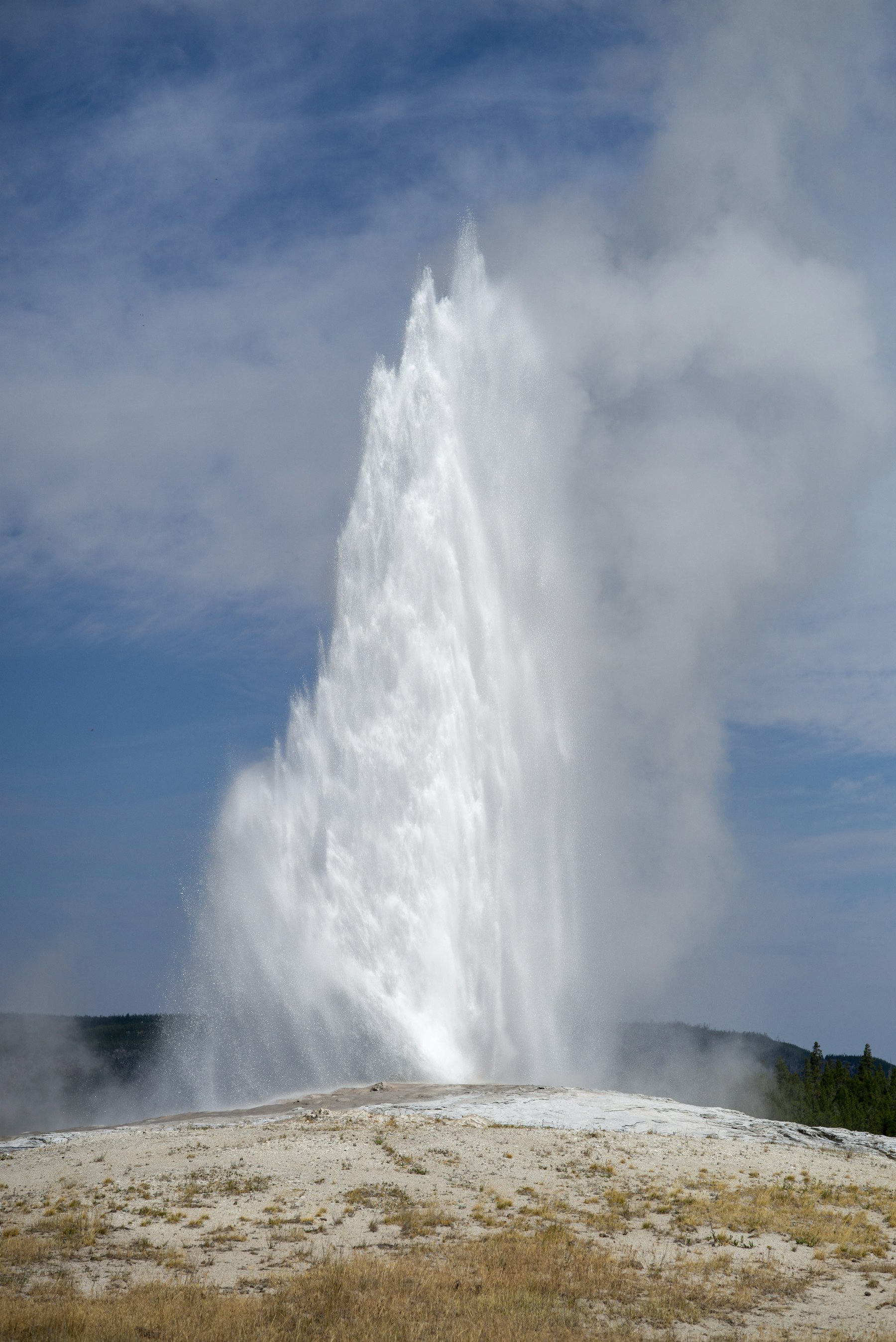
The Park Service states that burns from thermal features are a common cause of serious injury and death in the park. Not a rare freak event. Common. The water at the Old Faithful vent has been measured at 204 degrees Fahrenheit during an eruption, and the deepest circulating water in the system exceeds the surface boiling point of 199 degrees. There is no version of falling in that ends well, and there is no lifeguard.
Stay on the boardwalk, and understand why the rule exists. The crust either side of the boardwalk can look like solid pale ground and be a thin shell with superheated water underneath. It gives way under weight. That is exactly the surface a six year old will step onto to get a better photograph of a pool, because it looks like a path. The boardwalk is the only ground anyone has tested.
Do not touch the features or the runoff, and do not get in. Swimming or soaking in the hot springs is prohibited outright. The runoff channels that trickle across the flats look shallow and harmless and are not. Small children put hands in water. That is what small children do, which is why this needs saying before you are standing next to it rather than while you are.
Pets are prohibited in thermal areas. If Poppy were coming with us this alone would reshape the day, because it means somebody sits in the car at every single basin. Plan the dog out of a Yellowstone trip rather than planning around them. It is the honest answer and it saves a lot of arguing at the trailhead.
The practical rule I would actually use with three children. One adult per small child on any boardwalk with no railing, hand held, on the inside. Do the talk in the car park, not on the walk. Give the biggest child the job of counting the smallest, which sounds gimmicky and genuinely works. And accept that you will do fewer basins than you planned, because doing them properly is slower.
There are more than 10,000 hydrothermal features here and more than 500 geysers, more than anywhere else on earth. That abundance is exactly the risk. After the fourth basin the novelty wears off and attention drops, and the fifth basin is as dangerous as the first. The moment your family stops being impressed is the moment to tighten up, not relax.
Wildlife Jams, and the 100 and 25 Yard Rules
Two numbers to memorise. One hundred yards from bears, wolves and cougars. Twenty five yards from bison and elk. They are not guidance, they are the rule, and the animal that hurts the most people here is not the one you would guess.
Bison have injured more people in Yellowstone than any other animal. The Park Service says it in those words, and adds that they may appear tranquil. They weigh close to a tonne, they can outrun you comfortably, and they are standing calmly beside the road looking like farm animals. That combination is the problem. Twenty five yards is roughly two school buses end to end. If you are close enough for a phone photograph without zoom, you are too close.
One hundred yards for bears, wolves and cougars, and that is a full football pitch. Nobody gets a good phone photograph of a bear at 100 yards and that is rather the point. Bring binoculars or a long lens or accept that you are looking, not shooting. Pelican Valley is described by the Park Service as some of the best grizzly bear country in the lower 48 states, which is a reason to go there with care and not a reason to go there casually with a four year old.
The wildlife jam is a Yellowstone institution and it will eat your schedule. A single bison on the road stops traffic in both directions for as long as it feels like standing there. This is why every drive time on this page needs padding. Stay in the car, do not get out to photograph across the road, and pull fully into a pullout if you are stopping. Half a car in the lane is how the jam becomes an hour instead of ten minutes.
Binoculars change this trip more than any other single purchase. One cheap pair per child, not one good pair shared. The distance rules mean most of the wildlife you see will be far away, and a child with their own binoculars stays engaged for an hour in a valley where a child without them is bored in four minutes. This is the highest return twenty pounds you will spend on the trip.
Never approach, never feed, and never get between anything and its young. Spring is calving season and a cow bison with a calf is a different animal from the one grazing in September. If an animal changes its behaviour because of you, whether that is looking up, moving away or turning towards you, you are already too close and the fix is to back off, not to freeze and take one more photograph.
Lamar Valley, and the Only Hours That Work
Lamar is the reason people who have been to Yellowstone go back to Yellowstone. It is also the place most first timers drive through at two in the afternoon, see nothing, and write off. The difference is entirely the clock.
First light and last light. Everything else is a scenic drive. Predators move at dawn and dusk and bed down in the heat. If you arrive in Lamar at 6am you are in with a real chance of wolves, bears, pronghorn and a valley floor covered in bison. If you arrive at 1pm you will see bison and a lot of grass. Same valley, completely different trip, and the only variable is what time the alarm went off.
Lamar sits on the one road that never closes, which makes it the winter and shoulder season answer. The Northeast Entrance to Tower Junction is 60 minutes and that stretch is the year round road. When the rest of the park is shut in March, this is still drivable. Winter is genuinely the best wolf watching of the year because the animals are visible against snow and they are lower down.
Base at Gardiner or Cooke City, not at Old Faithful. Canyon Village to Tower Junction is 50 to 60 minutes before you have even started up the valley. From a lower loop bed, a dawn in Lamar means leaving at 4am with three children, and that is a thing people plan and then do not do. From Gardiner it is a manageable early start. This is the single clearest example on this page of the bed deciding the trip.
Watch the people, not just the animals. A cluster of spotting scopes on tripods in a pullout means something is out there right now, and the wolf watchers who stand there every morning are generous with a look through the eyepiece if you are polite and quiet. That is the fastest route to your children actually seeing a wolf. Park properly, do not slam doors, and ask.
Nearby short walks if you want to get out of the car. Lost Lake from the Tower area is one to two hours on the Park Service estimate. Trout Lake and the Yellowstone River Picnic Area trail are both short northern range options. Slough Creek Campground has 16 sites at 20 dollars and runs 15 June to 12 October, and it is about as close as a tent gets to the wolves.
Boardwalks That Suit Small Legs
The Park Service publishes time estimates rather than mileage for most of these, which is honestly more useful with children. Here is the whole park sorted by how long a family will actually be out of the car.
Thirty to sixty minutes, the ones that always work. West Thumb Geyser Basin Trail at 30 to 60 minutes is flat, on the lake, and the best short basin in the park. Mammoth Hot Springs Trails run 30 to 90 minutes. Pelican Creek Nature Trail is a 30 to 60 minute loop to the lake shore. Wraith Falls is 30 to 60 minutes for an actual waterfall. Forces of the Northern Range is a 30 to 60 minute self guided trail and it is the one I would use to teach the geology without a lecture.
One to two hours, for children over about six. Mud Volcano Trail is a one to two hour loop and it is the smelliest, most theatrical thermal area in the park, which is exactly why children love it. It also runs in all four seasons. Storm Point is one to two hours. Natural Bridge is one to two hours. The Grand Prismatic Overlook is one to two hours and it is the one on this list I would not skip.
Two hours and up, for older children only. Bunsen Peak is two to three hours. Beaver Ponds Loop is two to five. Elephant Back Mountain is two to three. Riddle Lake is two to four. Yellowstone Lake Overlook is one to three. Osprey Falls is four to six and Sepulcher Mountain is six to eight, and neither belongs on a family trip unless your teenagers actually walk.
The one to leave alone. Avalanche Peak is described by the Park Service as one of the most strenuous day hikes in the park at three to four hours. Pelican Valley is three to four hours through prime grizzly country. Both are real hikes in real bear country and neither is a family outing, whatever the view is like.
Plan the day around basins, not miles. Two thermal basins in a morning is a good day with young children. Three is pushing it. Four is how you end up carrying somebody back to the car while the others argue. Pack more water than feels sensible, because the elevation is high and dry and children do not notice they are thirsty until they are miserable.
Money, and the 100 Dollar Question
The 2026 fee change matters more to families holding a foreign passport than anything else on this page, and there is a piece of arithmetic in it that almost nobody has spelled out. Every figure here is off the Park Service fee page.
The standard gate prices. A private vehicle is 35 dollars and covers the car and everyone in it for seven consecutive days. A motorcycle is 30 dollars for seven days. On foot or by bicycle it is 20 dollars per person aged 16 and over. A Yellowstone Annual Pass is 70 dollars and runs a year from the month you buy it. Children under 16 are free at the gate on every one of those.
The non resident surcharge, in the Park Service’s own words. Each non US resident aged 16 and older visiting Yellowstone must pay a 100 dollar nonresident fee in addition to the standard entrance fee, unless admitted with an Annual or America the Beautiful Pass. Photo ID is checked. The America the Beautiful annual pass is 80 dollars for residents and 250 dollars for non residents.
Here is the arithmetic, and please check it at the gate before you rely on it. Take a family from outside the United States with two adults and three children under 16. Paying at the gate is 35 for the car plus 100 each for the two adults, so 235 dollars for Yellowstone. Grand Teton charges its own fee, so doing both the usual way is 470. The exemption wording means a 250 dollar non resident America the Beautiful pass should cover both parks and remove the surcharge. That is a difference of over 200 dollars on a two park trip, and it is the single most valuable line on this page for an international family.
The 2026 fee free days, which are free entry and not free parking. 16 February, 25 May, 14 June, 3 to 5 July, 25 August, 17 September, 27 October and 11 November. Three of those fall in the busy season and all three will be heaving. A fee free day in Yellowstone in July saves a family 35 dollars and costs them two hours in traffic, which is a bad trade.
What you will actually spend inside the park. Lodging is the big number and it is fixed by the concessioner. Campsites run 20 to 45 dollars a night with Fishing Bridge RV Park at 94. Fuel inside the park is dearer than in the gateway towns, so fill up in West Yellowstone or Gardiner. Mobile signal is poor to absent across most of the park, so download your maps and do not plan on paying for anything with an app.
What Is Open When
Yellowstone is open 24 hours a day, 365 days a year. That sentence is true and it is also the most misleading fact about the park, because what is open is not the same as what is reachable.
November to April is the year round road and nothing else. Gardiner to Cooke City via Tower Junction stays open to cars. Everything else is snow. The interior becomes accessible only by snowcoach and snowmobile, Mammoth Hot Springs Hotel and Old Faithful Snow Lodge stay open with a closure in March and April, and Mammoth Campground goes first come first served from 15 October to 1 April. It is a genuinely wonderful trip and it is a completely different holiday from the summer one.
Late April to May is the opening sequence and it is the value window. Roads come back in stages from around 17 April through to the high passes around 22 May. Bear cubs and bison calves are out. Lodges open through May. Prices and crowds are both well below July. The risk is that a road you needed is still shut, which is why you check the status page in the week before you travel rather than trusting a plan made in January.
July and August are everything open and everyone there. Every road, every lodge, every campground, and Yellowstone sits in the top five national parks for visitors. Car parks at Grand Prismatic and Old Faithful fill by mid morning. If this is your only window, the fix is not to avoid the famous places, it is to do them between 6am and 9am and rest in the middle of the day.
September to mid October is what I would book if the school calendar allowed it. The elk rut, cooler days, thinner crowds and most facilities still running. Watch the closing dates carefully because they stack up fast. Roosevelt Lodge Cabins close in early September. Bridge Bay Campground closes 13 September. Canyon Campground closes 19 September. The high passes go around 12 October and most roads close around 31 October.
Two closures worth knowing about specifically. Pebble Creek Campground is closed for flood recovery. The Beartooth Highway runs only from the Friday of Memorial Day weekend to mid October, so the scenic approach to the Northeast Entrance is unavailable for more than half the year. Neither is on most itineraries until the day somebody drives to one.
Who It Suits, Who Should Skip It, and What Surprises People
Yellowstone is not a park that works for everybody, and I would rather say so than sell somebody a week they will not enjoy.
It suits families with children roughly six and up who will walk. That is the age where the boardwalk rules stick, where an hour in a valley with binoculars is interesting rather than torture, and where the geology lands as genuinely amazing rather than as a smell. It suits anybody who will get up at 5am. It suits people who want one big place rather than six small ones.
It suits a second American trip better than a first. Families who have already done a US road trip know how long these distances feel from the back seat. Yellowstone rewards that experience. As a first taste of the country with small children it is a lot of driving and a lot of rules.
Skip it with a toddler and a pushchair, and skip it with a dog. Pets are prohibited in the thermal areas, which removes most of the park. Boardwalks with unrailed edges over water hot enough to kill are the wrong environment for a child who runs. Grand Teton, or the Black Hills, or a lake, will give you a better week at that age and Yellowstone will still be here.
Skip it if you have three days and want to see two parks. The honest answer is that you will see neither. Pick one, do it properly, come back for the other. I would rather lose that booking than have a family come home saying America was just driving.
What surprises first timers, in order. The smell, which is sulphur and is everywhere. The size, which nobody believes until they drive it. The altitude, which makes everyone tired and thirsty on day one. How little mobile signal there is. How cold it gets at night even in July. And how much of the very best of it, the valleys at dawn, the boardwalks, the canyon overlooks, costs nothing beyond the price of the car at the gate.
The one children always ask about. Yes, it is a volcano, and yes, the caldera is the reason all of this exists. The heat under the ground is what drives more than 10,000 hydrothermal features and more than 500 geysers, more than anywhere else on earth. Tell them that first and the whole park becomes one story instead of a series of stops.
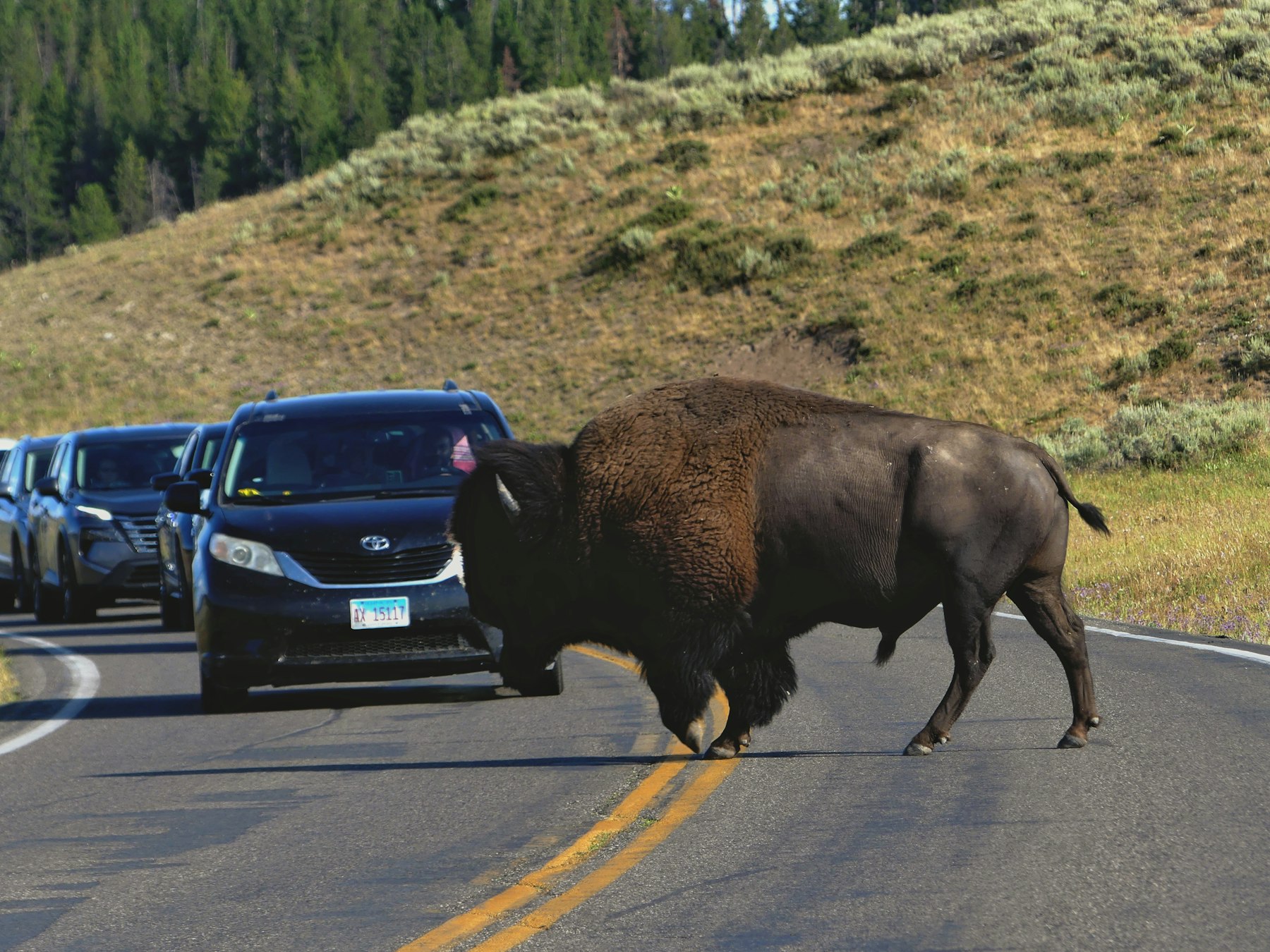
This is the traffic. It has right of way, it knows it, and every drive time on this page assumes it will happen to you at least once a day
Go Deeper
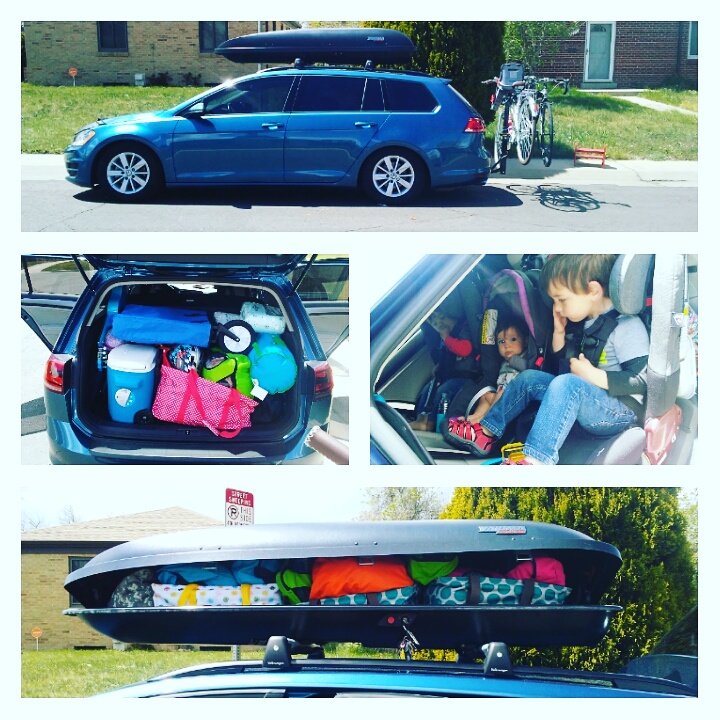
We have not written Yellowstone from the inside yet. What we have written is a long American road trip with three children in the back, which is the skill this park actually demands, and these three are the honest ones.
Pairs Well With
The state guide this page sits under, and the one to read first. It carries the wider road calendar, the Grand Teton comparison and the surcharge picture across both parks rather than just this one.
Entry rules, driving, tipping and the national park pass questions that apply everywhere. If Yellowstone is one stop on a longer American trip, start here.
The natural pairing by road and often a cheaper airport. Rocky Mountain National Park sits on the same surcharge list, so the pass arithmetic on this page applies there too.
