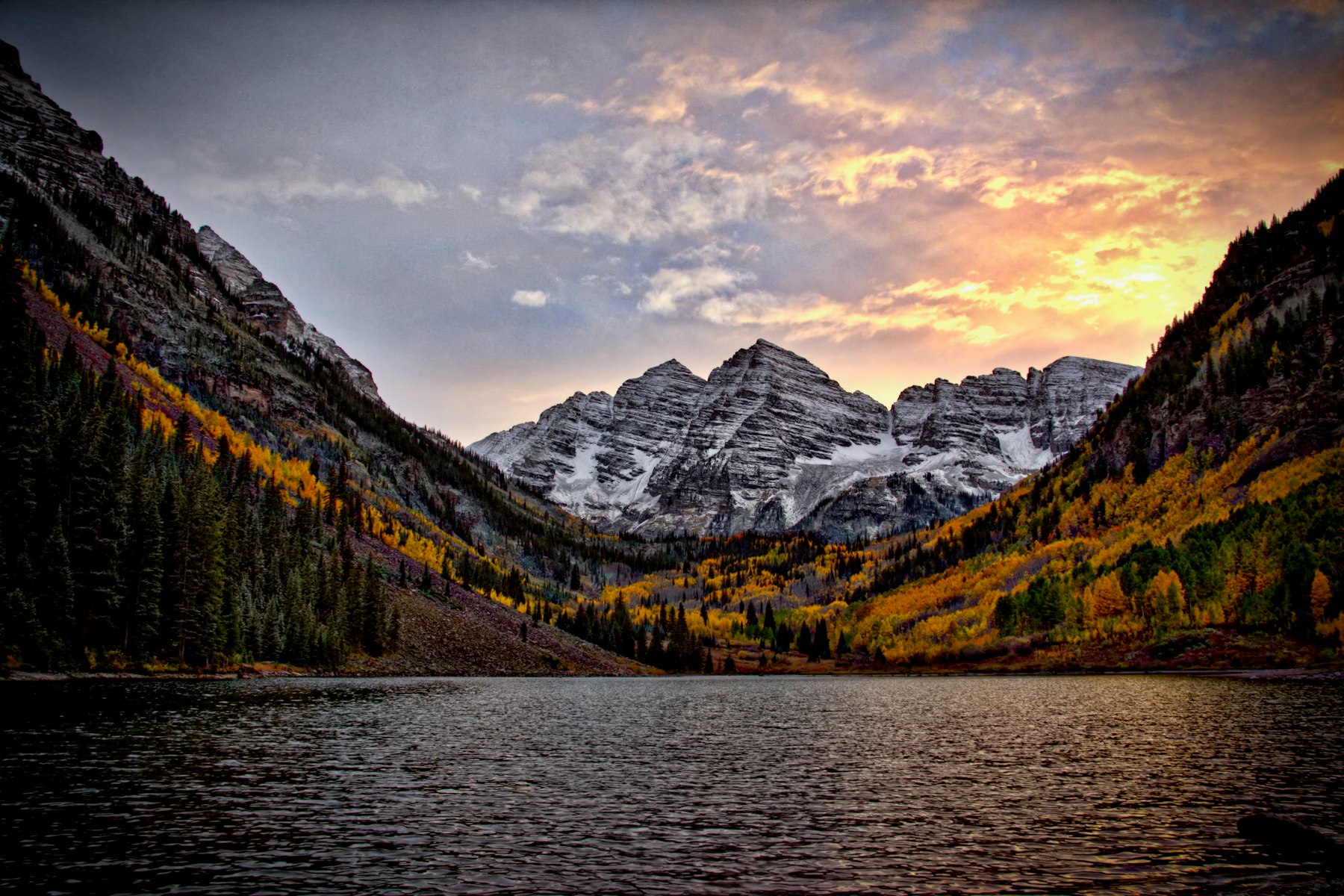
The Maroon Bells outside Aspen. Two peaks over fourteen thousand feet, and the reason half the people who visit Colorado go home and start looking at property listings
Colorado With Kids Family Travel Guide
“Colorado is not a hard place to visit. It is a hard place to arrive in, because you land already a mile above where your body expects to be, and nobody warns you.”
Nicole Damiano, ASTA Verified Travel Advisor with FG Luxury Travel
Will the altitude bother the kids?
Some of them, for a day or two. Headaches, tiredness and short tempers are the usual signs. Sleep in Denver at a mile high before going up to the mountain towns, drink more water than seems reasonable and keep the first day gentle. Most kids are fine by day two.
Is Rocky Mountain National Park doable with a stroller?
Parts of it. Bear Lake is a flat paved loop, Sprague Lake is the same, and the Alpine Visitor Center on Trail Ridge Road has a short paved walk. Timed entry permits apply in summer and the Bear Lake corridor needs its own. Go early and the elk are in the meadows.
Summer or winter?
Both work. Summer is hiking, rafting, alpine slides and mountain coasters in every ski town. Winter is skiing with some of the best kids' ski schools anywhere, plus sledding and snow tubing that suit the ones who do not ski. Fall in late September for the aspens is the sleeper season.
Where should we base?
Estes Park for Rocky Mountain. Breckenridge or Winter Park for a mountain town week within two hours of Denver. Glenwood Springs for the hot springs pool and the adventure park. Durango for the steam train and Mesa Verde. Denver itself has a great zoo, science museum and a downtown that families can walk.
What about the Durango train?
The narrow gauge to Silverton is a full day, three and a half hours each way through the canyon, with a couple of hours in Silverton in the middle. Kids under about five find it long. Older kids love the open car. Book the winter Polar Express version months ahead.
Nicole’s Perspective
Why families hire me for Colorado

Adam and I lived in Denver for a stretch once, an apartment a few blocks from City Park, and Colorado gets into you differently once you have lived at altitude rather than just visited it.
One car in five here really is a Subaru, and that tells you everything about how the whole state orients itself around getting outside. Winter Park is where I first stood on skis, badly, on the bunny slope, and fell in love with it anyway.
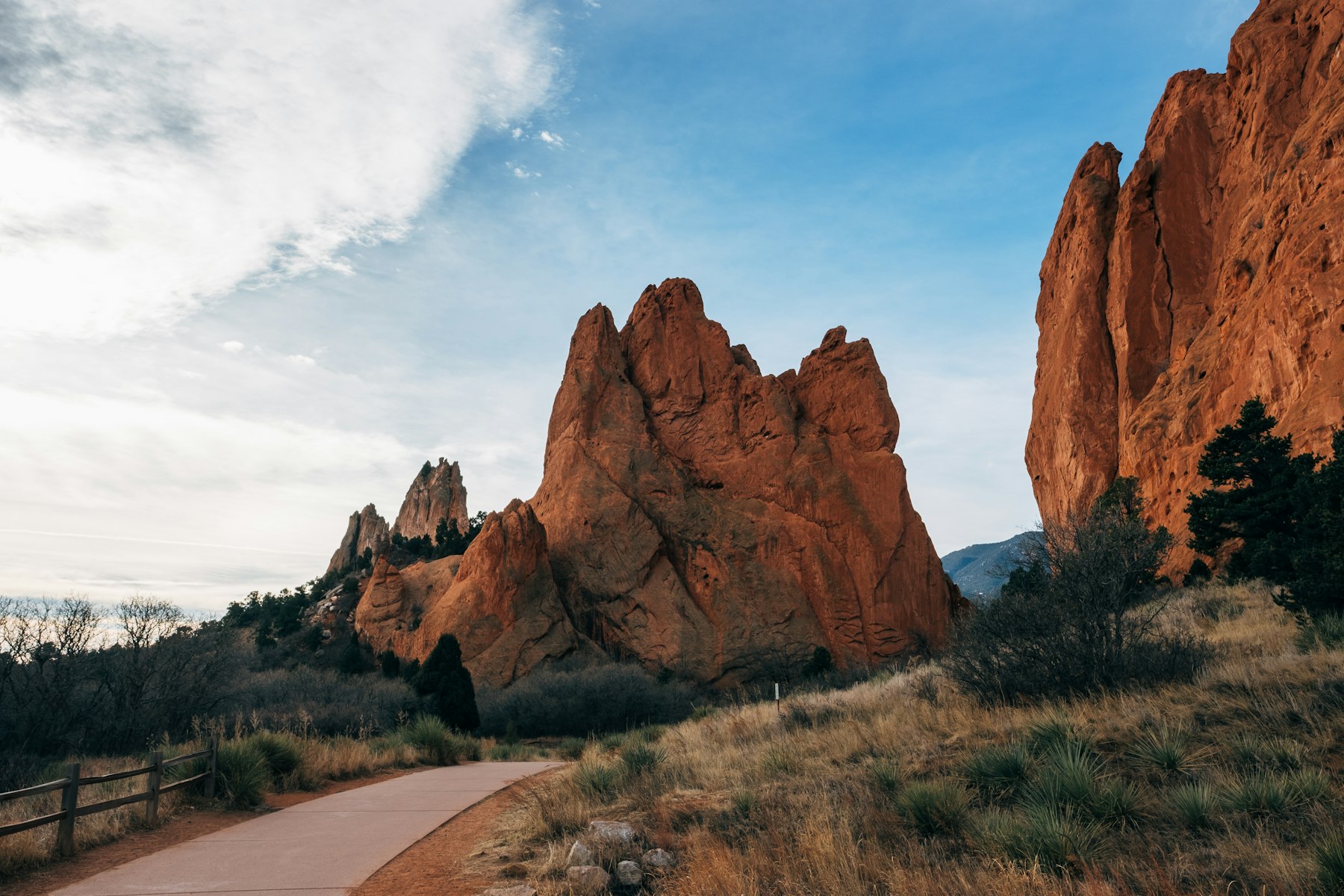
Garden of the Gods has red rock formations that look like they were dropped there on purpose, and the Coors tour in Golden is exactly the kind of unpretentious thing Coloradans do on a Saturday.
This is a state built around its own backyard. Mountains that are just there, every direction you look, and a culture that treats getting outside as a daily habit rather than a vacation.
Beyond the Bookshelf
A shelf of Colorado stories, mountain movies, and high-altitude cooking to get everyone ready for the Rockies.

- CentennialJames Michener
- PlainsongKent Haruf
- The ShiningStephen King
- Butcher’s CrossingJohn Williams
- C Is for CentennialLouise Doak Whitney
- Good Night Colorado
- The Secret SchoolAvi
- Colorado Cache Cookbook
- Colorado CollageJunior League of Denver
Book links go to Bookshop.org, which supports local bookstores. Film and music links go to JustWatch and Spotify. As an affiliate we may earn from qualifying purchases.
Why this state, for this family
Why Colorado works with kids
 Poppy marks the family parts. Wherever you see her, that section is written for traveling with children.
Adam and I lived in Denver, a few blocks from City Park, and it is where I first stood on skis. Colorado is the outdoors with a safety net, which is exactly right for a family’s first big mountain trip.
Wilderness with a supermarket
Denver is a real city with a real airport, the mountain towns have good beds and good food, and you are rarely an hour from a hospital. You get the mountains without roughing it.
Summer is cheap
Free parks, low entrance fees, and hiking that costs nothing. Outside ski season this state is far kinder to five people than its reputation, and Garden of the Gods is free forever.
A culture built around getting outside
One car in five is a Subaru and the trailhead lot is full at five in the morning. Children pick up on that. Being outside every day stops being a holiday activity and starts being normal.
The map
Colorado Place by Place
Eight places, and the thing to understand before you read them is that Colorado is two states wearing one name. There is the Front Range, where the cities sit at the edge of the plains and life is normal. Then there is everything west of that, which is mountains, and where the rules about driving, weather and your own body all change. Pick which one you are going to before you book anything.


State song Where the Columbines Grow, and Rocky Mountain High by John Denver, which was made the second state song in 2007. Good to know Mountain time. Sales tax around eight percent in Denver. The altitude is real, drink water the first two days and take the hike slowly.
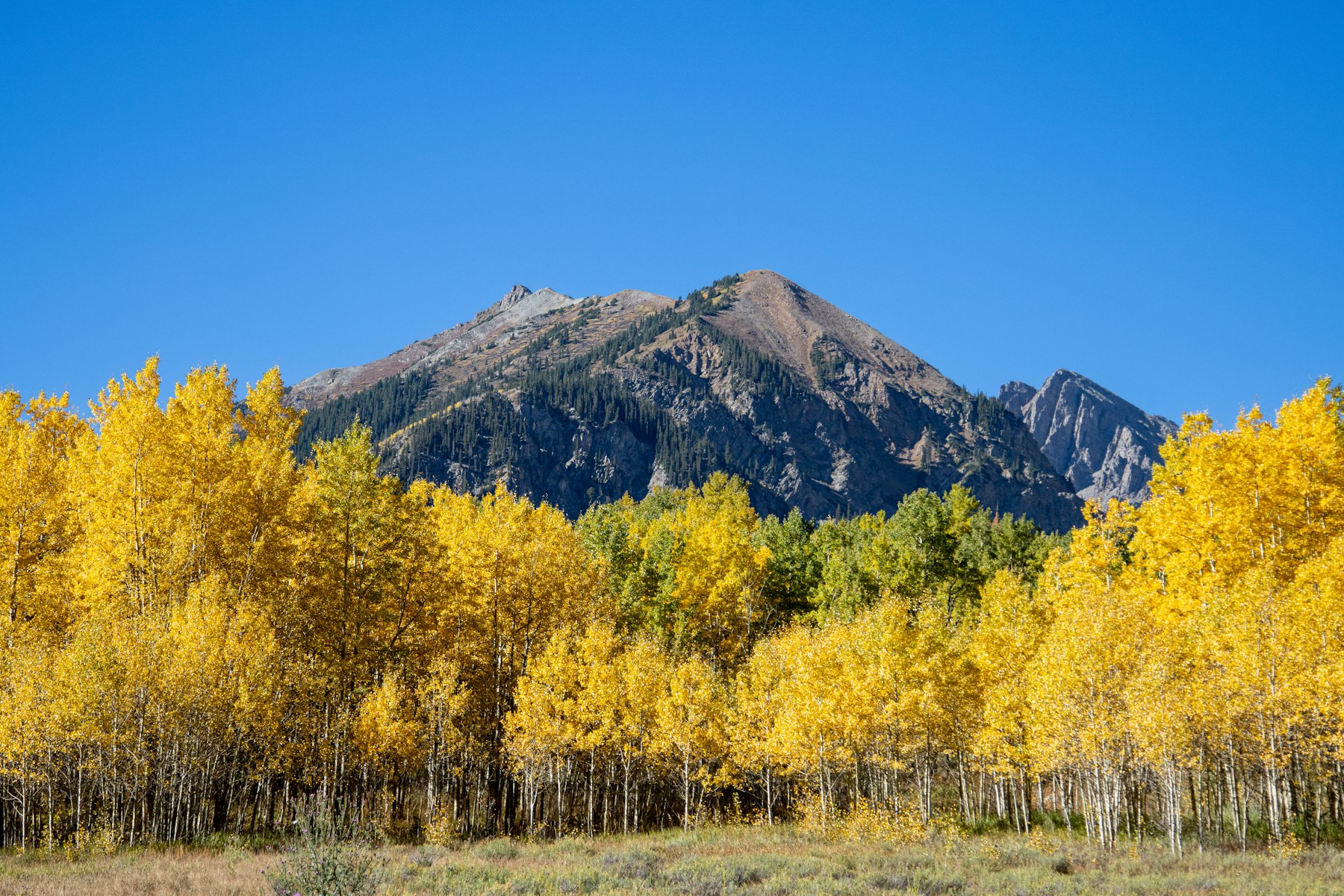
Aspen
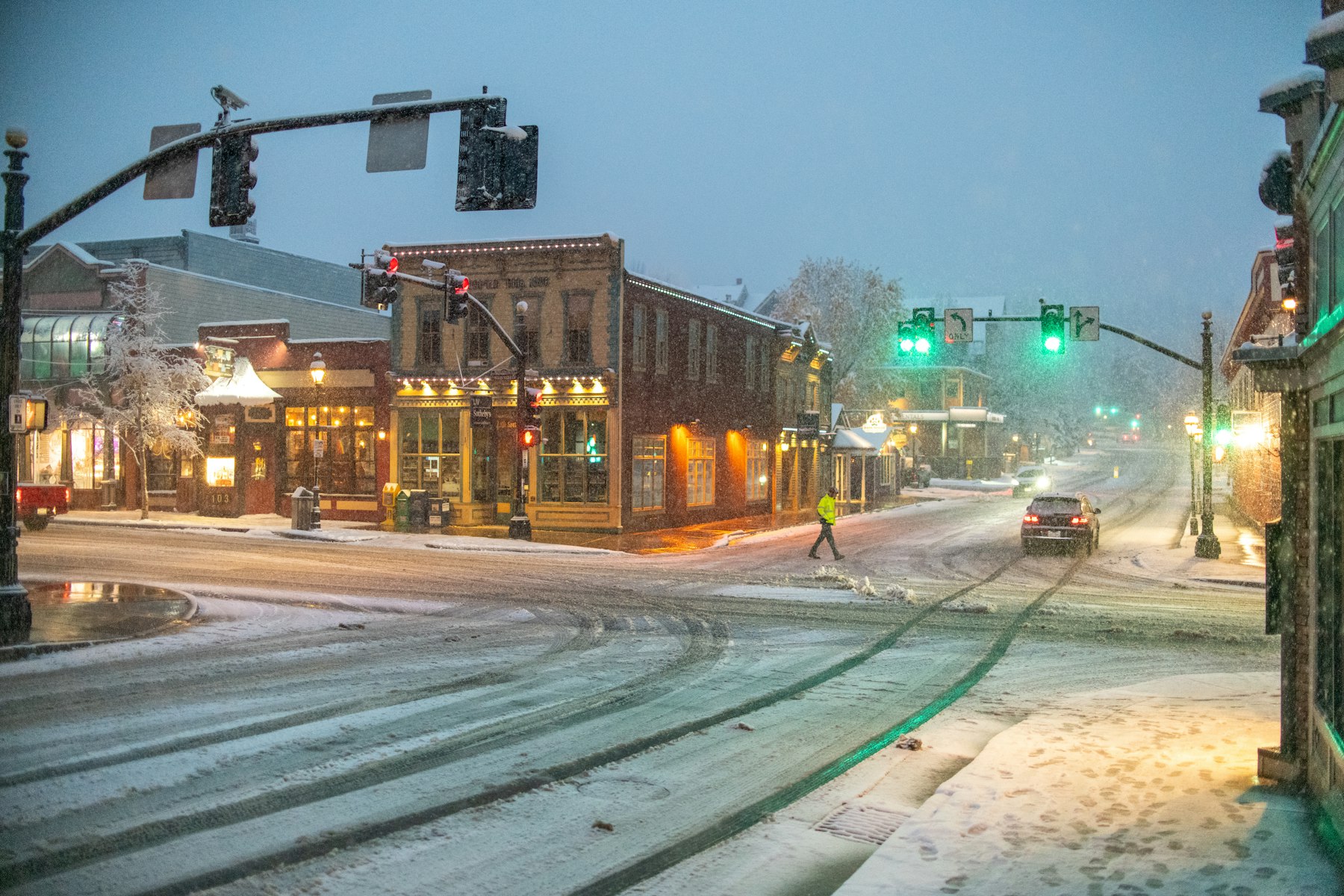
Breckenridge

Colorado Springs
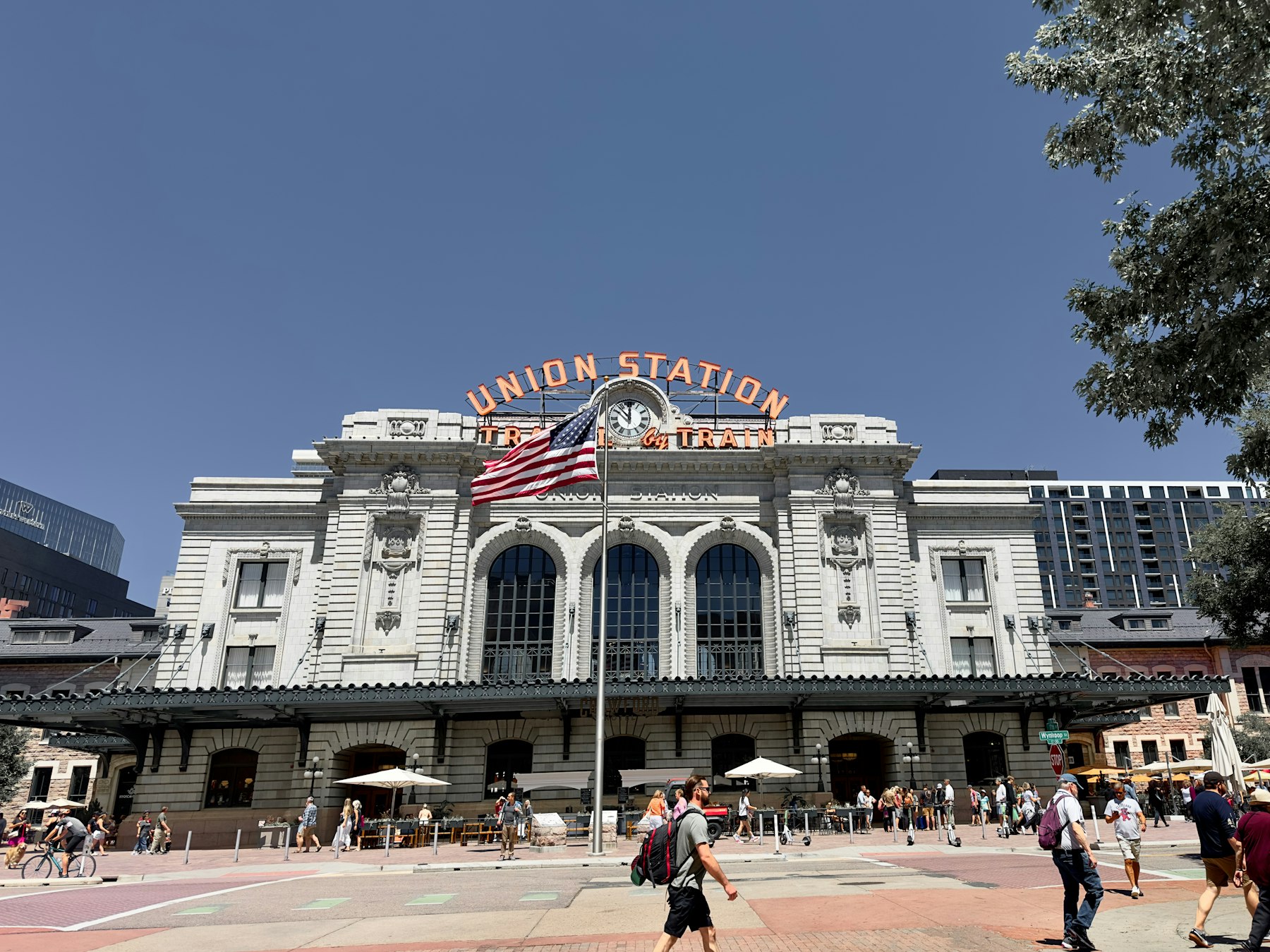
Denver

Durango
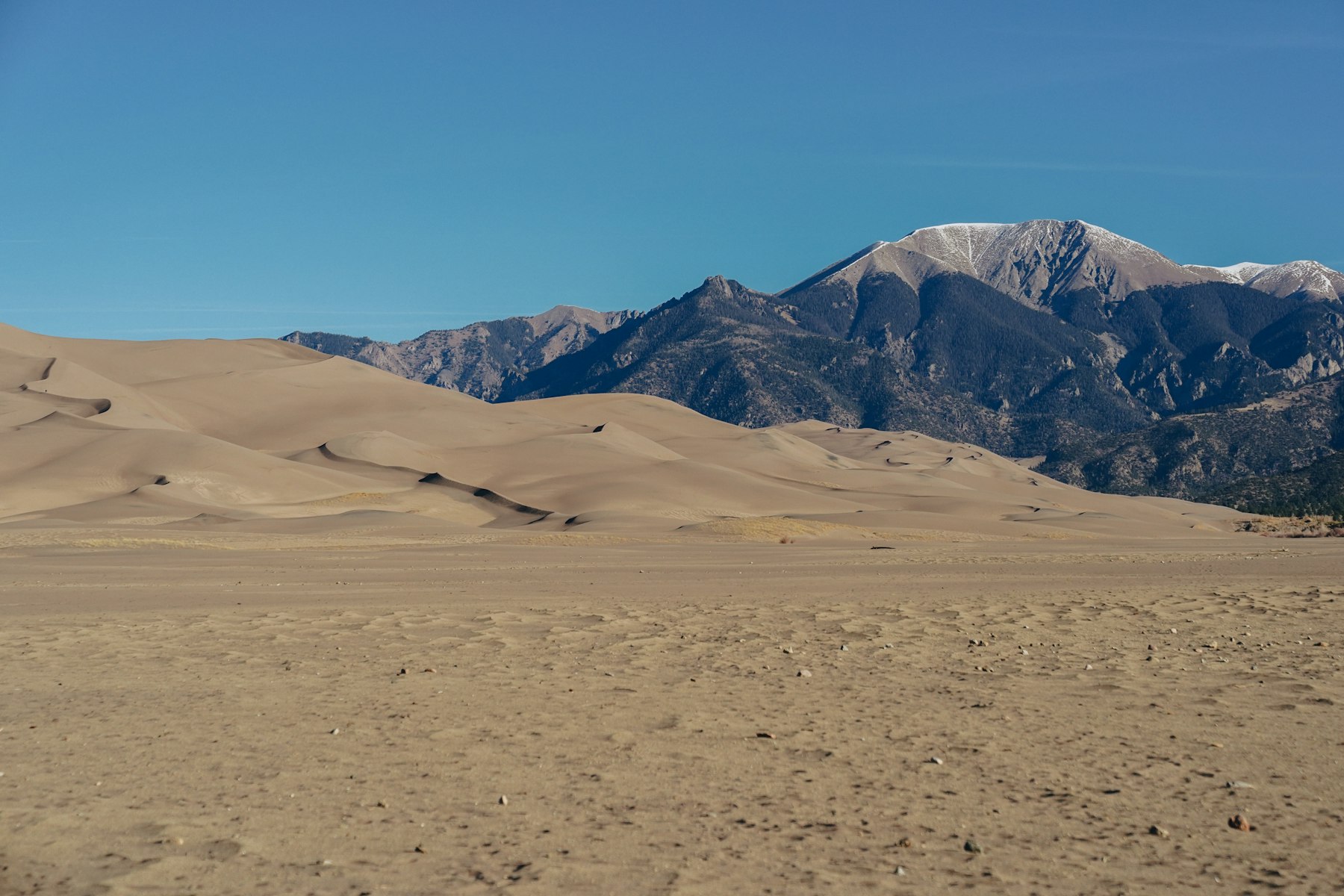
Great Sand Dunes

Rocky Mountain National Park

Vail
Colorado Is a State That Lives Outside
The mining towns built it, the ski towns pay for it, and the Ancestral Puebloans were here seven hundred years before either. Knowing that makes the mountain towns make sense.
Mesa Verde is the oldest thing on the page. Cliff dwellings built into the canyon walls and lived in for over seven hundred years. A ranger led tour of Cliff Palace is the day in Colorado that has nothing to do with skiing and children remember it longest.
The mining towns are still standing. Breckenridge, Leadville, Georgetown and Silverton were silver and gold camps in the 1870s and kept their main streets. The narrow gauge trains that served the mines still run, and that is the way to see it with kids.
Skiing is the religion. Winter Park, Vail, Aspen and Breckenridge are why the world knows the state. Ski school for a six year old is a real tradition here and locals learn before they can read. It is also the most expensive thing on this page.
Green chile is the food identity. Not quite Mexican, not quite anything else. Smothered over burritos, burgers and eggs. It comes from the Hispanic farming towns of the San Luis Valley and southern Colorado and it is the flavour people miss when they leave.
Denver is a real city with a beer habit. Union Station, the museums in City Park, the Rockies at Coors Field, and more breweries than most countries. The Coors tour in Golden is the unpretentious thing Coloradans do on a Saturday, and it was free when we went.
What to Eat in Colorado
Mountain town food is better than it needs to be, and the cheap Front Range food is the real thing.
A smothered green chile burrito. El Taco de Mexico on Santa Fe Drive in Denver, open since 1985 and a James Beard America’s Classics winner. Green chile is the state dish and this is the version everything is measured against.
A breakfast burrito from a gas station. Foil wrapped, eggs, potato, cheese and green chile, sold from a warmer by the till at any Front Range gas station before seven. The correct breakfast before a mountain drive.
Rocky Mountain trout. On menus in every mountain town, usually grilled, often caught within the county. The one local fish and an easy sell to a picky eater.
Palisade peaches and Olathe sweet corn. August on the Western Slope. Roadside stands between Grand Junction and Glenwood sell peaches that are worth the detour on their own.
Casa Bonita, for the spectacle. Cliff divers, a mariachi band, a gorilla and sopapillas, and the food is beside the point. We went when we lived there and my conclusion still stands. The lower your expectations, the more fun you will have. Ticket only now, book ahead.
Distances, I-70 and the Trap Nobody Warns You About
Colorado map distances lie, and they lie in a specific direction. The miles are short and the hours are long, because you are climbing, and because almost everybody heading into the mountains from Denver uses the same road at the same time. This is the state’s real logistics trap.
I-70 west out of Denver is a predictable weekly jam, not bad luck. On the 65 mile stretch to Silverthorne, a Friday afternoon between 4 and 5:30 turns a 1 hour 25 minute drive into 1 hour 50. Sunday afternoon coming back is far worse. Between 2 and 6 it runs about 2 hours 30 against 1 hour 15 in clear conditions.
In ski season Saturday morning is its own problem. Heading up between 7 and 7:30 takes close to two and a half hours instead of an hour and twenty five. Coming back down between 3 and 4, when the elevators close, adds roughly 45 minutes. Leave before 6:30am or come home after 6pm and you skip nearly all of it.
Denver to Vail is about 100 miles and 2 to 2 and a half hours when nothing is wrong. Winter storms, weekend ski traffic or summer roadworks can add anywhere from 30 minutes to over 2 hours. If you have a flight, build in a full extra hour and do not negotiate with yourself about it.
Denver airport to Estes Park, the gateway to Rocky Mountain, is 76 miles and about 1 hour 26 by the toll road. Through Boulder with no tolls it is 81 miles and about 1 hour 48. Estes Park sits at 7,522 feet, so this drive is also a 2,200 foot altitude gain in ninety minutes.
You can skip a car for the Denver part entirely. The RTD A Line runs from the airport to Union Station, 23 miles in about 37 minutes for 10 dollars each way, every 15 minutes between 5am and 8pm. For a first night in Denver before you collect a hire car, this is the easy move.
Winter tire rules on the mountain corridors are real and enforced. If you are hiring a car between roughly September and May, take the all wheel drive rather than saving forty dollars on a saloon. This is the actual reason one car in five here is a Subaru, and Adam wrote a whole post about that once because he could not believe it.
Skiing Costs Versus Summer Costs
People assume Colorado is expensive. Colorado in winter is expensive. Colorado in summer is one of the better value family destinations in the United States, and the gap between the two is enormous. Here is the arithmetic laid out, because this is the decision that sets your whole budget.
Peak single day elevator tickets for 2026 reach about 299 dollars at Vail, 269 at Aspen Snowmass and 229 at Breckenridge. Buying online in advance rather than at the window takes roughly 50 to 65 dollars off. A walk up ticket on a trip week is the most expensive way to do anything in this state.
A full ski day per person lands somewhere between about 194 and 428 dollars once you add the elevator, rental, food and parking. Multiply that by five and you can see why a week of skiing costs what a fortnight in Europe costs. I am not saying do not do it. I am saying know the number before you commit.
Rent your gear in town, not at the resort. A resort adult package runs about 72 dollars a day and a child aged 6 to 12 about 45. Town shops run closer to 48 and 30, and pre booking online drops it again to about 42 and 26. Same skis, a ten minute walk, roughly a third off.
Season passes change the math if you are going more than about four days. The Epic Pass is around 949 dollars and Epic Local 695. Ikon Base is about 719 and the full Ikon 1,179. For a family of five that is a big commitment, but for two adults skiing a full week it can beat day tickets.
Now the summer version. Garden of the Gods is free. Great Sand Dunes is 25 dollars a vehicle. Rocky Mountain is 35 for seven days plus a 2 dollar permit fee. That is a full week of headline attractions for under 65 dollars per car. The mountains are the same mountains. Only the price of standing on them changes.
The one summer splurge worth it with children is the Durango and Silverton narrow gauge railroad. The 2026 season runs 2 May to 1 November. Standard coach is 118 dollars for an adult and 108 for a child aged 4 to 11. It is about 7 hours 15 all in, three and a half hours each way with a two hour stop in Silverton. Under fours who do not take a seat ride free.
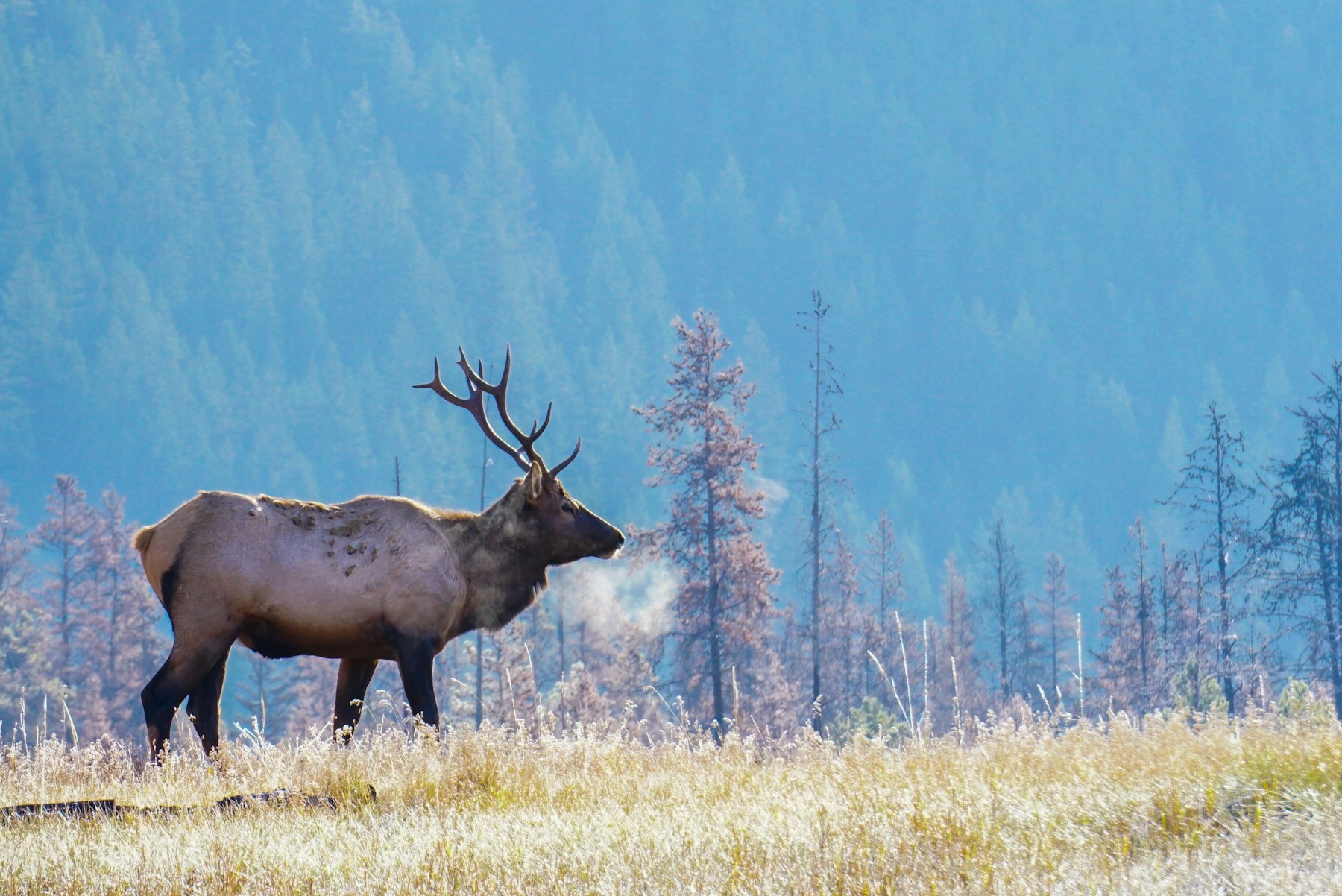
September and October are the elk rut in Rocky Mountain. The bugling carries across a whole valley and it is the sound my children would remember longest
The New 100 Dollar Surcharge, and How to Legally Avoid It
This one matters enormously if you are reading from outside the United States, and I have seen almost nobody write it up properly for families. From 1 January 2026 there is a 100 dollar surcharge for international visitors at eleven national parks. Rocky Mountain is one of them. So are Yellowstone, Yosemite, Grand Canyon, Grand Teton, Zion, Bryce Canyon, Glacier, Acadia, Everglades and Sequoia and Kings Canyon.
The normal Rocky Mountain entrance fees are 30 dollars a vehicle for one day and 35 for seven days. A motorcycle is 25 or 30. On foot or by bike it is 15 for a day and 20 for seven. The park’s own annual pass is 70 dollars. Those are the same for everybody regardless of passport.
The surcharge is 100 dollars per person, not per vehicle, and it applies to non residents aged 16 and over. Green card holders and permanent residents are exempt. It applies per park visit rather than as a one off. Two visiting parents at Rocky Mountain are therefore looking at 35 dollars for the car plus 200 dollars on top.
Here is the bit that saves families real money. The surcharge does not apply if you are admitted on an America the Beautiful annual pass. The non resident annual pass is 250 dollars, up from 80. US residents still pay 80. So for an international family the 250 dollar pass is cheaper than paying the surcharge twice, and it then covers every national park in the country for a year.
At drive in entrances, everyone in the pass holder’s vehicle comes in under that pass. One 250 dollar pass, one car, whole family through the gate. At walk in entrances residency is assessed person by person instead, so arrive by car if you have the choice.
Not every Colorado park is on the list. Great Sand Dunes is 25 dollars a vehicle for seven days, 20 for a motorcycle, 15 per person on foot, and its own annual pass is 45. It is not one of the eleven, so there is no surcharge there at all. That gap is worth knowing when you are planning which parks to prioritize.
Bring photo identification to the gate. Residency is being checked rather than assumed. If you are a US resident traveling with an accent and no ID, you are the person who ends up arguing at a booth with a line behind you.
When to Go
Colorado has four different seasons and they are not equally good for families. This is the calendar I would work from.
Best overall: September into early October. The aspens turn gold, the elk are bugling, the crowds have gone back to school, Trail Ridge Road is still open and the Rest of Park permit system stops on 13 October. Warm days, cold nights, and the light is beautiful. If I could pick one fortnight, it would be the back half of September.
Good: late June through August, with one caveat. Everything is open, the high roads are clear and the days are long. But July alone brings over 734,000 people into Rocky Mountain, and afternoon thunderstorms above the treeline are a real hazard rather than an inconvenience. Start early, be off the high ground by early afternoon.
Ski season: December to March, at maximum cost. Christmas and the New Year fortnight are the most expensive days of the Colorado year. If you want snow and not the price, late January and early March hold good conditions with far smaller crowds and lower rates.
Awkward: April and May. The ski areas are closing, the high roads are still shut, Trail Ridge is under snow and the lower trails are mud. It is the cheapest time to be here and there is a reason. Locals call it mud season without affection.
One date to know if you want the sand dunes at their best. Medano Creek flows at the base of the dunes in late spring and early summer, which turns the whole thing into a shallow beach with mountains behind it. That is a completely different day out from dry sand in August.
How Many Days & First-Trip Routing
How many days do we need in Colorado? Plan a week.
The first night is in Denver at 5,280 feet so everyone adjusts before you go any higher.
Then pick one mountain base for the rest of the week. A new hotel every night up here means a new sleeping elevation every night too.
Altitude Is What Ruins Family Trips Here
This is the single most important section on this page and it is the one nobody puts in a brochure. Families do not have bad Colorado trips because they picked the wrong town. They have bad Colorado trips because somebody spent day two in a hotel room with a headache and nausea while everyone else went out. It is preventable, and the prevention is boring and free.
Denver is a mile up before you start
5,280 feet, which is where the name comes from. Most people fly in from somewhere near sea level, so you have already made a serious altitude gain before you have driven anywhere or done anything.
1,600 feet a night, above 8,000
Children’s Hospital Colorado advises not increasing your sleeping elevation by more than about 1,600 feet per day once you are above 8,000 feet. Sleeping elevation is what counts, not the highest point you touched during the day.
Spend the first night in Denver
One night at 5,280 feet before you go up is the cheapest insurance in this state. It costs you an evening and it buys the rest of the week.
Symptoms show up inside the first 24 hours and are usually worst after the first night’s sleep. Headache, nausea, no appetite, broken sleep. If your child wakes on day two feeling awful, that is the textbook pattern rather than a bug they picked up on the plane, and the answer is to not go higher that day.
Children are at roughly the same risk as adults, possibly slightly less. The catch is that small ones cannot tell you. Watch for unusual fussiness, going quiet and unplayful, pale skin, refusing food, and sleeping much more or much less than normal. Short rapid breaths with pauses during sleep are a normal adjustment and not the alarm.
Do not book the ski lesson or the big hike for your first full day. Hard exertion before you have adjusted is what turns a mild headache into a ruined week. Give it a day of pottering about. This is the advice families ignore most and regret most.
Drink steadily and eat even when nobody feels like it. The air is dry as well as thin, so you lose water faster than you notice. Appetite drops at altitude, and a child who has not eaten is a child who will feel worse by the afternoon.
Know the numbers you are actually asking your family to handle. Denver 5,280 feet. Estes Park 7,522. Breckenridge 9,601. Leadville 10,119, the highest incorporated city in the United States. Trail Ridge Road tops out at 12,183 and the summit of Pikes Peak is 14,115. That last pair are day trips, not places to sleep.
Going down is the treatment. If someone is unwell, losing a couple of thousand feet of elevation usually fixes it faster than anything else you can do. In Colorado that is almost always a short drive, which is a real advantage this state has over more remote high places.
Rocky Mountain National Park, and the Permit You Will Forget
Rocky Mountain took 4.12 million visitors in 2023 and was the fifth most visited national park in the country. July is the peak at over 734,000 people in one month, with August and September close behind. That is why the permit system exists, and yes, it is running again in 2026.
Timed entry is in force for 2026 and there are two different permits. The Bear Lake Road Corridor permit covers 5am to 6pm and gets you the corridor plus the rest of the park. The Rest of Park permit covers 9am to 2pm and specifically excludes Bear Lake Road. People buy the cheaper mental model, turn up at Bear Lake, and get turned around.
The dates are not the same for the two permits. Bear Lake Road runs 22 May to 19 October 2026. The Rest of Park system ends earlier, on 13 October 2026. Outside those windows you just drive in with your entrance fee and no reservation at all, which is the quiet argument for going late in the year.
Reservations release on the first of each month at 8am Mountain Time. 1 May opens 22 May to 30 June. 1 June opens July. 1 July opens August, and so on to 1 September for October. Put the release date in your calendar with an alarm, because summer Bear Lake slots go quickly.
The permit itself is only a 2 dollar recreation.gov processing fee. That is not the entrance fee, which is separate. Your permit gives you a two hour window to enter and no set time to leave, so the pressure is on arrival only.
Trail Ridge Road is the drive, and it is seasonal. It reaches 12,183 feet and is closed to through travel from about mid October to late May. July through September is the reliable window for the whole road. If your trip is late May or early June, check before you build a day around it.
Elk are the wildlife you will actually see, and September into October is the rut. The bulls bugle, which is a sound children do not forget. Keep well back. This is the one wildlife rule people break in Rocky because the animals look calm from a car.
Rocky Mountain, Mesa Verde and Great Sand Dunes are three separate entrance fees if you are doing all three. A fourth grader in the family makes them one fee of nothing, for the whole school year. Claim it at everykidoutdoors.gov.

The Durango and Silverton, real 1880s track through real mountains.
Regions at a Glance
The Front Range
Denver, Boulder, Colorado Springs and Fort Collins. The cities, the airport, Garden of the Gods and Pikes Peak. Where you acclimatise and where a first trip should start.
The Northern Mountains
Rocky Mountain National Park, Estes Park, Winter Park and Steamboat. Elk, Trail Ridge Road, the permit system and the first place the altitude bites.
The Interstate 70 Corridor
Breckenridge, Vail, Aspen and Glenwood Springs. The ski towns, the hot springs, the Maroon Bells and the Sunday afternoon traffic jam back to Denver.
The Southwest and the San Luis Valley
Durango, Mesa Verde and the Great Sand Dunes. The narrow gauge train, the cliff dwellings and a dune field with a creek at the bottom. A second trip on its own.
Must See and Do
Six specific things with real numbers attached. If you read nothing else on this page, these six will still give you a good trip.
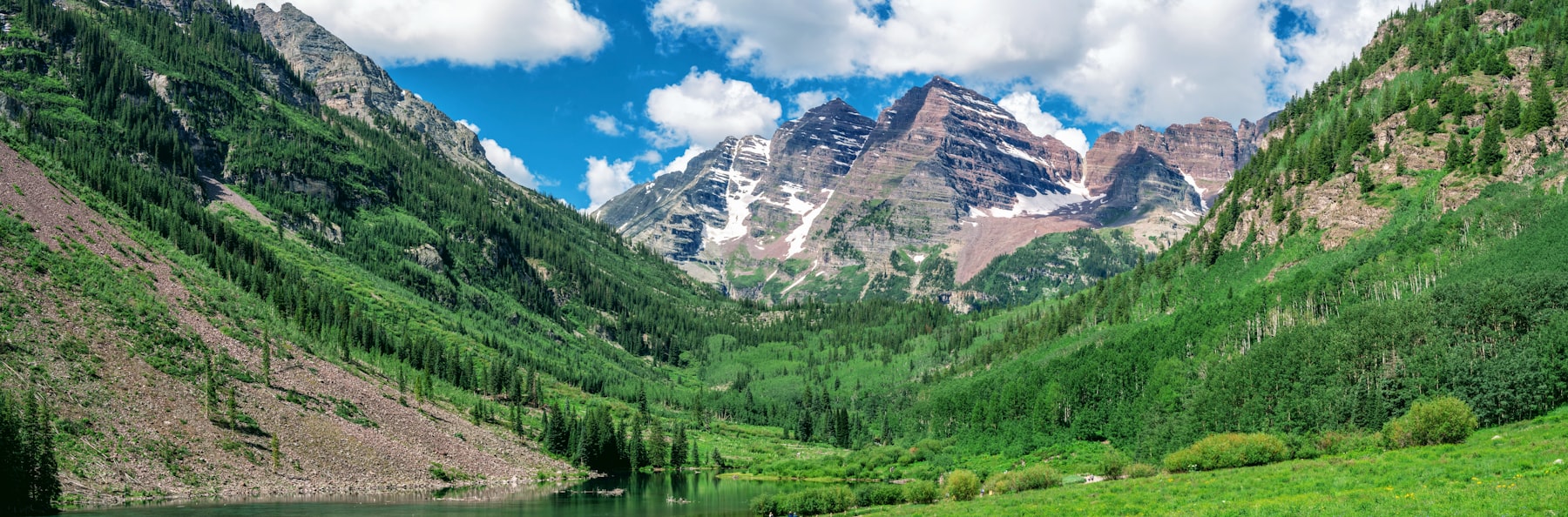
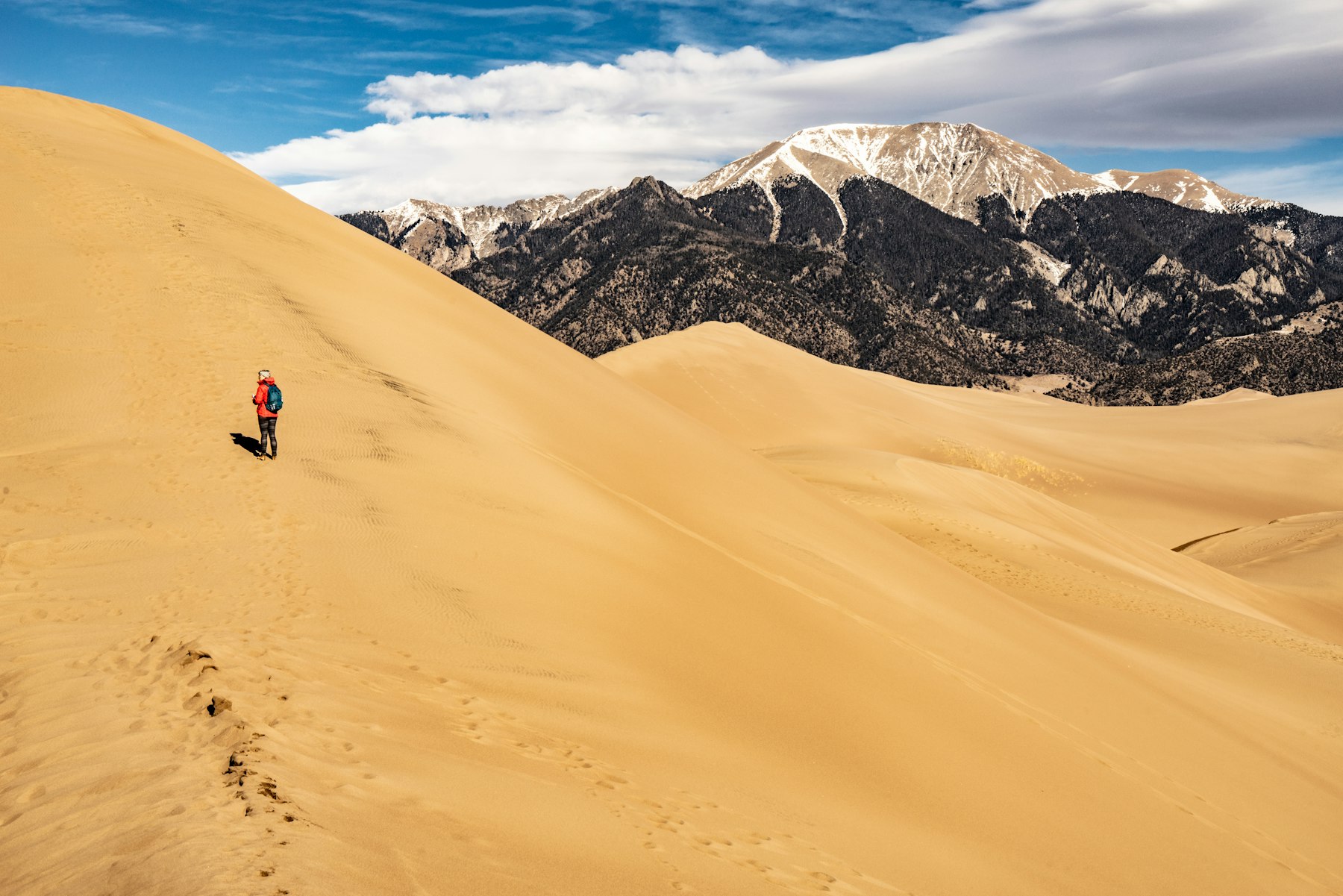




Above the treeline there are no trees, no shade and no shoulder. This is the part of Colorado that photographs beautifully and drives slowly
Doing It With Children
This is the advisor section rather than the resident section, and I want to be straight about that. I did Colorado as an adult with no children. What follows is what I would plan for a family, and it covers the things to do in Colorado with kids that I build into real itineraries, based on what I know about the place and what I know about traveling with my three.
Build the trip low to high and never the other way. Two nights in Denver at 5,280 feet, then Estes Park at 7,522, then higher if you are going higher. Flying into Denver and driving straight to Breckenridge at 9,601 feet on the same afternoon is the single most common way families wreck their own week.
The sun at altitude is much stronger than the temperature suggests. Thin air filters less. Children burn on cool days here in a way that surprises people from sea level, and a hat and proper sunscreen matter more in Colorado in September than they do on a beach.
Afternoon thunderstorms in summer are a schedule, not a surprise. Above the treeline there is nowhere to shelter and lightning is the real risk. Do the high hike in the morning. Plan the town, the pool or the museum for after two.
Hot springs are the great Colorado children’s day and they are open all year. Glenwood is the big one at over two blocks long, roughly 42 to 60 dollars for adults and teens and 30 to 38 for children. Sitting in hot water in falling snow is the thing they will describe to their friends.
Not everything has to be a mountain. Casa Bonita in Lakewood is cliff divers, a mariachi band, a gorilla and sopapillas, and the food is beside the point. We went when we lived there and I still quote my own conclusion at people. The lower your expectations, the more fun you will have. It is now ticket only with no walk ins, so book ahead and check the current price.
Pack for a thirty degree swing in one day. A September morning in Estes Park can start near freezing and hit the seventies by lunch. Layers for every person, and a proper jacket even in August if you are going high.
Who Colorado Suits, and Who Should Skip It
It suits families with children roughly six and up. That is the age where a real hike, a sledding run down a dune and a full day on a train stop being endurance events and start being the best day of the trip. The scenery does a lot of the work for you.
It suits families who want outdoors without roughing it. Denver is a proper city with a proper airport, the mountain towns have good food and comfortable beds, and you are rarely more than an hour from a hospital or a supermarket. It is wilderness with a safety net, which is exactly right for a first big outdoors trip.
It suits a summer budget better than almost anyone expects. Free parks, cheap entrance fees, and hiking that costs nothing. Outside ski season this state is far kinder to a family of five than its reputation suggests. If you are hunting Colorado family vacation ideas that will not wreck your budget, this is where I start people.
Skip it with a baby or a toddler if you were planning to go high. A small child who cannot tell you their head hurts, at nine thousand feet, on a trip you have paid for, is a bad combination. Stay on the Front Range or wait a few years.
Skip a winter trip if the budget is tight. There is no clever way to make a peak week of Colorado skiing affordable for five people. If snow is the point and money is the constraint, go in March, or go somewhere else, or come in summer instead.
Skip it if anyone in your party has a heart or lung condition without talking to a doctor first. This is not a scenic preference, it is a medical one. Altitude is a real physiological load and it deserves a real conversation before you book.
How Colorado Compares to Its Neighbors
Utah is the drier, redder, stranger version. Five national parks close together, less altitude stress because much of it sits lower, and scenery that looks like another planet. If your family found Colorado’s green mountains familiar, Utah will not be familiar at all.
Wyoming is Colorado with fewer people and more animals. Yellowstone and Grand Teton are both on the 100 dollar surcharge list too, so the same annual pass logic applies. The driving distances are longer and emptier, and the wildlife is on a different scale.
New Mexico is the cultural trip rather than the outdoors trip. Santa Fe and Taos are a few hours south of the Great Sand Dunes and pair naturally with a southern Colorado loop. We drove through Taos on a road trip once and it is a different country down there.
Florida is the exact opposite trip and worth naming as a contrast. Flat, humid, engineered, indoors when it rains. Colorado is high, dry, unpredictable and outdoors by default. Families who find theme parks overstimulating almost always prefer this state, and the reverse is just as true.
Worth the Money in Colorado
Summer Colorado is cheap, which is exactly why one winter splurge or one big summer day is affordable.
One ski day, done properly. Rent gear in town rather than at the resort, book the lift ticket online weeks ahead to take fifty to sixty five dollars off, and put the small children in ski school for the morning. One good day beats three exhausted ones.
The Durango and Silverton train. A real 1880s narrow gauge steam train on a cliff ledge above the Animas River, three and a half hours each way. It is not cheap for five and it is the single best Colorado day for a child under twelve.
Glenwood Hot Springs in the snow. The largest hot springs pool in the world, over two blocks long, forty two to sixty dollars an adult. Sitting in hot water while snow falls is the thing they will describe to their friends.
A night in Estes Park before the park permit. Staying at the gate means being inside Rocky Mountain before the timed entry window starts, which is the only way to have Bear Lake without a crowd. The Stanley Hotel is the famous one and children like the ghost story.
Things That Surprise First Timers
The 300 days of sunshine claim is marketing, not weather. Denver averages about 86 days a year with measurable rain or snow, which leaves roughly 279 without. The figure traces back to railway companies in the 1870s trying to persuade workers to move west. It is sunny here. It is not 300 days sunny.
Some of the best things are free. The Coors tour in Golden was free when we went, self guided with an audio handset through a five mile facility turning out sixteen million barrels a year. Garden of the Gods is free. A lot of what makes Colorado good does not have a ticket price.
Green chile goes on everything and it is not Mexican food exactly. It is its own regional thing, it is on burgers and breakfast burritos and eggs, and asking for it smothered is the correct answer. This is the flavour I missed after we left.
There are 58 peaks over fourteen thousand feet and climbing one is a normal weekend here. Not for your family on day two, but it explains the culture. Everyone you meet is training for something, and the trailhead parking lot is full at 5am.
Alcohol hits noticeably harder at altitude. One drink in Breckenridge does not feel like one drink at home. Worth knowing on the first night, which is also the night you are least adjusted.
The Subaru thing is not a stereotype, it is a census. Adam counted roughly one in five cars as an Outback or an Impreza when we lived there, and then wrote a post about it because he did not believe himself. Roof racks, bumper stickers, the lot.
Where I Would Start
Five people, a September week, and the rule is low to high, never the other way.
Two nights in Denver at 5,280 feet. Acclimatise. City Park, the zoo and the nature museum, Union Station, a Rockies game if they are home. Do not drive to Breckenridge on the afternoon you land.
Two nights in Estes Park at 7,500 feet. Rocky Mountain National Park with the timed entry permit booked, Bear Lake early, Trail Ridge Road if it is open, and elk in the meadows at dusk in September.
Two nights in the Colorado Springs area. Garden of the Gods before nine, the Pikes Peak cog railway or the drive to the top, and Manitou Springs for the arcade. Lower altitude and easier days after the park.
One night at the Great Sand Dunes, then home. Sled the dunes early, before the sand is hot, and if it is late spring, Medano Creek turns the base into a beach with mountains behind it. Back to Denver for the flight, about four hours.
Colorado by the numbers
Facts to know before you go
Ways to travel
Colorado is not one kind of trip
How you move through it changes the trip more than which places you pick.
Road trips
The drive up to Maroon Bells outside Aspen, or over Trail Ridge Road through Rocky Mountain National Park, both earn their reputations.
For example: Trail Ridge Road across the park in September, before it closes for snow.Rail journeys
The Georgetown Loop and the Durango and Silverton narrow gauge both run on real 1880s track through real mountains.
For example: Durango to Silverton by steam train and back the same day.Walking and hiking
Garden of the Gods has flat, stroller friendly paths right beside the red rock, no serious hiking required to feel the payoff.
For example: the Bear Lake loop in Rocky Mountain, early, with the permit booked.Guided and small group travel
A ranger led tour into Mesa Verde’s cliff dwellings is the only way in, and it turns the ruins into a story.
For example: the Cliff Palace ranger tour at Mesa Verde.Explore by interest
What families come to Colorado for

Sports
Skiing and the Rockies
World class skiing at Vail, Aspen and Breckenridge, a Rockies game at Coors Field in summer, and a whole state that treats a fourteener as a normal weekend.

History
Mesa Verde to the mining towns
Ancestral Puebloan cliff dwellings occupied for seven hundred years, and 1870s silver camps that kept their main streets and their trains.

Food and drink
Green chile and breweries
Green chile smothered on everything, Palisade peaches in August, and more breweries per person than almost anywhere.

Nature
Fifty eight fourteeners
Rocky Mountain National Park, the Maroon Bells, the Great Sand Dunes and 58 peaks over 14,000 feet. You do not need to summit one to feel it.
What makes it different
Only in Colorado

Read
Centennial, James Michener
A doorstop of a novel that follows one patch of Colorado ground from the dinosaurs to the 1970s. Not a kids’ book, but it explains the state better than any guidebook. Photo via Unsplash.

Watch
The Shining, inspired by a real hotel
Stephen King stayed at the real Stanley Hotel in Estes Park the night before it closed for the season, and that stay became the book. You can tour it, daylight only. Photo via Unsplash.

From here
“America the Beautiful”
Katharine Lee Bates wrote it after riding to the top of Pikes Peak in 1893. The “purple mountain majesties” line is not poetic license, it is what she actually saw. Photo via Unsplash.

Only here
Mesa Verde’s cliff dwellings
The largest concentration of ancestral cliff dwellings in the country, built into the canyon walls and lived in for over 700 years. Photo via Unsplash.
Combine It With
The country guide this page sits under. Entry rules, driving, tipping, and how the national park passes work across the whole system.
The other big outdoors state, and the obvious second leg of a western trip. Two of the eleven surcharge parks are there, so the same annual pass argument applies.
The exact opposite trip, and the one I grew up in. Useful if you are weighing mountains against theme parks for the same fortnight.

Plan Colorado with Nicole
Tell me who is coming, and when.
Colorado trips go wrong on altitude, on the Interstate 70 traffic and on the park permit, and all three are fixable before you book. Send me the ages, the dates and the season you are picturing, and I will build it low to high.
Nicole Damiano, ASTA Verified Travel Advisor with FG Luxury Travel. Adventures We Seek is my travel blog and planning resource. Trips are booked through Favorite Grampy Travels.
Colorado, Answered
Will the altitude bother the kids? Some of them, for a day or two. Headaches, tiredness and short tempers are the usual signs. Sleep in Denver at a mile high before going up to the mountain towns, drink more water than seems reasonable and keep the first day gentle. Most kids are fine by day two.
Is Rocky Mountain National Park doable with a stroller? Parts of it. Bear Lake is a flat paved loop, Sprague Lake is the same, and the Alpine Visitor Center on Trail Ridge Road has a short paved walk. Timed entry permits apply in summer and the Bear Lake corridor needs its own. Go early and the elk are in the meadows.
Summer or winter? Both work. Summer is hiking, rafting, alpine slides and mountain coasters in every ski town. Winter is skiing with some of the best kids’ ski schools anywhere, plus sledding and snow tubing that suit the ones who do not ski. Fall in late September for the aspens is the sleeper season.
Where should we base? Estes Park for Rocky Mountain. Breckenridge or Winter Park for a mountain town week within two hours of Denver. Glenwood Springs for the hot springs pool and the adventure park. Durango for the steam train and Mesa Verde. Denver itself has a great zoo, science museum and a downtown that families can walk.
What about the Durango train? The narrow gauge to Silverton is a full day, three and a half hours each way through the canyon, with a couple of hours in Silverton in the middle. Kids under about five find it long. Older kids love the open car. Book the winter Polar Express version months ahead.
Keep exploring from Colorado
The rest of the states, and the wider map.
Click any card to open that page
More of the United States
 Montana
 South Carolina
 Louisiana
 Alaska
 Massachusetts
 Oregon
 Washington
 Wyoming
 Maine
Maine Texas
Texas New York City
 Illinois
 Nevada
 Washington, D.C.
 North Carolina
 Hawaii
 Georgia
 Tennessee
 Arizona
 Utah
Utah California
 Florida
 All of the United States
 All of North America
 Explore the world
 The Travel Library