
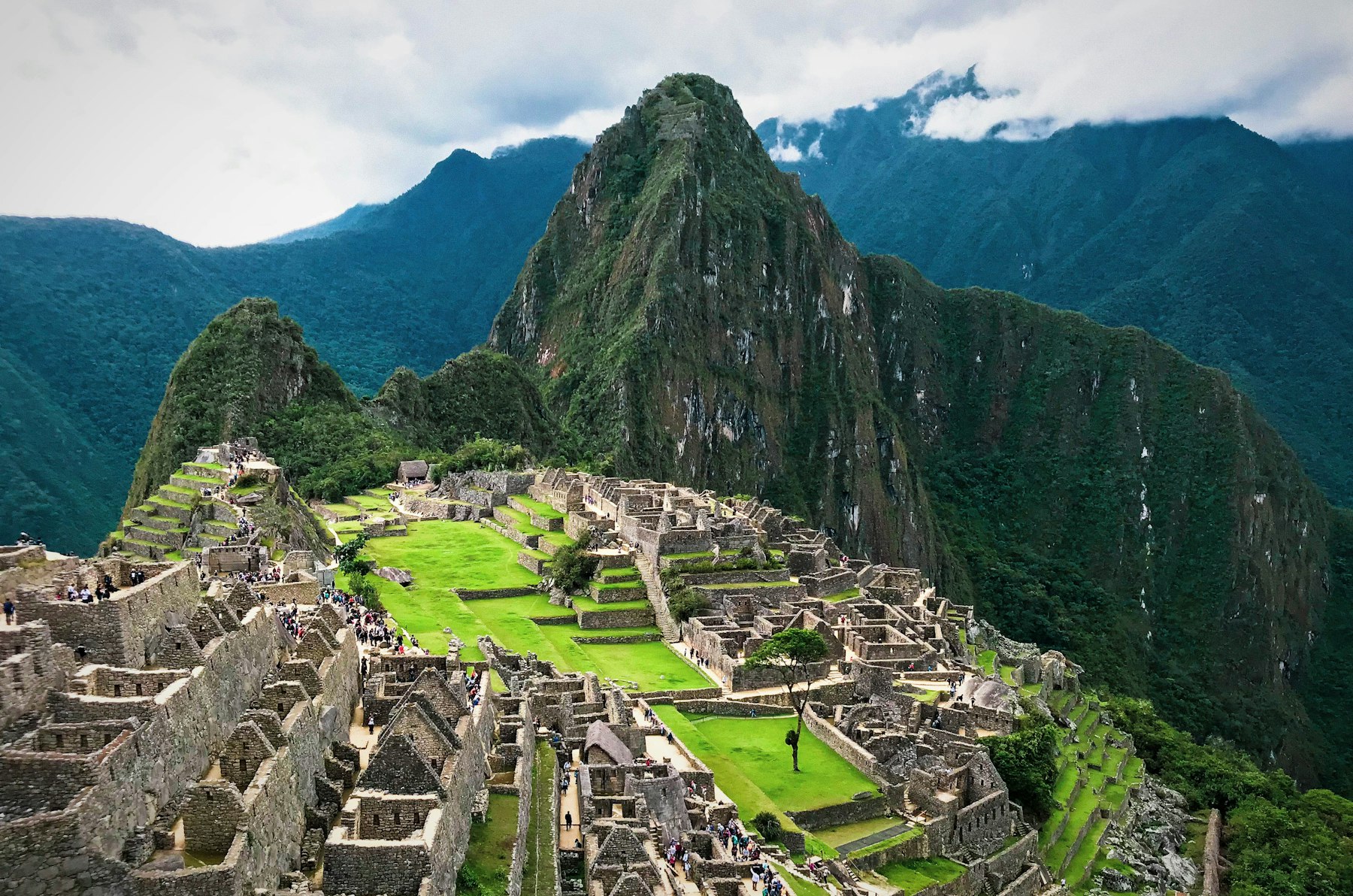
Machu Picchu, September 2025. This is the photograph everybody takes
Peru Family Travel Guide
“Peru is the first country where I understood that altitude is not a detail you handle on arrival. It is the entire shape of the itinerary.”
Nicole Damiano, ASTA Verified Travel Advisor with FG Luxury Travel
Do we need a visa?
No. Passport with six months left, and you get ninety days on arrival.
How do we handle the altitude?
The order matters. Lima first, then the Sacred Valley at nine thousand feet, then Machu Picchu, then Cusco last at eleven thousand. Adam and I did it in that order in September 2025 and it was the right call. Cusco on day one knocks families flat.
How old for Machu Picchu?
Eight. The site is steep, the altitude is real, and younger kids do not take it in. Ten and up is where it starts to mean something.
Train or the Inca Trail?
Train for almost every family. The Inca Trail is four days of camping at altitude and needs permits months ahead. The train from Ollantaytambo is two hours and the views are half the trip.
When should we go?
May through September is the dry season and the best window. June and July are the busiest. April and October are quieter and usually fine. Machu Picchu tickets have timed entry now and sell out, so they get booked before the flights.
Nicole’s Perspective
Why families hire me for Peru

Adam and I went to Peru in September 2025 and did it in an order I would recommend to anyone. Lima first, then the Sacred Valley, then Machu Picchu, and Cusco last, once our bodies had already adjusted to the altitude on the way up.
Machu Picchu earns every bit of its reputation. The scale of it, stone terraces climbing a mountain that drops straight into cloud forest below, is not something photos prepare you for even after you have seen a thousand of them. Doing Machu Picchu with kids just means building in more rest days than you think you need.
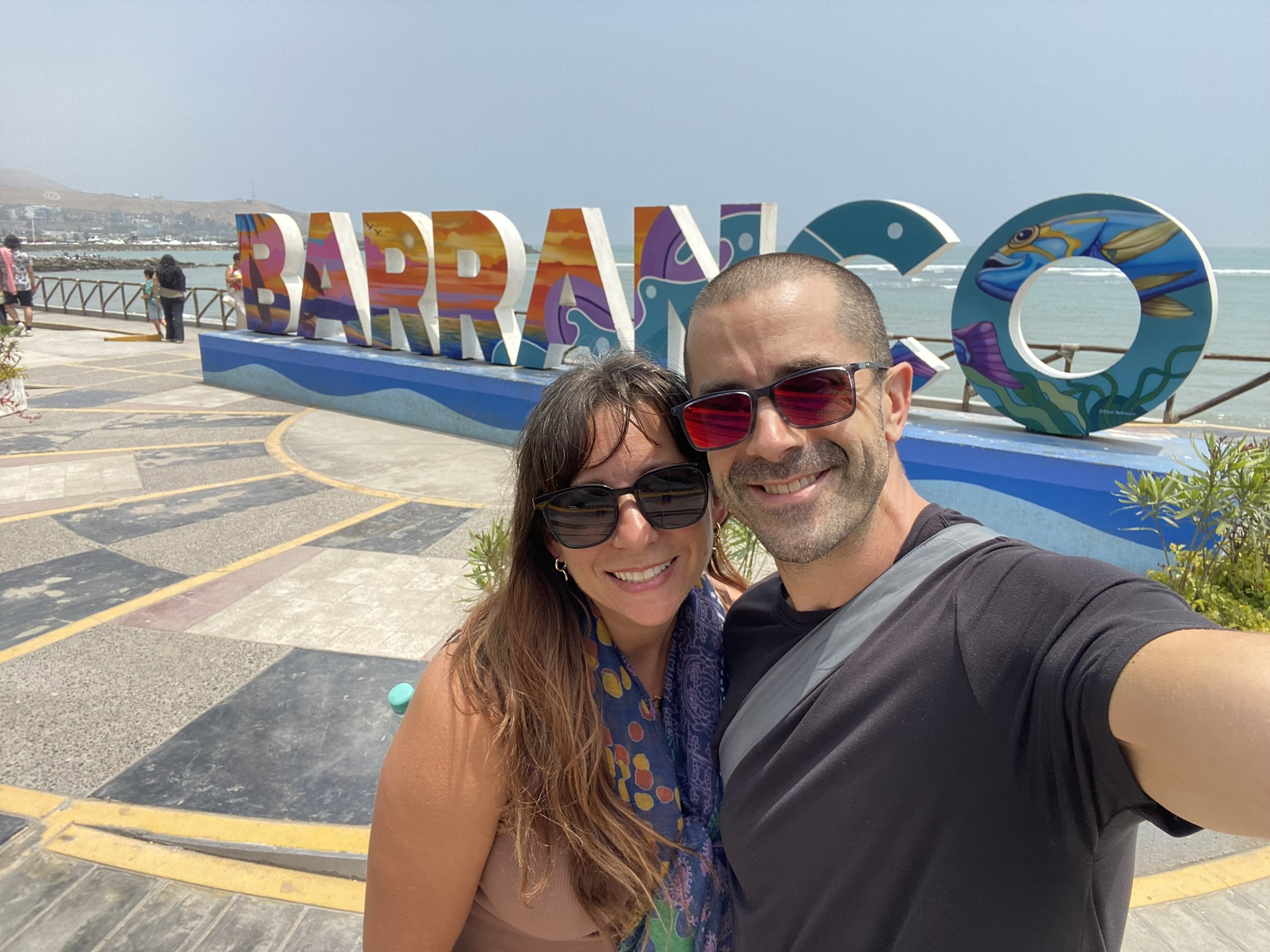
Lima was the real surprise. I had it filed away as the airport you pass through on the way to somewhere else. It turned out to be one of the best eating cities in the hemisphere, and Barranco is a beautiful neighborhood to just wander with a family for an afternoon.
The Sacred Valley ties it all together, terraced Incan farmland still worked the same way it has been for centuries, with the mountains doing something different in the light every hour of the day. A Peru family vacation built around that route, Lima, the Sacred Valley, then Machu Picchu, is the order I tell every client to follow.
Beyond the Bookshelf
Stories to carry you deeper into Peru. This is our own family shelf, real books, films, music and a cookbook tied to the place, not a generic reading list. Read it before you go and the trip means more when you get there.

- The Time of the HeroMario Vargas Llosa
- Turn Right at Machu PicchuMark Adams
- Death in the AndesMario Vargas Llosa
- Aunt Julia and the ScriptwriterMario Vargas Llosa
- Up and Down the AndesLaurie Krebs
- Maria Had a Little LlamaAngela Dominguez
- KusikiyMercedes Cecilia
- Peru: The CookbookGastón Acurio
- Lima: The CookbookVirgilio Martínez & Luciana Bianchi
Book links go to Bookshop.org, which supports local bookstores. Film and music links go to JustWatch and Spotify. As an affiliate we may earn from qualifying purchases.
Why this country, for this family
Why Peru works with kids
 Poppy marks the family parts. Wherever you see her, that section is written for traveling with children.
We did Peru ourselves, the Sacred Valley, Machu Picchu, Cusco and Lima, and it is the South American trip I book most for families with children over eight. It is one of the great wonders of the world plus a real culture, and the logistics are the part that needs a professional.
Machu Picchu earns it
The single reason most families come and it is better in person than in any photograph. Tickets and trains are sold months ahead, and that is where I earn my keep.
The Sacred Valley is the base
Lower than Cusco, calmer, and full of markets, ruins and hotels with lawns. Sleep here first and the altitude is a footnote instead of the story.
Lima is a food city
Two or three days at the end, by the sea in Miraflores and Barranco, with some of the best restaurants on the continent and children welcome in all of them.
The map
Peru Place by Place
Eight places worth naming. The first four are the standard first visit. The last four are what you add on a second trip, or when you have three weeks instead of ten days.


Anthem The Himno Nacional del Peru, somos libres, we are free, and it goes on for a while. Language and money Spanish, with Quechua in the highlands. The sol, and cash for the markets and the taxis.

Amazon Basin

Arequipa

Cusco

Lake Titicaca
Lima
Machu Picchu
Nazca
Sacred Valley
The Altitude Is the Thing Nobody Plans For
Cusco sits at eleven thousand one hundred and fifty feet. Denver is five thousand two hundred. Aspen is seven thousand nine hundred. Cusco is higher than any American ski town you have ever been to and most people fly straight into it after an overnight flight. Altitude sickness is not a personality flaw and being fit does not protect you. Children get it too, and they are worse at telling you what is wrong.
Do not sleep in Cusco on night one. Fly into Cusco if you must, because almost every flight goes there, but get in a car and drive straight down to the Sacred Valley. Urubamba and Ollantaytambo sit around nine thousand feet, two thousand feet lower, and that two thousand feet is the difference between a headache and a ruined week.
Ask your doctor about acetazolamide before you go. It is a prescription altitude drug, it is cheap, and it works by helping you acclimatise faster rather than by masking symptoms. It has to be started a day or two before you go up, which means having the conversation at home and not in a pharmacy on the Plaza de Armas. If it is right for your children is a question for your own pediatrician, not for a travel blog.
Build in a nothing day. The single best thing we did was refuse to schedule anything for the first full day. No ruins, no drive, no early start. Just the valley, a slow breakfast and a short walk. If you have five days in Peru you cannot afford this. That is a reason to make it seven, not a reason to skip it.
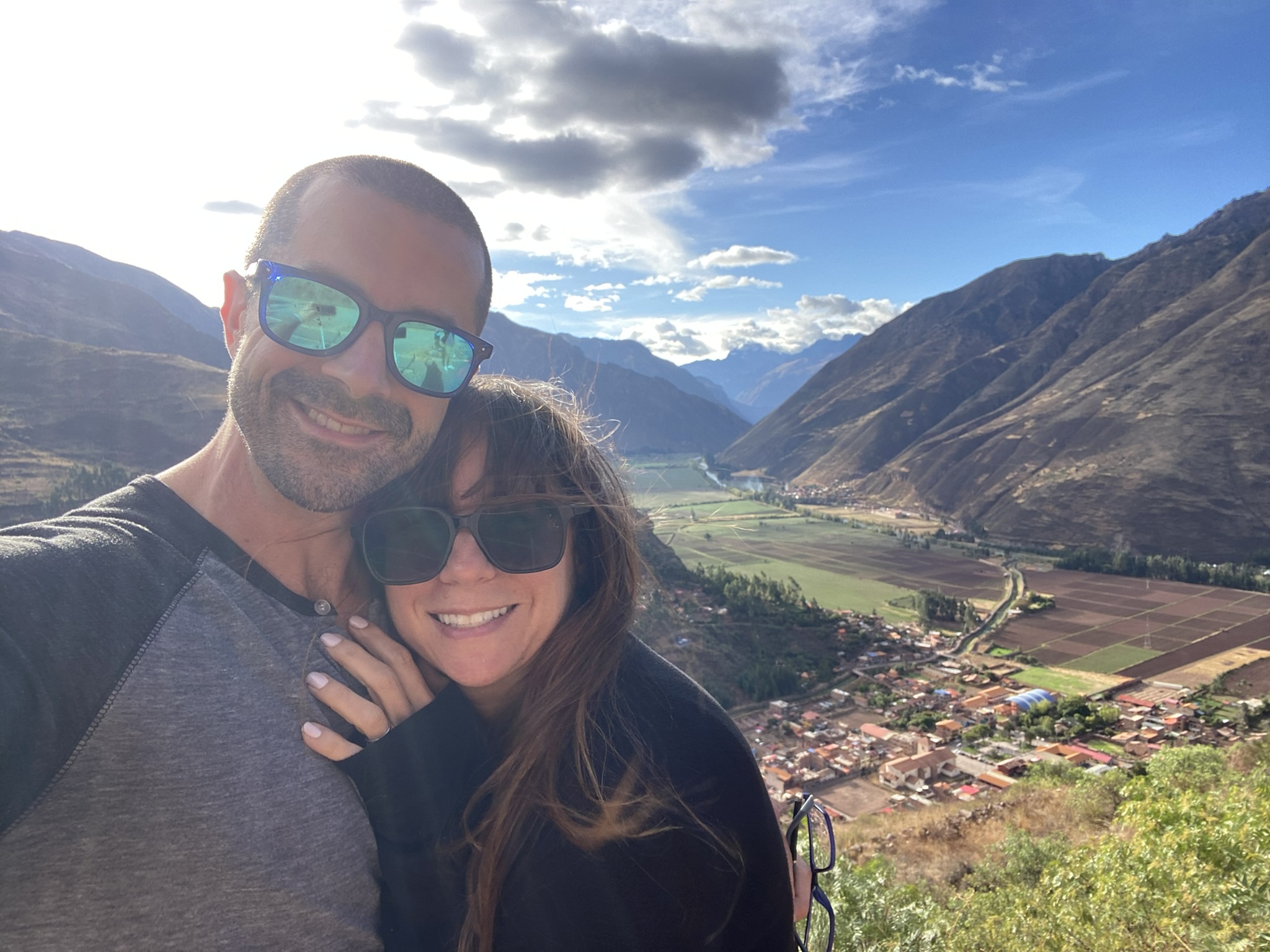
The Sacred Valley from the road above Urubamba. Two thousand feet lower than Cusco and it does not look it, but your body knows.
Machu Picchu Tickets and Trains, Months Ahead
This is the part that catches people out. Machu Picchu is not a place you decide to visit on a Tuesday. Entry is capped, sold in timed circuits, and the train that gets you there is a separate booking on a separate website with its own sell-out problem. If you are traveling in the dry season and you have not booked by about four months out, you are choosing from what is left.
Entry is by circuit and by time slot. You do not buy a ticket to Machu Picchu. You buy a ticket to a specific route through it at a specific hour. Circuit 2 is the one with the classic view over the terraces, and it is the one that sells out first. If somebody offers you a cheap last minute ticket, check which circuit it is, because several of them never see the postcard angle at all.
The train is the bottleneck. PeruRail and IncaRail both run from Ollantaytambo to Aguas Calientes. It is about ninety minutes through a river gorge and it is one of the loveliest train rides I have taken. It is also the only practical way in. Book the train and the entry ticket together, in that order, because there is no point holding an entry slot you cannot reach.
Then there is a bus, and then there is a line. From Aguas Calientes a shuttle bus switchbacks up to the gate. The line for it starts before dawn. Buy bus tickets the afternoon before rather than standing in two lines in the dark.
Hire the guide. A guide is now required for most circuits anyway, and the site makes almost no sense without one. It is stones and terraces until somebody explains what was grown where and why the windows sit where they do. With children this is the difference between an hour of complaints and actual interest.
The Sacred Valley Is the Smarter Base
Most itineraries treat the Sacred Valley as a day trip out of Cusco. Turn that around. Base yourself in the valley for three or four nights and treat Cusco as the thing you do at the end. It is lower, it is warmer, it is greener, the hotels have more room for a family than the tight colonial buildings in Cusco do, and it puts you an hour from the Machu Picchu train rather than two.
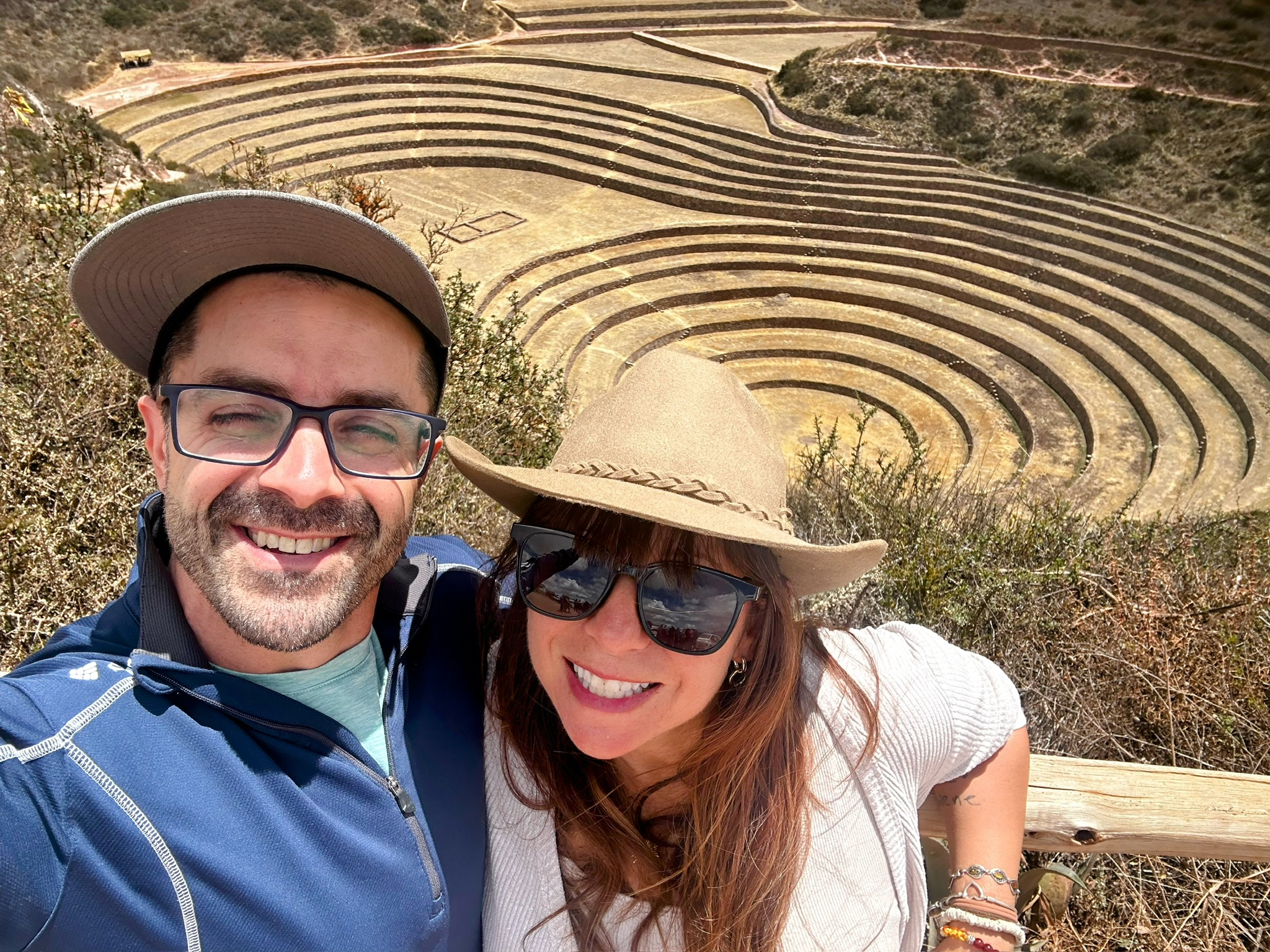
Moray and the salt pans. Moray is a set of concentric circular terraces the Inca appear to have used to test crops at different microclimates. It photographs beautifully and it is strange in person. The Maras salt pans are twenty minutes away, thousands of small white evaporation ponds stacked down a hillside, still worked by the same families. Both together make an easy half day.
Ollantaytambo is the one to walk. It is a working Inca town, not a ruin with a town attached. The street plan and the water channels are original and still in use. The fortress above it is a hard climb at altitude and worth it. This is also where your train leaves from, so it is the obvious last night before Machu Picchu.
Chinchero for the weaving. The women’s weaving cooperatives here will show you the whole chain, from washing raw alpaca with a root that lathers like soap, through the cochineal beetle that makes the red, to the finished cloth. It is a demonstration and yes it ends at a table of things to buy. It is also the single best hour of context you will get on what all those textiles in the market actually are.
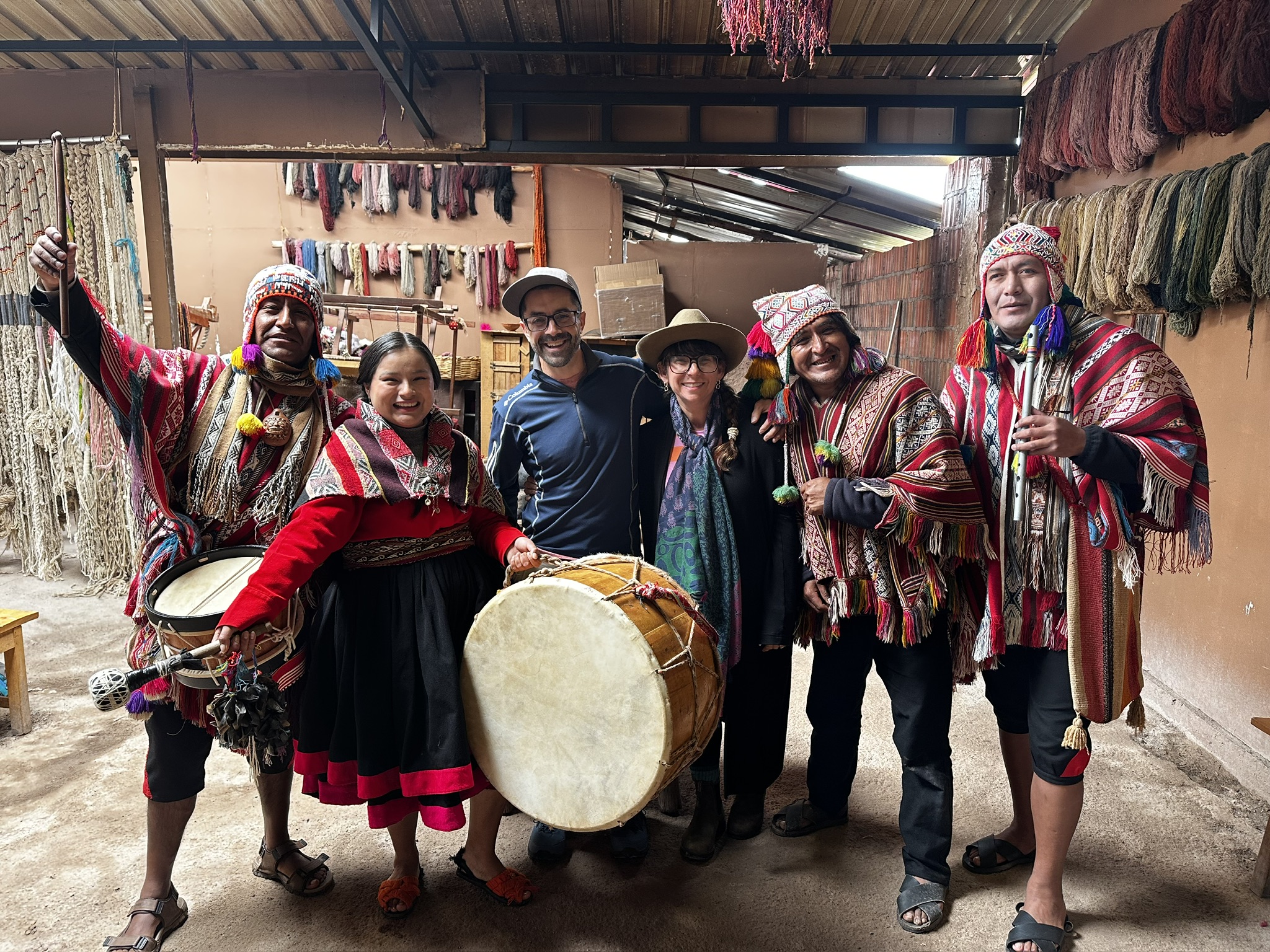
Chinchero. The clothes are not a costume put on for visitors, though the drum came out because we were there.
Cusco, and Why It Goes Last
Cusco is the best looking city in Peru and one of the best looking in South America. Spanish colonial arcades built directly on top of Inca stonework, so the bottom four feet of half the walls in the old center are fifteenth century and the rest is seventeenth. It is also the highest place you will sleep, which is why it belongs at the end of the trip rather than the start.
The Plaza de Armas is the whole point. Two churches, arcades on all four sides, and a constant flow of people. Sit in one of the balcony restaurants for an hour rather than trying to see everything. San Blas up the hill is the artisan quarter and the walk is steep enough that you will feel the altitude.
Qorikancha and Sacsayhuaman. Qorikancha was the Inca sun temple, and a Dominican convent was built straight on top of it. You can see both at once, which tells the story of the conquest better than any museum text. Sacsayhuaman above the city has the enormous fitted stones that make people invent theories.
Watch your pockets in the crowd. Cusco is not dangerous. It does have practiced pickpockets around the plaza and the market, the way Barcelona and Rome do. Nothing about that changed how comfortable I felt walking around at night.
Lima Deserves Days, Not a Layover
I had Lima filed under airport. That was wrong. Lima is one of the three or four best eating cities in the Americas and it is at sea level, which makes it the correct place to spend your first two nights while your body is still on aeroplane time. Stay in Miraflores or Barranco, both of which sit on cliffs above the Pacific with a park running along the top.
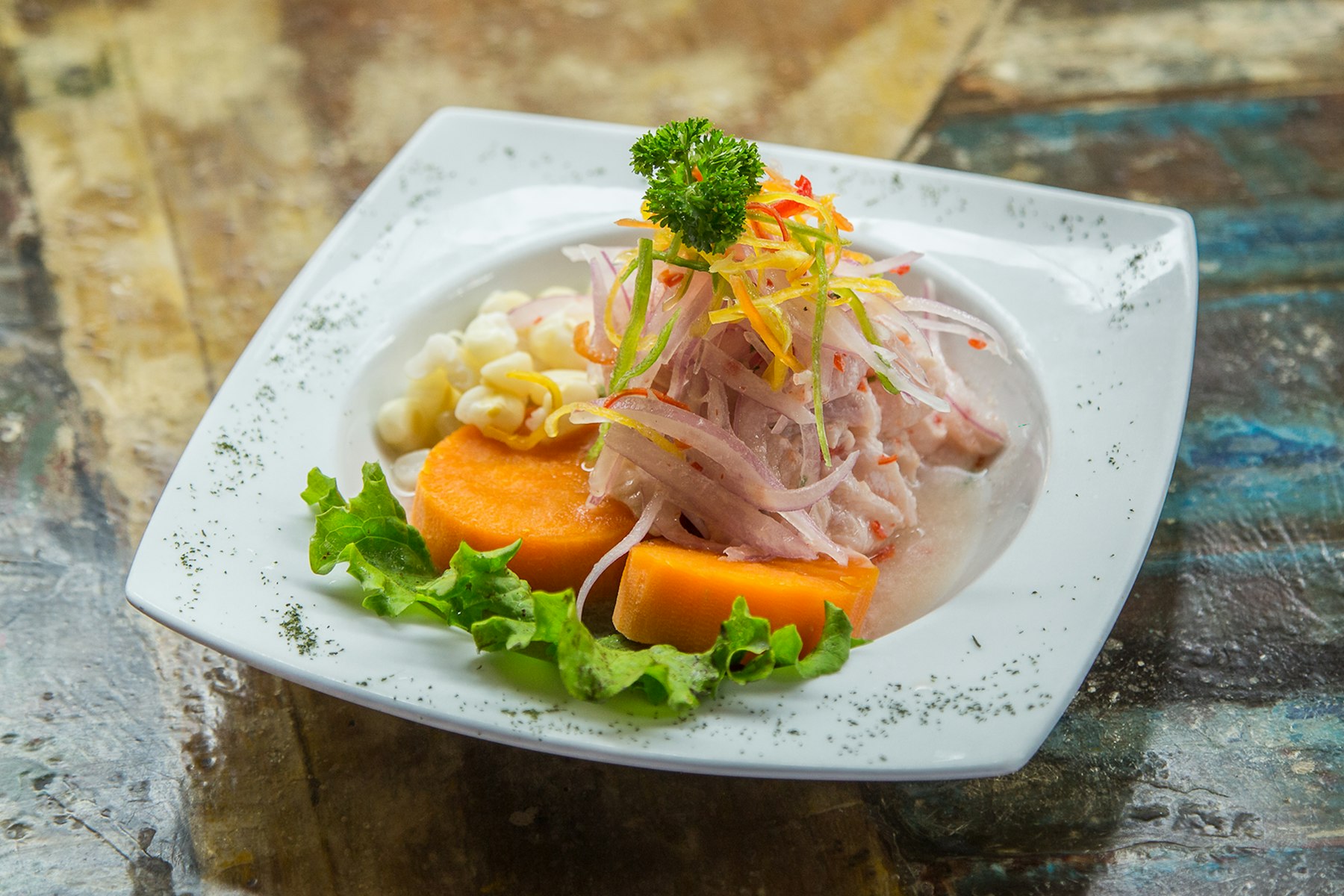
The food is the reason. Peru absorbed Japanese and Chinese immigration in a way no other South American country did, and the cooking that came out of it is its own thing. Nikkei is the Japanese Peruvian strand and chifa is the Chinese Peruvian one. You do not need a tasting menu to eat well here. A neighborhood cevicheria at lunchtime, which is when Peruvians actually eat ceviche, will do it.
Barranco is the neighborhood to walk. Painted houses, murals, the Bridge of Sighs, a lot of bougainvillea, and a cliff path down to the sea. It is small enough to cover on foot with children and it is where I would stay if I were doing it again.
The coast is for looking at, not swimming. The Humboldt current runs up this coast and the water is cold and gray most of the year. The cliff parks in Miraflores are lovely and the paragliders launching off them will hold a child’s attention for a long time. Nobody comes to Lima for the beach.

Central Lima. The colonial core is a fifteen minute drive from Miraflores and almost nobody staying on the cliffs bothers.
Culture and Etiquette
Peru is Andean and Spanish, proud and formal, and the altitude shapes daily life more than any custom. Adam and I felt both in September 2025.
Buenos dias, and use senor and senora. Peruvians are polite and a little formal. Match it and doors open.
Coca tea is offered everywhere at altitude. Drink it. It is legal, mild, and it helps. Do not bring the leaves home.
Ask before photographing people in traditional dress. In Cusco the women with llamas expect a tip for a photo. That is their job. Pay it or do not take the picture.
Lunch is the big meal. One to three in the afternoon. Restaurants offer a menu del dia, three courses for a few dollars, and it is how families eat well cheaply.
Tip ten percent and carry soles. Small notes. Nobody can change a hundred sol note outside a hotel.
Food
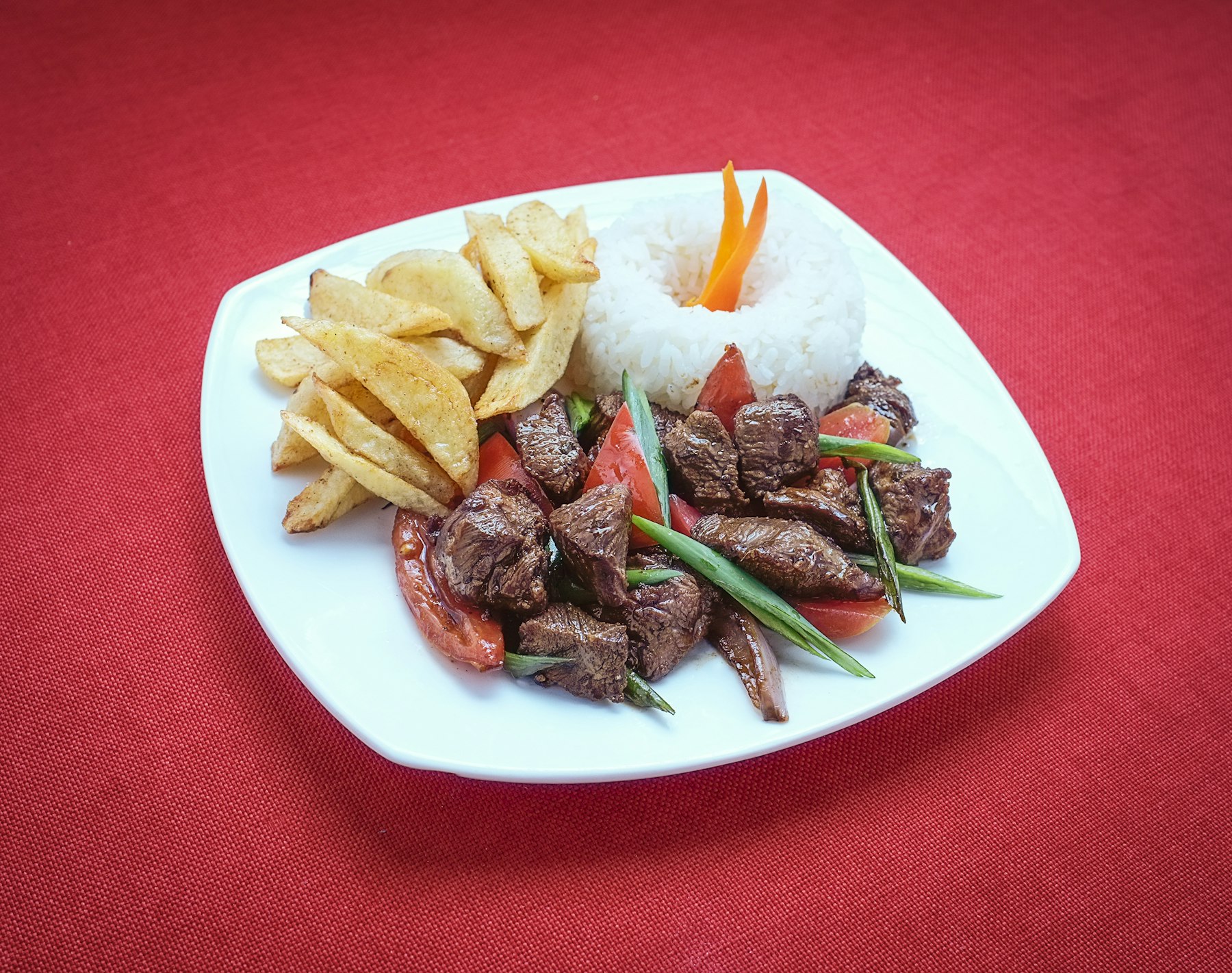
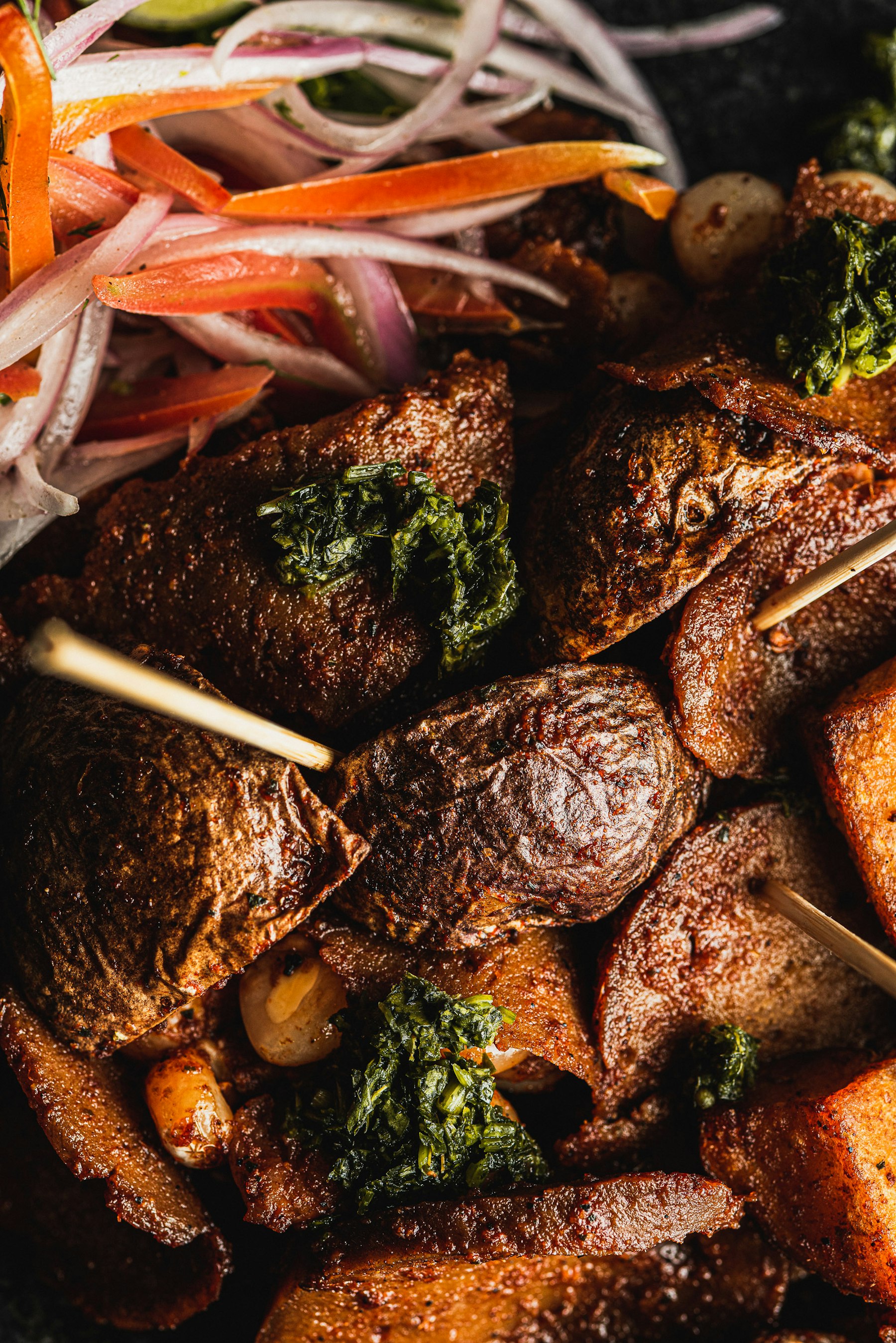
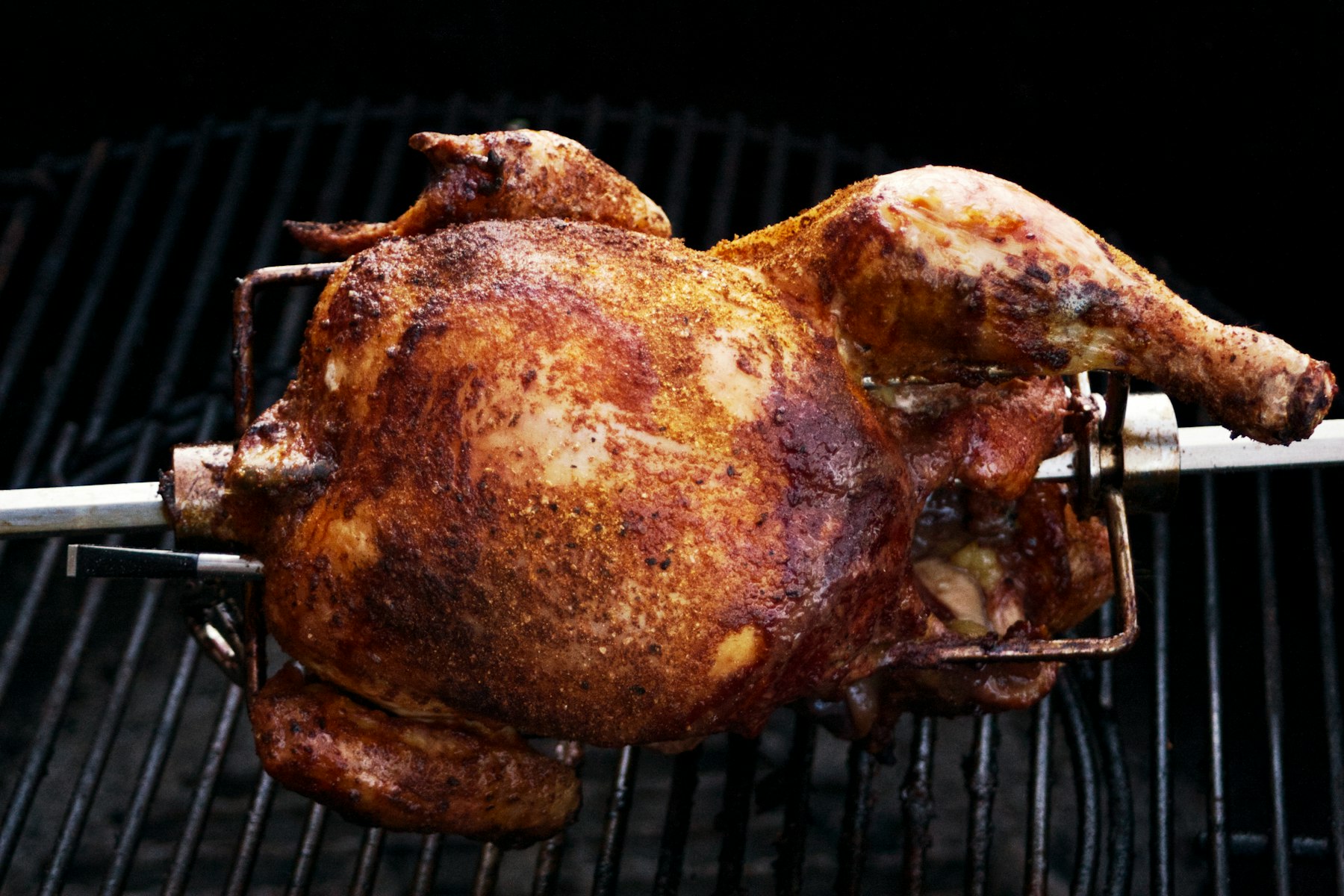
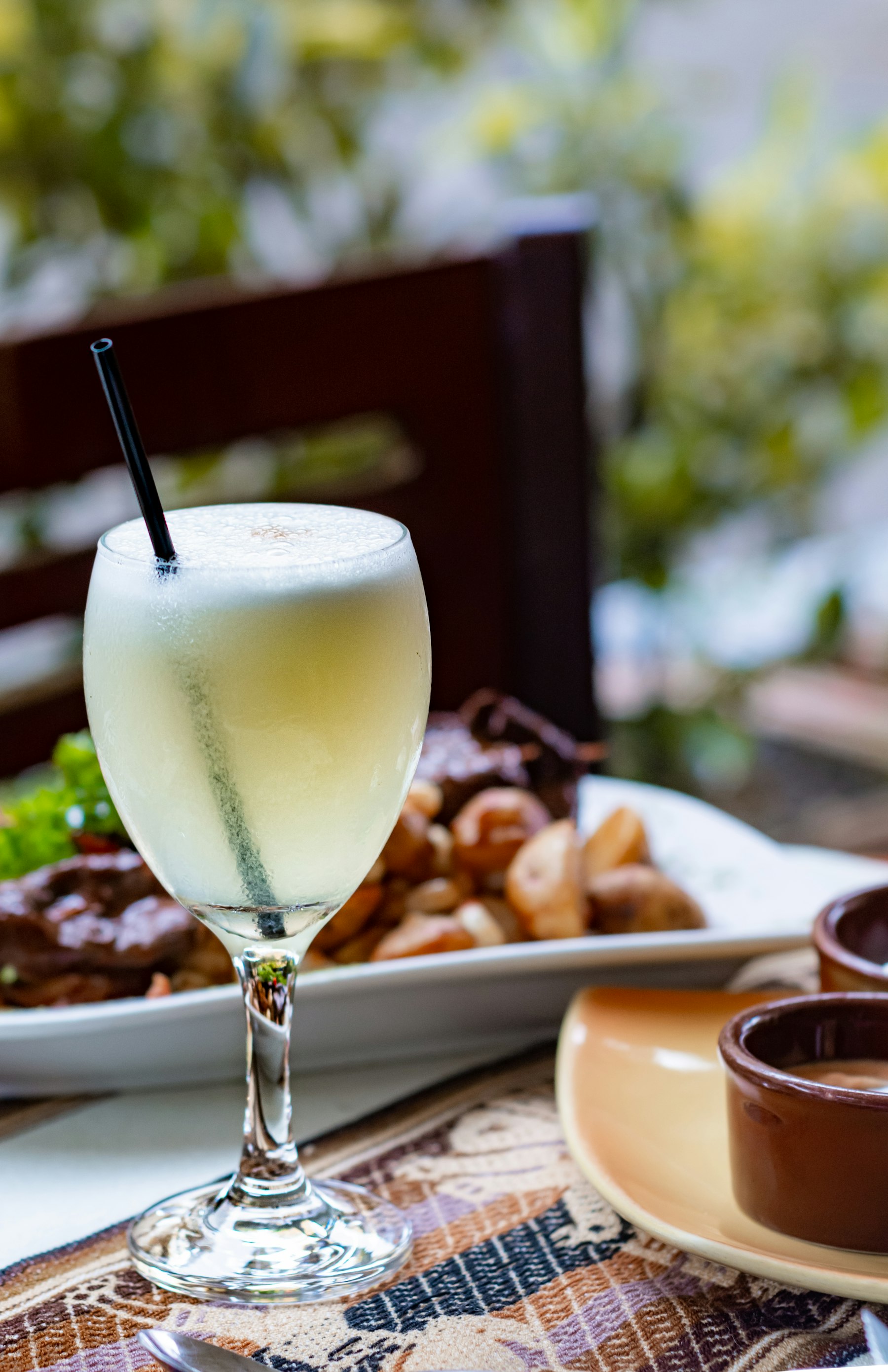
Peruvian food is the reason a lot of people come back. It is built on an enormous larder, four thousand varieties of potato, corn with kernels the size of a thumbnail, chillies that are fruity rather than punishing, and it has absorbed Japanese, Chinese, Spanish and West African cooking over four centuries. Five dishes to order by name.
Getting Around
Peru is large and the terrain is against you. Roads that look like two hours on a map are five in the mountains. Domestic flights are cheap and they are the answer more often than they are in Europe.
Fly the long legs. Lima to Cusco is an hour and twenty minutes and costs less than a nice dinner. The bus is twenty two hours. Lima to Arequipa, Lima to Puerto Maldonado for the Amazon, Lima to Juliaca for Titicaca, all the same story. Book these as you book the trip, not on arrival.
Hire a driver in the Sacred Valley, do not self drive. A car with a driver for the day costs less than a rental plus fuel in most of Europe, and it means somebody else deals with the switchbacks, the altitude and the roadworks. This is the single best value purchase on a Peru trip.
The trains are for Machu Picchu and for scenery. The Ollantaytambo line is the practical one. The Cusco to Puno train across the altiplano is a full day, expensive, and spectacular. Neither is a cheap way to move.

Moray, the Inca terraces in the Sacred Valley
Money and Practical Basics
Soles, and carry cash. The sol is the currency. Cards work in Lima and Cusco hotels and restaurants and stop working the moment you are in a market or a small town. Take out soles at a bank ATM, not at the airport, and always decline the machine’s offer to charge you in dollars.
Do not drink the tap water. Not in Lima, not in Cusco, not anywhere. Bottled or filtered, and use it for teeth as well. Hotels almost all supply it. This is the single most common way visitors lose two days.
No visa for Americans, Canadians or the EU. Ninety days on arrival for tourism. Your passport needs six months of validity. There is no vaccination requirement for the standard Lima and Cusco route, though yellow fever comes into it if you are adding the Amazon, so ask your doctor about that leg specifically.
When to Go
Peru has a dry season and a wet season and the difference matters more here than in most places, because the thing you came for is outdoors and at altitude.
May to September is the dry season and the busy one. Clear mornings, cold nights, and the whole world there with you. June to August is peak. If you want the postcard weather at Machu Picchu this is when it happens, and it is also when you must book four to six months out.
April and October are the sweet spot. Shoulder either side of the dry season. Green rather than brown, meaningfully fewer people, and rain that comes in the afternoon rather than all day. This is when I would go.
January to March is the wet season. Heavy afternoon rain, cloud sitting on the ruins, and the Inca Trail closed for maintenance in February. Machu Picchu itself stays open. Prices drop hard. If your only window is February, go, just do not expect the view.
How Many Days and How to Route It
The altitude sets the order. Lima, the Sacred Valley, Machu Picchu, Cusco last. We did it that way and it worked.
Seven days. Lima for two, the Sacred Valley for three with a Machu Picchu day by train, Cusco for two. Tight but complete.
Ten days. The same route with breathing room. A second Sacred Valley day for Moray and the salt pans, a rest day in Cusco.
Fourteen days. Add the Amazon from Puerto Maldonado for three nights, or Lake Titicaca and the floating islands. Both are a short flight from Cusco.
The Machu Picchu day. Train from Ollantaytambo, bus up, timed ticket, guide, back by dinner. Or a night in Aguas Calientes to be first in at dawn. Tickets sell out months ahead.

The Plaza de Armas in Cusco
Regions at a Glance
Lima and the Coast
The capital, Miraflores on the cliffs, the food. Where you arrive.
Cusco and the Sacred Valley
Machu Picchu, Ollantaytambo, Pisac, the altitude. The reason you came.
The Amazon
Puerto Maldonado and Tambopata. A short flight from Cusco into the jungle.
Arequipa and the South
The white city, Colca Canyon condors, Lake Titicaca. Second trip.
Where to Go in Peru
Peru is the Sacred Valley and Machu Picchu, and the order is set by altitude. Five places.
Lima. Two nights. Miraflores on the cliffs, the Larco museum, ceviche at lunch, paragliders over the ocean.
The Sacred Valley. Three nights at nine thousand feet. Ollantaytambo, Pisac market, Moray and the salt pans, a lodge with a garden.
Machu Picchu. A day or a night. Train from Ollantaytambo, timed ticket, a guide. We did it in September 2025 and the scale is not in the photos.
Cusco. Two nights, last. The Plaza de Armas, Sacsayhuaman, the San Pedro market, chocolate museum for the kids.
Tambopata. Three nights on a second trip. A lodge up the river, macaws at the clay lick, caiman by torchlight.
Doing It With Children
Age eight is the floor
Below that the altitude is a real risk and the ruins mean nothing. Peru with kids works best once they are old enough to actually take in what they are looking at. From eight up, Peru is one of the great trips of a childhood. Llamas, mountains, a train through a gorge, and a lost city they have already seen in a film.
Pack for four seasons in one day
Thirty five degrees in the sun and near freezing at night in the valley, in the same twenty four hours. Layers, a proper hat, and real sunscreen. The UV at that altitude burns people who never burn.
The food is easy
Rice, chicken, potatoes, chips and grilled meat everywhere. Fussy eaters have a much easier time in Peru than in most of Asia or the Middle East. Just be careful with raw fish and cut fruit outside proper restaurants.
Splurge-Worthy Experiences
The Hiram Bingham train
The Belmond train to Machu Picchu with brunch, a bar car and live music. Three hours you will not want to end. Book it one way and take the regular train back.
A Sacred Valley lodge
Explora, Sol y Luna or the Belmond Rio Sagrado. Gardens, horses, a pool, and the valley walls going pink at sunset.
A private guide for Machu Picchu
One who knows the site, the light and the quiet corners. It turns stones into a civilization for a ten year old.
An Amazon lodge at Tambopata
Three nights, macaw clay licks at dawn, caiman by torchlight, a canopy tower. It is a second trip inside the first one.
Who Peru Suits, and Who Should Skip It
I would rather tell you not to book something than have you come home disappointed. Peru is not a soft trip and it does not suit everybody.
Book it if you want the trip to mean something. Families with children over eight who will remember it. First time South America travelers, because Peru is the easiest of the big six to organize. Anyone who cares about food. Anyone who has done the European cities and wants the next thing.
Skip it if you have five days. Peru with less than eight nights is a bad trip. You will spend two of them acclimatising and two of them in transit. If five days is the window, go to Mexico or Costa Rica and save Peru for when you have the time.
Skip it with toddlers. Altitude, long drives, early starts and archaeology. There is no version of this that works well with a three year old, and the Caribbean or Costa Rica is right there.
How it compares to its neighbors. Peru is the most complete single country trip in South America, because it has the ruins, the food, the mountains and the Amazon in one place. Ecuador does the same thing smaller and cheaper and adds the Galapagos. Chile and Argentina are for landscape rather than history and cost noticeably more. Colombia is easier and warmer and has nothing on this scale. Brazil is a different continent in temperament and does not overlap with Peru at all.
Things That Surprised Us
How affordable it is once you are there. The flight is the expensive part. On the ground, a private driver, good hotels and eating well cost a fraction of what the same trip costs in Europe. The exception is Machu Picchu itself, where the tickets, the train and the bus stack up fast.
Cusco is cold at night. People pack for Peru as if it were the Amazon. In June the valley drops close to freezing after dark and a lot of hotels have no central heating, just a hot water bottle in the bed. Which is charming right up until it is not.
The textiles are not all real. A lot of what is sold as alpaca in the markets is acrylic. Buy from a cooperative where you have watched the process, or from a proper shop, and expect to pay accordingly.
Where I Would Start
First time in Peru with kids? Lima, the Sacred Valley, Machu Picchu, then Cusco last. The order is set by altitude, and it matters.
Lima. Two nights. Miraflores on the cliffs, the Larco museum, ceviche at lunch, paragliders over the ocean.
The Sacred Valley. Three nights at nine thousand feet. Ollantaytambo, Pisac market, Moray, the salt pans, a lodge with a garden.
Machu Picchu and Cusco. Three nights. The train from Ollantaytambo, a timed ticket, a guide. We did it in September 2025 and the scale is not in the photos. Then Cusco to finish.
Numbers Worth Knowing
Peru, by the numbers
Ways to travel
Peru is not one kind of trip
How you move through it changes the trip more than which places you pick.
Guided and Small Group Travel
A guide is necessary at Machu Picchu, both for context and for the entry permit system.
For example: a private guide and driver from Cusco through the valley to Machu PicchuRail Journeys
The train from Cusco or Ollantaytambo to Machu Picchu is a scenic ride in its own right, through the Sacred Valley.
For example: the Vistadome train from Ollantaytambo to Aguas Calientes, with the window seatsWalking and Hiking
The Inca Trail is the famous multi-day trek, but shorter Sacred Valley hikes suit younger kids just as well.
For example: the one day Inca Trail from kilometre 104 for families with teenagersAdventure and Outdoors
Amazon rainforest lodges near Puerto Maldonado add real wildlife encounters to a Peru trip.
For example: the Sacred Valley by horse or bike, and a rafting afternoon on the UrubambaExplore by interest
What families come to Peru for

Wonders
Machu Picchu
The single reason most families come, and it earns every bit of the hype in person. A fifteenth century citadel built without mortar, stones fitted so precisely a knife blade cannot slide between them.

Culture
The Sacred Valley and Cusco
Colorful markets, Inca ruins and towns like Pisac and Ollantaytambo on the way to Machu Picchu, then the former Inca capital with its walkable centre and real altitude to plan around.

Wildlife
The Amazon
Rainforest lodges near Puerto Maldonado, a short flight from Cusco, with macaws, monkeys and caimans from a boat and no full jungle expedition required.

Lakes
Lake Titicaca
The highest navigable lake in the world, with the floating reed islands of the Uros still inhabited today. A long day from Cusco by train or an overnight in Puno.
Something unexpected
Only in Peru

Read before you go
Turn Right at Machu Picchu
Mark Adams retraces the 1911 rediscovery of the site. A fun read before visiting and the one I hand to the adults.

Watch before you go
Paddington
The 2014 film opens in Peru, and the bear’s fictional homeland, deepest darkest Peru, is shown with real Peruvian landscapes. The one the small children will want.

From here
The potato
First domesticated in Peru over seven thousand years ago, and Peru still grows more potato varieties than anywhere else on earth. The markets sell dozens.

Only in Peru
The Nazca Lines
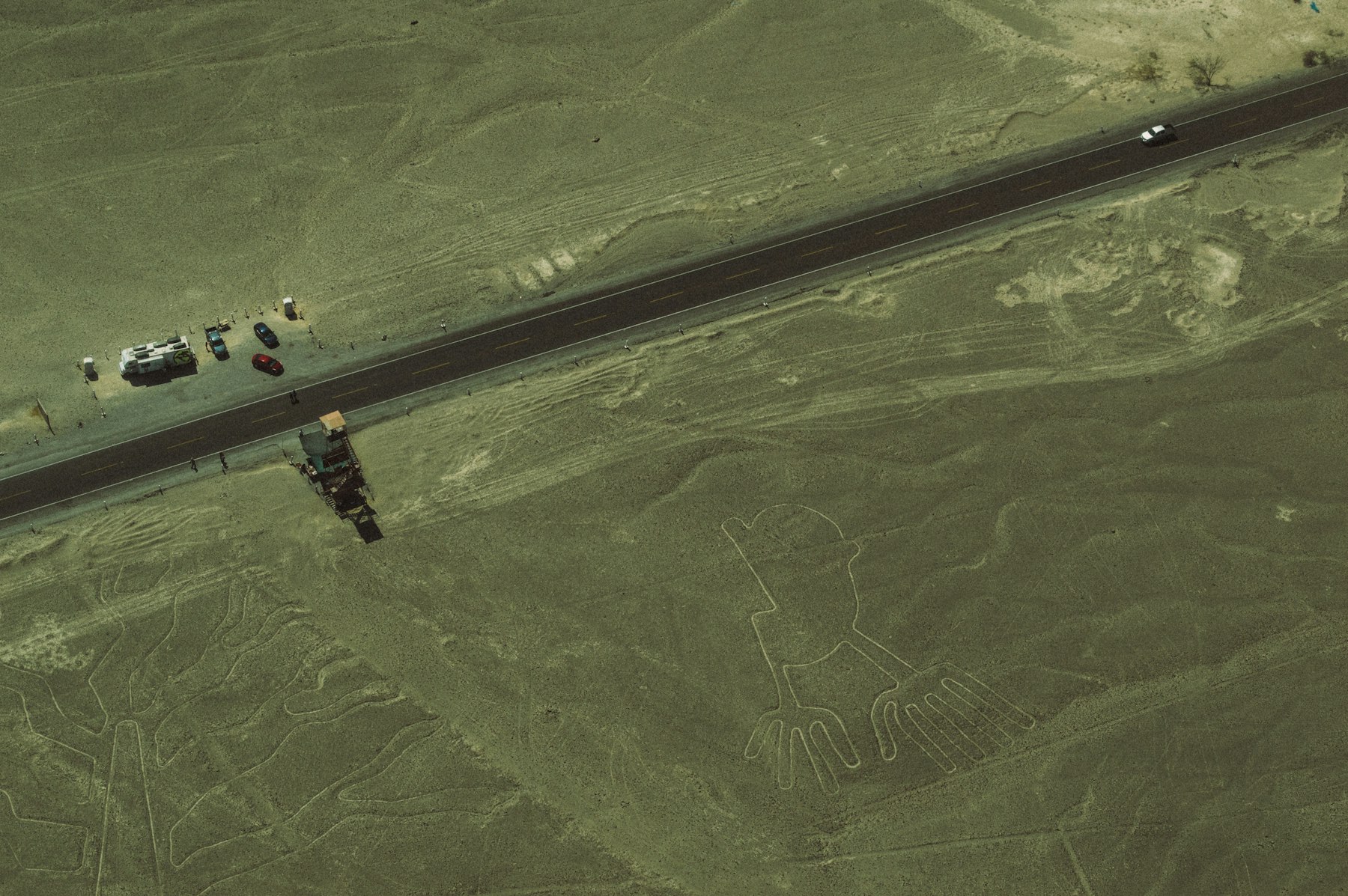
Giant desert drawings you can only make sense of from a small plane, made two thousand years ago and still unexplained. A long day south of Lima.
Combine It With
If you have the time to add a second country, these are the two that make sense next to Peru rather than repeating it.
The same Andes, the same colonial cities, a quarter of the flying. Add the Galapagos and you have the wildlife half that Peru does not really do.
Landscape instead of history. The Atacama is a four hour flight from Lima and it is the most alien place either of us has stood.
Warm, cheap, coastal, and the easy half of a trip whose first half was all altitude and early starts.

Plan Peru with Nicole
Tell me who is coming, and when.
Altitude in Cusco surprises a lot of families, and planning a couple of easy days in the valley before Machu Picchu makes a real difference. I can build that adjustment time into your itinerary. Send me the ages, the dates, and what you are hoping this trip feels like. I will come back with what is really available.
Nicole Damiano, ASTA Verified Travel Advisor with FG Luxury Travel.
Questions families ask about Peru
The ones that come up in almost every planning call. If yours is not here, ask me.
Do we need a visa?
No. Passport with six months left, and you get ninety days on arrival.
How do we handle the altitude?
The order matters. Lima first, then the Sacred Valley at nine thousand feet, then Machu Picchu, then Cusco last at eleven thousand. Adam and I did it in that order in September 2025 and it was the right call. Cusco on day one knocks families flat.
How old for Machu Picchu?
Eight. The site is steep, the altitude is real, and younger kids do not take it in. Ten and up is where it starts to mean something.
Train or the Inca Trail?
Train for almost every family. The Inca Trail is four days of camping at altitude and needs permits months ahead. The train from Ollantaytambo is two hours and the views are half the trip.
When should we go?
May through September is the dry season and the best window. June and July are the busiest. April and October are quieter and usually fine. Machu Picchu tickets have timed entry now and sell out, so they get booked before the flights.
Keep exploring from Peru
Cities, neighbors, and the wider region.
Click any card to open that page
 Argentina
 Brazil
 Chile
Chile Colombia
 Ecuador
 All of South America
 Explore the world
 The Travel Library