
Lisbon With Kids
Nobody warns you about the hills. Everything else about Lisbon is easier than you expect and the hills are harder than anyone tells you, and if you plan around that one fact the city is one of the best value family trips in Europe. This page covers the things to do in Lisbon with kids that are worth your time, laid out the way I build a Lisbon family itinerary for my own clients.
Nicole Damiano, ASTA Verified Travel Advisor with FG Luxury Travel
How many days do we need in Lisbon?
Four nights. The city itself is two days, Sintra is a full day on its own, and the beach or Cascais is worth the fourth. Three works only if you skip Sintra entirely.
Is Lisbon hard with a stroller?
Yes,. Steep gradients, narrow pavements and polished limestone that is slick in the rain. A carrier is the better tool for anyone under three, and Baixa, Belem and Parque das Nacoes are the flat parts of the city to build your days around.
Should we ride tram 28?
Only early and only carefully. It is a beautiful route and it is the most worked pickpocket line in the country. Tram 12 covers much of the same hill with a fraction of the crowd, and tram 15 to Belem is the useful one.
Can we do Sintra as a half day?
No. It is forty minutes each way, the palaces are up a mountain from the station, the connecting bus is packed and entry is timed. Two sites is the maximum with children and it fills the day.
Is Lisbon still cheap?
Cheaper than northern Europe by a clear margin, and no longer cheap in absolute terms. Budget between Spain and France. The biggest savings are eating away from the squares and using a transit day pass instead of paying per ride.
Does using a travel advisor cost me extra?
Planning fees start at $200 and cover everything. International family trips start at $500. The trip itself is the same price you would pay booking it direct. What you are buying is the routing and the sequencing, which on a city built on seven hills is most of the trip.
The Hills Are The Thing Nobody Warns You About
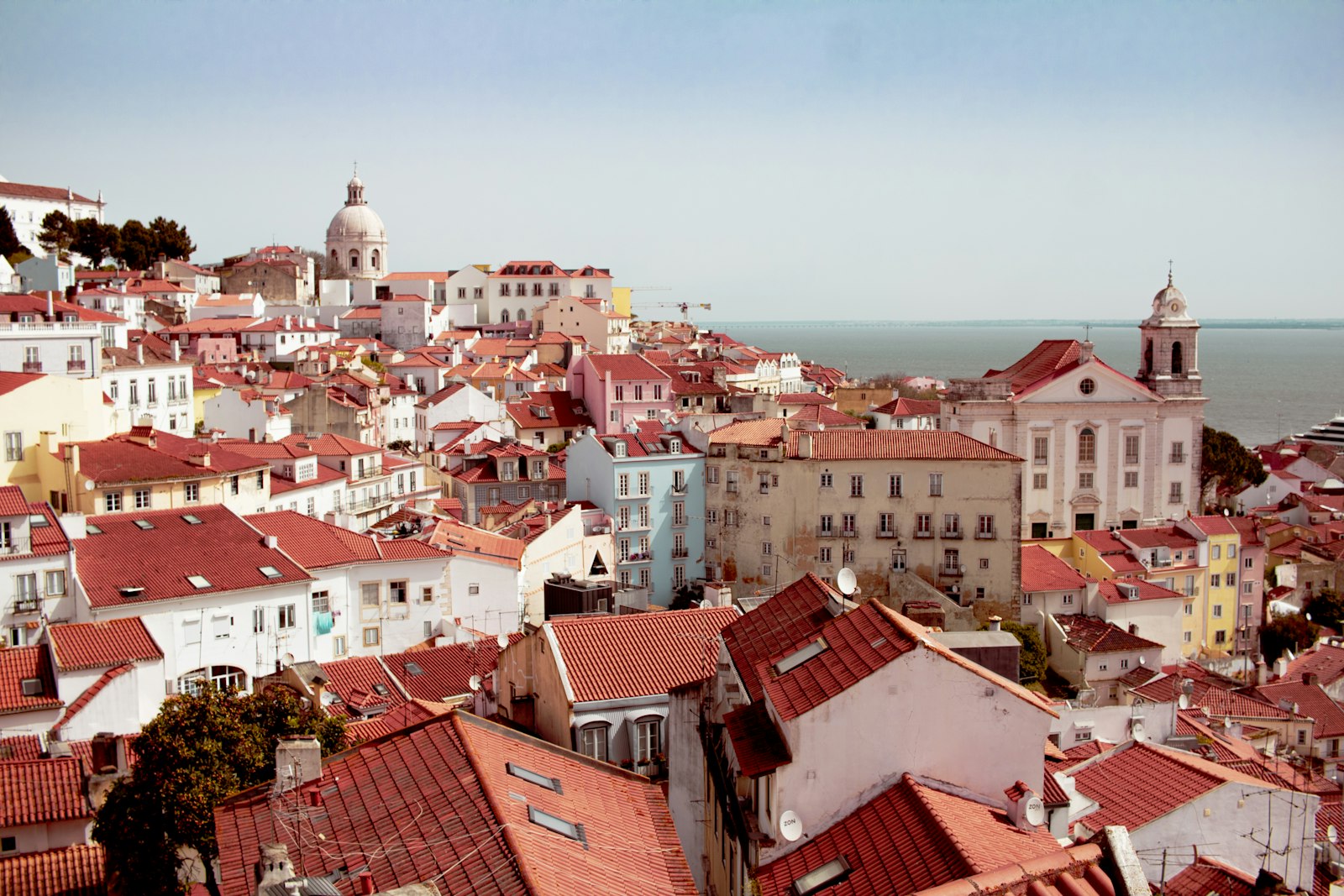
Lisbon is built across seven hills and the guidebooks mention that as a charming fact. It is not a charming fact. It is the single thing that will decide if your days work. Some of these streets are not walks, they are climbs, and the surface is polished limestone that gets slick in the rain.
What is not in doubt is what makes Lisbon work for families. It is warm when the rest of Europe is not. It is cheaper than Paris, Amsterdam or Copenhagen by a wide margin. It has a river, trams, a castle, an aquarium that is world class, and beaches thirty minutes out on a suburban train. Very few European capitals give you that combination.
Who it is for
Families who want sunshine and value in the shoulder season, kids who can handle a lot of walking, and anyone who wants a city that comes with beaches and a castle day trip attached.
Who should skip it
If you are traveling with a stroller and a baby, Lisbon is hard work and I would move it later or pick a flatter city. The same goes for anyone with a knee, a hip or a mobility issue. And if your family cannot cope with heat, do not put Lisbon in August.
Getting There
General ranges, not exact schedules. Traffic and season move all of these.
Trams Are Transport. Tram 28 Is Something Else.
Tram 28 Is A Pickpocket Route
Every list tells you to ride tram 28 and it is a beautiful route through Graca, Alfama and Baixa on a wooden 1930s tram. It is also the single most worked pickpocket route in Portugal. The carriages are packed, everybody is a tourist, everybody has a phone out, and the police put up signs about it. If you ride it, ride it at half seven in the morning from the Martim Moniz end, sit down, put the bags on your lap and keep your hands on them.
Use Tram 12, 24 And 15 Instead
Tram 12 does a shorter loop of the same hill for the same ticket with a fraction of the crowd. Tram 24 goes up to Campolide through Principe Real. Tram 15 is a modern one that runs out to Belem and is the easiest way to do that half of the city. All three are ordinary public transport that happens to be scenic, which is what people want from tram 28.
The Elevators Are Public Transport Too
Lisbon has three funiculars and a public elevator because the hills defeated the city too. The Elevador da Bica, the Gloria and the Lavra all climb hills for a transit fare, and the Santa Justan elevator is a wrought iron tower that carries you from Baixa up to the Carmo ruins. They are on the same day pass as everything else, which almost nobody realizes. Buy the Viva Viagem card, load a day pass, use the hills as a ride.
What Is Worth Your Hours

Belem, and the pasteis
Belem is a flat riverside district about twenty five minutes west and it holds most of the famous things in one strip. The Belem Tower, the Monument to the Discoveries, the Jeronimos Monastery with a cloister that stops people mid sentence, and the original pastel de nata bakery which has been making them since 1837 and sells thousands a day. Do the whole thing as one morning. It is flat, which after two days in Alfama will feel like a gift.

Alfama, Sao Jorge Castle and the miradouros
Alfama is the old Moorish quarter, the part that survived the 1755 earthquake, and it is a maze of lanes and washing lines with the castle above it. Take a tram or a tuk tuk up and walk down. The castle itself is more wall and view than furnished rooms, which suits children fine because there are ramparts to walk and peacocks in the grounds. The miradouros, the terraced viewpoints, are free and are where you stop and let everybody sit down.

The Oceanario, and this is the one I would not cut
The Oceanario de Lisboa out at Parque das Nacoes is one of the largest and best aquariums in the world, built around a single enormous central tank you circle on two levels with sharks and a sunfish and rays going past at eye height. It is a proper half day, it is indoors when it is too hot or wet, and it is the thing every family I have planned Lisbon for has named as the highlight. Book a timed slot.

Far Cheaper Than Western Europe. No Longer Cheap.
The Gap Is Real And It Has Narrowed
Lisbon still comes in well under Paris, Amsterdam, Copenhagen or Dublin on almost everything, and for a family that difference across four nights is meaningful. But the days of Lisbon being a bargain are over. A decade of tourism and remote workers has pushed rents and restaurant prices up hard, and the locals will tell you so. Budget somewhere between Spain and France and you will be about right.
The Couvert Is Not Free
Bread, olives and cheese appear on your table without you ordering them. That is the couvert and it is a charge, it is legal, and you are allowed to say no and send it back. Nobody minds. It is small money but it is on every bill in the tourist areas and it surprises people.
Portugal Is On The Euro
Which makes it simple if you are coming from Spain or France. Cards work almost everywhere. Multibanco cash machines, the ones in blue, are the bank network and give a fair rate. Avoid the standalone Euronet machines in tourist streets, which are the same trap as everywhere else in Europe.

Lisbon Is A Shoulder Season City
Five Things To Eat In Lisbon
 Pastel de nata
 Bacalhau
 Sardinhas assadas
 Polvo a lagareiro
 Arroz de marisco
Nicole’s Perspective

Everything Here Runs Downhill
Lisbon rewards a plan more than almost any European city its size. Routing, sequencing, what to book and when, which neighborhood puts your family closest to the things they will do, and which famous thing is not worth the line. Get those right and the city is easy on everybody. Get them wrong and you spend four days climbing.
The thing I keep coming back to with Lisbon is the topography, because it is the one variable that decides if the trip is lovely or exhausting. Every itinerary I build for it is organized around going downhill. Get up the hill by tram, funicular or tuk tuk. Walk down. Do that and Lisbon is one of the best value family cities in Europe. Ignore it and you will spend four days negotiating with tired children on a slope.
Portugal is high on our own list. In the meantime, send me your dates and I will build you the version that goes downhill.

Slopes, Cobbles And Where To Put Them Down
The calcada portuguesa, the small white limestone blocks that pave most of Lisbon, is beautiful and it is polished glassy by a century of feet. On a slope, in the wet, it is slippery. This is the practical fact of the city.
Downtime Pick
Parque das Nacoes. The old Expo site on the river, flat, modern, with the aquarium, a cable car along the water, wide promenades and fountains children are allowed to run through. It is the opposite of Alfama in every way and that is exactly why it works as the second half of a hard day. Jardim da Estrela is the smaller central option, with a playground and a duck pond.
The Neighborhoods, And What Each One Costs Your Legs

Baixa, Chiado, Principe Real, Alfama, Belem
Baixa is the flat grid the city rebuilt after the 1755 earthquake, between the river and the hills. For a family this is the easy answer. You are level, you are on every tram and metro line, and you do not have to climb home. It is touristy and it is a little charmless at night, and it is still what I book most often.
Chiado sits just above Baixa and is the smart shopping and theater district. Prettier, pricier, and only a modest hill. Principe Real is further up again, leafier, more residential, very good restaurants, and a proper climb from the center unless you use the Gloria funicular.
Alfama is the one everybody wants and the one I talk families out of. It is gorgeous, it is a maze, taxis cannot always reach the door, luggage has to be carried up steps and it is loud with fado and tourists until late. Wonderful for two adults. Hard with children and bags.
Belem is flat, riverside, quiet and green, and it is twenty five minutes from the center. If your family wants space and calm over being in the middle of things, it is underrated and it is cheaper.
Sintra Needs Its Own Planning, Not A Spare Afternoon

Pena Palace, Quinta da Regaleira, and the mistake everybody makes
Sintra is forty minutes by train from Rossio station and it is a hillside of palaces in a misty forest. Pena Palace is the one on every postcard, painted red and yellow like something a child drew. Quinta da Regaleira has an initiation well, a spiral stone staircase going nine storys down into the ground with tunnels at the bottom, and that is the single best thing in the whole area for children over about seven.
Here is the mistake. People treat Sintra as a spare afternoon. It is a full day minimum and it needs booking. Pena entry is timed and sells out in season. The town is at the bottom, the palaces are up a mountain, and the 434 bus that connects them is packed by ten in the morning. Two sites in one day is the honest maximum with children.
Get the first train out, be at Pena when it opens, do Regaleira after lunch, and go home. If you would rather have an easier day, take the coastal line to Cascais instead and put everybody on a beach.
Where The Money Is Worth Spending
Pay For Flat Ground And Skip The Fado Dinner
In Lisbon the upgrade that changes your trip is not a nicer room, it is a flatter address. A modest apartment in Baixa with an elevator beats a beautiful one halfway up Alfama with thirty steps to the door, every single time, with children. That is the whole splurge advice and I would spend the money there before anywhere else.
Two more that earn it. A tuk tuk up the hill on your first morning, which costs a few euros a head, saves the argument and doubles as an orientation tour. And the timed Sintra tickets bought weeks out rather than on the day, because the alternative is a line in the sun with a family who did not sign up for that.
What I would not pay for. The fado dinner shows in Alfama aimed at tour groups are expensive and the food is beside the point, and fado with children under ten is a hard sell anyway. The river sunset cruises are pleasant and not worth what they charge. And the hop on bus makes no sense in a city where a day pass covers trams and funiculars.


The Honest Number Of Nights
Four nights, and Lisbon is one of the few cities where I say four rather than three. That is because Sintra takes a whole day and the beach takes another, and if you only give it three you are choosing between them and the city itself. Five if you want Sintra and Cascais both.
Day one, up and then down
Tram or tuk tuk up to the castle first thing, walk the ramparts, then work downhill through Alfama to the cathedral and out into Baixa. Lunch off the square. Afternoon flat, a miradouro at the end of the day.
Day two, Belem then the aquarium
Tram 15 west to Belem for the tower, the monastery cloister and the pasteis. Back in the afternoon, or straight out to Parque das Nacoes for the Oceanario if the weather has turned.
Day three, Sintra. Day four, the beach
First train to Sintra, Pena at opening, one more site, home. Then give the last day to Cascais or Carcavelos and let everybody do nothing. That last day is the one people cut and it is the one they remember.
Things I Would Tell A Friend Before They Booked
Lisbon With Kids, Answered
 Poppy marks the family parts. Wherever you see her, that section is written for traveling with children.
How Many Days
Three days is right for Lisbon with kids. A fourth for a beach or a day trip.
Tram 28 up the hills, Belem for the tower and the pasteis de nata, the castle of Sao Jorge, and a sunset over the river.
Add the Oceanario, a ride up the Santa Justa lift, and time in the lanes of the Alfama.
Sintra for the palaces in the hills, or Cascais for the beach.
How many days do we need in Lisbon?
Four nights. The city itself is two days, Sintra is a full day on its own, and the beach or Cascais is worth the fourth. Three works only if you skip Sintra entirely.
Is Lisbon hard with a stroller?
Yes,. Steep gradients, narrow pavements and polished limestone that is slick in the rain. A carrier is the better tool for anyone under three, and Baixa, Belem and Parque das Nacoes are the flat parts of the city to build your days around.
Should we ride tram 28?
Only early and only carefully. It is a beautiful route and it is the most worked pickpocket line in the country. Tram 12 covers much of the same hill with a fraction of the crowd, and tram 15 to Belem is the useful one.
Can we do Sintra as a half day?
No. It is forty minutes each way, the palaces are up a mountain from the station, the connecting bus is packed and entry is timed. Two sites is the maximum with children and it fills the day.
Is Lisbon still cheap?
Cheaper than northern Europe by a clear margin, and no longer cheap in absolute terms. Budget between Spain and France. The biggest savings are eating away from the squares and using a transit day pass instead of paying per ride.
Does using a travel advisor cost me extra?
Planning fees start at $200 and cover everything. International family trips start at $500. The trip itself is the same price you would pay booking it direct. What you are buying is the routing and the sequencing, which on a city built on seven hills is most of the trip.
Three printables built just for Lisbon
Three printables for Lisbon so far, plus a bingo card the whole family can play. Every page points at something real in the city. More are on the way, and if you need one for an upcoming trip, message me!

Lisbon Explorer Journal
Ages 8 to 12. 56 pages and nine creative studios. $9.99.

Lisbon History Hunt
Ages 11 to 13. Six real stops, from the Roman theatre of Olisipo to Largo do Carmo, where a regime changed on April 25, 1974, each one a case to investigate. $9.99.

Lisbon Adventure Bingo
All ages. One card, seven print sizes, twenty-four things to spot in Lisbon and a free space in the middle. $1.99.
Ready To Put Lisbon On The Calendar
Send me your dates and how old your kids are and I will build you the version that goes downhill, with Sintra booked before you fly and the flat days in the right places.
Keep exploring from Lisbon
Nearby cities, the country, the whole region.
Click any card to open that page
 All of Portugal
 All of Europe
 Explore the world
 The Travel Library