
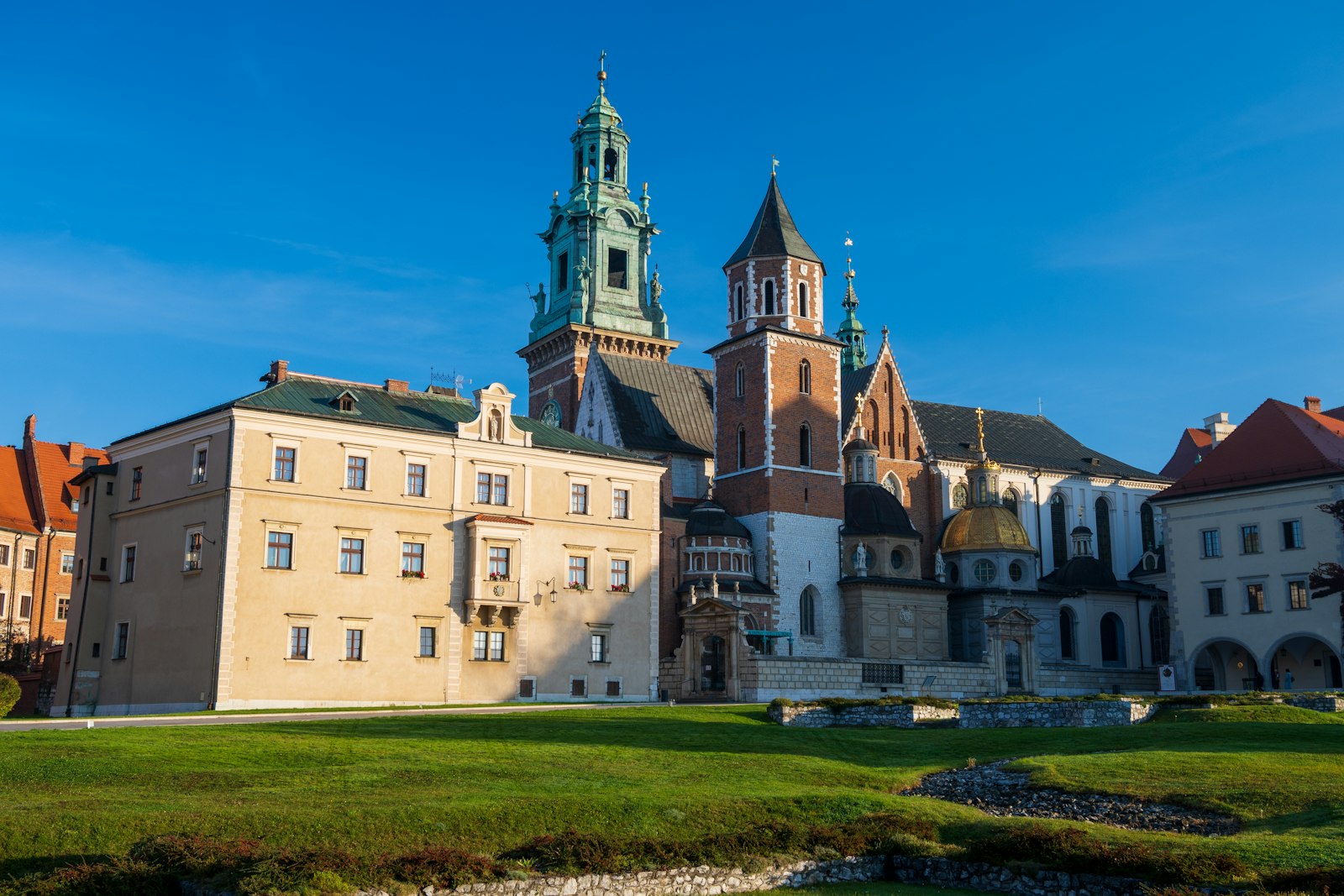
Wawel Cathedral in Krakow. We slept in an RV directly underneath this on a Saturday night because Saturday parking is free · photo: Unsplash
Poland Family Travel Guide
“I have read Anne Frank. I have been to the Holocaust museums in Orlando, Washington DC and Israel. None of it gave me what standing there gave me.”
Nicole Damiano, ASTA Verified Travel Advisor with FG Luxury Travel
Do we need anything to enter, beyond passports?
Not a visa. US passport holders get 90 days in any 180 day period across the Schengen area, and this country counts toward that same 90 days. Your passport has to be valid for at least three months beyond the day you leave Europe. Check the kids' passports too. Child passports are only good for five years and they expire quietly. Since October 2025 the EU has been taking fingerprints and a facial image at the border under the new Entry and Exit System. No fee, no form. The first arrival can be slower than you remember, so build a real cushion into any connection. ETIAS, the paid travel authorization you may have read about, is not running yet. It is expected in late 2026. When it starts I will tell every family I am working with, well before they fly.
Should we take the kids to Auschwitz?
The museum recommends fourteen and up, and I agree. We walked it in 2010 and I have thought about that question more than almost anything else on this site. With younger children, one parent goes while the other takes the kids to the Wieliczka salt mine, which is astonishing and an hour away. Then talk about it at dinner in the way that fits your family.
Krakow or Warsaw?
Krakow. The old town survived the war, Wawel Castle is right there, and the whole center is walkable with kids. Warsaw is rebuilt and interesting, but it is a second trip. Krakow to Warsaw is two and a half hours on the train if you want both.
Do we need zloty?
Yes, Poland kept its own currency. Cards work almost everywhere, so you will need very little cash. Use a bank ATM or a kantor, never a street booth.
Is it cheap?
Compared with Germany or Austria, yes, by about a third. A family dinner of pierogi and soup runs forty dollars. Hotels in the old town are half what Prague charges.
Nicole’s Perspective
Why families hire me for Poland

Poland is the country I have thought about most in the fifteen years since we drove it, and it is not because of the food or the castles.
We came into Poland from Germany in an RV with German plates, which turns out to be a detail you feel. We slept under Wawel Castle in Krakow on a Saturday night because Saturday means free parking. The plan was to walk the city in the morning and eat pierogi. Instead a man appeared at the windows offering to watch our vehicle and keep it safe from bandits, so we did a driving tour of Krakow instead, which is how I ended up on the tram tracks getting looks from people who thought we were German.
Then we went to Auschwitz and Birkenau, and everything else about that week stopped mattering.
I had learned about the Holocaust in sixth grade and again in high school. I had read Anne Frank. I had seen Schindler’s List. I had been to the Holocaust museums in Orlando, in Washington DC and in Israel. None of it gave me what standing there gave me. Two hours through Auschwitz I on a headset, then a bus three kilometers to Birkenau, which is twenty times larger and was never finished. What I have never been able to put down is a long hallway with glass walls on both sides, filled with shoes. Not a number on a page. Shoes.
So this guide is going to give you enormous value for money, a country most Americans have never considered, and one honest, difficult conversation about if to bring your children to a death camp. I am not going to skip that part. It is the single most common question I get about Poland and it deserves a real answer, not a soft one.
Beyond the Bookshelf
Stories to carry you deeper into Poland. This is our own family shelf, real books, films, music and a cookbook tied to the place, not a generic reading list. Read it before you go and the trip means more when you get there.

- The Zookeeper’s WifeDiane Ackerman
- Schindler’s ArkThomas Keneally
- SolarisStanisław Lem
- The Trumpeter of KrakowEric P. Kelly
- Map: Collected and Last PoemsWisława Szymborska
- Polska: New Polish CookingZuza Zak
Book links go to Bookshop.org, which supports local bookstores. Film and music links go to JustWatch and Spotify. As an affiliate we may earn from qualifying purchases.
Why this country, for this family
Why Poland
 Poppy marks the family parts. Wherever you see her, that section is written for traveling with children.
Poland is the best value in Europe right now and it is not particularly close. A family of five eats a proper sit down dinner for what two people spend in Paris. The cities are beautiful, most of them rebuilt from rubble by people who refused to let them stay gone, and the history is not decoration here. It is the reason the place looks the way it does.
Who it is for. Families on a budget who are done pretending that means compromising. Castle and knight kids, because Poland has more of both than anywhere. Families with older children ready for real history rather than a costumed version. Anyone who has done western Europe and wants somewhere that has not been polished for tourists yet.
Who should skip it. Families with young children looking for a light, easy, sunshine trip. Poland can absolutely be that, but the country’s biggest draws are heavy, and you will end up either engaging with that or deliberately steering around it. Also skip it in January unless you like cold.
The zloty, and it goes far
Not the euro. Roughly four zloty to the dollar. A restaurant meal, a museum ticket and a train fare all cost around half what they do in Germany.
Most of it was rebuilt
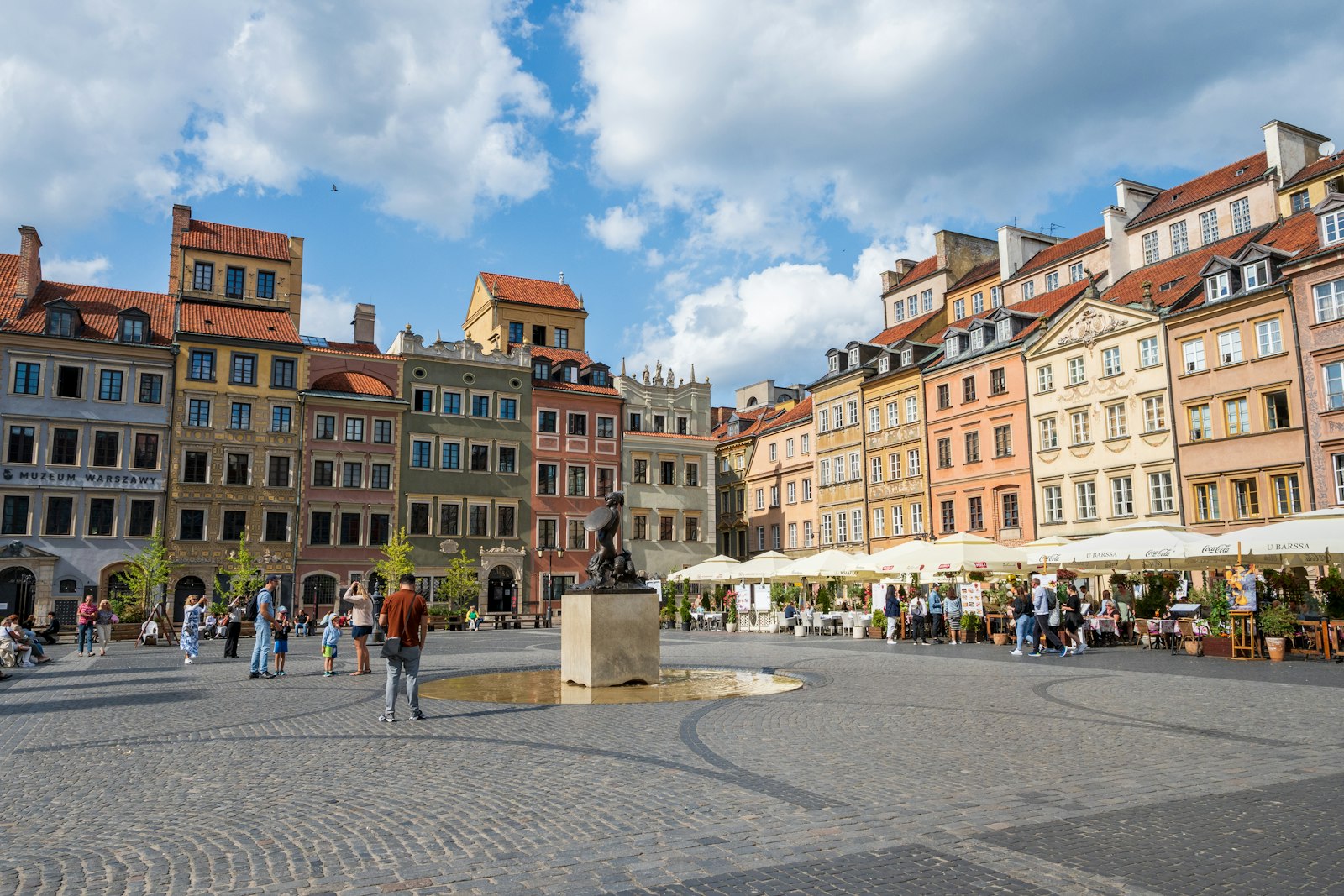
Warsaw’s old town was over eighty percent destroyed in the war and then reconstructed from paintings and photographs. It is a UNESCO site specifically because of that.
The history is not optional
Auschwitz, the Warsaw Uprising, the Jewish quarter in Krakow, Schindler’s factory. You can plan around it, but you cannot pretend it is not there.
None of it gave me the knowledge and understanding as visiting Auschwitz-Birkenau.
Nicole Damiano, Oswiecim, November 2010Where to go
Poland City by City
Poland is big. Bigger than most people picture, roughly the size of New Mexico, and the distances between these eight places are real. Pick a corner rather than trying to cross it. Most families do Krakow and one other thing and that is the right call.


Anthem Mazurek Dabrowskiego, Poland is not yet lost. It was written by soldiers in exile and it still sounds like a march. Language and money Polish, and very good English from anyone under forty. The zloty, not the euro, and prices are a third below western Europe.


Culture and Etiquette
Poles are direct, warm once you are past the front door, and far more formal with strangers than Americans expect. Politeness here is structure, not smiling.
Formality first, warmth second. Pan and Pani, sir and madam, get used with strangers as a matter of course. Once you are a guest in someone’s home it flips entirely and you will be fed until you cannot move.
Catholicism is woven in. Churches are working churches, not exhibits. Cover shoulders, keep children quiet, and do not photograph people praying. Sunday morning is busy for a reason.
Be careful how you talk about the war. Never say Polish death camps. They were German camps built in occupied Poland, and the distinction matters enormously here. Poland lost around six million people, roughly a fifth of its population.
Shoes off in homes. Always, and there will be slippers waiting for you.
If you are invited to dinner, bring flowers. An odd number of stems, never chrysanthemums, which are for graves. Vodka is also acceptable and will be opened.
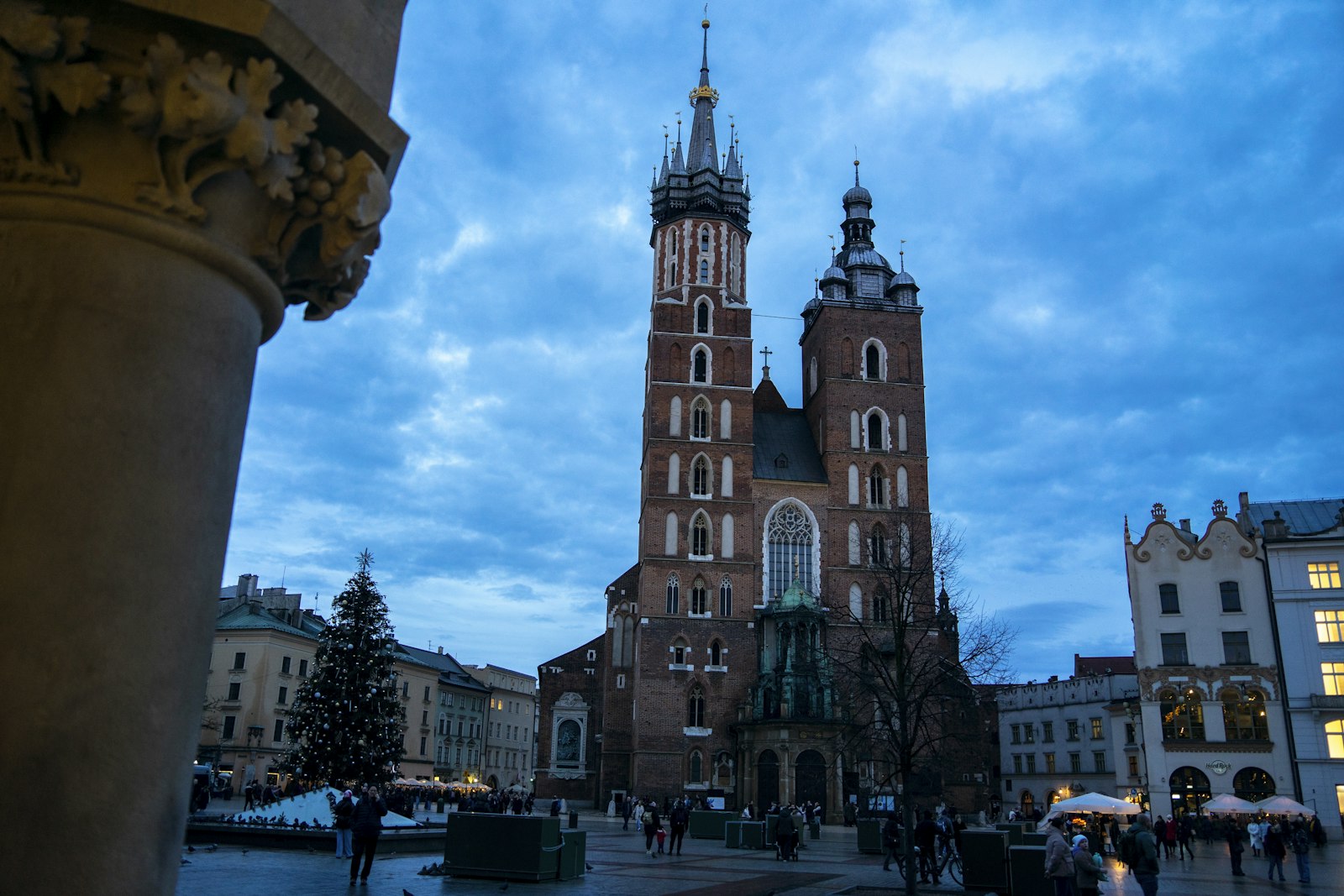
Saint Mary’s Basilica on Krakow’s main square. A trumpeter plays from the tower every hour and stops mid note, which children find either fascinating or maddening.
Food
Polish food is dumplings, soup, cabbage, pork and sour cream, and it is the most comforting food in Europe when it is cold outside, which in Poland it often is.
The thing that will surprise you is the price. A milk bar, a bar mleczny, is a state subsidised cafeteria left over from the communist era, still running, still cheap, still serving real food. Five people can eat for what one dish costs in a tourist restaurant thirty meters away. Point at what you want. Nobody minds.
We never got our pierogi in Krakow. A man at the window offering to protect our vehicle from bandits changed the plan and we drove out of the city instead. It is a small regret and it is on my list for when we go back.





Getting Around
Trains between the big cities, and a car only if you are going into the mountains or chasing castles.
PKP Intercity runs fast, modern trains and the EIP service between Warsaw, Krakow, Gdansk and Poznan is good. Warsaw to Krakow is about two and a half hours. Warsaw to Gdansk under three. Book online in advance for the cheap fares. Children travel at large discounts and under fours go free.
City transport is trams and buses, cheap, and you validate a ticket when you board. Krakow’s old town is closed to cars, which is worth knowing before you do what we did and drive a large vehicle into the middle of it. I ended up on the tram tracks. There is no version of that story where I come out well.
If you drive, Poland’s motorways have improved beyond recognition since 2010. Some sections are tolled electronically through the e-TOLL system rather than by a windscreen sticker, so check what your rental company has set up before you leave the lot. Rural roads are single lane and slower than the map suggests.
For Auschwitz specifically, buses and organized transfers run from Krakow constantly and take about ninety minutes each way. Driving yourself is possible and parking is easy, but the memorial requires a timed entry slot in high season and a guided tour if you arrive between ten and three.
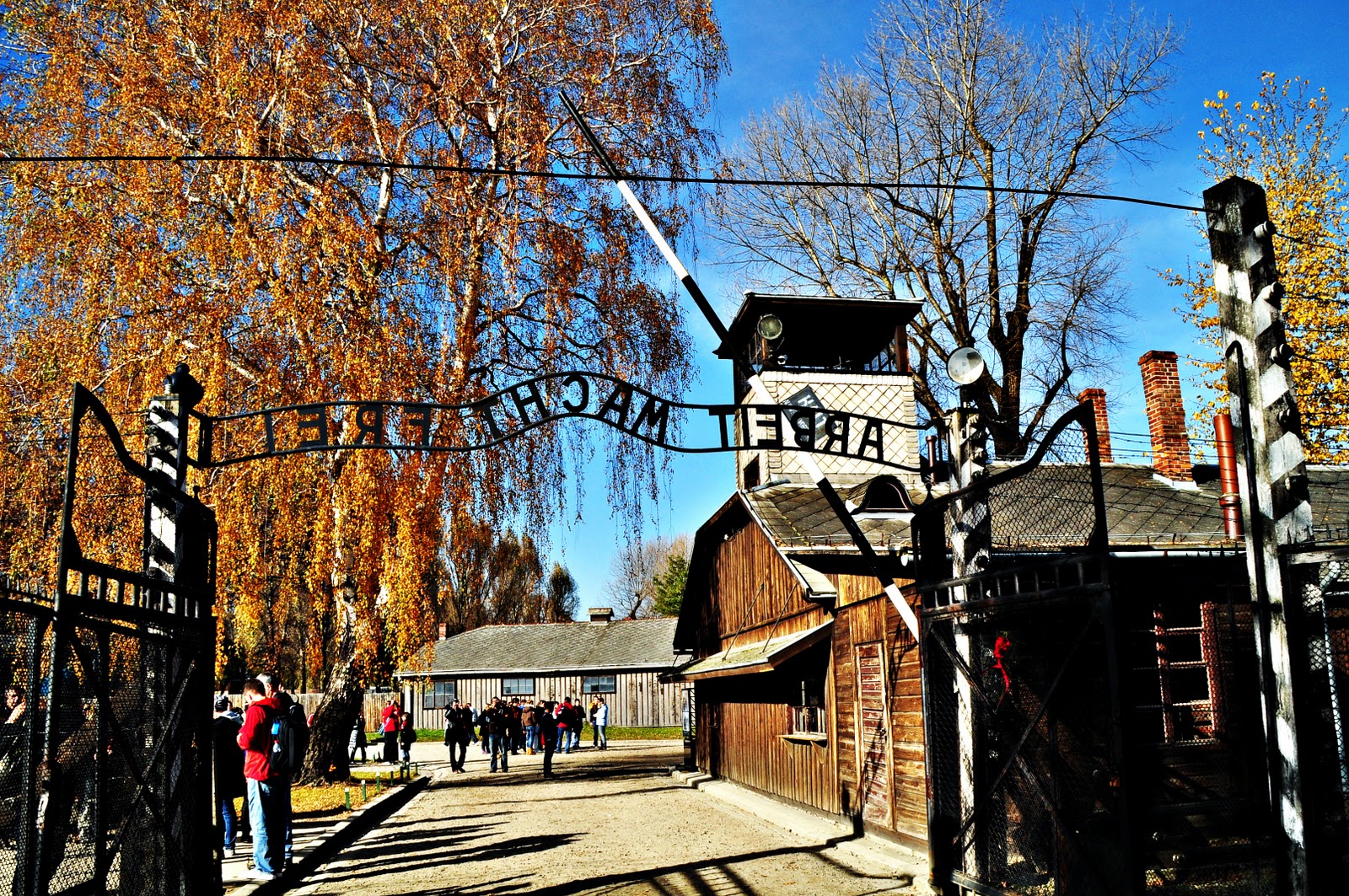
The gate at Auschwitz I, photographed from the inside. Our own, November 2010.
Money and Practical Basics
Zloty, not euro. Poland is in the EU and has kept its own currency. Use a bank ATM or a kantor, which is a proper exchange office, and always decline the machine’s own conversion rate.
Poland is close to cashless. Contactless works almost everywhere, including trams and market stalls. Carry a hundred zloty for toilets, small churches and rural stops.
Ten percent, and do not say thank you as you hand the money over. Dziekuje while paying is understood as keep the change, which is fine unless you wanted change.
Learn what a bar mleczny is. The milk bars are the single best budget tool in the country. Cheap, filling, no English menu, no atmosphere, excellent food.
Toilets cost two to three zloty. Coins or contactless at the turnstile. Shopping centers are the free option.
Apteka is the pharmacy. Excellent, cheap, and pharmacists handle minor problems directly. Private clinics are inexpensive and fast if you need a doctor.
When to Go
Poland has a real winter and a short, lovely summer. We went in November and it was cold, gray and completely empty, which suited what we came to see.
Spring
April and May. Cool, green, cheap and quiet. Everything is open by May and the crowds have not arrived. The best value window of the year.
Summer
June through August. Warm, long days, the Baltic coast actually swimmable in July. Krakow’s main square is busy and Auschwitz requires booking well ahead in this window.
Autumn
September and October are beautiful. November is gray and stripped back. Ours was November and there is an argument that the memorial sites are more honest in that light.
Winter
Cold, well below freezing, with snow in Zakopane and the Tatras from December. Christmas markets in Krakow and Wroclaw are excellent. January and February are for skiers and bargain hunters.
How Many Days and How to Route It
Poland is large and the temptation is to cover it. Do not. Pick a base and go deep.
Four days. Krakow only. Two days in the old town and Kazimierz, one at the Wieliczka salt mine, and one for Auschwitz if your family is doing it. That is a full, honest trip.
Seven days. Krakow for four, train to Warsaw for three. Two very different cities. Krakow survived the war largely intact, Warsaw did not, and seeing both in one week teaches more than either alone.
Ten days. Krakow, Warsaw, Gdansk. Add the Baltic coast in summer and Malbork Castle on the way. Three trains, three bases, no repacking every night.
Two weeks with a car. Add Zakopane and the Tatras, Wroclaw, and as many castles as your family will tolerate. This is the version where Poland stops being a city break.

Gdansk on the Baltic
Regions at a Glance
Lesser Poland and the South
Krakow, Oswiecim, Wieliczka, Zakopane and the Tatras. The most visited part of the country and where most first trips begin and end.
Mazovia and the Center
Warsaw and its surroundings. The capital, the Uprising Museum, the rebuilt old town and the modern glass city that grew up beside it.
Pomerania and the Coast
Gdansk, Sopot, Malbork and the Baltic beaches. Amber, shipyards, the place the Second World War started and where Solidarity later ended it.
Silesia and the West
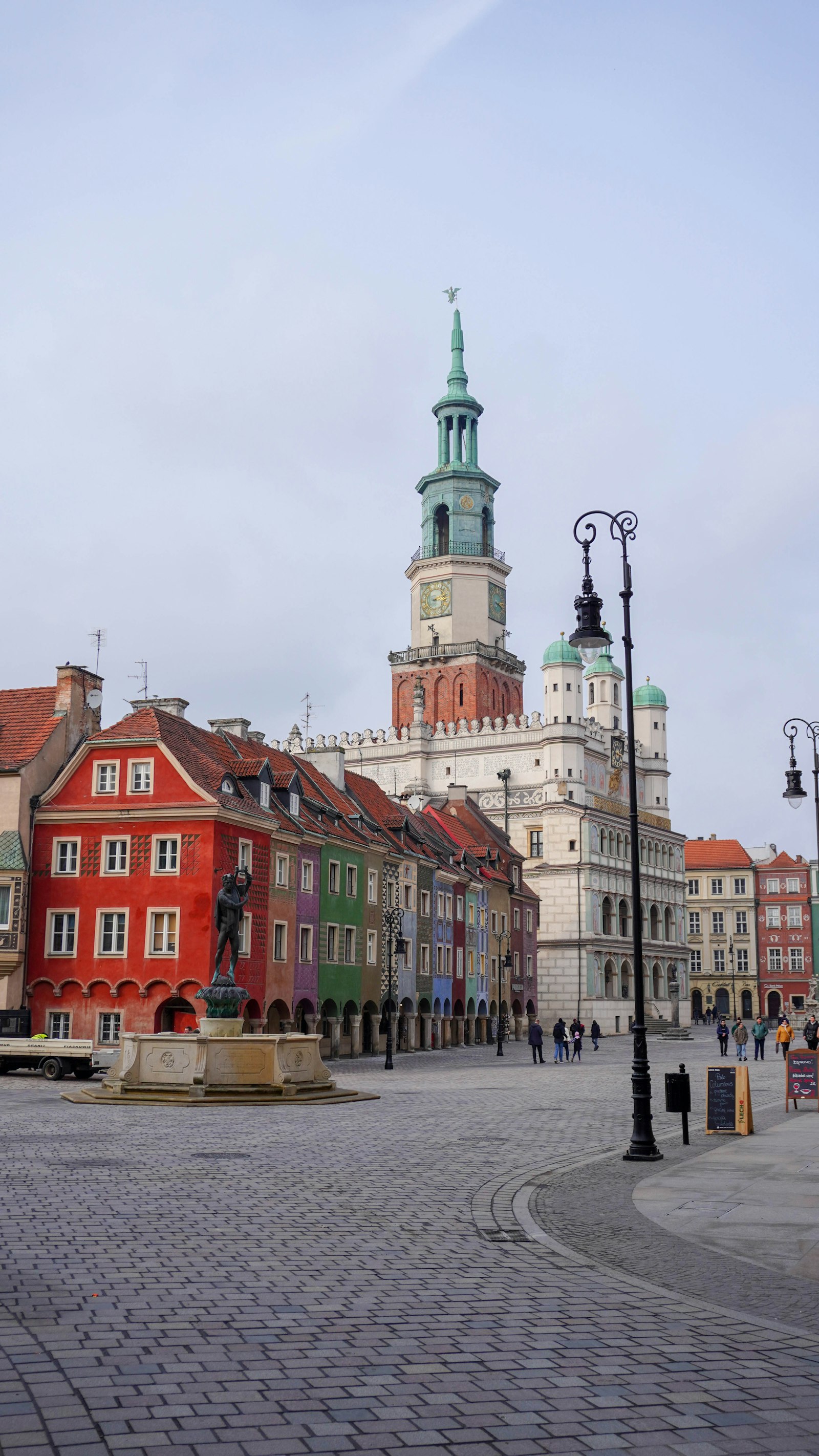
Wroclaw, Poznan, Torun. University towns with enormous painted squares, very few foreign visitors and the lowest prices in the country.
Where to Go in Poland
Two of these are ours and they are marked.
Krakow. Ours, sort of. We slept under Wawel Castle and then drove through the city instead of walking it, which I still count as a mistake. Krakow came through the war largely undamaged, so the medieval old town is real rather than rebuilt. The main square is the largest in medieval Europe. Kazimierz, the old Jewish quarter, is where the food and the atmosphere are now. Schindler’s Factory is here and is a serious museum, not a film tie in.
Auschwitz-Birkenau. Ours, and the reason this page exists. Ninety minutes from Krakow, among small towns and fog filled farmland. Entry is free but you need a booked slot, and a guided tour is compulsory in the busy middle of the day. Two hours at Auschwitz I, then a shuttle three kilometers to Birkenau, which is twenty times larger. There is a full section on bringing children below and I would ask you to read it before you book.
Warsaw. Over eighty percent flattened and then rebuilt from paintings, which is the whole story of the city in one sentence. The Warsaw Uprising Museum is immersive and intense and better for teenagers than for young children. The Copernicus Science Centre is the opposite and is one of the best children’s museums in Europe.
Gdansk. A Hanseatic port with a waterfront of tall narrow merchant houses, amber shops and a Second World War museum that is world class. Sopot and the Baltic beaches are twenty minutes away by train.
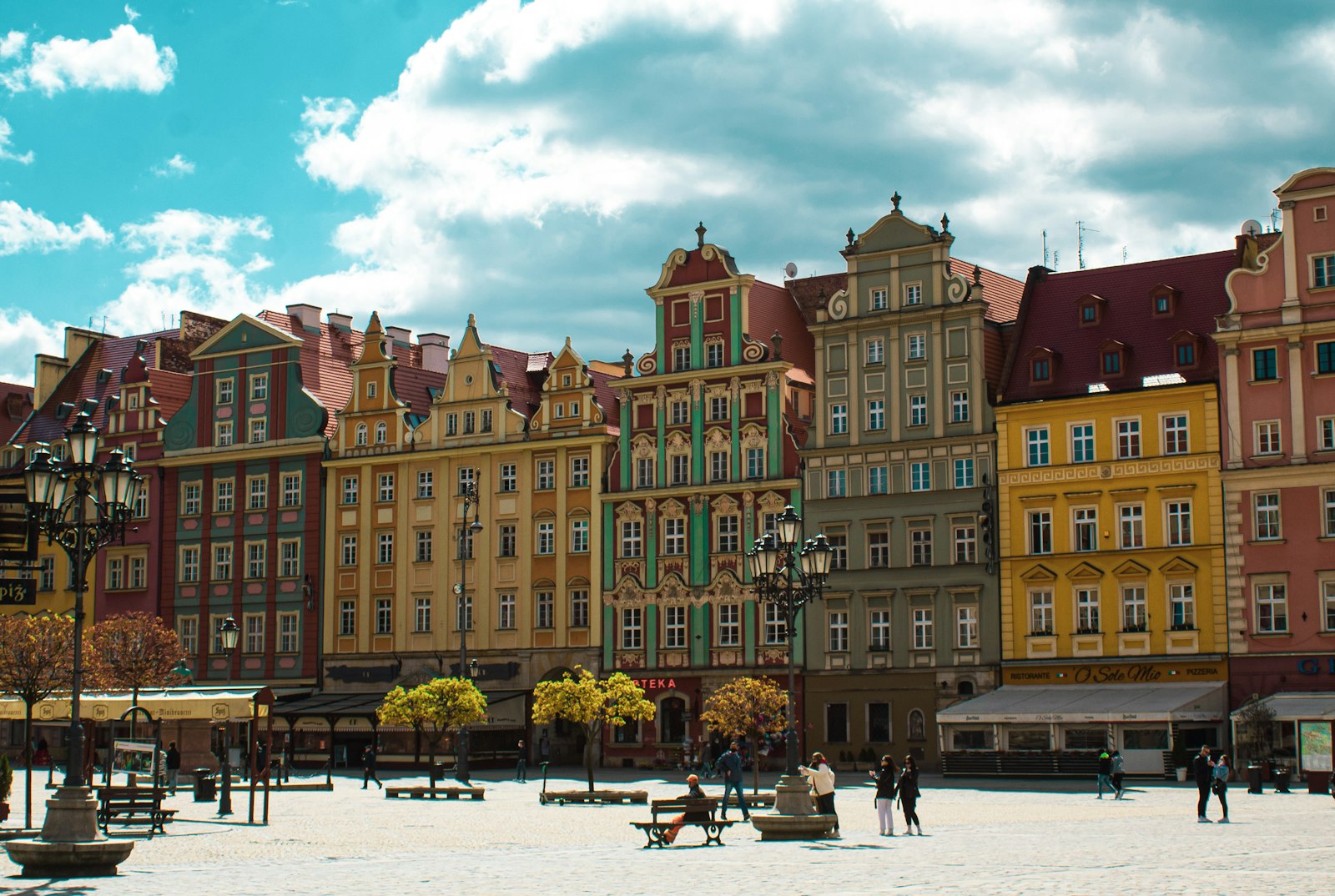
Wroclaw. An enormous painted market square, twelve islands and over three hundred small bronze dwarf statues hidden around the city. Give your kids a dwarf map and the afternoon plans itself.
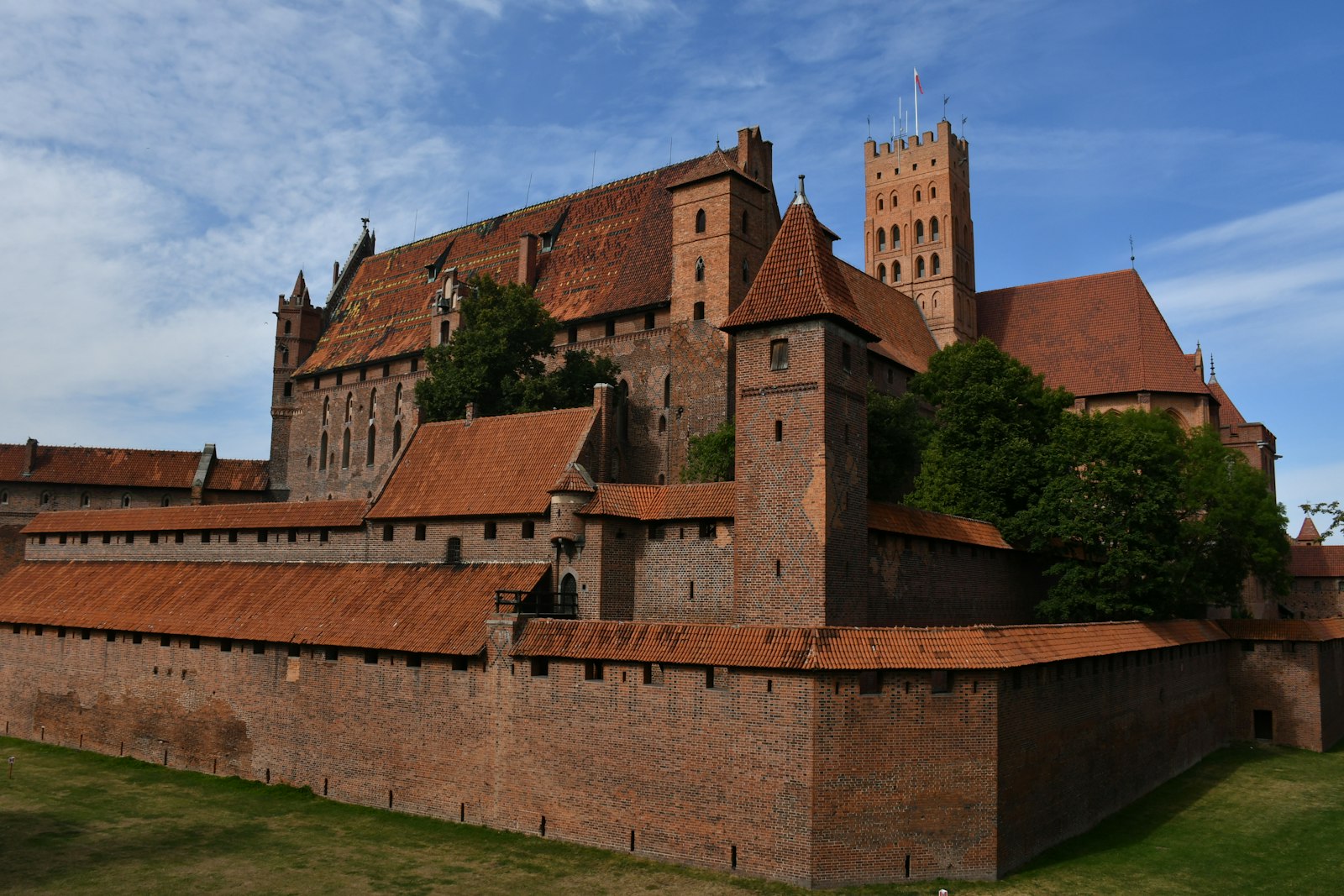
Malbork. The largest brick castle in the world, built by the Teutonic Knights, an hour from Gdansk by train. If you have a child who is into knights this is the single best day in Poland.
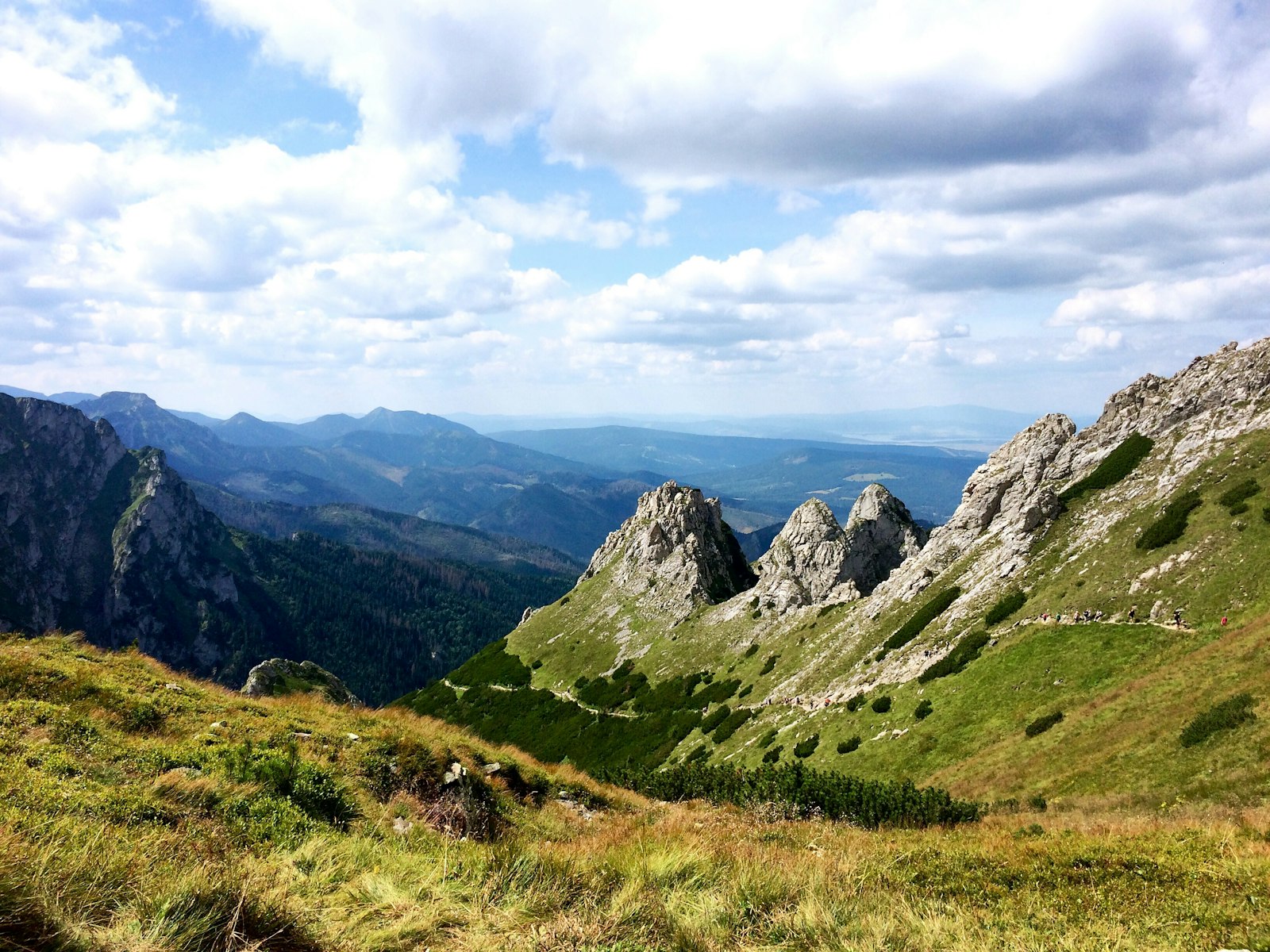
Zakopane and the Tatras. Wooden mountain architecture, cable cars, hiking in summer and skiing in winter, at a fraction of alpine prices. It is also very busy with Polish tripmakers, which is a good sign rather than a bad one.
Wieliczka Salt Mine. Thirty minutes from Krakow. Nine levels underground, chapels and chandeliers carved from rock salt, and about eight hundred steps. Kids love it and it is the obvious counterweight to a heavy day.
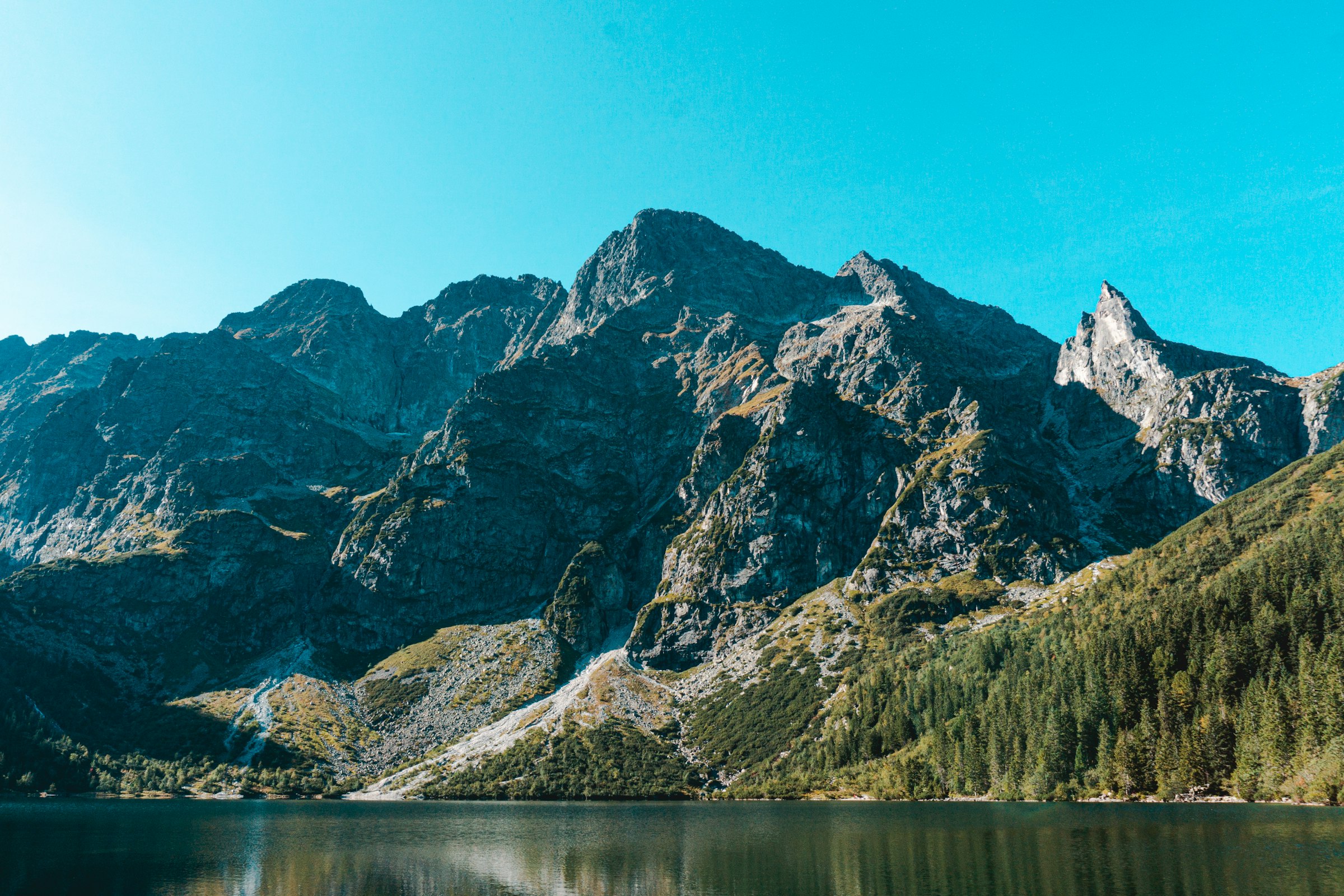
Morskie Oko in the Tatras, a two hour walk from the road at Palenica. Poland is not only the heavy part. It has mountains most people never think to look for · photo: stock
Family Travel Considerations
We drove Poland before we had Gavin, Jake or Avilene. The exception is the first item, and I have thought about it more than anything else on this site.
Poland with kids is mostly easy. This section is where it is not.Auschwitz with children. The honest answer. The memorial itself asks that visitors be at least fourteen, and that is not a rule invented to be difficult. It is not gory and it is not staged. It is quiet, factual and cumulative, and the weight comes from scale. A hallway of shoes behind glass. A room of hair. What I still cannot put down is not something I saw once, it is something I understood slowly over two hours. A younger child will not process that. They will process fragments and take them home without a frame to hold them in. If your child is under fourteen, my advice is to go without them, or go together to Schindler’s Factory or the POLIN museum of Polish Jewish history in Warsaw instead, both of which teach the same history at a survivable distance. If your child is fourteen or older and wants to go, take them, prepare them the week before, and plan nothing for the rest of that day.
Balance a heavy day with a light one. This is the practical version of the point above. Wieliczka after Auschwitz. The dwarves in Wroclaw. The science center in Warsaw. Do not stack two memorials back to back with children, at any age.
Poland is a castle country. Malbork, Wawel, the Trail of the Eagles’ Nests. Cheap entry, big courtyards, plenty of room to run. This is the easy win with under tens.
Feeding a big family is almost free here. Milk bars, huge portions, pierogi that every child eats. A family of five eating out three times a day in Poland costs less than one restaurant dinner in Switzerland.
Poland family vacation days that actually work. A morning at a castle, lunch at a milk bar, an afternoon with nothing planned. That rhythm is what makes a week here feel easy instead of rushed.
Pack for real cold outside summer. Poland gets properly cold and much of the sightseeing is outdoors and slow moving. Layers, hats, gloves, and the memorial sites have very little shelter.
Splurge-Worthy Experiences
A private guide at Auschwitz
The standard group tour is good. A private guide is better, because your family can ask the questions it actually has, at its own pace, without thirty strangers listening. It is not expensive by American standards and it changes the day.
The full Wieliczka miners’ route
Not the tourist loop. The longer route puts you in overalls with a headlamp doing measurements in working tunnels. Older children come out of it proud of themselves.
A horse cart into the Tatras at Morskie Oko
Nine kilometers uphill to a glacial lake. You can walk it, and with small children the cart makes the difference between a memory and a mutiny.
A night inside Malbork Castle grounds
Stay in the old town beneath the walls and go to the evening light and sound show. The largest brick castle in the world, lit up, with almost nobody there.
What Surprises First-Timers
How cheap it really is. Not cheap for Europe. Cheap. A sit down family dinner, a museum for five, a two hour train ride, all for less than one of those things costs in France.
How much of it is a reconstruction. Warsaw’s old town looks four hundred years old and is mostly seventy. Once you know, you cannot unsee it, and it becomes the most impressive thing about the city.
Do not drive into a Polish old town. Krakow’s center is closed to traffic and I found that out from inside it, on the tram tracks, in a vehicle the size of a bus. Park outside and take the tram.
How many visitors Auschwitz gets. I expected a quiet place among the farms. There were crowds, every language, every faith. That was not what I had prepared for and it turned out to be the hopeful part.
Things to do in Poland with kids are not hard to find. Castles, salt mines, a science museum in Warsaw, a whole coastline in summer. The country is not built around families the way some are, but it does not need to be. There is plenty here that kids genuinely like.
Where I Would Start
First time in Poland with kids? Krakow, not Warsaw. Fly in, walk the old town, then two day trips that the kids will remember for different reasons.
Krakow. Four nights. The main square and the trumpet call, Wawel castle and its dragon, a pierogi lesson, the Jewish quarter for dinner.
The Wieliczka salt mine. A day. Chapels carved from salt, an underground lake, eight hundred steps down and a lift up. Kids of any age love it.
Auschwitz. A day for kids over twelve. Ninety minutes away. Go with a guide, go quietly, and talk about it after. It is why some families come.
Numbers Worth Knowing
Poland, by the numbers
Ways to travel
Poland is not one kind of trip
How you move through it changes the trip more than which places you pick.
Europe by Rail
Fast, cheap, and connects Warsaw, Krakow, and Gdansk without a rental car.
For example: Warsaw to Krakow in two and a half hours on the fast train, then Gdansk overnightEurope by Car
Good for reaching smaller towns and the mountains in the south that trains don’t cover well.
For example: a rental car from Krakow for Zakopane, the Tatras and the wooden churchesGuided and Small Group Travel
A local guide adds real weight here, especially at Auschwitz-Birkenau and in the Warsaw old town.
For example: a private guide for the salt mine, Auschwitz and Kazimierz, one day eachWalking and Hiking
The Tatra Mountains around Zakopane are a genuine alpine hiking destination, less crowded than the Alps.
For example: Morskie Oko in the Tatras, a flat nine kilometre walk families do with a pramExplore by interest
What families come to Poland for

History
Krakow’s old town
It survived the war almost intact, one of the few in Europe that did. The square, the Cloth Hall, the trumpeter on the hour and Wawel Castle up the hill, all walkable with children.

Underground
The Wieliczka salt mine
An underground cathedral carved entirely from salt, chandeliers included, a hundred metres down. The single best day trip from Krakow for children of any age.

Mountains
Zakopane and the Tatras
Two hours south of Krakow for hiking in summer, skiing in winter and the walk to Morskie Oko lake. Wooden houses, sheep cheese and a funicular.

Coast
Gdansk and the Baltic
The merchant houses, the shipyard where Solidarity began, Malbork castle nearby and the beaches at Sopot. A different side of Poland than most people picture.
Something unexpected
Only in Poland

Read before you go
The Diary of Anne Frank
It is not set in Poland, but Auschwitz Birkenau, near Krakow, is where her story ended, and it is a real place families can visit and understand together. We took it slowly.

Watch before you go
Schindler’s List
Filmed largely in Krakow, in the real Jewish quarter of Kazimierz, where you can walk the same streets and visit the factory itself.

From here
Copernicus, Curie and Chopin
All three were born in Poland. Torun for Copernicus, Warsaw for Curie and Chopin, with a museum for each and a Chopin bench that plays his music on every corner of the old town.

Only in Poland
Pierogi as a way of life
Pierogi, kielbasa and a bowl of zurek are an easy sell to kids, even picky ones, and the milk bars serve them for a few dollars a plate.
Combine It With
If you have the time to add a second country, these are the ones I would actually pair this one with. Not a list of neighbors. A list of trips that work.
Prague to Krakow is a straight run east. Krakow is the one people leave off the list and then talk about for years.
Berlin to Krakow or Warsaw is one train. The border barely registers now and the price drops the moment you cross it.

Plan Poland with Nicole
Tell me who is coming, and when.
Krakow’s old town is walkable with kids, and the salt mine and Auschwitz Birkenau both work as day trips from the city. I can build the right pace for your family’s ages and interests. Send me the ages, the dates, and what you are hoping this trip feels like. I will come back with what is really available.
Nicole Damiano, ASTA Verified Travel Advisor with FG Luxury Travel.
Questions families ask about Poland
The ones that come up in almost every planning call. If yours is not here, ask me.
Do we need anything to enter, beyond passports?
Not a visa. US passport holders get 90 days in any 180 day period across the Schengen area, and this country counts toward that same 90 days.
Your passport has to be valid for at least three months beyond the day you leave Europe. Check the kids’ passports too. Child passports are only good for five years and they expire quietly.
Since October 2025 the EU has been taking fingerprints and a facial image at the border under the new Entry and Exit System. No fee, no form. The first arrival can be slower than you remember, so build a real cushion into any connection.
ETIAS, the paid travel authorization you may have read about, is not running yet. It is expected in late 2026. When it starts I will tell every family I am working with, well before they fly.
Should we take the kids to Auschwitz?
The museum recommends fourteen and up, and I agree. We walked it in 2010 and I have thought about that question more than almost anything else on this site.
With younger children, one parent goes while the other takes the kids to the Wieliczka salt mine, which is astonishing and an hour away. Then talk about it at dinner in the way that fits your family.
Krakow or Warsaw?
Krakow. The old town survived the war, Wawel Castle is right there, and the whole center is walkable with kids. Warsaw is rebuilt and interesting, but it is a second trip.
Krakow to Warsaw is two and a half hours on the train if you want both.
Do we need zloty?
Yes, Poland kept its own currency. Cards work almost everywhere, so you will need very little cash. Use a bank ATM or a kantor, never a street booth.
Is it cheap?
Compared with Germany or Austria, yes, by about a third. A family dinner of pierogi and soup runs forty dollars. Hotels in the old town are half what Prague charges.
Keep exploring from Poland
Cities, neighbors, and the wider region.
Click any card to open that page
More of Europe
 Austria
 Belgium
 Croatia
 Cyprus
 Czechia
 Denmark
 France
 Germany
 Greece
 Hungary
 Iceland
 Ireland
 Italy
Italy Netherlands
 Norway
 Portugal
 Spain
Spain Sweden
 Switzerland
 Turkey
 United Kingdom
 All of Europe
 Explore the world
 The Travel Library