
The Arthur Ravenel Junior Bridge at sunrise over Charleston harbour. Coming in over this from Mount Pleasant is the moment the trip actually starts
South Carolina With Kids Family Travel Guide
“Charleston and Myrtle Beach are about a hundred miles apart and they are not the same trip. People book them interchangeably, and half the family comes home disappointed.”
Nicole Damiano, ASTA Verified Travel Advisor with FG Luxury Travel
Charleston or the beach?
Charleston has three beaches within twenty minutes, so both. Stay downtown for the history and the carriage ride, then spend afternoons at Folly, Sullivan's or Isle of Palms. Or base in Mount Pleasant near Patriots Point and drive in.
Myrtle Beach or Hilton Head?
Myrtle Beach for arcades, mini golf, rides and cheap oceanfront condos. Hilton Head for bikes, dolphins, calm beaches and quiet villas. Kids under twelve who want noise pick Myrtle. Families who want to unwind pick Hilton Head.
Which plantation should we visit?
Magnolia for the petting zoo, the swamp boardwalk and the tram, which suits younger kids. McLeod for older kids, because it tells the story from the perspective of the enslaved people who lived there. Boone Hall for the oak avenue and the slave cabins exhibit.
When should we go?
Late March through May and September through November. Summer is hot and humid with afternoon storms, though the beaches make it work. Hurricane season peaks in September, so insure the beach week.
Is Congaree worth a stop?
Yes, if you are near Columbia. The boardwalk loop through the giant trees takes an hour, it is free, there are junior ranger badges and the synchronous fireflies in late spring are a lottery worth entering. Bring bug spray in summer.
Nicole’s Perspective
Why families hire me for South Carolina

We lived here, and it did not go the way we planned. In 2014 our lease in Sanford was up and we had no idea where we wanted to be. We scoured rental sites with days to spare and found a lake house in Fair Play, South Carolina. About two hours north of Atlanta, an hour south of Greenville, right on Lake Hartwell. Three bedrooms, a deck, a huge backyard, a boat dock, almost no neighbors. We planted a garden. We bought a boat. We kept hens in a chicken coop. It was the kind of place you would only ever dream about as a trip rental.
And then we broke the lease after five and a half months. With a toddler and both of us working from home, that beautiful isolation turned into real isolation. I tell you that because it is the single most useful thing I know about this state. South Carolina is gorgeous in a way that photographs brilliantly and lives differently. The water is warm, the trees are enormous, the pace is slow, and if slow is not what your family wants, you will feel it by day four.
I have also done Charleston, in July 2013, with a ten week old Gavin in a rented Chevy Equinox. It was hot and it rained on us, and it was still one of my favorite American cities. Those sections are me as an advisor, not me as a mother, and I will keep flagging which is which. Georgia sits right underneath and the two get planned together constantly.
Beyond the Bookshelf
A shelf of South Carolina stories, lowcountry movies, and shrimp and grits recipes to get everyone ready for Charleston.

- The Prince of TidesPat Conroy
- The Water Is WidePat Conroy
- The Secret Life of BeesSue Monk Kidd
- Brown Girl DreamingJacqueline Woodson
- P Is for PalmettoCarol Crane
- Good Night South Carolina
- The Great SantiniPat Conroy
Book links go to Bookshop.org, which supports local bookstores. Film and music links go to JustWatch and Spotify. As an affiliate we may earn from qualifying purchases.
Why this state, for this family
Why South Carolina works with kids
 Poppy marks the family parts. Wherever you see her, that section is written for traveling with children.
We lived here, five and a half months on Lake Hartwell with a toddler, a boat and a chicken coop, and we broke the lease. I also did Charleston with a ten week old Gavin. Both taught me the same thing. South Carolina is gorgeous in a way that photographs brilliantly and lives slowly, and slow is the whole product.
Bikes to everything
Hilton Head is flat, the paths are separated from traffic, and children who are not allowed to cycle anywhere at home cycle to everything. That freedom is what you are buying.
A walking city with a harbour fort
Charleston south of Broad on foot before nine, then the ferry to Fort Sumter. One of my favorite American cities even in July rain with a newborn.
Dolphins for free
Resident bottlenose dolphins in the tidal creeks behind the sea islands, seen from docks and bridges without paying a thing. Twenty minutes of that beats any ticket.
The map
South Carolina Place by Place
This is how I plan things to do in South Carolina with kids. Eight places, and they are not interchangeable. The state divides into three strips that feel like different countries. The Upstate is foothills and waterfalls and Greenville. The Midlands is Columbia and pine and the Congaree floodplain. The Lowcountry is salt marsh, Spanish moss and the coast. Pick your strip before you pick a hotel.


State song Carolina, and South Carolina on My Mind. Both get sung at the state fair. Good to know Eastern time. Sales tax six to nine percent. Charleston hotels are pricey, the beaches nearby are not.

Beaufort
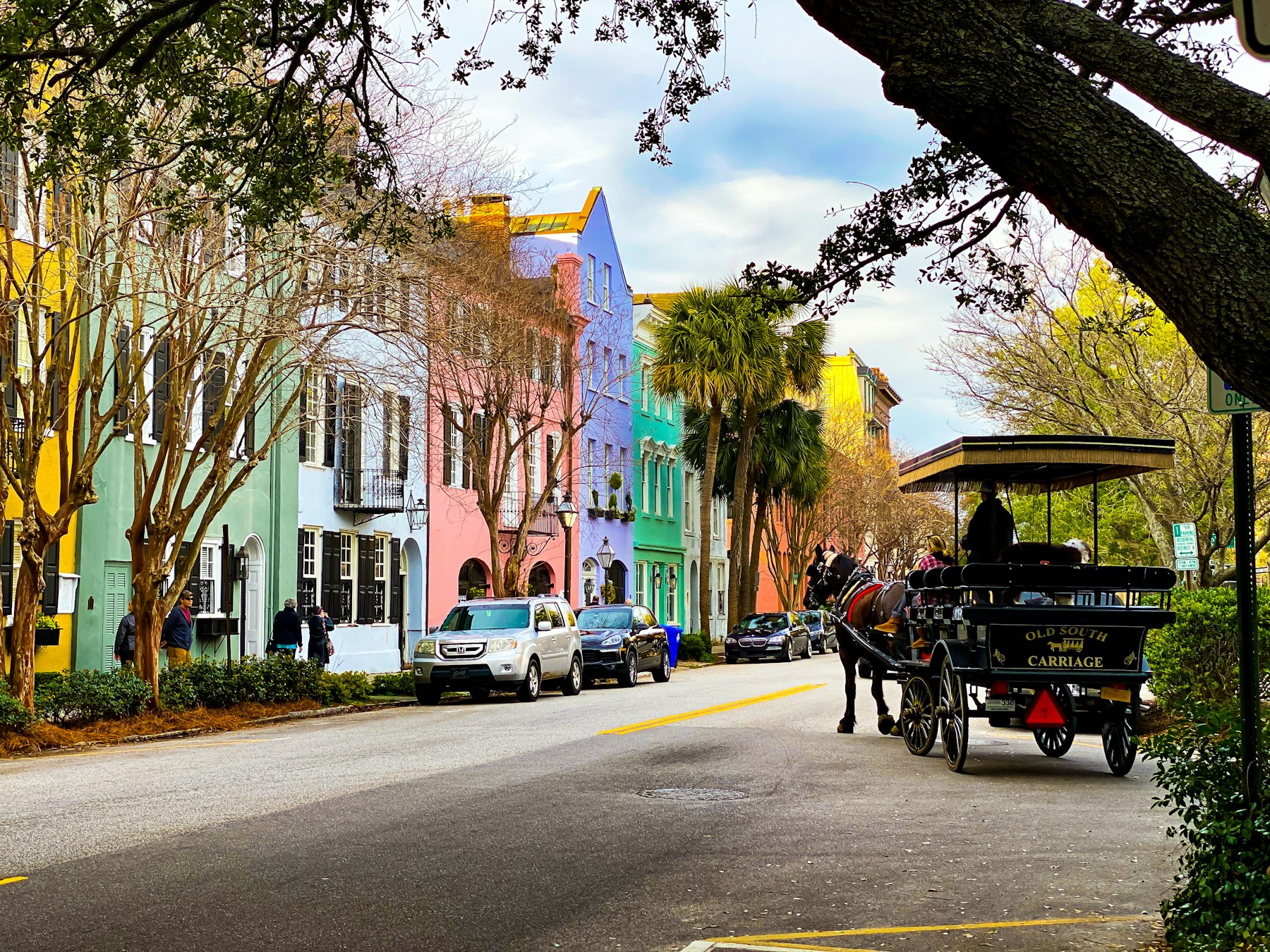
Charleston

Columbia
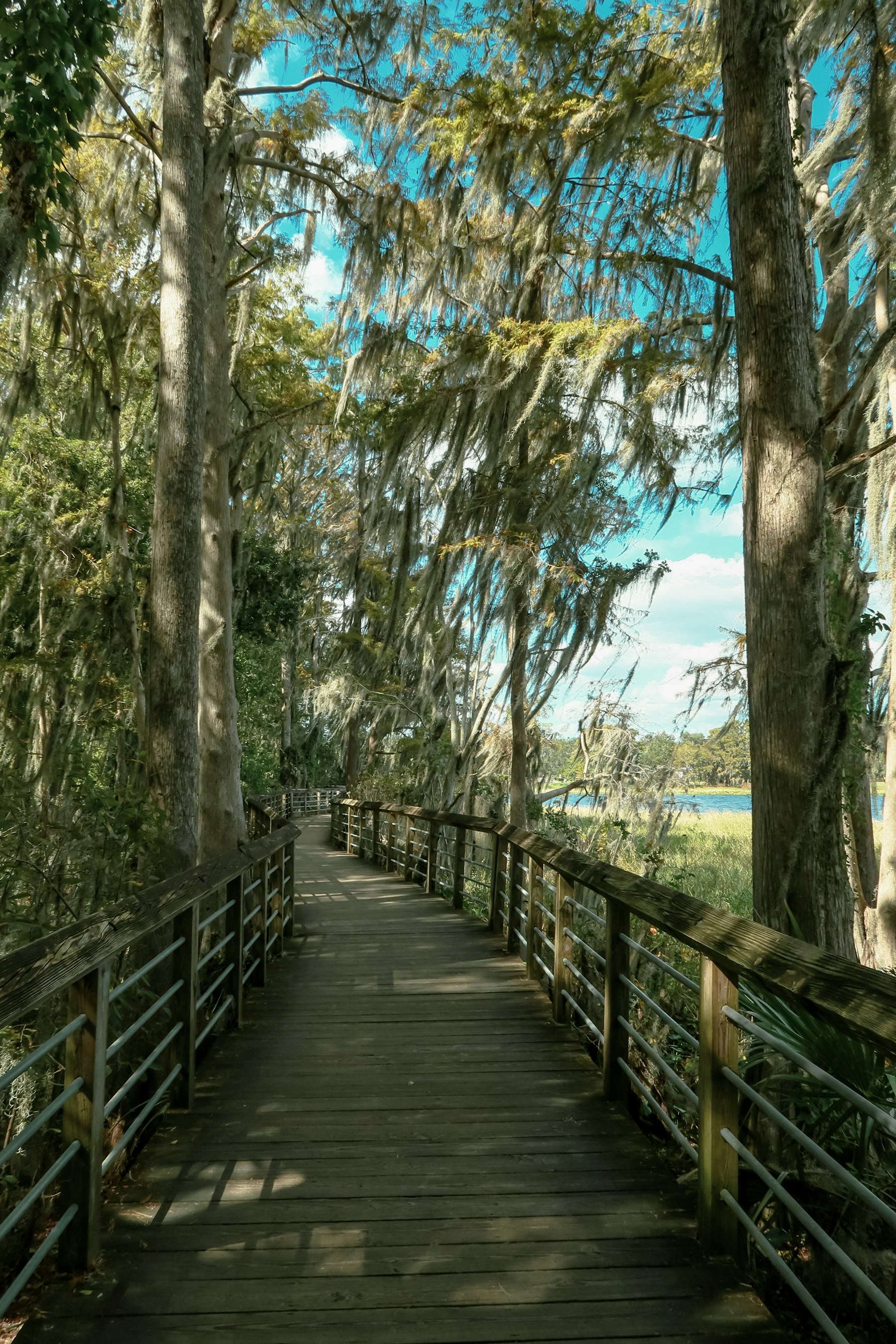
Congaree National Park

Greenville

Hilton Head

Kiawah Island

Myrtle Beach
How This State Tells Its History Now
You cannot travel the Lowcountry without meeting the history of slavery, and how a site handles it varies enormously. I drove through Magnolia Plantation in 2013 and I did not think hard enough about what I was looking at. I would plan it differently now, and this is the practical version of that.
The plantation sites are not all telling the same story, so choose deliberately. Some are wedding venues with gardens where the enslaved people are a footnote. Others have rebuilt their entire interpretation around the people who were held there. The difference is visible on their own websites before you book, and it is worth ten minutes of reading.
McLeod Plantation Historic Site on James Island is the one I would take children to. Charleston County Parks runs it and every daily guided tour focuses on the transition to freedom for the generations of African American people who lived there, during slavery and after it. The tours cover sea island cotton, Gullah and Geechee culture, Carolina indigo, and organized and individual resistance to slavery. Admission is 20 dollars for ages 13 and up, 15 for 60 and over, 6 for ages 3 to 12 and free for two and under.
Boone Hall keeps nine original slave cabins standing and interprets them year round. Its Black History in America exhibit is a self guided walk through those cabins, with a live presentation on the lives of the enslaved people who lived at Boone Hall. Admission is 30 dollars for adults, 27 for seniors, military and AAA, 12 for children 6 to 12, and free for five and under. Open Monday to Saturday 9am to 5pm and Sunday noon to 5pm.
The International African American Museum in Charleston stands on Gadsden’s Wharf, where a large share of enslaved Africans first landed in North America. That is the point of the building and of its African Ancestors Memorial Garden. It is at 14 Wharfside Street, open Tuesday to Sunday 10am to 5pm with last entry at four, closed Mondays, and from July 2026 Sunday hours shift to noon to 5pm.
Fort Sumter and Fort Moultrie are the Civil War half and they are cheap. There is no Park Service entrance fee for Fort Sumter itself, only the 43 dollar ferry that gets you there. Fort Moultrie on Sullivan’s Island charges 10 dollars per adult aged 16 and up, free for children under 16, or 35 dollars for an annual pass covering the holder plus three adults. It takes card only, no cash.
Talk to your children before you go in, not in the parking lot afterwards. Mine are nine, ten and almost thirteen and they can handle far more truth than adults expect, as long as somebody frames it first. The good sites here do this work properly now. Turning up unprepared and then rushing everyone back to the car is the version that teaches nothing.
What to Eat in South Carolina
Lowcountry cooking is the best food in the South, and the ordinary version is the good version.
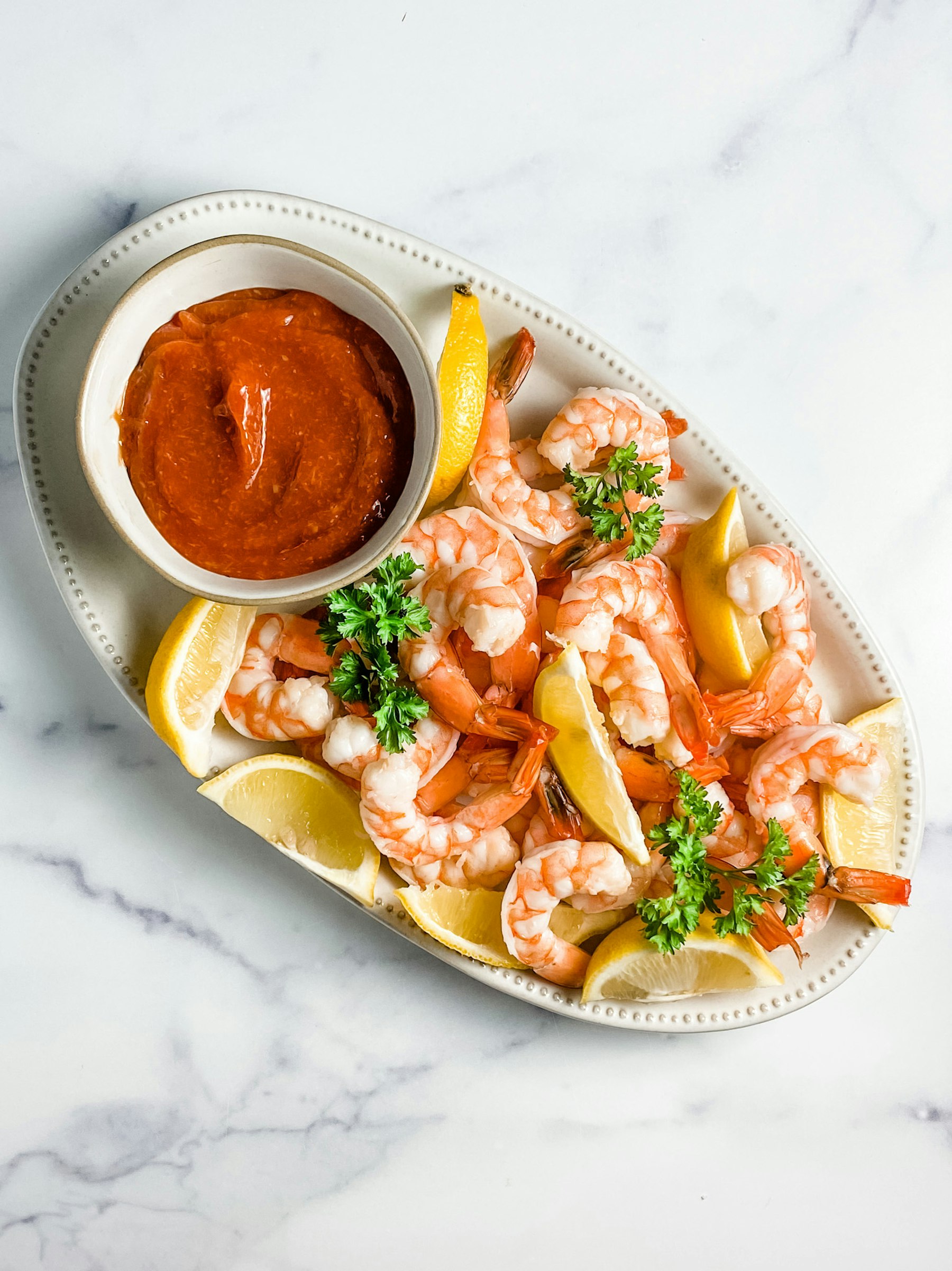
Shrimp off a local boat. Ask where it landed. If nobody can tell you, it was frozen and it came a long way. Shrimp and grits for breakfast, a Frogmore stew for dinner, from Beaufort to McClellanville.
Boiled peanuts from a roadside cooler. Warm, salty, wet, in a paper bag. The state snack and the thing children either love immediately or refuse forever.
Okra soup and red rice. Jestine’s Kitchen in Charleston did the okra soup I still think about. Gullah cooking, West African roots, and the plates that make Charleston more than a pretty street.
Mustard barbecue. South Carolina’s own sauce, yellow and tangy, on pulled pork in the Midlands. The one state where the barbecue is not red.
Peaches in June and July. South Carolina grows more peaches than Georgia most years. Roadside stands on the way to the lake, and the best eating we did was whatever came out of the garden onto the deck.
Getting Around South Carolina
A car for everything except the Charleston peninsula, and the sea islands are not walkable from anywhere.
Fly into Charleston, Greenville or Savannah. Charleston for the Lowcountry, Greenville for the Upstate, Savannah in Georgia for Hilton Head, forty five minutes away.
Charleston downtown is the one place to park the car. A hotel inside the old city is worth paying for. Parking is a nuisance and everything south of Broad is a walk.
The islands need the car and then do not. Hilton Head and Kiawah are a drive from the airport and then a bike for the week. Rent the bikes with the house.
Charleston to Myrtle Beach is two hours and a different trip. Highway 17 up the coast. Pick one, and if you do both, do not do them in the same three days.
The Upstate is three and a half hours from the coast. Greenville, the lakes and the foothills are a separate week or the road to Atlanta. There is no useful train between any of it.

Harbour Town, Hilton Head. Bikes to everything and nobody drives.
When to Go, and What It Costs
South Carolina has two lovely windows and one difficult one, and the price curve follows the school calendar rather than the weather. Getting those two things out of alignment is where the value is.
Late March through May is the best window in the state and it is not close. The azaleas and the oaks are doing their thing, Charleston is walkable all day, the ocean is coming up to temperature and the humidity has not arrived. If you have any flexibility at all in when you travel, take April.
Late October and November is the quiet second best. The heat has broken, the crowds have gone, hurricane season is winding down and the Upstate gets real autumn color in the foothills. Coastal rates drop noticeably once the school breaks end.
Mid June to mid August is peak price and peak difficulty at the same time. If that is your only option, go to Myrtle Beach or an island rather than a city, because a resort with a pool absorbs the heat in a way that a walking tour of a historic peninsula does not.
State park entry is the same modest price almost everywhere and it is the best value in South Carolina. Hunting Island, Myrtle Beach and Edisto Beach state parks all charge 8 dollars for adults, 5 for South Carolina seniors, 4 for children 6 to 15 and nothing for children five and under. A family of five with young children gets a full beach day for under 20 dollars.
Quoted prices are before tax, and accommodation carries extra local taxes on top. This catches European visitors constantly, because you are used to the shelf price being the price. Budget above the headline rate for hotels and rentals, and expect the till total to be higher than the menu total everywhere.
You need a car, with the single exception of a Charleston peninsula only trip. There is no useful rail between these places and the sea islands are not walkable from anywhere. Charleston downtown is the one spot where parking is a real nuisance and a hotel within the old city is worth paying for.
The Heat, the Humidity and Hurricane Season, Said Plainly
Nobody selling you a Lowcountry trip wants to lead with this, so I will. Summer here is hard, and the cheapest weeks of the year are cheap for a reason.
It is the humidity, not the temperature, that beats families. A July afternoon in Charleston does not feel like a hot day somewhere dry, it feels like walking through warm soup. Children wilt faster than adults and they wilt without warning. Plan the outdoor half of every day before eleven and after five, and put something air conditioned in the middle. That single rule saves more South Carolina trips than any other thing I tell people.
The afternoon thunderstorm is a scheduled event in summer, not bad luck. It builds, it dumps, it clears. When we did Charleston in July 2013 it rained on us and I remember thinking every trip we take it rains. It was not a ruined day, it was a two hour indoor day. Book something with a roof for mid afternoon and the storm becomes a rest instead of a disaster.
The Atlantic hurricane season runs 1 June to 30 November. The statistical peak is 10 September, and most activity falls between mid August and mid October. That is half the year, and it sits directly on top of the cheapest coastal rates in South Carolina. That is not a coincidence and you should price it in rather than be surprised by it.
If you travel in September, buy the insurance and read the cancellation terms properly. Most coastal weeks pass with nothing happening. The point is not that a storm is likely, it is that the downside is a mandatory evacuation with a non refundable rental. Named storm cover and a flexible booking are what make a September Lowcountry week a sensible risk rather than a gamble.
The bugs are real, especially near the marsh at dusk. Sand gnats in the Lowcountry are worse than mosquitoes and they are small enough to get through cheap screens. Repellent goes in the day bag, not the suitcase. This is another reason the boardwalk at Congaree beats bushwhacking through the floodplain with children.
How Many Days & First-Trip Routing
How many days do we need in South Carolina? A week in one place. Charleston or Myrtle Beach, not both.
Charleston works best as four nights with one anchor a day.
Myrtle Beach is a full week in an oceanfront condo with a kitchen.
Charleston Versus Myrtle Beach, Which Are Not the Same Trip
This is the single most common mistake I see on South Carolina itineraries. They are about a hundred miles apart on the same coast, and people treat them as two versions of one thing. They are opposites, and the family that wanted one will not enjoy the other.
Charleston is a walking city that happens to be near water. The old peninsula is flat, compact and shaded, and the actual activity is looking at things. We walked it in 2013 with a ten week old and it was the walkability and the kindness of the locals that got us. Adam and I both said afterwards that it had everything we like in a city.
Myrtle Beach is a purpose built beach resort strip and it is unapologetic about it. Ten miles of high rise hotels along the sand, mini golf, arcades, waterparks, pancake houses. If your children are six to twelve and what they want is to be entertained from breakfast until bedtime, Myrtle Beach delivers exactly that and Charleston will bore them by day two.
The money works completely differently. Charleston is a boutique hotel and restaurant town where a family of five spends most of the budget on rooms and meals. Myrtle Beach is an ocean front condo town where you get a kitchen, do a supermarket shop and spend the money on activities instead. Same week, same state, two entirely different spreadsheets.
Charleston with young children needs one anchor per day, not four. The South Carolina Aquarium is open daily nine to five with last entry at 3:30, and it sits right beside the Fort Sumter ferry terminal at Liberty Square, so those two make one clean day. Patriots Point in Mount Pleasant is 28 dollars for adults 13 to 61, 23 dollars for children 6 to 12, 25 dollars for seniors 65 and over, and free for children five and under, open daily ten to five with the ticket window closing at four. Walking onto the USS Yorktown is the thing my clients’ boys remember.
If you want the beach without the strip, Myrtle Beach State Park is the fix. Eight dollars for adults, five for South Carolina seniors, four for children 6 to 15, free for children five and under. Open 6am to 10pm March to November and 6am to 8pm December to February. It has a pier, a nature center open 11:30 to 4:30 Tuesday to Sunday, and 278 campsites. It is the same ocean, minus the neon.
You can have both, but give each one at least three nights. Charleston first while everybody is fresh and willing to walk, then Myrtle Beach to decompress. Doing it the other way round means dragging sunburnt, over sugared children round historic houses, and that is a bad afternoon for everyone.
Hilton Head and Kiawah, the Family Resort Answer
When a family tells me they want one place, one unpack, sand, bikes and no driving, this is where I send them. The sea islands are the most straightforward family week in the state, and Hilton Head in particular is built around exactly that.
Hilton Head’s official beach season runs 1 April to 30 September. The island is flat and threaded with separated bike paths, which is the whole reason it works with children. You park the car when you arrive and mostly leave it there. Harbour Town with its red and white lighthouse is the postcard, and it is nice at sunset.
Beach parking is paid and it is app only now, so set this up before you arrive. Three dollars an hour on weekdays and five dollars an hour at weekends, enforced 1 March to 7 September, daily from 7am to 5pm. Cash is not accepted anywhere. Coligny Beach Park at 102 Pope Avenue is free for everybody, and there are 70 free spaces at the Barker Field expansion lot on Mitchelville Road. Fines run from 50 to 500 dollars, so do not chance it.
The dog rules are strict in summer and they catch people out. From the Friday before Memorial Day through Labor Day, dogs are not allowed on the beach at all between 10am and 5pm, though they are fine on leash or under voice control from 5pm to 10am. From October through March they are allowed any time. We will be traveling with Poppy for years yet and this is exactly the kind of rule that ruins an afternoon if you find it out on the sand.
Kiawah is the quieter, more expensive, less commercial version. Twenty odd miles southwest of Charleston, mostly gated resort and private homes, with Beachwalker Park at the west end run by Charleston County Parks as the public access point. It suits families who want the beach and the bikes without any strip at all, and it pairs with Charleston far better than Hilton Head does because it is so much closer.
Beaufort is the one nobody books and it is lovely. It sits between Charleston and Hilton Head, it is small, walkable and full of enormous oaks, and Hunting Island State Park is fifteen miles out. Entry is 8 dollars for adults, 5 for South Carolina seniors, 4 for children 6 to 15 and free under six, open 6am to 6pm daily and until 9pm during daylight saving. The lighthouse dates from 1859, was rebuilt in 1875, and is 167 steps to the top.
If you are doing several Charleston County parks, do the sums on a Gold Pass. It is 99 dollars plus tax annually, 84 for Charleston County residents and 69 for seniors 60 and over, and it covers gate admission at their sites including Beachwalker on Kiawah. For a two week trip built around county beaches it can pay for itself.
Congaree, the National Park Almost Nobody Books
Congaree sits twenty minutes southeast of Columbia and it is one of the least crowded national parks in the country. It is also completely free, which in 2026 is a bigger deal than it used to be.
There is no entrance fee at Congaree and there never has been. The Park Service states it plainly: entrance to the park is free, there is no fee to enter. For a family of five that is a rare thing in the American national park system in 2026, and it makes Congaree the cheapest wild day out in South Carolina.
This matters enormously if you are visiting from outside the United States. From 2026 non residents aged 16 and over pay an extra 100 dollars per person, on top of the normal entrance fee, at eleven parks: Acadia, Bryce Canyon, Everglades, Glacier, Grand Canyon, Grand Teton, Rocky Mountain, Sequoia and Kings Canyon, Yellowstone, Yosemite and Zion. The non resident annual pass is 250 dollars where the resident America the Beautiful pass is still 80. Congaree is not on that list of eleven, and it charges nothing at all.
The Boardwalk Loop is 2.6 miles, elevated and accessible. That is the whole park for most families and it is enough. Flat surface, stroller friendly, no scrambling. It carries you through the largest intact expanse of old growth bottomland hardwood forest left in the southeastern United States, which is a mouthful, and in person just looks like the tallest trees your children have ever stood under.
The numbers on the trees are the thing that lands with children. The average canopy height in there is over 100 feet. The tallest tree in the park is the national champion loblolly pine, 170 feet tall with a circumference of over 15 feet. Congress authorised the park in 1976 specifically to protect this forest. Give a nine year old those three facts at the trailhead and the walk sells itself.
Camping here is almost absurdly cheap. Longleaf Campground is 15 dollars a night for a regular tent site and 25 for a group site. Bluff Campground is 10 dollars a night. Both book through Recreation.gov. Backcountry camping is free with a permit, requested at least 72 hours ahead, and senior and Access pass holders get 50 percent off the frontcountry rates.
Check the flood status before you drive out, because this is a floodplain and it floods. That is the entire point of the ecosystem. Sections of boardwalk and trail close when the Congaree and Wateree are up. It is a twenty minute detour from Columbia to check the park alerts page and it saves you a wasted morning.

Falls Park in Greenville, a waterfall in the middle of the city and free.
Regions at a Glance
Charleston and the Lowcountry
The peninsula, Fort Sumter, the plantations that tell it properly, and Beaufort with the oaks. The walking trip.
The Sea Islands
Hilton Head, Kiawah, Edisto and Hunting Island. Bikes, low tide, dolphins and one unpack. The family resort answer.
The Grand Strand
Myrtle Beach and sixty miles of high rise sand. The boardwalk, the golf and the opposite of Charleston.
The Upstate and the Midlands
Greenville, Falls Park, Lake Hartwell where we lived, and Congaree outside Columbia. Foothills, waterfalls and a free national park.
Must See and Do
Charleston with kids starts with six specific things, real prices attached. Every figure here came off the operator’s own site, not off a listicle.
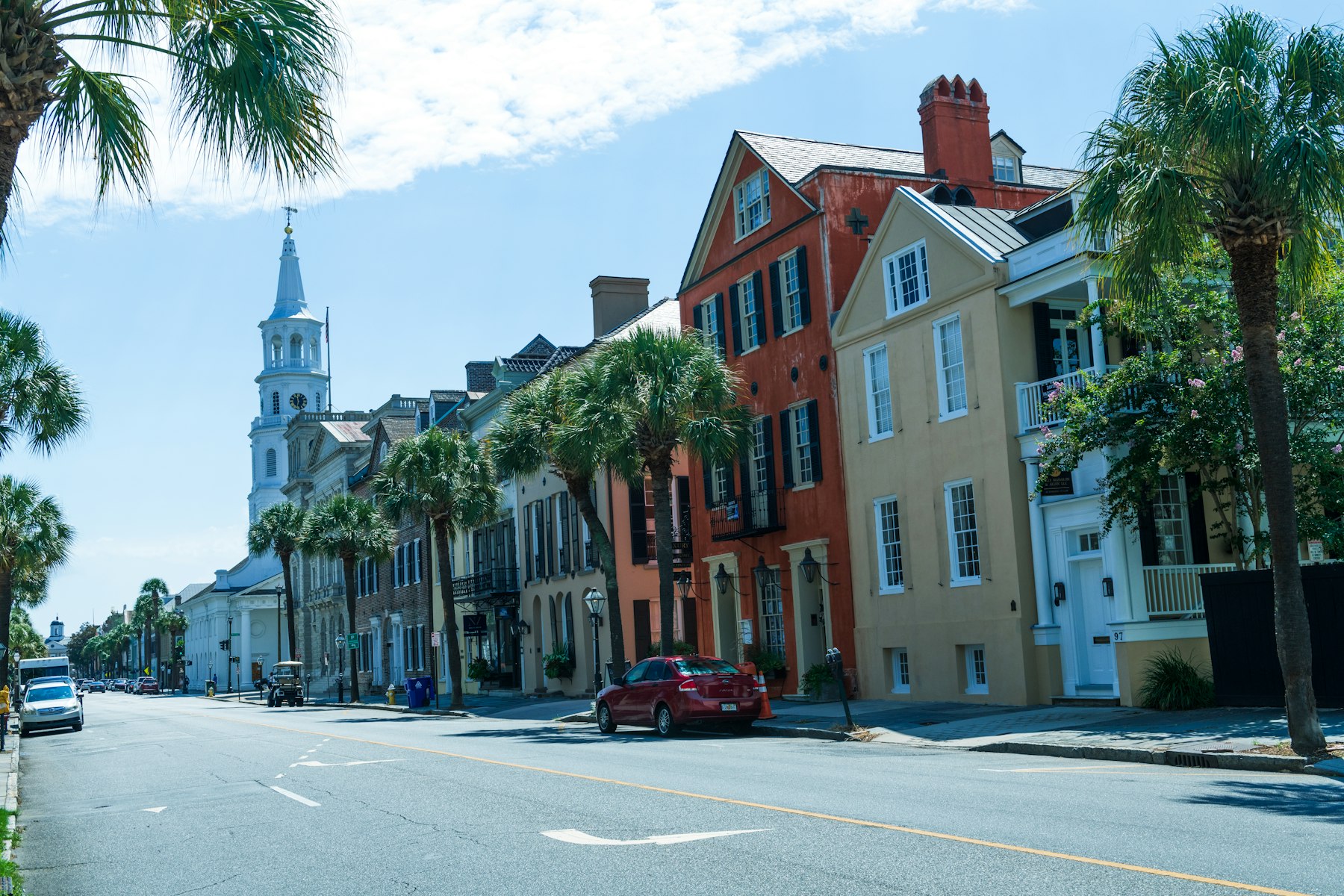


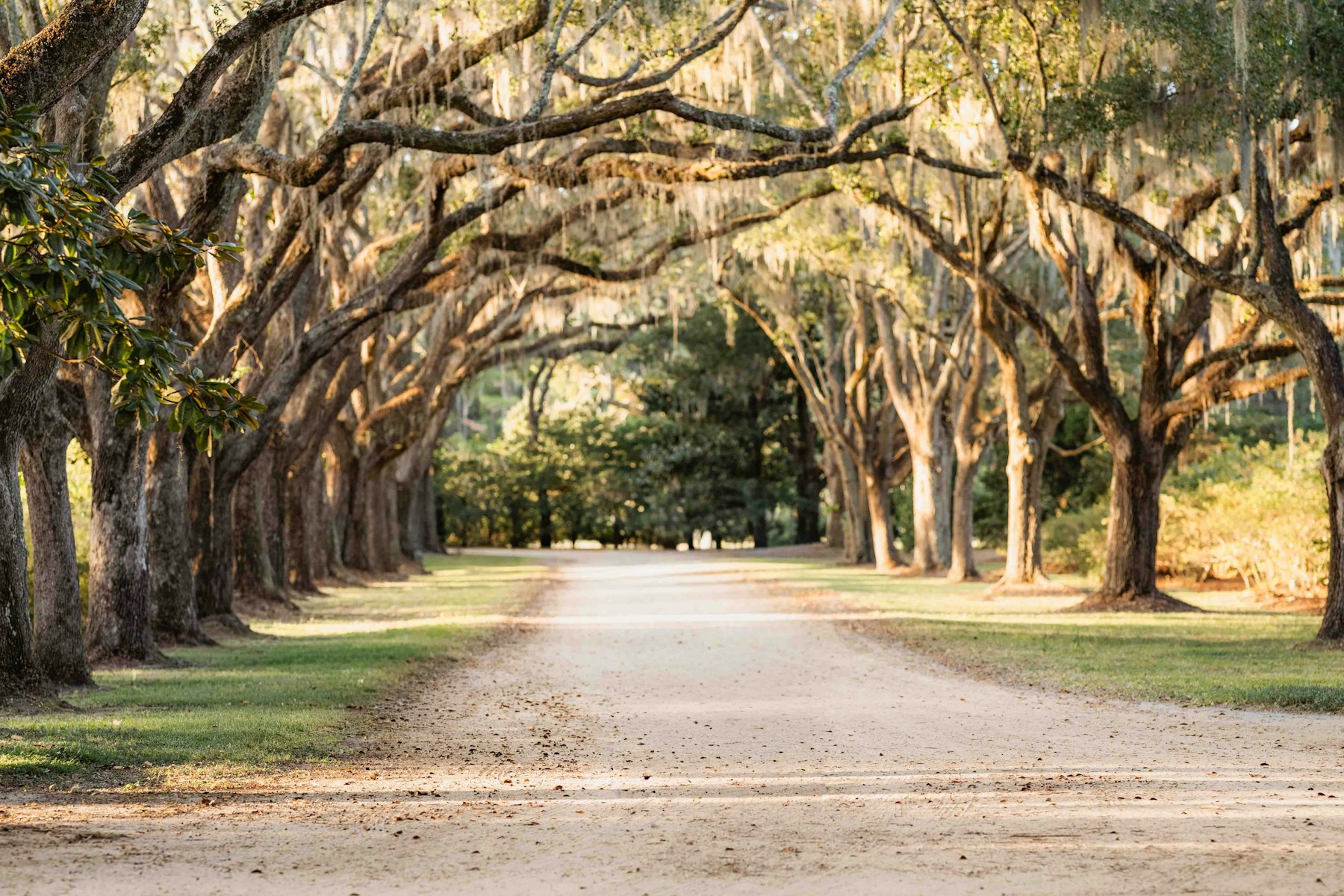
The live oak avenues of the Lowcountry. They are this beautiful, and almost every one of them was planted on land worked by enslaved people. Both things are true and the good sites now say so out loud
Fair Play, and the Five Months We Lived on Lake Hartwell
This is the part of the page that is not research. We moved into a lake house in Fair Play in 2014 and moved out five and a half months later, and almost everything I now tell clients about the Upstate came out of those months.
The lake house was everything the photos promised and that was the problem. Three bedrooms, a deck over the water, a boat dock, a huge backyard, very few neighbors. We planted a garden, bought a boat, kept hens. We ate dinner out on that deck more nights than not. As a two week trip it would have been perfect. As a life, with a toddler and two adults working from home, it got isolating fast.
Fair Play is about two hours north of Atlanta and an hour south of Greenville, straight off Interstate 85. That is the honest geography of the Upstate. You are closer to Atlanta than to Charleston, and closer to the Blue Ridge than to the ocean. Families who book the Upstate expecting to pop down to the beach have not looked properly at a map.
Lake Hartwell is the reason to be up there and a boat changes the trip completely. Without one you are looking at water. With one you are in it. If you rent a lake house anywhere in the Upstate, work out the boat before you book the house, because the house without the boat is a very pretty place to be bored.
The logistics trap in this state is the diagonal. South Carolina looks small and compact on a phone screen. It is not. Greenville sits in the far northwest corner and Hilton Head sits in the far southeast, and that is a five hour drive with no interesting midpoint. Families routinely book one night in each and spend the whole week in the car.
The Upstate is waterfalls and foothills and it is a different trip. It is cooler, greener and about a third cheaper than the coast in July. If your family is happier hiking than lying on sand, book the Upstate and skip the Lowcountry entirely. Nobody ever tells you that and it is true.
Doing It With Children, and What Surprises People
Ours are Gavin at almost thirteen, Jake at ten and Avilene at nine, plus Poppy. That spread is exactly the spread that makes American beach states difficult, because the twelve year old and the nine year old want opposite trips.
Charleston works with a baby better than it works with a seven year old. I did it with a ten week old and it was fine, because a baby does not mind what you are looking at. Seven year olds mind a great deal. The fix is one child led thing every single day, banked early, before anybody is asked to admire a wrought iron gate.
The aquarium is the reliable reset for a mixed age group. The South Carolina Aquarium sits on the Charleston waterfront, open daily nine to five with last entry at 3:30, closed Thanksgiving and 25 December and open 9am to 1pm on Christmas Eve. It is air conditioned, it is indoors, and it works for a nine year old and a thirteen year old at the same time, which very little else does.
Charles Towne Landing is the underrated one for primary school children. Twelve dollars for adults, 7.50 for South Carolina seniors, 7 for youth 6 to 15 and free for five and under. It has a replica seventeenth century trading vessel they can board, and the Animal Forest, which is the only zoo in the Charleston area, with otters, bears and bison. The visitor center runs 9am to 4pm and the Adventure and Animal Forest 10am to 4pm, with the ship closed on Tuesdays.
Dolphins in the creeks surprise everybody. The tidal creeks behind the sea islands have resident bottlenose dolphins and you see them from boardwalks, docks and bridges without paying for a thing. My children would take twenty minutes of that over any paid attraction, and it costs nothing.
First timers are surprised how far out the tide goes. The Lowcountry tidal range is large, and a beach that was a hundred meters of sand at breakfast is a different beach entirely by mid afternoon. Check the tide chart before you plan a shelling walk or a sandcastle afternoon, because low tide is when these beaches are at their best.
The other surprise is how good the ordinary food is. Boiled peanuts from a roadside cooler, shrimp off a local boat, peaches in June and July. South Carolina grows more peaches than most people expect. Some of the best eating we did up at the lake was whatever came out of the garden and onto the deck.
Who South Carolina Suits, and Who Should Skip It
I would rather talk a family out of a place than book them into the wrong one. This state is a clear yes for some people and a clear no for others, and the middle ground is smaller than you would think.
Yes if you want one house, one unpack and a slow week. Sea island rentals, bikes, a beach, a kitchen and nowhere to be. That is what this state does better than almost anywhere on the eastern seaboard, and it is why Hilton Head has repeat families going back three generations.
Yes if one adult loves history and the others will tolerate a beach nearby. Charleston plus Kiawah is the cleanest version of that compromise in the American south, because they are close enough to swap between without a real drive.
No if your family measures a trip in things ticked off. There is no theme park anchor here and there is no dramatic landscape. The whole appeal is texture and pace. Families who need a headline attraction every day come away wondering what the fuss was about.
No in high summer if anyone in your party struggles in heat. I am not being delicate about this. Grandparents, toddlers in strollers and anyone with a breathing condition find July on this coast punishing, and there is no clever workaround beyond going in April instead.
Against Georgia, South Carolina has the better beaches and Georgia has the better city. Savannah is denser and more theatrical than anywhere here, and it is forty five minutes from Beaufort, so combining them is easy and sensible. Georgia’s barrier islands are wilder, South Carolina’s are more developed and easier with children.
Against North Carolina, the difference is mountains. North Carolina has the far better high country and the wilder coast in the Outer Banks. South Carolina’s coast is warmer, calmer, closer together and considerably easier to do with small children. Pick North Carolina for scenery and South Carolina for ease.
Against Florida, this is the version without the lines. Florida is parks and volume. South Carolina is porches and marsh and a national park with no entrance fee. Families who found Orlando exhausting often find the Lowcountry is what they actually wanted the whole time.
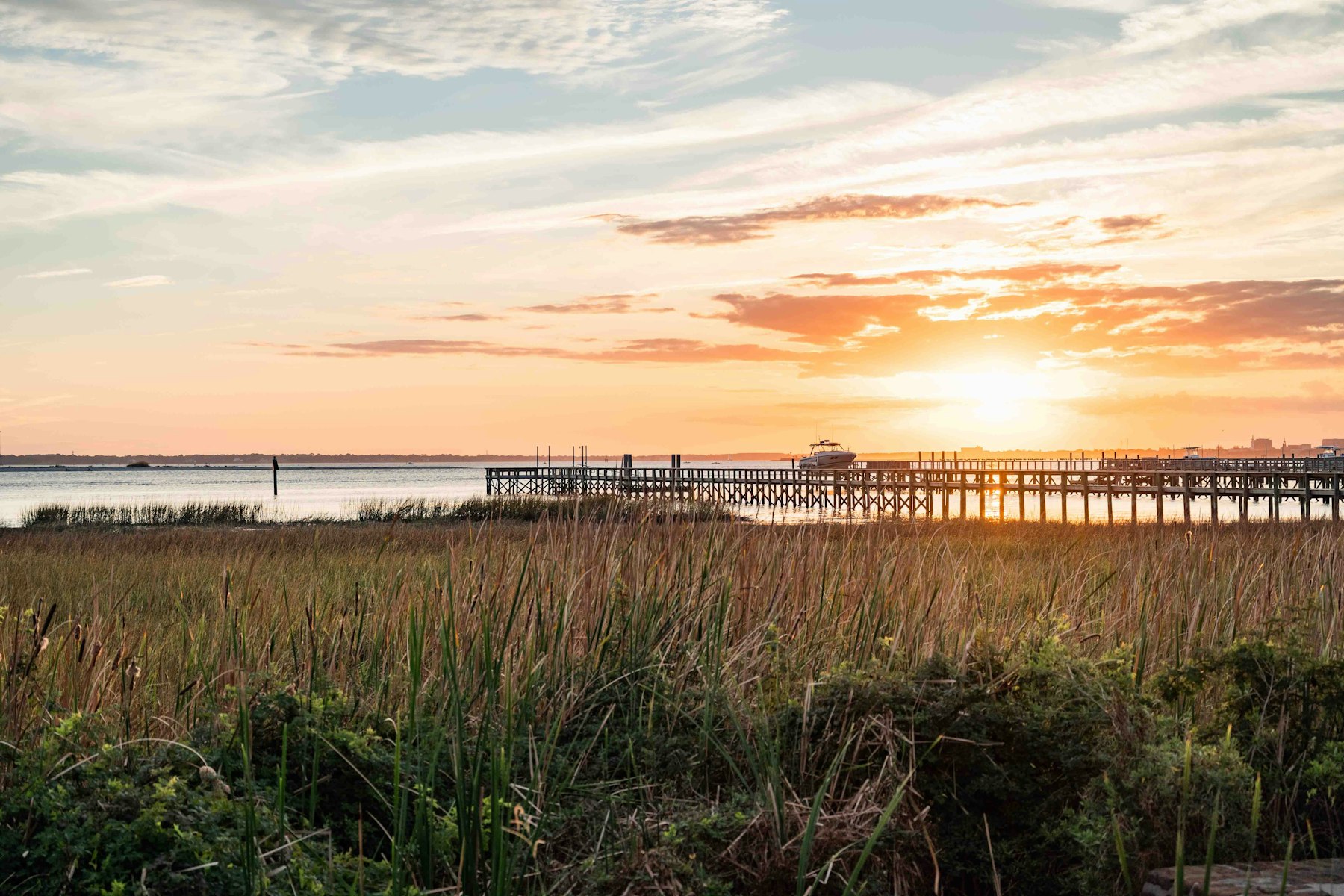
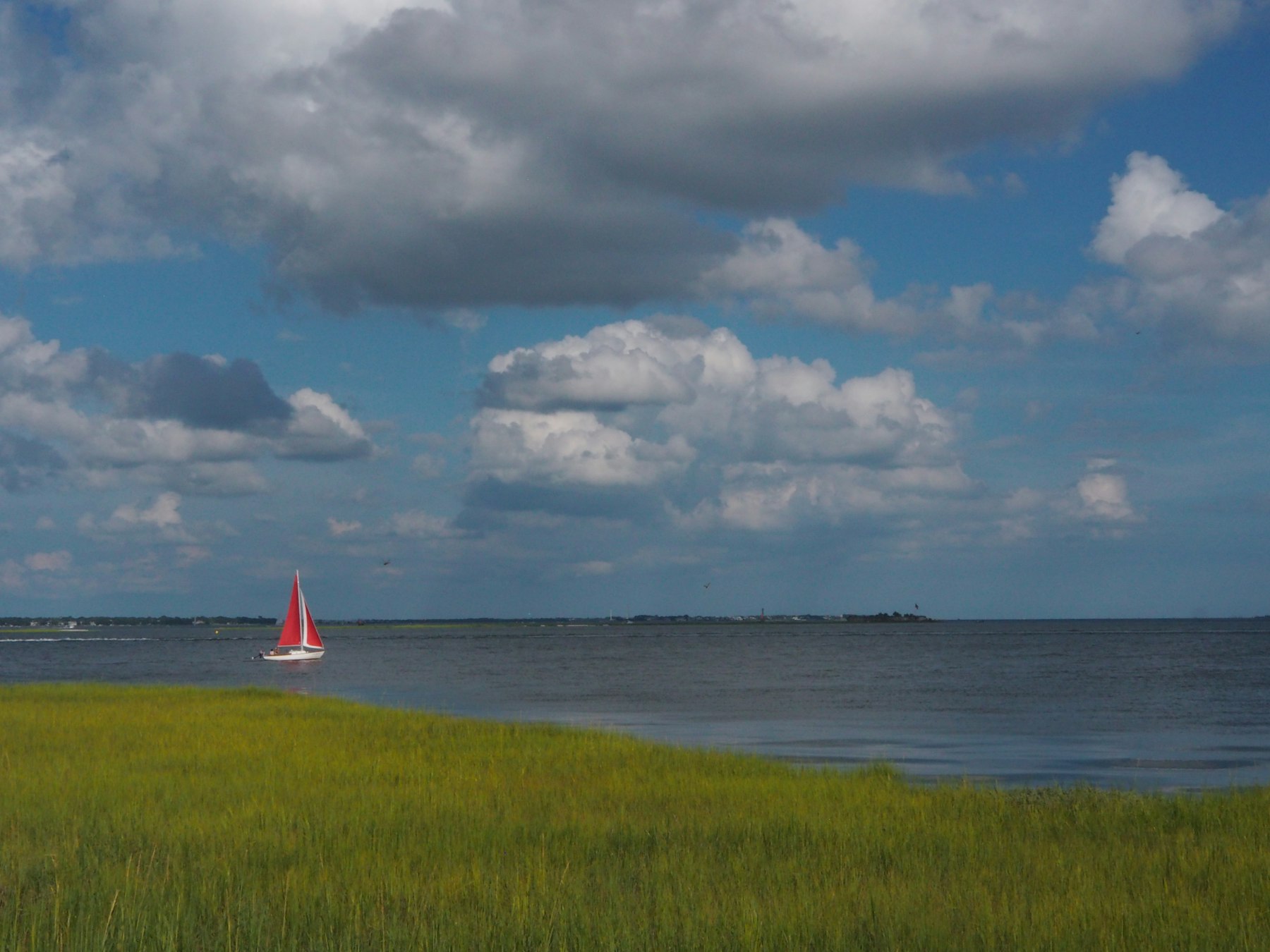
Sunset over the salt marsh. The tide here moves further than visitors expect, and low tide is when these creeks are at their most alive
Worth the Money in South Carolina
A cheap state park coast with two resort islands. Spend it on the island.
A week on Hilton Head with bikes. A house or a condo in Sea Pines or Palmetto Dunes, bikes for everyone, the beach at low tide, dolphins in the creek. One unpack and no driving.
A hotel inside the Charleston peninsula. Walking distance to Rainbow Row, the market and the waterfront, and no parking. Two nights before the island.
The Fort Sumter ferry. About 43 dollars an adult, two and a quarter hours with an hour on the fort where the Civil War started. Book direct with the only authorised operator.
Kiawah for the quieter version. Ten miles of beach, a resort with a kids programme, bikes on the hard sand, and alligators in the ponds from the boardwalk. More expensive than Hilton Head and emptier.
Things That Surprise First Timers
The tide goes out a long way. A hundred metres of sand at breakfast is a different beach by mid afternoon. Check the tide chart before the sandcastle afternoon.
The humidity beats the temperature. A July afternoon in Charleston does not feel like a hot day somewhere dry. April and October are the answer.
Congaree is free and empty. No entrance fee, ever, twenty minutes from Columbia, and one of the least visited national parks in the country.
Charleston and Myrtle Beach are opposites. A hundred miles apart on the same coast and nothing in common. The family that wanted one will not enjoy the other.
The dolphins are in the creeks. Behind the sea islands, seen from bridges and docks. Free, and the thing my children would pick over any ticket.
Where I Would Start
Five people, the second half of April, and the Lowcountry only.
Two nights in Charleston, on the peninsula. South of Broad before nine, the market, the aquarium in the heat of the afternoon, Charles Towne Landing for the ship and the animals.
The Fort Sumter ferry and a plantation that tells it properly. Sumter in the morning, then McLeod Plantation, which centres the enslaved people who lived there. Skip the ones that do not.
Four nights on Hilton Head or Kiawah. Bikes, the beach at low tide, dolphins from the dock, a Lowcountry boil on the deck. Savannah for a day if the week stretches.
Congaree on the way home if you fly from Columbia. Free, a 2.6 mile boardwalk through the biggest old growth bottomland forest in the southeast, and the fireflies in late May if you time it.
South Carolina by the numbers
Facts to know before you go
Ways to travel
South Carolina is not one kind of trip
How you move through it changes the trip more than which places you pick.
Guided and small group travel
Charleston’s horse drawn carriage tours and the Fort Sumter ferry with a ranger both turn the history into a story, and a Gullah guide on the islands is the one worth finding.
For example: the Fort Sumter ferry from Liberty Square with a ranger on the fort.Road trips
Highway 17 down the coast from Myrtle Beach through Charleston to Beaufort and Hilton Head, with the oaks and the marsh out the window.
For example: Charleston to Beaufort to Hilton Head over a week.Walking and hiking
Charleston south of Broad before nine, the Congaree boardwalk loop, and Falls Park in Greenville. Flat, shaded and short.
For example: the 2.6 mile boardwalk loop at Congaree.Ocean cruising
Charleston is a cruise port with Bahamas and Caribbean sailings, and a few Charleston nights before boarding is the easiest add on in the South.
For example: two Charleston nights before a Bahamas sailing.Explore by interest
What families come to South Carolina for

Sports
Clemson and the Gamecocks
Clemson and South Carolina football split the state every autumn, and the Heritage golf on Hilton Head every April.

History
Sumter and the plantations
Fort Sumter where the Civil War started, Charles Towne Landing where the colony did, and plantations that now tell the story of the people enslaved there.

Food and drink
Shrimp, grits and boiled peanuts
Shrimp off the boat, shrimp and grits, okra soup, mustard barbecue in the Midlands, boiled peanuts from a cooler, and peaches in June.

Nature
Marsh, oaks and Congaree
The salt marsh and the sea islands, live oaks under Spanish moss, Falls Park in Greenville, and a free national park almost nobody books.
Only In South Carolina
Only in South Carolina

Read
The Original Rainbow Row
These thirteen houses were painted in pastel colors in the 1930s to help preserve them and make them stand out to buyers. It worked, they’re some of the most photographed houses in the country now.Photo via Unsplash.

Watch
Where The Civil War Began
Confederate forces fired on Fort Sumter on April 12, 1861, and the war started right there in the harbor. The ferry ride out is short and the kids remember it.Photo via Unsplash.

From Here
Gardens Open Since 1870
Magnolia Plantation opened its gardens to the public after the Civil War when the family needed income. It’s one of the oldest public gardens in the country and still blooms every spring.Photo via Unsplash.

Only Here
Older Than The State Itself
Nobody knows the Angel Oak’s exact age, but estimates put it at 400 to 500 years old. Its limbs are so heavy some rest right on the ground.Photo via Unsplash.
Combine It With
Savannah is forty five minutes from Beaufort, so the two states join up without a real drive. Georgia brings the better city, South Carolina brings the better beaches.
Straight up Interstate 95 or the coast road. Take it for the mountains and the wilder shoreline that South Carolina simply does not have.
The country guide this page sits under. Entry rules, driving, tipping, national park fees and how the rest of the states compare.

Plan South Carolina with Nicole
Tell me who is coming, and when.
South Carolina is three strips that feel like different countries, and the mistake is treating Charleston and Myrtle Beach as two versions of one thing. Send me the ages and the dates and I will tell you which strip, and if the island week or the walking city fits your family this year.
Nicole Damiano, ASTA Verified Travel Advisor with FG Luxury Travel. Adventures We Seek is my travel blog and planning resource. Trips are booked through Favorite Grampy Travels.
South Carolina, Answered
Charleston or the beach? Charleston has three beaches within twenty minutes, so both. Stay downtown for the history and the carriage ride, then spend afternoons at Folly, Sullivan’s or Isle of Palms. Or base in Mount Pleasant near Patriots Point and drive in.
Myrtle Beach or Hilton Head? Myrtle Beach for arcades, mini golf, rides and cheap oceanfront condos. Hilton Head for bikes, dolphins, calm beaches and quiet villas. Kids under twelve who want noise pick Myrtle. Families who want to unwind pick Hilton Head.
Which plantation should we visit? Magnolia for the petting zoo, the swamp boardwalk and the tram, which suits younger kids. McLeod for older kids, because it tells the story from the perspective of the enslaved people who lived there. Boone Hall for the oak avenue and the slave cabins exhibit.
When should we go? Late March through May and September through November. Summer is hot and humid with afternoon storms, though the beaches make it work. Hurricane season peaks in September, so insure the beach week.
Is Congaree worth a stop? Yes, if you are near Columbia. The boardwalk loop through the giant trees takes an hour, it is free, there are junior ranger badges and the synchronous fireflies in late spring are a lottery worth entering. Bring bug spray in summer.
Keep exploring from South Carolina
The rest of the states, and the wider map.
Click any card to open that page
More of the United States
 Montana
 Louisiana
 Alaska
 Massachusetts
 Oregon
 Washington
 Wyoming
 Maine
Maine Texas
Texas New York City
 Illinois
 Nevada
 Washington, D.C.
 North Carolina
 Hawaii
 Georgia
 Tennessee
 Arizona
 Colorado
 Utah
Utah California
 Florida
 All of the United States
 All of North America
 Explore the world
 The Travel Library