
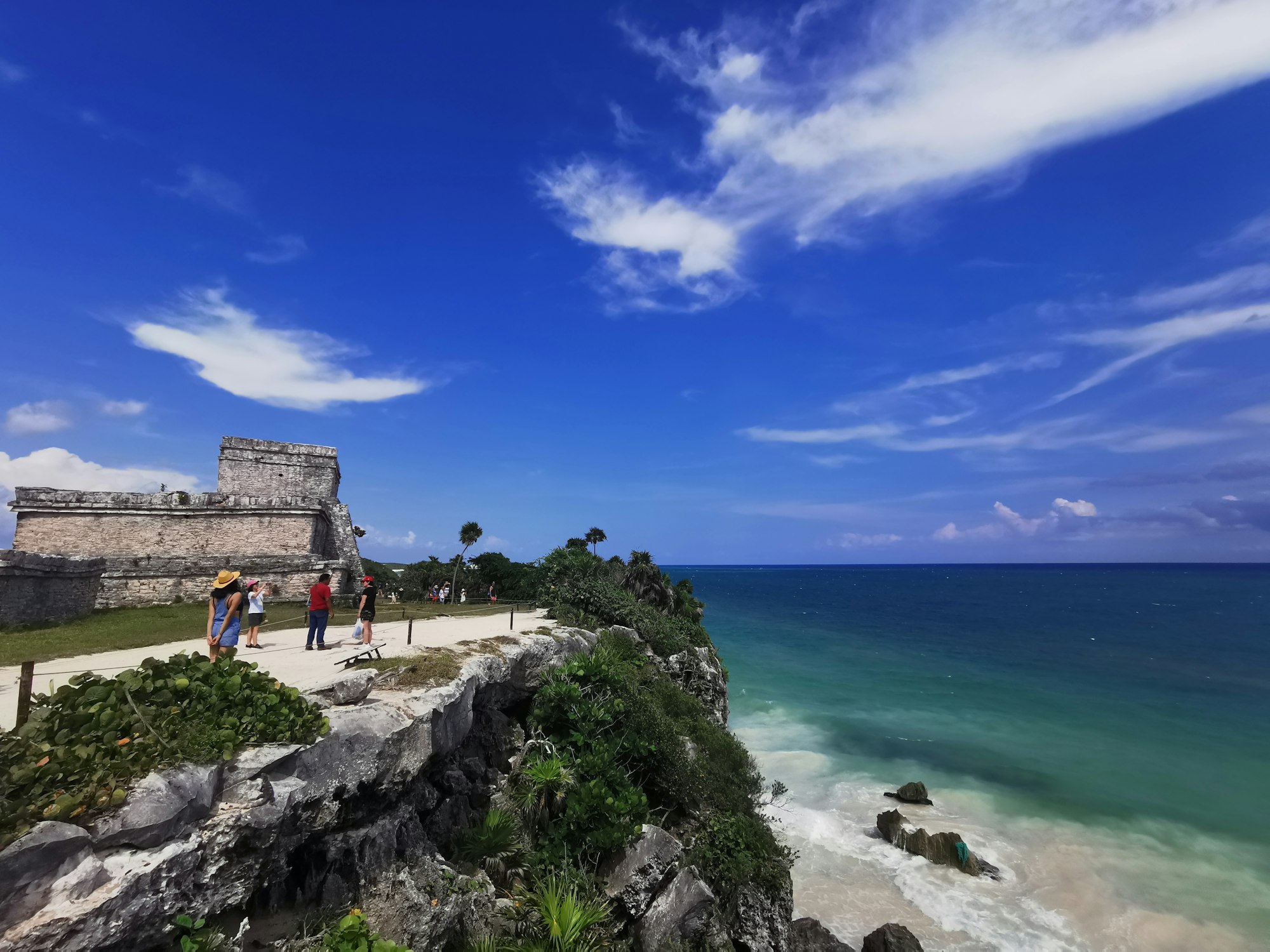
The fort walls above the Atlantic, Old San Juan, October 2024. Four hundred years of Spanish stonework, and the children were allowed to run on it
Puerto Rico Family Travel Guide
“No passport. No currency to change. No roaming charges. And it still feels completely foreign the second you step off the plane.”
Nicole Damiano, ASTA Verified Travel Advisor with FG Luxury Travel
Do you need a passport for Puerto Rico?
No. It is a United States territory. American citizens fly in on a driver's license, dollars work everywhere, and your phone plan and prescriptions carry over too.
When is the best time to go with kids?
I would pick May or June. Prices drop, the crowds thin out, the sea is warm and the real storm risk has not started yet. December through April is drier and the busiest, and it books out completely around Christmas and Three Kings Day.
Do you need to rent a car?
Unless you are staying inside Old San Juan the whole time, yes. Public transport outside the city barely exists and taxis add up fast. Your US license and your own car insurance usually work there, so check that before you pay for the counter policy.
What about hurricane season?
It runs June 1 through November 30, with the real peak from mid August to mid October. Most days in that window are fine and prices are at their lowest. Buy travel insurance with named storm cover when you book, not later, and choose refundable rates.
Are the power outages something to worry about?
They are real. The grid never fully recovered from Hurricane Maria in 2017 and outages are a normal part of life. Good hotels have generators, so ask before you book, and I would pack a power bank just in case.
Is Old San Juan okay with a stroller?
It is hard work. The streets are cobbled and steep. There are free trolleys that loop the old city, and that is what I would use with small kids or tired ones instead of pushing uphill.
Nicole’s Perspective
Why families hire me for Puerto Rico

We had one day in Old San Juan and the children got Junior Ranger badges. That is the whole of our Puerto Rico, so I am telling you up front. October 2024, off a ship, ten in the morning until nine at night, and we spent most of it inside the San Juan National Historic Site.
It was better than a whole week of a lot of places. The National Park Service runs the forts, so the booklets are free, a ranger swears the children in at the end, and mine sat on the stone with a pencil drawing iguanas for an hour without being asked to. If you do nothing else in San Juan, ask for the Junior Ranger booklet at the desk.
The thing I keep telling American families is the passport. You do not need one. Not for you, not for the baby, not for the teenager whose renewal is stuck in a line. You board a domestic flight, your phone works, the money is dollars, and you land somewhere that is entirely and unmistakably not the mainland.
Everything below that goes beyond the old city is planning knowledge rather than a story about my own three, and I have said so at the top of each section that needs it. Read it next to the North America guide, or against Mexico and Costa Rica, which are the two it usually competes with.
Beyond the Bookshelf
Stories to carry you deeper into Puerto Rico. This is our own family shelf, real books, films, music and a cookbook tied to the place, not a generic reading list. Read it before you go and the trip means more when you get there.

- When I Was Puerto RicanEsmeralda Santiago
- The House on the LagoonRosario Ferré
- The Storyteller’s Candle / La velita de los cuentosLucía González
- A Taste of Puerto RicoYvonne Ortiz
Book links go to Bookshop.org, which supports local bookstores. Film and music links go to JustWatch and Spotify. As an affiliate we may earn from qualifying purchases.
Why this country, for this family
Why Puerto Rico Works With Kids
 Poppy marks the family parts. Wherever you see her, that section is written for traveling with children.
A Puerto Rico family vacation works because nothing here is a travel day.
No passport, no currency, no roaming
It is a United States territory. American citizens fly domestic with a driver’s license, spend dollars, use their own phone plan and their own prescriptions. For a family of five that removes about six hundred dollars and three months of admin from the front of the trip.
A rainforest and a beach in one day
El Yunque is forty minutes from San Juan. The bio bays are an hour. Flamenco Beach is a ferry ride. Nothing on this island is a travel day, which is the opposite of almost every other Caribbean itinerary I build.
Five hundred years of history you can walk on
The old city is a UNESCO site and the forts are a national park. Children can climb the ramparts, go into the tunnels and earn a badge for it. There is nowhere else in the Caribbean where the history is this accessible and this free.
Cabo Rojo
Who should think twice. If you want a gated all inclusive with a wristband and a swim up bar, Puerto Rico has fewer of those than the Dominican Republic or Jamaica and the ones it has are expensive. This is an island for people who will hire a car. And if you cannot travel outside hurricane season, read the When to Go section properly before you book.

Castillo San Cristobal, October 2024. Free for children, six inconsequential dollars for the adults, and it kept three of them occupied for most of a day
Old San Juan and the Forts
Seven square blocks of sixteenth and seventeenth century Spanish colonial city, painted in colors that should not work together and absolutely do, on blue cobblestones that came over as ships’ ballast. This is the part I can write about from having been there.
Two forts, one ticket, and they are a national park. Castillo San Felipe del Morro on the point and Castillo San Cristobal above the Atlantic. One admission covers both for twenty four hours, children under sixteen are free, and the whole thing costs less than a coffee each. Six levels, tunnels, sentry boxes, cannon. Do San Cristobal first because it is quieter.
Ask for the Junior Ranger booklet. Free at either fort desk. Activities scaled by age, and a ranger swears them in and pins a badge on at the end. It is the single best value thing we did with our three anywhere in the Caribbean and it is free.
Walk the Paseo del Morro at the bottom of the wall. A flat waterside path that runs along the base of the city wall between the two forts. Cats, fishermen, no traffic and no hills, which matters if you have short legs with you. It is the nicest hour in the old city.
The old city empties in the evening and improves. Day trippers and ship passengers leave around five. Plaza Colon and Calle Fortaleza after that are a different place, with music and families out and no lines. If you are staying rather than cruising, this is when to be there.
El Yunque
We did not get out there on a port day. This is what I tell families and what I check before they go.
The only tropical rainforest in the United States National Forest system. Twenty eight thousand acres, forty minutes east of San Juan, and around two hundred inches of rain a year, which is the point.
You need a timed reservation for the main road. Route 191 requires a booked entry slot from recreation.gov and they go days ahead in high season. It costs a couple of dollars. Families turn up without one and get turned away, and it is the most avoidable mistake on this island.
La Mina Falls, Juan Diego and the tower. Yokahu Observation Tower is a walk up from the parking lot and gives you the whole forest. Juan Diego Falls is a five minute scramble and swimmable. La Mina Falls is the famous one and closed for years after the 2017 hurricanes, so check it is open before you promise it to anybody.
Go in the morning and take a rain jacket. It rains most afternoons and the trails get slippery. Proper shoes, not flip flops. There is no food inside worth eating, so bring lunch.

El Yunque gets around two hundred inches of rain a year. That is not a warning, it is the entire reason the forest looks like this
The Bio Bays, and Which One Is Worth It
Puerto Rico has three bioluminescent bays, more than anywhere else on earth. Dinoflagellates light up electric blue when the water is disturbed. It is real and it is incredible, and most people who come back disappointed went to the wrong one on the wrong night.
Mosquito Bay on Vieques is the one. It is the brightest recorded bioluminescent bay on earth and it is not close. If the glow is the reason you are going, go to Vieques and stay the night. The others are good. This one is the thing people describe for years afterwards.
Book the darkest nights, and only those. The glow is drowned out by moonlight. Aim for the five nights either side of a new moon and treat a full moon booking as money thrown away. Any operator who tells you the moon does not matter is selling you something.
Laguna Grande at Fajardo is the practical compromise. An hour from San Juan, a mangrove channel you kayak through in the dark to reach the lagoon, no overnight required. It is dimmer than Mosquito Bay but it is doable as an evening from the city, and the channel itself is memorable.
La Parguera is the one to skip with children. It is the only one where motorboats are still allowed, which means it is the least protected and the least impressive of the three. It also runs later. If somebody offers you it as the convenient option, that is why it is convenient.
No sunscreen, no repellent, no flash. Anything on your skin kills the organisms. Reputable operators will tell you to shower first and will not let you swim. If yours does not mention it, book somebody else.

Bioluminescence. Photographs of it are always better than the naked eye, so set expectations with children before you go and then let the water do the rest
Vieques and Culebra
Two small islands off the east end, reachable by ferry from Ceiba or a twenty five minute flight from San Juan. Quieter, emptier and slower than the main island, and where the beaches people photograph actually are.
The ferry is cheap and it is a lottery. Two dollars a head, about forty five minutes, and residents get priority. Book online the moment the window opens and turn up very early. If the trip depends on being somewhere at a particular time, fly instead. I have had families lose a whole day to a full ferry.
Flamenco Beach on Culebra earns the ranking. It is on every best beaches list and it deserves to be. White sand, calm shallow water for small children, and two rusting tanks left on the sand from the years the US Navy used the island for target practice, which children find far more interesting than the sea.
Vieques has wild horses and Mosquito Bay. They wander the roads and they are wild, so give them room. Vieques is the bigger, emptier, rougher of the two and it is where you go for the bio bay. Roads are poor and a 4×4 earns its money.
The map
Puerto Rico Place by Place
Planning Puerto Rico with kids starts here: the main island is about a hundred miles across and thirty five deep. Rainforest in the north east, dry limestone cliffs in the south west, surf on the west coast and two small islands off the east. Three hours end to end, which makes it one of the easiest islands in the Caribbean to see properly.


Anthem La Borinquena, named for the island’s Taino name, played before the Star Spangled Banner at official events. Language and money Spanish and English, both official. The US dollar, no passport needed from the mainland, and your phone plan works.

Cabo Rojo

Culebra

El Yunque

Fajardo

Old San Juan

Ponce

Rincon

Vieques
The Culture Underneath the Beach
Puerto Rico is a US territory, but it does not feel like a domestic trip once you are there, and that tension is part of what makes it interesting.
US citizens, not a foreign country, but not quite a state either. Puerto Ricans have been US citizens since 1917 but cannot vote for president while living on the island. It comes up in conversation, and it is worth understanding before you go.
Old San Juan is old, not staged. Founded in 1521, with real Spanish colonial forts, not a themed recreation. El Morro and San Cristobal are both worth the entry fee.
Reggaeton started here, and salsa runs deep too. San Juan in the 1990s is where reggaeton was born, and Puerto Rican artists still shape the genre. Local festivals celebrate both traditions.
Mofongo is the dish to know. Mashed fried plantain, usually with garlic and pork cracklings, served alongside whatever protein you order. It shows up everywhere and it is worth seeking out the good versions.
Food
Puerto Rican cooking is Spanish, Taino and West African at once, built on sofrito, adobo and plantain, and it is almost never spicy hot. That last point matters more than anything else here if you are feeding children.


Two notes. The chinchorros, the roadside food and drink stops, are where the island actually eats at weekends, and chinchorreo, going from one to the next, is a proper local pastime worth joining. And the coffee is excellent and grown in the mountains, so buy a bag from Yauco or Adjuntas rather than at the airport.
Getting Around
Hire a car unless you are only doing the old city. Public transport outside San Juan barely exists and taxis get expensive fast. Your US license and your own car insurance usually work, which is worth checking before you pay for the counter policy. Roads are American style, signs are in Spanish and distances are in kilometers while gas is in litres.
Two airports, and use the second one. San Juan is the main gateway. Aguadilla on the north west coast takes low cost flights and puts you next to Rincon and the surf coast without a three hour drive.
Old San Juan is walkable and steep. Cobbles, hills and narrow pavements. A stroller is hard work. Free trolleys loop the old city and are the answer with small children or tired ones.

Old San Juan, where the forts and the ice cream are
Money and Practical Basics
Dollars, and cards work everywhere. No exchange rate, no foreign transaction fee, no conversion trick at the card machine. Carry some cash for chinchorros, beach parking and the ferry, which are cash businesses.
Your health insurance works and so do your prescriptions. It is a US territory, so the pharmacy chains are the ones you already use and your plan generally applies. This is a real reason families with a medical situation choose Puerto Rico over anywhere else in the Caribbean.
Spanish is the working language and English is widespread. San Juan, the resorts and the tourist areas run in English. Small towns and the mountains do not, and a little Spanish is appreciated the same way it is anywhere. Nobody will be stuck.
Power cuts still happen. The grid has never fully recovered from 2017 and outages are a normal part of life. Good hotels have generators. Ask. A power bank and a torch in the bag is sensible rather than paranoid.
When to Go, Hurricanes Included
Eighty degrees all year. The variable is not temperature, it is rain and storms, and I am going to give you the actual numbers rather than the brochure version.
Dec to Apr
High season. Driest, least humid, most expensive, and Christmas through to mid January books out entirely. Puerto Rican Christmas runs to Three Kings Day on 6 January and the two weeks after, which is the best time to be there and the hardest to get a room.
May and Jun
My pick. Prices drop, the crowds go, the sea is warm and the serious storm risk has not started. Some afternoon rain. This is the best value fortnight on the calendar.
Jul to Nov
Hurricane season, officially 1 June to 30 November, with the real peak from mid August to mid October. Most days in that window are perfectly fine and prices are at their lowest. The risk is real though: Maria in 2017 was catastrophic and the island is still living with it.
If you go in season
Buy travel insurance with named storm cover and buy it when you book, not later. Choose refundable rates. Fly early in the trip rather than tight to a connection. And accept that a canceled week is a possible outcome you have priced in.
How It Compares to the Islands That Need a Passport
This is the conversation I have most often, so here it is written down.
Against Aruba or Turks and Caicos. Those two have better beaches and better resorts and they cost considerably more. They also need passports for everyone. If your family has valid passports and wants a reliable beach week, they win. If you want a country to explore rather than a resort to sit in, Puerto Rico wins easily.
Against the US Virgin Islands. The other no passport option, and St John is two thirds national park and beautiful. But the USVI is small, expensive and short on things to do beyond the water. Puerto Rico has a rainforest, a colonial capital, a mountain range and two side islands. More depth, less polish.
Against Mexico. Mexico is cheaper and has more all inclusive choice. Puerto Rico needs no passport and no currency and your phone works. For a first trip that is meant to feel foreign without any of the friction, Puerto Rico is the softer landing.
If you are cruising. San Juan is both a port of call and a home port, and it is one of the few Caribbean stops where a port day is worth staying in the town for. Ours was. Add nights either side if the fare allows it.
How to Route This Trip
Most trips here are San Juan and a resort, full stop. The island rewards spreading out more than that.
Base in San Juan, day trip El Yunque and the bio bays. Both are close enough to do as day trips, El Yunque is under an hour, and Fajardo for the bio bays is about the same.
Add a west coast or south coast leg if you have more than a week. Rincon for surf town energy, Ponce for a different, less touristy city than San Juan. Both are a couple hours drive.
Vieques and Culebra need their own days, not a rush. The ferry or a small plane gets you there, but once you are on island time slows down. Do not try to see both in one day trip from San Juan.
A week covers San Juan plus one region well. Trying to do Old San Juan, El Yunque, the bio bays, and an outer island all in one week means you will rush every single one of them.

Flamenco Beach on Culebra
Regions at a Glance
San Juan and the North
Old San Juan, the forts, Condado and Isla Verde. The airport, the hotels and the history, all in one corner.
The East and El Yunque
The rainforest, Luquillo beach and the kiosks, Fajardo for the boats and the ferry to the islands.
Vieques and Culebra
The two small islands off the east coast. Bio bays, wild horses, Flamenco Beach and almost no traffic.
The West and South
Rincon for surf, Cabo Rojo for the salt flats and the lighthouse, Ponce for the pink firehouse. The Puerto Rico the cruise passengers never see.
Where to Go in Puerto Rico
It is one island with good roads, so this is an order of days rather than a route. A week does the first four.
Old San Juan. Two nights in the old city. The forts in the morning, the blue cobblestones, ice cream on the plaza and the cats at the wall. Then move to a beach hotel.
El Yunque. A morning in the rainforest. The La Mina trail if it is open, the tower, and lunch at the Luquillo kiosks after.
A bio bay. Laguna Grande at Fajardo is the easy one from San Juan. Mosquito Bay on Vieques is the one worth planning the whole trip around.
Vieques or Culebra. Two or three nights. Rent a jeep, find an empty beach, and let the horses walk past. Culebra if Flamenco Beach is the point.
The west coast. Rincon and Cabo Rojo on a longer trip. Surf lessons, the lighthouse, the pink salt flats and the best sunsets on the island.
Doing It With Children
Most of a San Juan with kids trip is not the old city at all, it is what you do around it.
Do the Junior Ranger program. Free at the forts and at El Yunque, scaled by age, and it ends with a ranger and a badge. It is the highest return on effort of anything on this island and it is the one piece of this page that comes from watching my own three do it.
Know which beaches are calm. The north coast faces the Atlantic and has surf and rip currents. Condado and Ocean Park in the city are lively rather than gentle. For small children, the south and west coasts, Flamenco on Culebra and the calm ends of the Fajardo beaches.
The coqui frogs are a bedtime feature. They start at dusk, they are loud, and they are on the national crest. Children either love them or need a fan on for the white noise. Both outcomes are common.
Heat and sun are the real hazards. Eighty degrees plus humidity all year. Mornings out, afternoons in water or in shade, reef safe sunscreen because the mangroves and the bio bays depend on it, and more water than you think.
Where to Spend the Extra Money
Puerto Rico ranges from budget guesthouses to serious resorts. A few splurges change the trip.
A guided kayak tour of Mosquito Bay on Vieques. This is not optional if the bio bay is the reason you came. A good guide knows the moonless nights and keeps the group away from sunscreen and bug spray that kill the glow.
A night or two actually inside Old San Juan. Staying in the old city rather than driving in for the day means you get it in the early morning and at night, both very different from the midday cruise crowds.
A guided hike to one of El Yunque’s harder to reach waterfalls. The easy trails get crowded. A guide can get you to the quieter ones.
Fly instead of ferry to Vieques or Culebra if the ferry is unreliable. The ferry system has a history of cancellations. A small charter flight costs more but removes the risk to your schedule.
Things That Surprised Us
How much a national park changed the day. I expected a pretty old town and a walk. What we got was a fort the children were allowed to run on and a booklet that held them for hours. It cost almost nothing.
How foreign it feels for somewhere so easy. Domestic flight, dollars, your own phone, and then blue cobblestones, Spanish on every sign and four hundred year old walls. The gap between how little effort it takes and how far away it feels is the whole appeal.
That 2017 is still present. Not as a warning, as a fact. You see it in the roofs, in the closed trails and in how people talk about the power. Anyone going should know that and behave like a guest who knows it.
Where I Would Start
First time in Puerto Rico with kids? San Juan, then the rainforest, then a bio bay. No passport for US families, and a week does it all.
Old San Juan. Three nights. The forts, the blue cobbles, kites on the lawn at El Morro, a walk along the wall at sunset.
El Yunque. A day. The rainforest an hour east, waterfalls, the tower, a swim at a river pool.
Vieques or Fajardo. Two nights. The bio bay by kayak on a moonless night, wild horses on the beaches at Vieques, a ferry or a small plane.
Numbers Worth Knowing
Puerto Rico, by the numbers
Ways to travel
Puerto Rico is not one kind of trip
How you move through it changes the trip more than which places you pick.
Ocean Cruising
San Juan is both a major port of call and a home port, and it is one of the few Caribbean stops where staying in town for the day genuinely pays off.
For example: a San Juan embarkation with two nights in the old city added on the frontRoad Trips
Hire a car and the whole island opens up, El Yunque one morning, the bio bays that evening, Rincon or Ponce if you have a few more days.
For example: San Juan to Rincon in about two and a half hours across the north coastGuided and Small Group
The forts and the bio bays both carry more weight with someone who actually knows the tides, the moon phase, and which ranger station has the Junior Ranger booklets.
For example: a guided kayak trip into Laguna Grande on a new moon nightWalking and Hiking
El Yunque has trails for every age, from a five minute scramble to a proper hike up to the Yokahu tower, and Old San Juan is its own walking tour of four centuries.
For example: the flat Paseo del Morro path between the two forts, no hills and no trafficExplore by interest
What families come to Puerto Rico for

History
The forts of Old San Juan
Two Spanish forts, one ticket, and a Junior Ranger badge at the end. Five hundred years of history that children are allowed to climb on. Ours did.

Nature
El Yunque
A rainforest forty minutes from the capital with waterfalls, a swimming hole and two hundred inches of rain a year. Book the entry slot ahead.

After dark
The bio bays
Three bioluminescent bays, and Mosquito Bay on Vieques is the brightest in the world. Kayak in on a new moon and every paddle stroke glows.

Islands
Vieques and Culebra
Wild horses on the roads, empty palm backed beaches and Flamenco Beach, a ferry or a small plane from the east coast. The slow half of the trip.
Something unexpected
Only in Puerto Rico

Watch before you go
In the Heights
Set in a Dominican and Puerto Rican corner of New York rather than the island itself, but the music and the pride in it come straight from families who trace back to exactly this kind of street.

Listen for this
Reggaeton, born here
San Juan in the 1990s is where the genre took shape, and Puerto Rican artists still shape where it goes next. It is playing somewhere in the old city before you have finished your first coffee.

Only in Puerto Rico
The brightest bio bay on earth
Mosquito Bay on Vieques is the record holder, no contest. Book the darkest nights around a new moon, and skip anywhere that lets motorboats in.

From here
Wild horses on Vieques
Descended from Spanish colonial stock and never rounded up since, they wander the roads and the beaches on Vieques and belong to no one in particular.
Combine It With
If you have the time to add a second destination, these are the ones I would actually pair this one with. Not a list of neighbors. A list of trips that work.
Mexico
Cheaper, bigger, and needs a passport, which is exactly the tradeoff worth naming out loud. If your family already has passports and wants more all-inclusive choice, Mexico is the other obvious pick.
Read the guide
Costa Rica
The other trip I compare Puerto Rico against most often. More rainforest and wildlife, less colonial history, and both work well for a family that would rather hike than sit on a lounger.
Read the guide
Plan Puerto Rico with Nicole
Tell me who is coming, and when.
Puerto Rico works as a long weekend in San Juan, a full week that adds El Yunque and the bio bays, or the anchor for a two country trip with the Dominican Republic or the Bahamas. Which one makes sense depends on your dates and what the rest of the trip looks like. Send me the ages, the dates, and what you are hoping this trip feels like. I will come back with what is really available.
Nicole Damiano, ASTA Verified Travel Advisor with FG Luxury Travel.
Puerto Rico, Answered
Do you need a passport for Puerto Rico? No. It is a United States territory. American citizens fly in on a driver’s license, dollars work everywhere, and your phone plan and prescriptions carry over too.
When is the best time to go with kids? I would pick May or June. Prices drop, the crowds thin out, the sea is warm and the real storm risk has not started yet. December through April is drier and the busiest, and it books out completely around Christmas and Three Kings Day.
Do you need to rent a car? Unless you are staying inside Old San Juan the whole time, yes. Public transport outside the city barely exists and taxis add up fast. Your US license and your own car insurance usually work there, so check that before you pay for the counter policy.
What about hurricane season? It runs June 1 through November 30, with the real peak from mid August to mid October. Most days in that window are fine and prices are at their lowest. Buy travel insurance with named storm cover when you book, not later, and choose refundable rates.
Are the power outages something to worry about? They are real. The grid never fully recovered from Hurricane Maria in 2017 and outages are a normal part of life. Good hotels have generators, so ask before you book, and I would pack a power bank just in case.
Is Old San Juan okay with a stroller? It is hard work. The streets are cobbled and steep. There are free trolleys that loop the old city, and that is what I would use with small kids or tired ones instead of pushing uphill.
Keep exploring from Puerto Rico
Cities, neighbors, and the wider region.
Click any card to open that page
More of the Caribbean & Central America
 Antigua & Barbuda
 Aruba
 Bahamas
 Barbados
 Belize
 Cayman Islands
 Costa Rica
 Curaçao
 Dominican Republic
 Guatemala
 Jamaica
 Panama
 St. Lucia
 Turks & Caicos
 All of the Caribbean & Central America
 Explore the world
 The Travel Library
