
Botafogo bay and Sugarloaf. Rio is the most physically beautiful big city I have ever put a client in
Brazil Family Travel Guide
“Brazil is not a country you visit. It is a continent with one flag on it, and the single biggest mistake is treating it like one destination.”
Nicole Damiano, ASTA Verified Travel Advisor with FG Luxury Travel
Do we need a visa?
Yes. Since April 2025 US citizens need an e-visa for Brazil. Apply online, about eighty dollars per person including kids, and allow two weeks. It is valid for ten years, so it only hurts once.
Is Rio safe with kids?
The beach neighborhoods are, with normal city sense. Ipanema and Leblon for the hotel. No phones out on the sand, no walking on the beach after dark, use a car service at night. Families do Rio every week and have a wonderful time.
How old for the Amazon?
Eight and up for a lodge trip. The boat rides, the heat and the early mornings are a lot for younger children. Pick a lodge with a pool and air conditioning, they exist.
Is Iguazu worth the extra flight?
Yes. It is the biggest waterfall system in the world and the walkways put you in the spray. Two nights, see both the Brazilian and Argentine sides, and do the boat under the falls with kids over seven.
When should we go?
Rio is year round. December through March is hot and it is Carnival season, which is either the reason or the thing to avoid. May through September is cooler, drier and cheaper.
Nicole’s Perspective
Why families hire me for Brazil

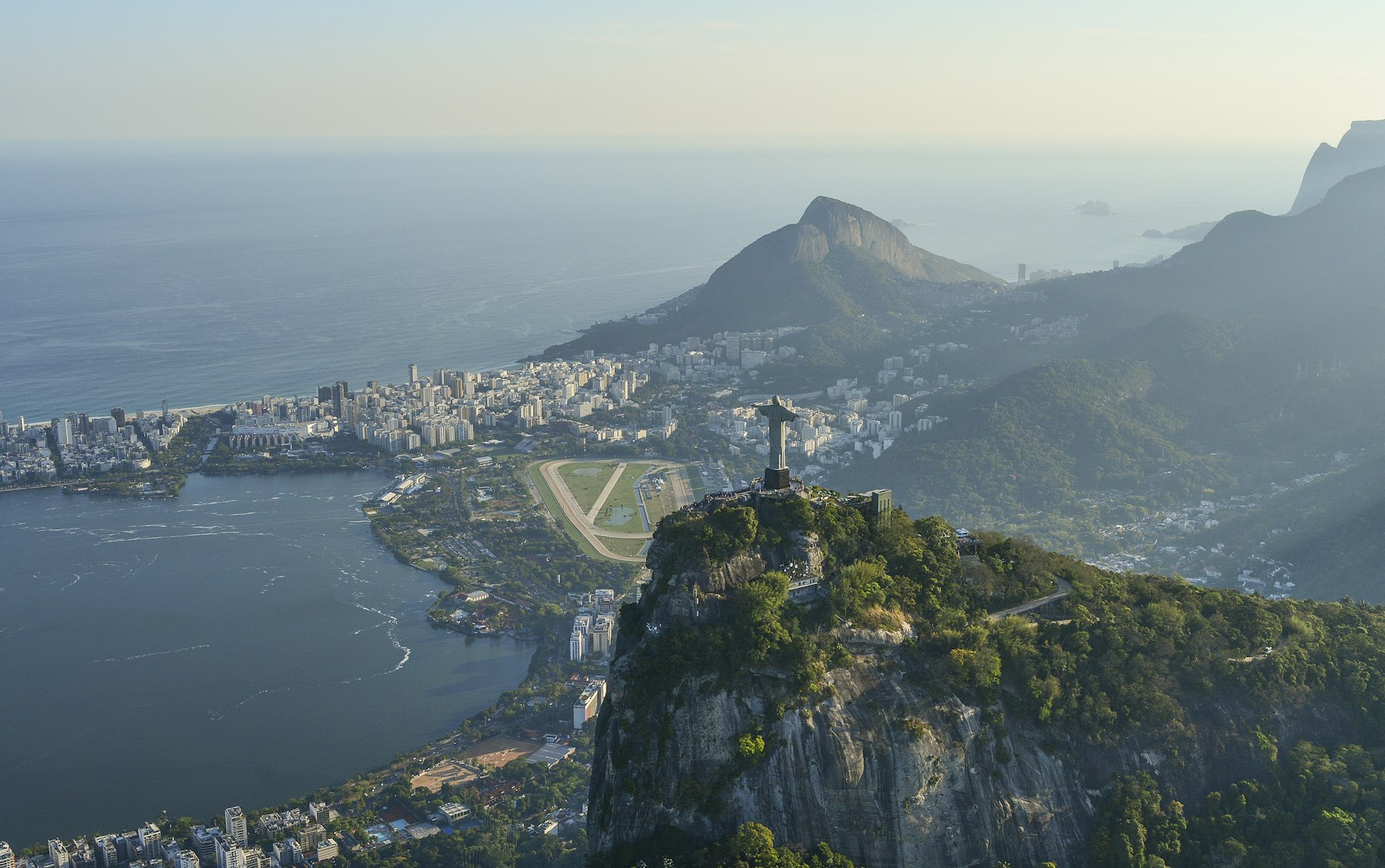
Rio has a rhythm to it that you feel before you understand it. Samba drifting out of a bar on a random Tuesday. A soccer game breaking out on the sand. Sugarloaf and Christ the Redeemer standing over the whole city like they are just part of the skyline, because to the people who live there, they are.
Then you go to the Amazon and the volume changes completely. It is still loud, just a different kind. Birds you cannot see, howler monkeys somewhere off in the trees, water against the side of a boat. Kids do not need it explained to them why the rainforest is amazing. They just feel it.
Iguazu Falls will make anyone feel small in the best way. Hundreds of waterfalls going at once, and mist rising so high you see it from the trail before you ever see the falls themselves.
Brazil does not fit neatly into a corner of a bigger trip, and I love that about it. This is the Brazil family travel guide I hand clients once they stop asking if it is safe and start asking where to go. Give it real room and it hands you back incredible food, music everywhere, and a country that feels like several countries stacked on top of each other.
Beyond the Bookshelf
Stories to carry you deeper into Brazil. This is our own family shelf, real books, films, music and a cookbook tied to the place, not a generic reading list. Read it before you go and the trip means more when you get there.

- The Hour of the StarClarice Lispector
- FlictsZiraldo
- The Brazilian KitchenLeticia Moreinos Schwartz
Book links go to Bookshop.org, which supports local bookstores. Film and music links go to JustWatch and Spotify. As an affiliate we may earn from qualifying purchases.
Why this country, for this family
Why Brazil
 Poppy marks the family parts. Wherever you see her, that section is written for traveling with children.
Brazil is a continent with one flag on it, and the people are the reason to go. Warm, loud, patient with children in a way that surprises families coming from Europe.
Who it is for. Families with kids over seven who want a big city, a big waterfall and a beach in one trip. Anyone who likes music and noise. Wildlife families, if you add the Amazon or the Pantanal.
Who should skip it. Anyone who wants quiet. Brazil is not quiet. Skip it too if Portuguese scares you, because English is thinner here than anywhere else in South America outside the big hotels.
The e-visa is required
Since April 2025, US citizens need one. About eighty dollars per person, valid ten years, apply two weeks out.
Rio is the anchor
Ipanema for the hotel, Sugarloaf at sunset, Christ the Redeemer early. Four nights is right. Add Iguazu by air.
The Pantanal beats the Amazon for animals
Open wetland, jaguars, caiman, capybara. Easier to see wildlife than in the jungle, and the lodges have pools.
Pick Two Regions, Not Five
Brazil is three point three million square miles. It borders every South American country except Chile and Ecuador. Nothing about the internal geography is walkable and almost nothing is drivable in the time you have.
The internal flights add up fast. Budget roughly two hundred to four hundred dollars a head for each internal leg, more in December and July. A family of five doing Rio, Iguazu, Salvador and Manaus is buying twenty flight segments. That is a second trip in airfare alone.
The three combinations that work. Rio plus Iguazu is the classic first trip and it is the right one. Rio plus Paraty and the green coast is the slower version. Salvador plus the Bahia beaches is the one nobody books and the one I would pick for a second visit.
Ten days means two places. Give Rio four nights, Iguazu two, and put the rest into whichever you added. Anything faster and you are buying transfers rather than a trip.
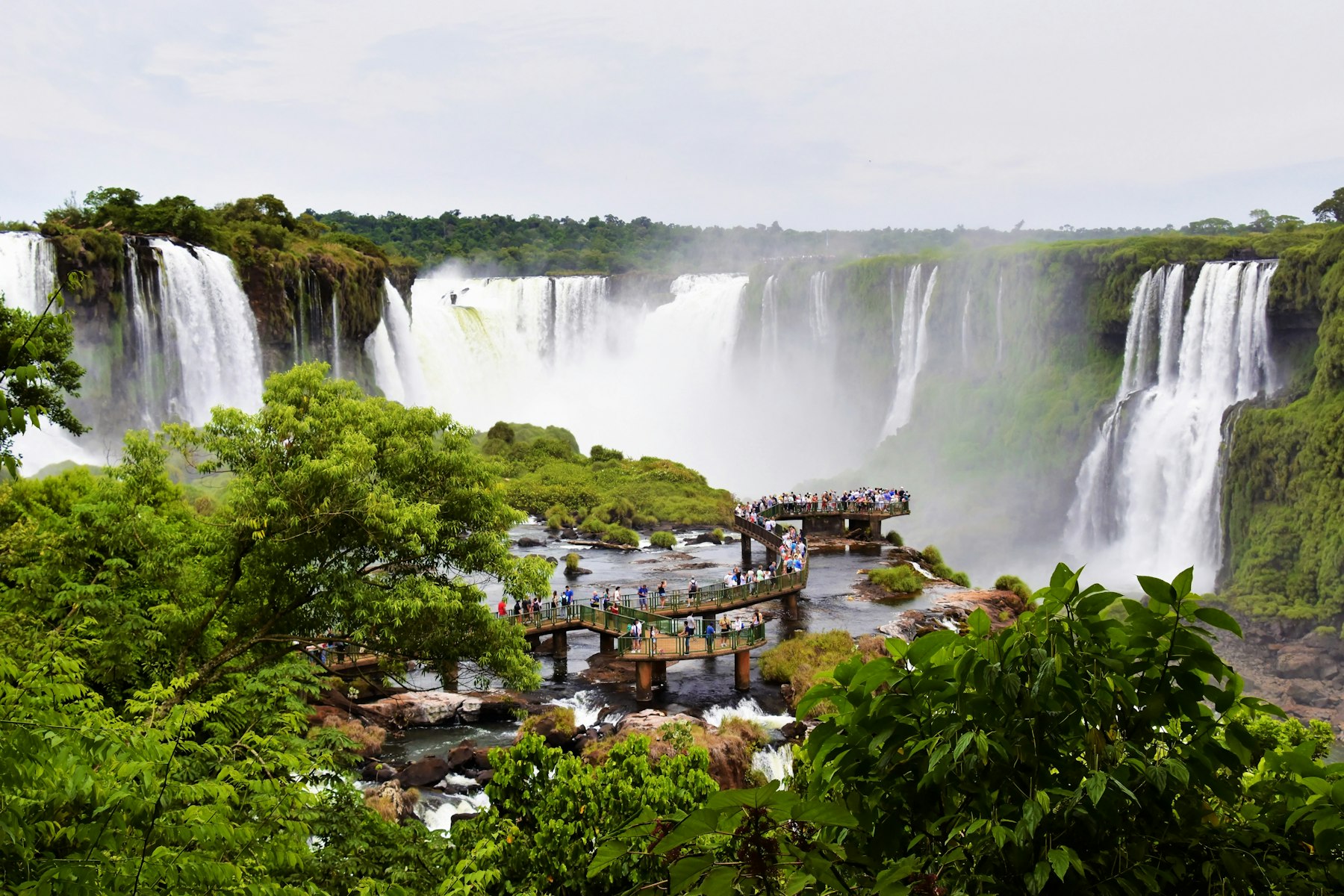
Iguazu from the Brazilian side. The walkway takes you out into the spray, which is the single best twenty minutes of the trip and also the wettest.
Rio, Handled
This is the question I get asked before any other, so here is the answer I actually give clients rather than the one that makes everybody comfortable. Rio has real crime and it is concentrated, predictable and largely avoidable. It is also one of the great cities of the world and telling families to skip it is bad advice.
Where you stay decides most of it. Ipanema and Leblon are the two I book. Copacabana is fine and busier and a little rougher at the far end. Santa Teresa is beautiful and hilly and I would not put a family there for a first visit. The south zone beach neighborhoods are policed, walkable and full of families.
Carry a beach phone and leave the good one in the safe. Phone snatching on the beachfront is the actual risk, not anything more dramatic. Locals carry an old handset and a small amount of cash to the beach and so should you. No watch, no visible jewellery, nothing in your hands on the sand.
Daylight and busy streets, and use apps for cars. Uber and 99 both work well and are cheap. Use them at night rather than walking, including short distances. That is not fear, it is what people who live there do.
The sights are worth every bit of it. Sugarloaf at sunset, Corcovado early before the cloud, the botanical gardens, the Sunday market in Ipanema, and the simple business of a whole city going to the beach after work. There is no substitute city for this.
What I say no to. Favela tours. There are responsible operators and I still will not book one for a family with children. Watching people live is not a sight, and the community projects that really need support take donations without the bus.
Iguazu With Children
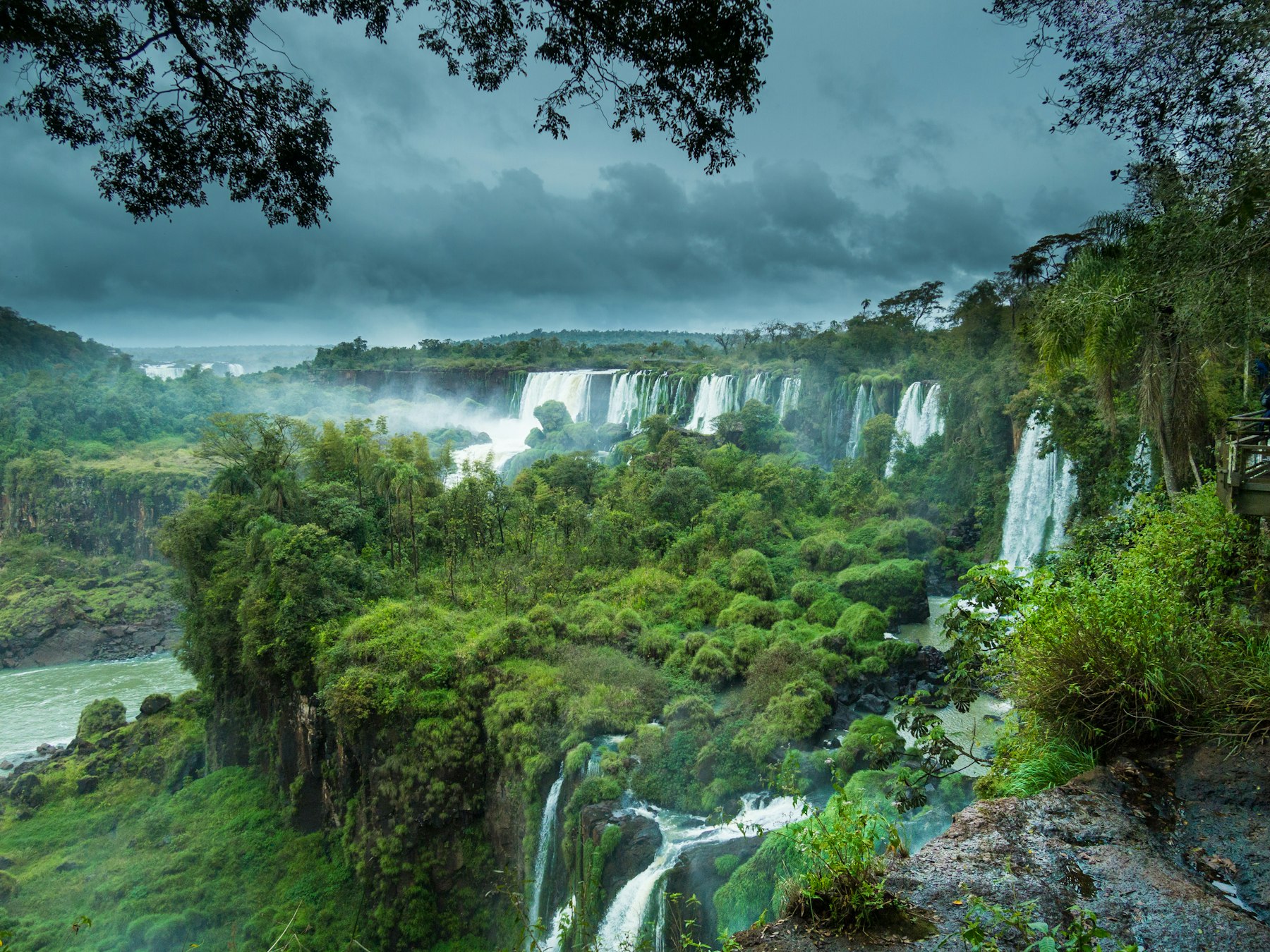
Two hundred and seventy five separate waterfalls spread across nearly two miles of river, on the border between Brazil and Argentina. It is the one thing in South America that beats its own photographs, and it is easy with kids.
The Brazilian side is the view. A single well made trail along the gorge that gives you the whole panorama, ending on a walkway out into the Devil’s Throat spray. It takes about three hours and a five year old can do all of it. This is the side to do if you only do one.
The Argentine side is the experience. Miles of catwalks that put you above and inside the falls, plus a little train. It is a full day and it is more walking. Crossing the border for it is straightforward but it is a border, with passports and a line, so plan a whole day and check visa rules for your nationality both ways.
You will get soaked and that is the fun part. Ponchos are sold everywhere and are basically useless. Quick dry clothes, sandals with a strap, and a dry bag for the camera. Children love this part more than any waterfall.
Two nights, not one. Fly in, do one side, do the other or the bird park, fly out. The Parque das Aves opposite the Brazilian entrance is a rehabilitation aviary with walk in enclosures and it is the best hour of the trip for a small child.

Pelourinho, Salvador. Capoeira in the street is not staged for tourists, though the hat that comes round afterwards is real too.
The Amazon Versus the Pantanal
This is the decision that separates a good Brazil trip from a disappointing one, and almost everybody gets it backwards. If you want to see animals, do not go to the Amazon.
The Amazon is about scale, not sightings. It is a closed canopy forest. The wildlife is above you, behind leaves, and mostly nocturnal. You will see birds, pink river dolphins, caiman at night and a lot of astonishing green. What you will not see is the documentary. Go for the river, the lodges and the sheer size of it.
The Pantanal is where the animals are. An open wetland the size of Britain, and open means visible. It has the highest jaguar sighting rate on earth in the dry season, plus giant otters, capybara, caiman by the thousand and anteaters. If your family is going all that way to see wildlife, this is the answer and it is not close.
They cost differently. Amazon lodges out of Manaus are the easier logistics and often the cheaper week. The northern Pantanal means flying to Cuiaba and driving the Transpantaneira, and the good jaguar camps are expensive. Budget accordingly rather than being surprised.
Season decides everything in the Pantanal. July to October, the dry months, is when the water drops and the animals concentrate. Turn up in February and you are looking at a flooded plain. The Amazon works year round with a high water and a low water season that change what you do, not if you go.

A capybara, which is a rodent the size of a labrador and the calmest animal in South America. The Pantanal is full of them.
Salvador and the Northeast
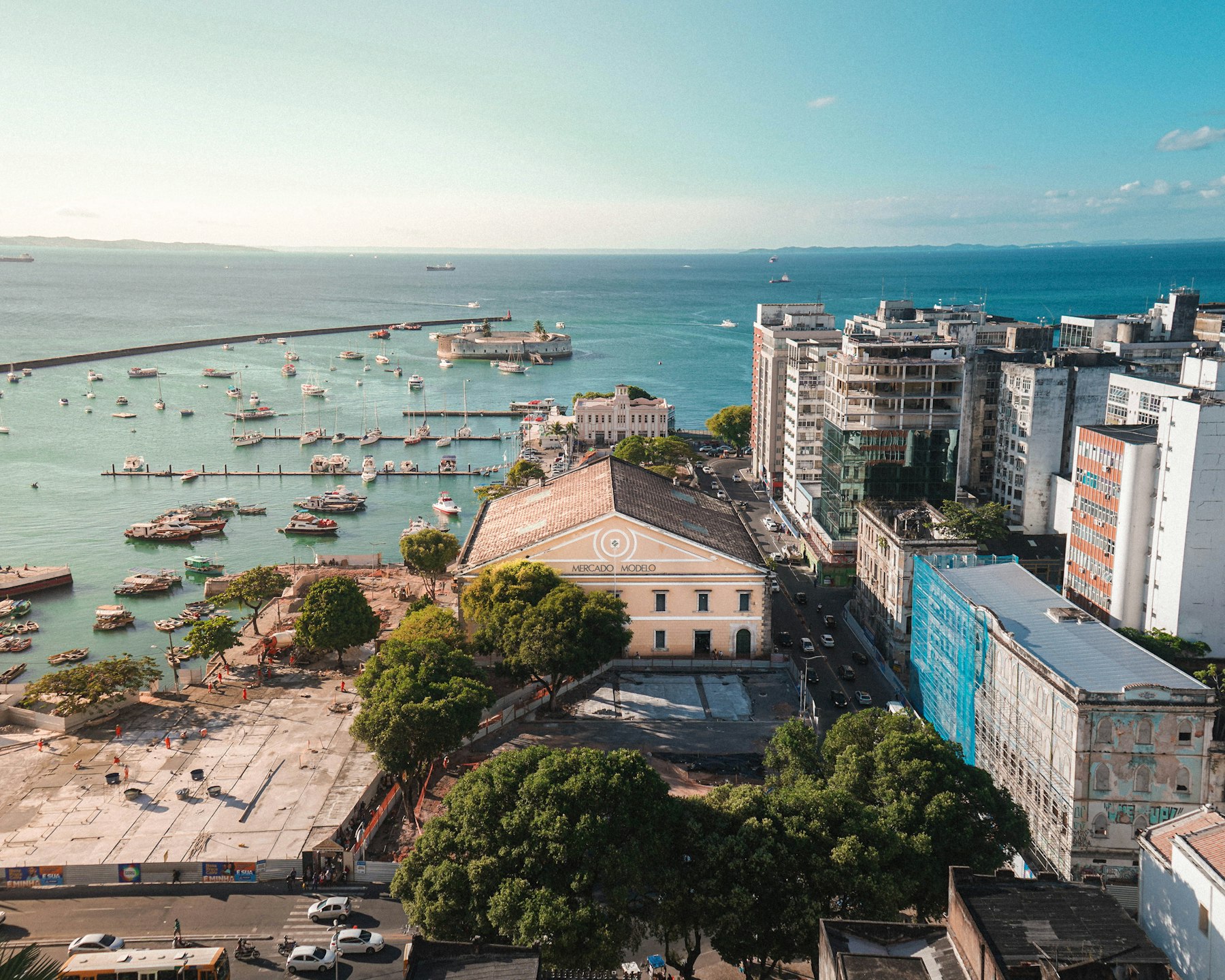
Salvador was the first capital of Brazil and the main port of the transatlantic slave trade, and the culture that came out of that is the reason the country sounds and tastes the way it does. It is the part of Brazil that most Americans skip and the part most likely to change how you think about the place.
Pelourinho is a UNESCO old town and a living one. Painted eighteenth century houses on cobbled hills, drumming groups rehearsing in the square, capoeira in the street. It is also the part of Salvador where you keep your wits about you after dark, the same as any old town in any port city.
The food is West African. Palm oil, dried shrimp, coconut, chilli. Acaraje is a black eyed pea fritter split and stuffed, sold by women in white lace from stands on the street, and it is the single best thing I have had described to me from this country.
The beaches north and south are the reason to stay. Praia do Forte, Itacare, Trancoso. Long, warm, and far less developed than the southeast. This is where I would put a family for a second week rather than going back to Rio.
The map
Brazil Place by Place
Eight places worth naming. Pick two of them, or three at the absolute outside, and give each one real days.


Anthem The Hino Nacional Brasileiro, fast, wordy and sung at breakneck speed before every match. Language and money Portuguese, not Spanish. The real, and cards and Pix payments work almost everywhere.

Amazon

Florianopolis
Iguazu Falls

Pantanal

Paraty
Rio de Janeiro
Salvador

Sao Paulo
Brazilian Culture
A country big enough to hold several different cultures inside one set of borders.
Football is not a metaphor here, it is the real thing. a five time World Cup winner, and a pickup game breaks out on every beach and street corner.
Carnival is the biggest party on earth. Rio’s version is the famous one, but Salvador and Recife run their own versions with just as much energy.
Salvador carries the country’s Afro Brazilian roots. capoeira, candomble and the food of Bahia all trace back to the enslaved Africans brought through this port.
Portuguese sets Brazil apart from every neighbor. it is the only Portuguese speaking country in South America, which shapes music, slang and identity differently than Spanish speaking neighbors.
Food
Brazilian food is regional to a degree that surprises people. The south is beef, the southeast is Italian and Japanese immigration, the northeast is West African. Feijoada, the black bean and pork stew, is the national dish and traditionally a Saturday lunch that takes the rest of the day off you. Five more things to order by name.





Getting Around
Fly, and book domestic legs early. LATAM, GOL and Azul cover the country. Prices climb steeply close to departure and in the school breaks, which in Brazil are December to February and July.
Do not plan to drive between regions. Rio to Salvador is a thousand miles. Renting a car makes sense on the green coast around Paraty or along the Bahia beaches and almost nowhere else.
Use ride apps in the cities. Uber and 99 are cheap, tracked and the normal way to move in Rio and Sao Paulo. Metered taxis are fine, hailing one on the street at night is the thing to avoid.

Paraty, the colonial town down the coast from Rio
Money and Practical Basics
Reais, and cards work almost everywhere. Brazil is close to cashless. Contactless works in taxis, beach kiosks and market stalls. Carry a small amount of cash for tips and the odd stall and no more.
Americans need a visa again. Brazil reinstated the visa requirement for United States, Canadian and Australian passports in 2024. It is an online e-visa, it takes a few weeks, and people still get caught out. EU and UK passports do not need one.
Yellow fever for the Amazon and the Pantanal. Not required for Rio and the coast, strongly recommended for the interior, and some onward countries will ask for the certificate. It needs ten days to take effect, so this is a decision made a month out.
Portuguese, not Spanish. And less English than you expect outside hotels. Download the offline Portuguese pack. Brazilians are extraordinarily patient with people who try.
When to Go
Brazil is mostly tropical and there is no bad month, only different trade offs. It sits in the southern hemisphere, so the seasons are inverted.
December to March is summer and it is peak. Hot, humid, expensive, and the beaches are full of Brazilians. Carnival moves around February and March. It is wonderful and it is not a value trip.
April to June is the sweet spot. Warm, drier in Rio, low season prices, and the falls are running high after the summer rain. This is when I would send a family.
July to October is winter and the wildlife season. Rio sits in the low seventies and the sea is cold. The Pantanal is at its best. The Amazon is in low water, which means beaches and better walking.
Routing Brazil
A country this size means picking a region, not trying to see all of it in one trip.
Rio is the natural anchor for a first trip. the beaches, Christ the Redeemer and Sugarloaf are all close together and easy with kids.
The Amazon is a serious add on, not a day trip. Manaus requires its own flight and its own days, build it in as an extension if wildlife is the priority.
The Pantanal rewards travelers who skip the Amazon. easier wildlife viewing and a shorter trip than the deep Amazon, worth considering as the nature focused choice instead.
The coast south of Rio is its own beach block. Paraty and Florianopolis pair well together for a slower, less touristed stretch of coastline.

Florianopolis, the beach island in the south
Regions at a Glance
Rio and the Southeast Coast
Rio, Paraty, Ilha Grande and Sao Paulo. The beaches, the mountains and the cities. Where almost every first trip starts.
Iguazu and the South
The falls on the Argentine border, then Florianopolis and the German towns of Santa Catarina. Cooler, greener and easy.
The Pantanal and the Amazon
The wetlands for wildlife you can see, the rainforest for the river and the scale. Pick one, and for children pick the Pantanal.
Salvador and the Northeast
Bahia, the Afro Brazilian heart of the country, then the beaches north to Recife, Natal and the dunes of Jericoacoara.
Where to Go in Brazil
Brazil is a continent with one flag. Five places, and a first trip does three.
Rio de Janeiro. Four nights. Sugarloaf at sunset, Christ the Redeemer early, Ipanema every afternoon, a Sunday on the closed beach road.
Iguazu Falls. Two nights. Both sides, the walkways into the spray, the boat under the falls with kids over seven.
The Pantanal. Three nights at a lodge. Jaguars, caiman, capybara, giant otters. Easier wildlife than the Amazon and the lodges have pools.
Salvador. Three nights. The Afro Brazilian capital, capoeira in the squares, the best food in the country.
Paraty. Two nights between Rio and Sao Paulo. A colonial town on a bay of islands, boat days, cobbles the kids can run.
Doing It With Children
Brazil with kids works better than people assume, once you plan around the heat instead of fighting it.
Brazil likes children
This is not a small thing. Restaurants, hotels and strangers are warm to families in a way that surprises people coming from Europe. Nobody minds a child in a restaurant at ten at night.
The heat is the real constraint
Rio in January is brutal for small children. Plan mornings and late afternoons, book somewhere with a pool, and stop trying to sightsee between eleven and four.
Watch the beaches
Ipanema and Copacabana have serious undertow and shore break. Swim where the flags and the lifeguards are, and for small children the calm water at Praia do Forte or the green coast is a better bet.
Who Brazil Suits, and Who Should Skip It
A family trip to Brazil is not one size fits all, so here is who it actually suits.
Book it if you want beaches and a real city in the same trip. Brazil is the only South American country that does world class urban and world class coast at once. Families with teenagers do especially well here. So do people who have done the Caribbean and want somewhere with a pulse.
Skip it if this is your first trip outside North America. Brazil rewards a bit of travel confidence. The language barrier is real, the distances are long, and the safety management is a skill. Costa Rica or Mexico first, Brazil second.
Skip it if you have under ten days. It is a ten hour flight from the east coast and an overnight one. Anything shorter than ten days and you are spending a quarter of the trip in the air.
How it compares to its neighbors. Peru and Ecuador are history and mountains, Brazil is beaches, music and wildlife, and they do not overlap. Argentina is the closest comparison and it is cooler, more European and better value right now. If your family wants one South American beach country, Brazil wins. If they want one South American country full stop, I would still send a first timer to Peru.
Worth the Splurge in Brazil
A few places where paying more changes what the day actually looks like.
A private boat day around Paraty’s islands. a chartered boat with a local crew beats the crowded group tours out of the same harbor.
A proper lodge stay in the Pantanal. the better lodges include guided safaris on foot, boat and horseback, worth it for the wildlife access alone.
A private Carnival experience in Rio. a guided grandstand seat or a spot with a smaller samba school avoids the worst of the crowds while keeping the spectacle.
A private capoeira and Bahian cooking session in Salvador. a hands on afternoon with a local mestre goes further than watching a street circle from the sidewalk.
What Surprises First-Timers
How big it is, and what the flights inside it cost. Rio to Iguazu is two hours in the air and Rio to the Pantanal is a full day of travel. You plan Brazil around domestic flights the way you plan Europe around trains, and they are not cheap in school holidays.
How warm people are with kids. Waiters carry babies around restaurants. Strangers talk to your children. Nobody minds noise at dinner. It is the easiest country in South America to be a parent in.
Sao Paulo is not on the postcards and has the best food in the country. If you land there, give it a night. The Japanese neighborhood, the market, the pizza. Then go to the beach.
Where I Would Start
First time in Brazil with kids? Rio, then Iguazu. Add the Pantanal if the kids like animals more than beaches, and Paraty if they like boats.
Rio de Janeiro. Four nights. Sugarloaf at sunset, Christ the Redeemer early, Ipanema every afternoon, the beach road closed to cars on Sunday.
Iguazu Falls. Two nights. Both sides, the walkways into the spray, the boat under the falls for kids over seven.
The Pantanal. Three nights. Jaguars, caiman, capybara, giant otters from a boat. A lodge with a pool and easier wildlife than the Amazon.
Numbers Worth Knowing
Brazil, by the numbers
Ways to travel
Brazil is not one kind of trip
How you move through it changes the trip more than which places you pick.
Ocean Cruising
A river cruise into the Amazon out of Manaus reaches wildlife and communities a hotel stay never touches, and Brazil’s Atlantic coast also runs regular cruise stops.
For example: a small ship river cruise into the Amazon from Manaus.Road Trips
The coast road between Rio and Paraty runs through some of the country’s best beaches and colonial towns, an easy multi day drive.
For example: a coastal drive from Rio to the colonial town of Paraty.Independent Travel
Rio, Sao Paulo and Florianopolis are well connected by domestic flights and comfortable to self plan for a family used to city travel.
For example: flying yourself between Rio and Florianopolis for beach time.Guided and Small Group
The Amazon and the Pantanal wetlands both reward a local guide who knows where the wildlife actually is and how to move safely through it.
For example: a guided wildlife trip into the Pantanal wetlands.Explore by interest
What families come to Brazil for

Cities
Rio de Janeiro
Corcovado, Sugarloaf, the beaches and the best city setting on earth. Handled carefully, with the right neighborhood and a driver, it works well with children.

Nature
Iguazu Falls
Two hundred and seventy five falls across the Argentine border, walkways that take you right into the spray, and coatis stealing lunch. The single best day in South America for a family.

Wildlife
The Pantanal
The easier place to see jaguars, capybaras, giant otters and caimans up close, from a boat, and far better than the Amazon for children who want to see animals.

Culture
Salvador and the Northeast
The Pelourinho old town was the first capital of colonial Brazil. Capoeira, drumming and Afro Brazilian food, and warm beaches up the coast.
Something unexpected
Only in Brazil

Watch it in the street
Capoeira in Salvador
Part dance, part martial art, capoeira came out of Salvador’s Afro Brazilian communities and is still practiced in street circles in the old Pelourinho district.

Spot it in the wild
Wildlife in the Pantanal
The Pantanal wetlands are actually a better place to see jaguars, capybaras and giant otters than the denser Amazon, with wildlife visible from open ground.

Walk out into it
The Iguazu Walkway
A metal walkway on the Brazilian side runs out into the spray of the falls themselves, close enough to feel the water in the air.

Wander its streets
Colonial Paraty
A whitewashed 18th century port town on the coast road between Rio and Sao Paulo, quiet enough to feel like a step back in time.
Pair it up
Countries That Pair Well With Brazil

Argentina
Iguazu straddles the border, so you can walk into it. Buenos Aires is a two hour flight from Rio and a completely different kind of city.
Read the guide
Colombia
The other great Atlantic coast country, cheaper, easier, and a short hop north if you want more beach and less flying.
Read the guide
Plan Brazil with Nicole
Tell me who is coming, and when.
Brazil can be a week focused on Rio and the coast south to Paraty, a wildlife trip built around the Pantanal or the Amazon, or a longer trip that combines Rio with Iguazu Falls or Salvador. Which one makes sense depends on how much flying you want to do and how long you have. Send me the ages, the dates, and what you are hoping this trip feels like. I will come back with what is really available.
Nicole Damiano, ASTA Verified Travel Advisor with FG Luxury Travel.
Questions families ask about Brazil
The ones that come up in almost every planning call. If yours is not here, ask me.
Do we need a visa?
Yes. Since April 2025 US citizens need an e-visa for Brazil. Apply online, about eighty dollars per person including kids, and allow two weeks. It is valid for ten years, so it only hurts once.
Is Rio safe with kids?
The beach neighborhoods are, with normal city sense. Ipanema and Leblon for the hotel. No phones out on the sand, no walking on the beach after dark, use a car service at night. Families do Rio every week and have a wonderful time.
How old for the Amazon?
Eight and up for a lodge trip. The boat rides, the heat and the early mornings are a lot for younger children. Pick a lodge with a pool and air conditioning, they exist.
Is Iguazu worth the extra flight?
Yes. It is the biggest waterfall system in the world and the walkways put you in the spray. Two nights, see both the Brazilian and Argentine sides, and do the boat under the falls with kids over seven.
When should we go?
Rio is year round. December through March is hot and it is Carnival season, which is either the reason or the thing to avoid. May through September is cooler, drier and cheaper.
Keep exploring from Brazil
Cities, neighbors, and the wider region.
Click any card to open that page
 Argentina
 Chile
 Colombia
 Ecuador
 Peru
 All of South America
 Explore the world
 The Travel Library
