
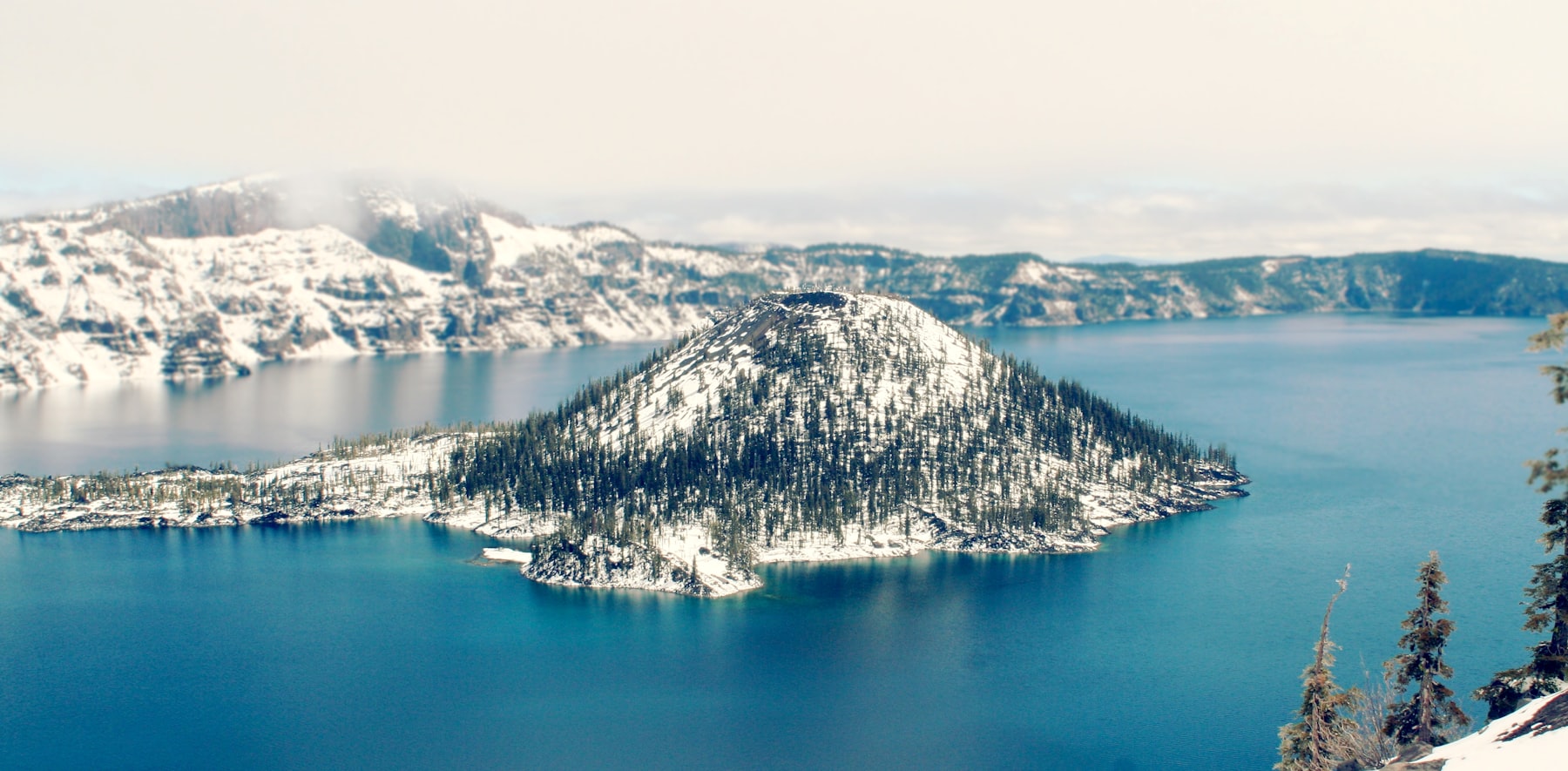
Crater Lake and Wizard Island. The deepest lake in the United States, and for most of the year you cannot get near the far side of it
Oregon With Kids Family Travel Guide
“Oregon looks small on a map and it is not. There is a mountain range down the middle of it, and that range decides your weather, your drive time and most of your trip.”
Nicole Damiano, ASTA Verified Travel Advisor with FG Luxury Travel
Can we swim on the Oregon coast?
Not really. The water is cold all year and the surf is rough. Kids wade, boogie board in wetsuits in summer and spend the rest of the time in tide pools, on the dunes and flying kites. The lakes inland and the Deschutes in Bend are where the swimming happens.
Portland or the coast?
Both, easily. Portland is ninety minutes from Cannon Beach. Two days in the city for Powell's, the food carts and OMSI, then three or four days working down the coast. Add the Columbia Gorge waterfalls as a day trip from Portland.
Is Crater Lake open when we visit?
From about July to early October, fully. The rim drive is under snow the rest of the year and the boat tours run only in summer. The lodge on the rim books a year ahead.
What about the rain?
It rains from October to June west of the mountains and then it stops. July through September are dry and glorious. Bend and central Oregon are sunny most of the year. Pack the rain jacket and go anyway.
Is the Oregon Dunes sandboarding safe for kids?
Yes, with a rented board from a shop in Florence and a gentle slope. It is slower than it looks and the landing is soft. Honeyman State Park has a dune that runs straight down into a lake, which is the kids' favorite.
Nicole’s Perspective
Why families hire me for Oregon

I have been to Oregon exactly once, and it was one city, and I was enormous. That photo is the real thing. It is our first ever Airbnb, a small trendy studio high up over Portland, and it was not the right space for two toddlers. But it had one enormous window, and the boys stood at it for what felt like hours watching the trains go past below. I was very pregnant with Avilene at the time. I wrote about that stay here, back when it was just a note about finding a cheaper way to travel.
What I have is one honest Portland memory and a long Pacific Northwest road trip through Washington State years before the kids existed, which taught me exactly what that rain and that coastline feel like, and a job where I plan this state for other families and then hear what happened.
Here is the thing I would tell a client on the phone. Oregon is two completely different trips separated by a mountain range, and the single most common mistake is booking both in one week and spending the difference in the car. West of the Cascades is green, wet, forested and cool. East of them is high desert, dry and sunny and three thousand feet up. Pick your side. Then, if you have the days, cross once and stay put.
Beyond the Bookshelf
A shelf of Oregon stories, Pacific Northwest movies, and farm-to-table cooking to get everyone ready for the coast.

- Sometimes a Great NotionKen Kesey
- The Lathe of HeavenUrsula K. Le Guin
- The Jump-Off CreekMolly Gloss
- Mink RiverBrian Doyle
- Ramona Quimby, Age 8Beverly Cleary
- WildwoodColin Meloy
- Good Night Oregon
- Six SeasonsJoshua McFadden
- Pok PokAndy Ricker
- The Portlandia Cookbook
Book links go to Bookshop.org, which supports local bookstores. Film and music links go to JustWatch and Spotify. As an affiliate we may earn from qualifying purchases.
Why this state, for this family
Why Oregon works with kids
 Poppy marks the family parts. Wherever you see her, that section is written for traveling with children.
My Oregon is one studio high over Portland, two toddlers at an enormous window watching the trains, and me very pregnant with Avilene. The rest is a job planning this state for other families and hearing what happened. It is two trips split by a mountain range, and both work.
Every beach is free, by law
All 362 miles of coast are held in public trust since 1967 and nobody can charge you to walk on the sand. Haystack Rock, the tide pools and the whole shoreline cost nothing.
Half mile walks with a payoff
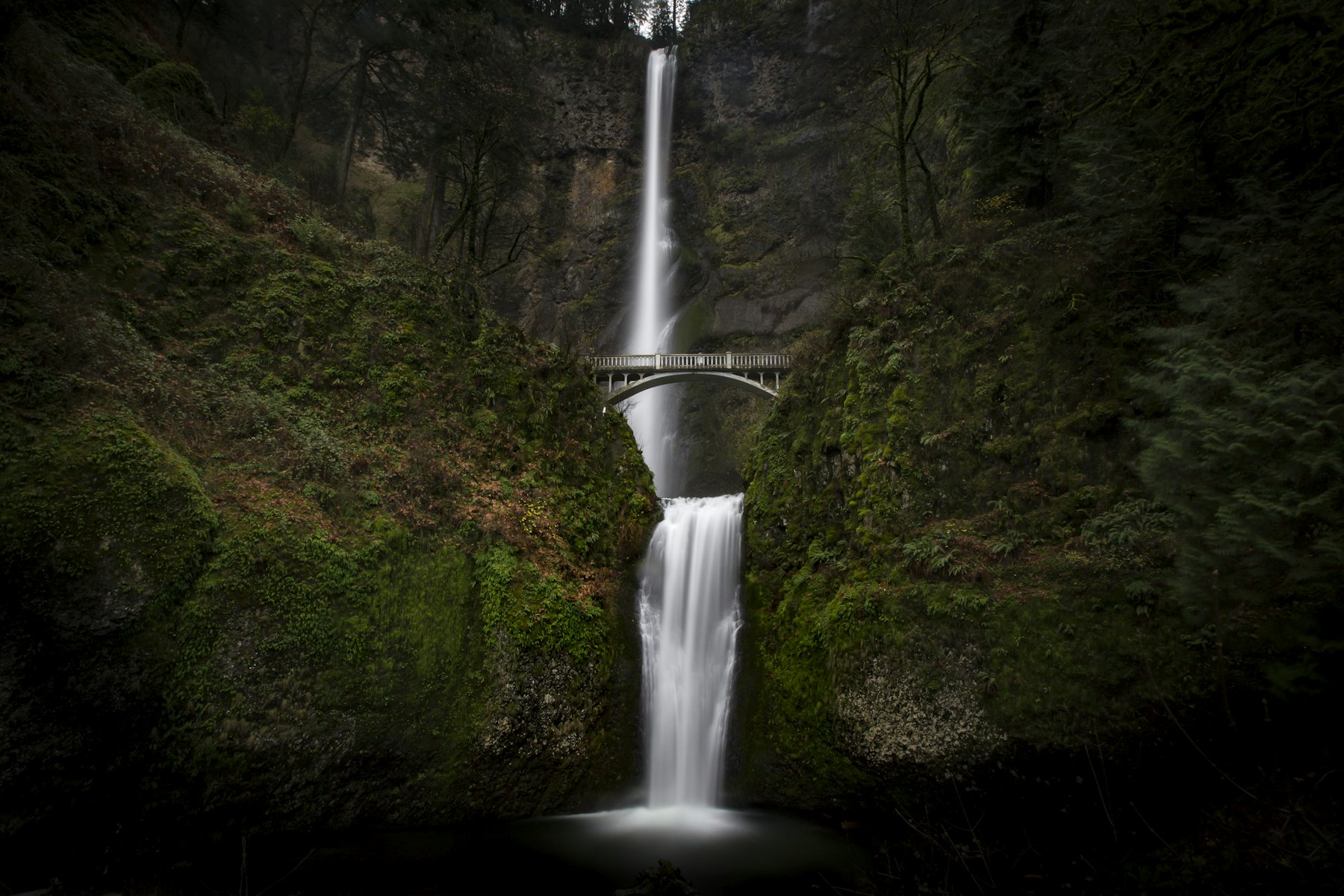
The paved path to the Benson Bridge at Multnomah, the base of Smith Rock, the rim at Crater Lake. Oregon does not make you march anyone up a mountain to see the good bit.
No sales tax and the cheapest great museum
The number on the shelf is the number you pay, and OMSI in Portland gives five people a full day for less than a theme park lunch in Florida.
The map
Oregon Place by Place
This is how I plan things to do in Oregon with kids. Eight places, and they really are not interchangeable. Four of them are within about two hours of Portland. Two of them are half a day away. Read the drive times before you build the route, because this is the state where families get that wrong most often.


State song Oregon, My Oregon, and the words were changed in 2021 to drop the pioneer stuff. Good to know Pacific time. No sales tax at all, which makes the shopping cheap. Someone else pumps your gas in most of the state, do not get out of the car.
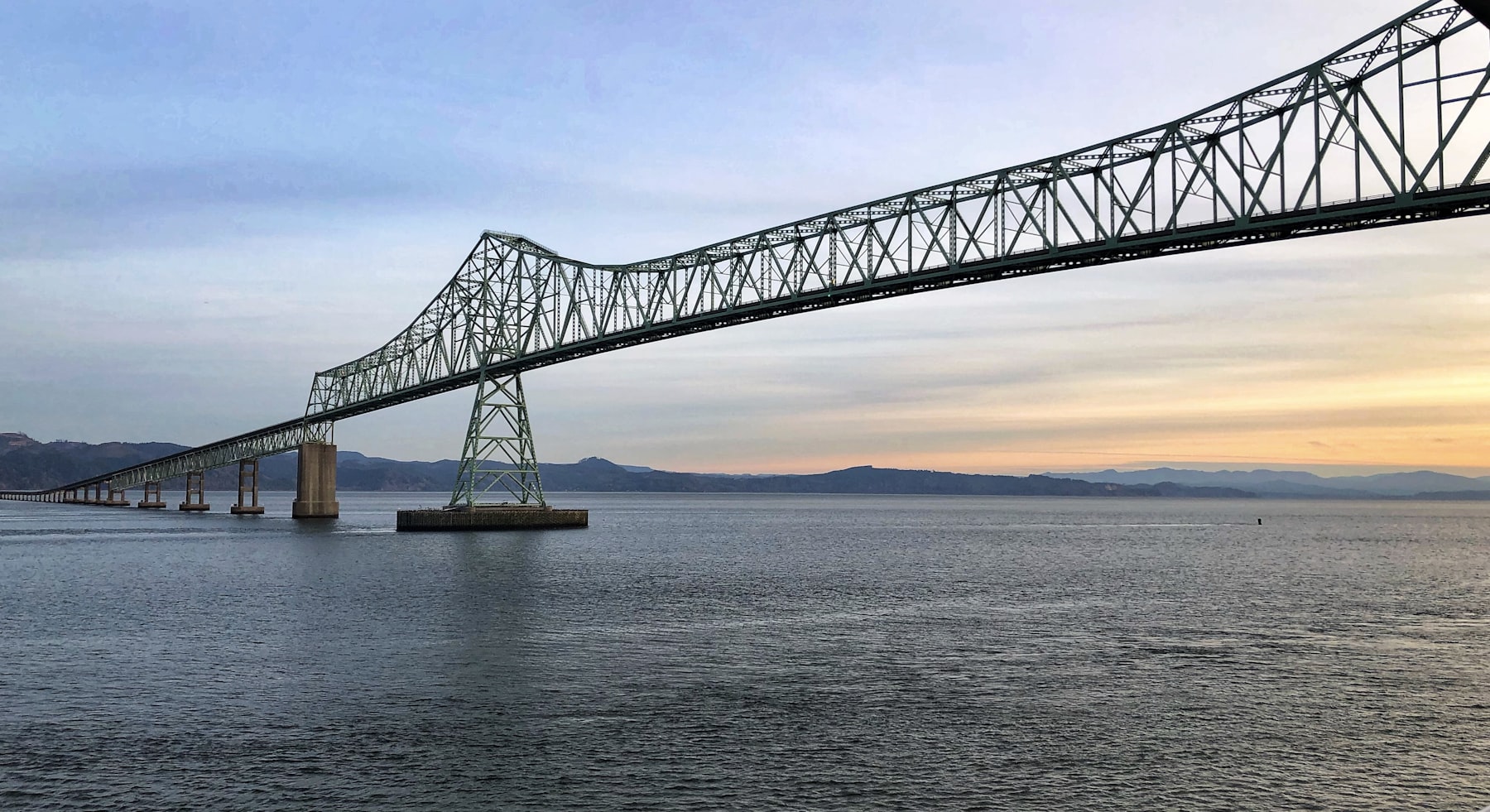
Astoria
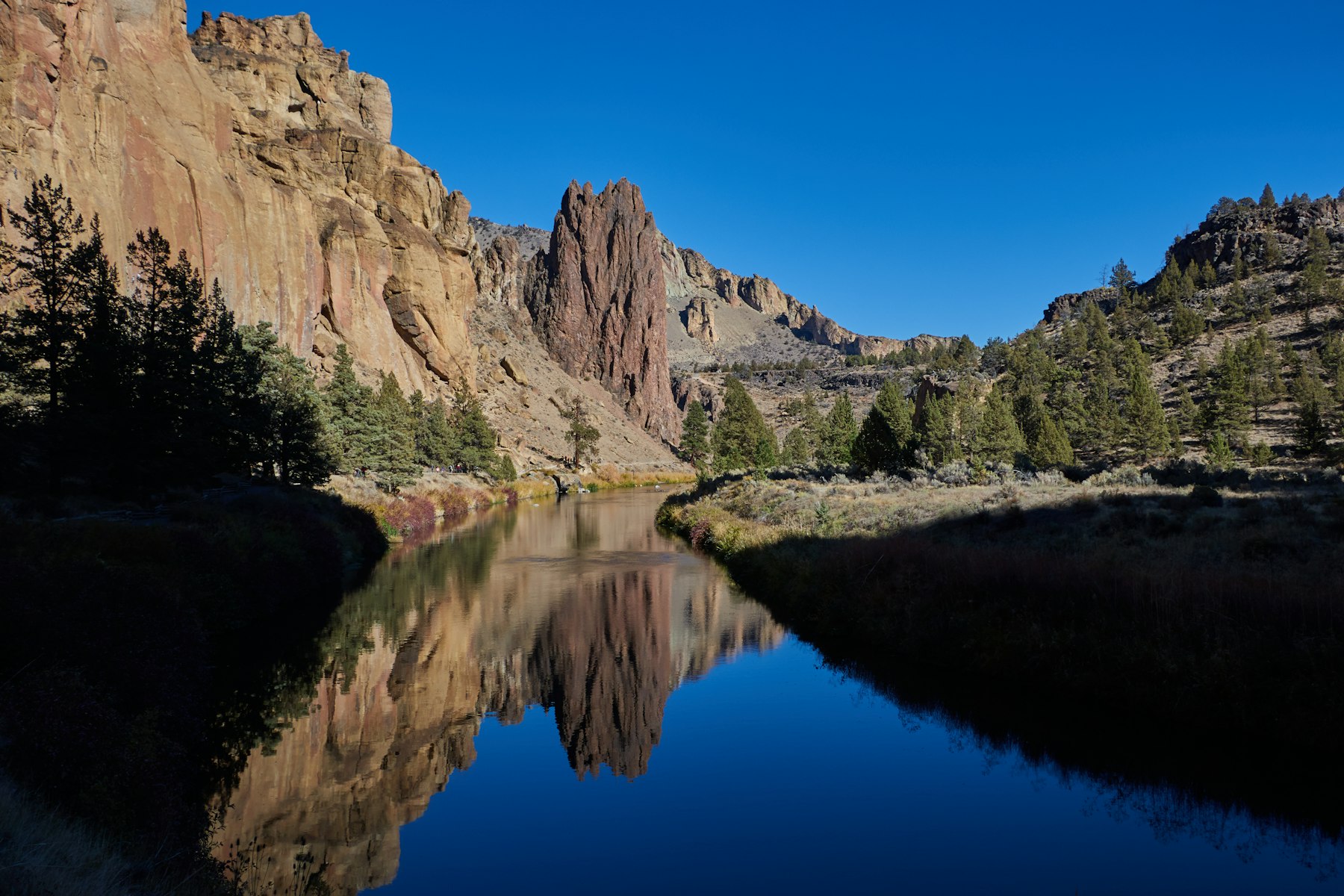
Bend
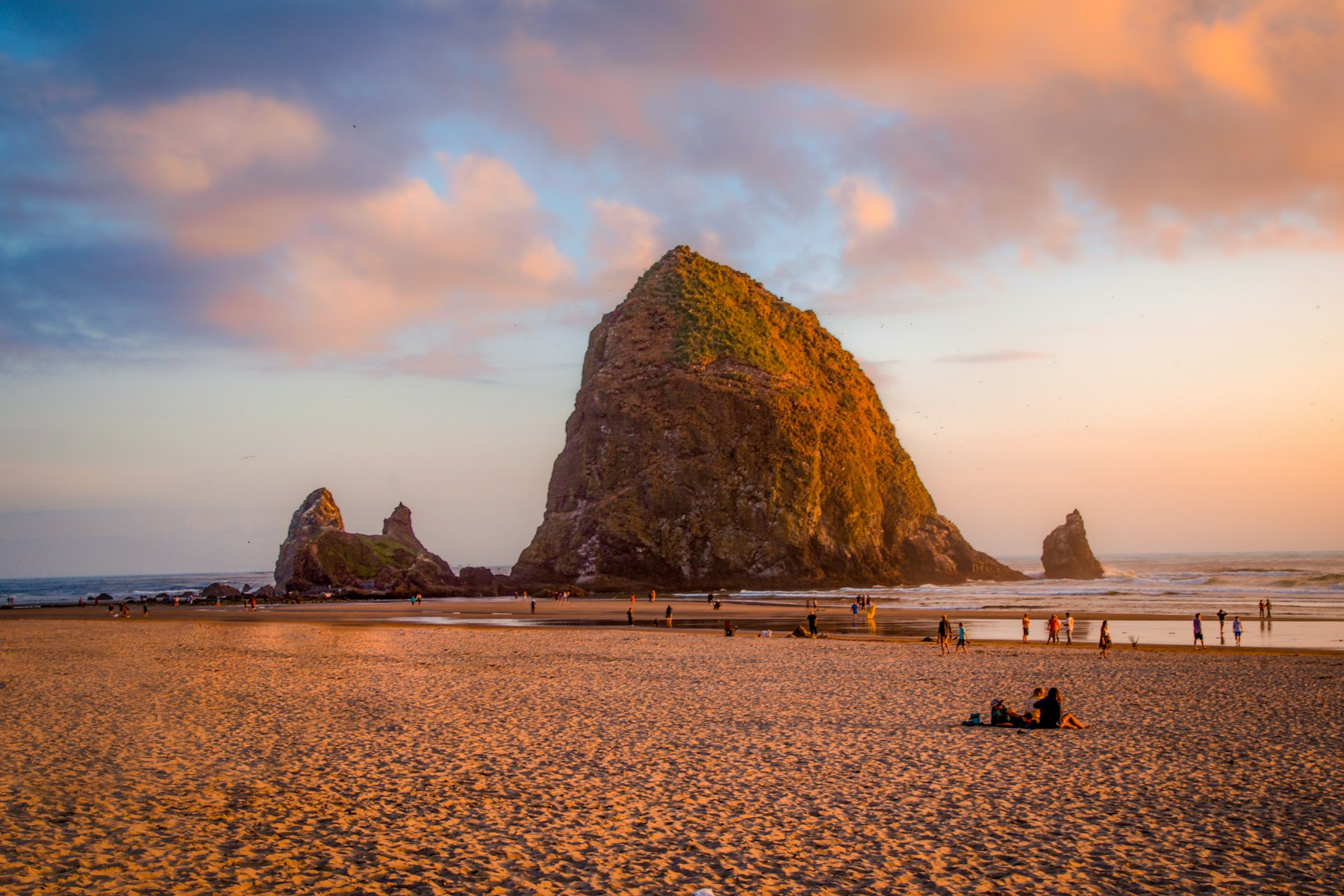
Cannon Beach
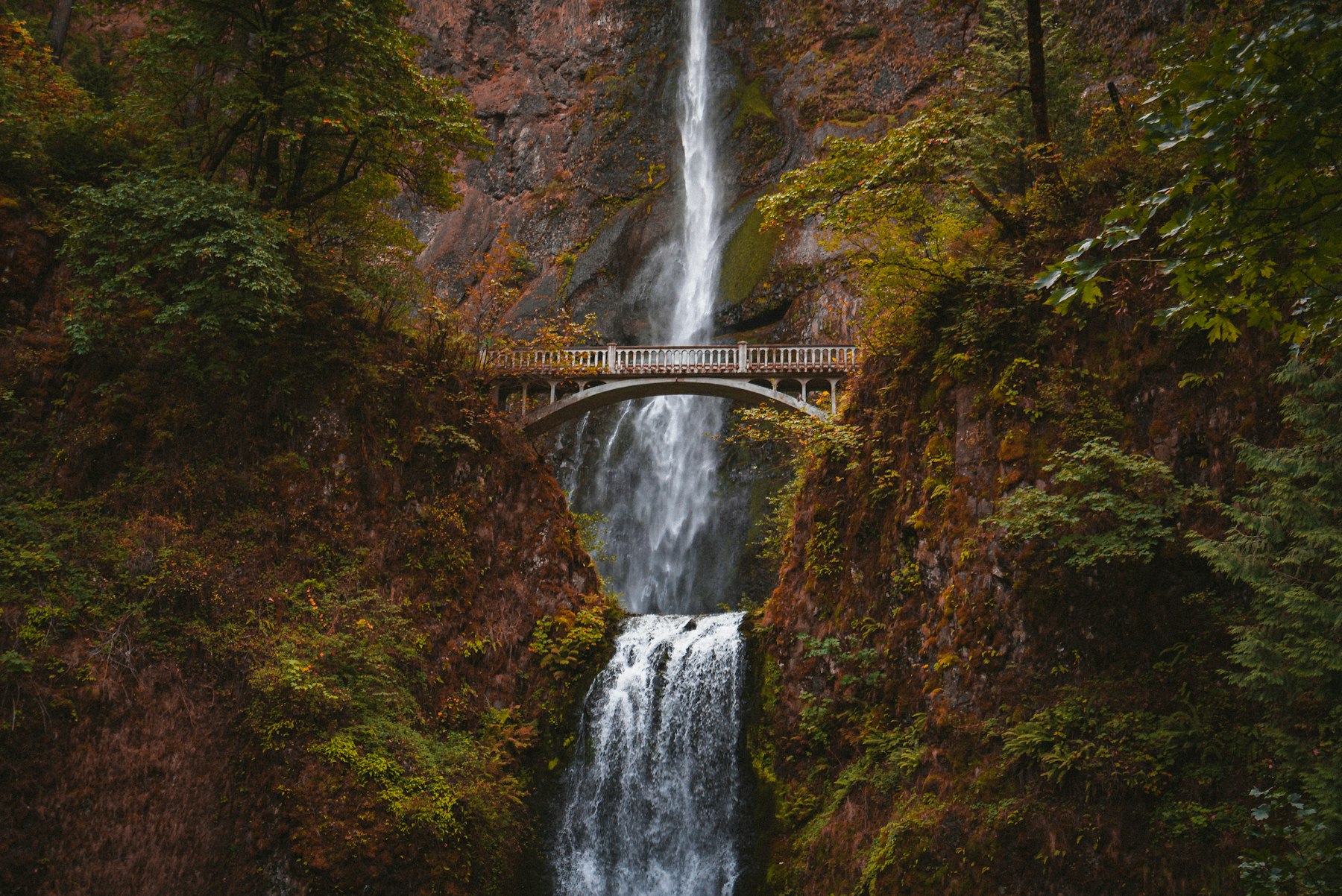
Columbia River Gorge
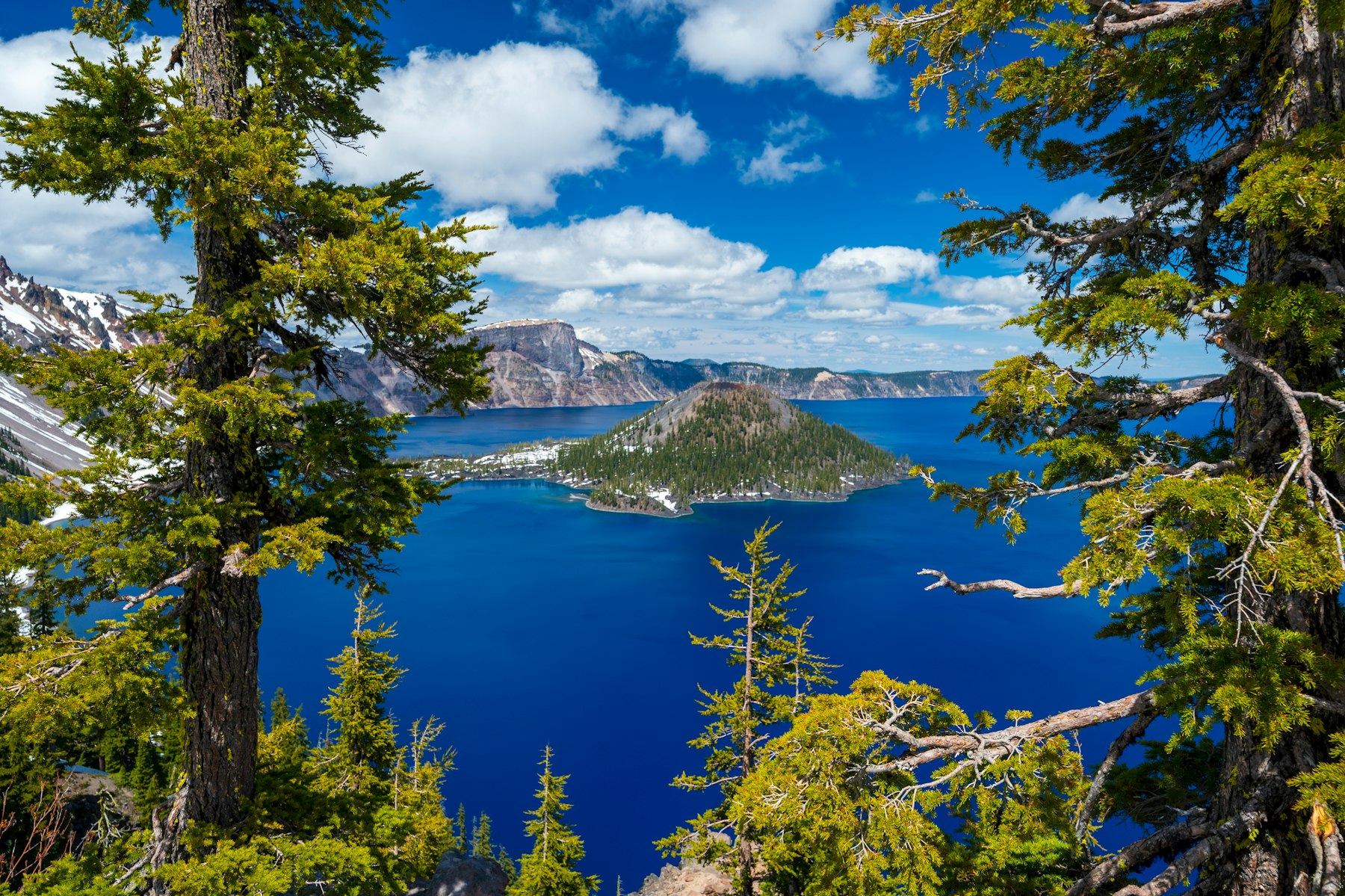
Crater Lake
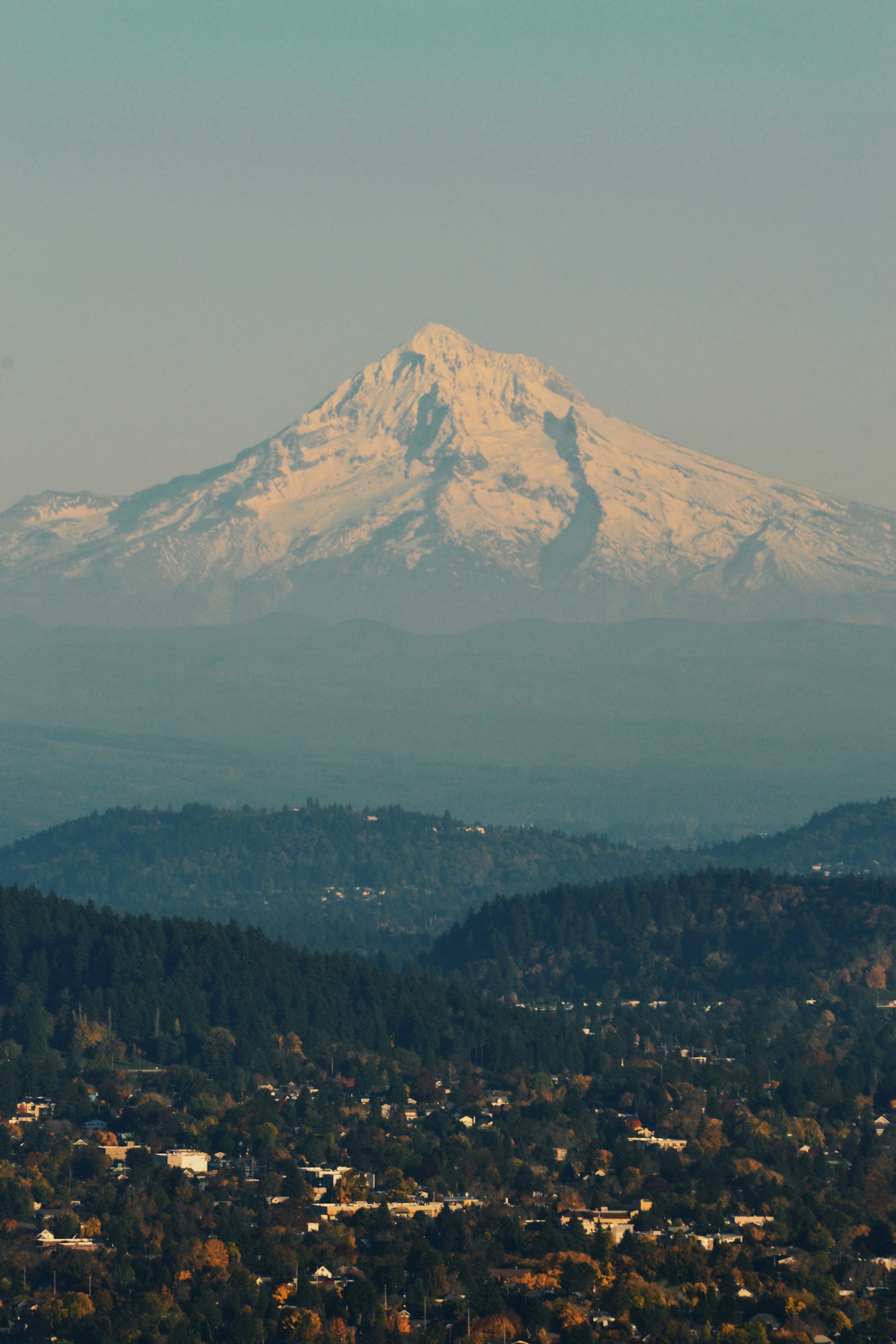
Mount Hood

Portland
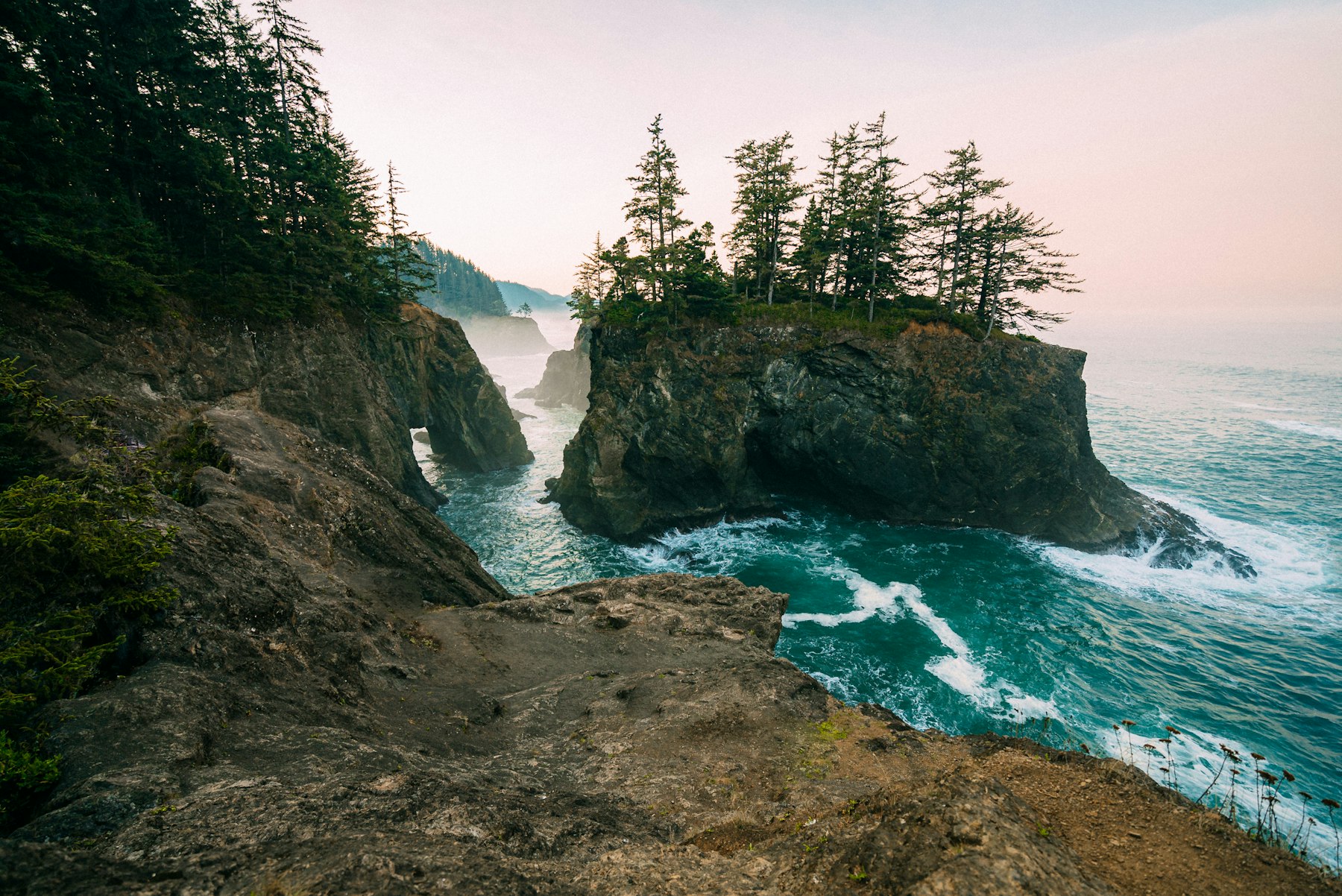
The Oregon Coast
Oregon Is the End of the Trail and the Start of Something
The wagons stopped here in the 1840s, the beaches were handed to everyone in 1967, and Portland turned weird on purpose. The state still runs on that mix of settler and rebel.
The Oregon Trail ended at Oregon City. Two thousand miles from Missouri, and the End of the Oregon Trail centre is twenty minutes from Portland. Children who played the game want to see the wagons.
Lewis and Clark wintered at Astoria. Fort Clatsop is rebuilt in the rain forest where they spent the winter of 1805, and Astoria itself is the oldest American town west of the Rockies, with a column you climb and the Goonies house on the hill.
The Beach Bill. Governor Tom McCall signed it in 1967 and every inch of the coast has been public since. It is the reason the Oregon coast looks nothing like California’s.
Portland keeps it weird. Food carts on every corner, the biggest bookshop in the country at Powell’s, Voodoo Doughnut, and a bike lane on every street. Children like it more than most cities because it is small and it is soft.
The high desert is a different Oregon. Bend is beer, mountain bikes and sun. The Painted Hills and the John Day fossil beds are three hours east with 40 million years of history in colored stripes. Nobody expects it.
What to Eat in Oregon
Portland eats out of carts and the rest of the state eats berries and fish. All of it tax free.
Marionberry pie. The Oregon blackberry, bred at Oregon State, on every diner menu in the state. Warm, with ice cream, and do not accept a substitute.
Food carts in Portland. Pods of carts across the city, every cuisine, five to twelve dollars a plate and no tax. Five people eat five different things at one picnic table and nobody argues.
Voodoo Doughnut and Blue Star. The pink box with the bacon maple bar is the famous one, Blue Star is the better one. Do both, it is a Portland argument.
Dungeness crab and clam chowder on the coast. Mo’s in Newport for the chowder, a crab shack in Astoria or Garibaldi for the crab. The coast dinner after a cold beach.
Tillamook cheese and ice cream. The creamery on Highway 101 has a free viewing floor and the biggest ice cream scoops on the coast. The children will make you stop.
The Drives Are Longer Than the Map Suggests
Oregon is about the size of the United Kingdom with a mountain range through the middle. Every route that looks like a straight line on the map is in fact a climb over a pass. These are approximate driving times in good summer conditions, and I have deliberately rounded them up rather than down.
Portland to Crater Lake is a full travel day, not a morning. It is roughly 250 miles and realistically four and a half to five hours before you stop, and you will stop. Families who try to drive down, see the lake and drive back in one day arrive tired, get about ninety minutes at the rim and remember the car. Sleep near the park or in Bend.
Portland to Bend is about three and a half hours over Mount Hood. It is a lovely drive on US 26 and it is a mountain pass, which in winter means chains, traction tires or a real closure. Check the pass conditions between November and April rather than assuming, because this is the road most visitors underestimate.
The good news is the north is compact. Portland to Cannon Beach is about an hour and a half. Portland to Astoria is about two hours. Multnomah Falls is barely half an hour east of the city. If your week is short, base in Portland and do all three as day trips, and you will never spend more than two hours in the car.
Bend to Crater Lake is roughly two hours, and that is the smart pairing. If Crater Lake is the reason you are coming, fly into Redmond near Bend rather than Portland. It halves the driving and it puts you on the sunny side of the mountains, which with children is worth more than it sounds.
Distances between services in the east and south are real. Once you are off the I-5 corridor, gas stations, food and phone signal all thin out considerably. Fill the tank when it hits half rather than when the light comes on, and carry water and snacks in the car as a matter of routine.

Cannon Beach. Free by law, cold by nature, tide pools at low tide.
No Sales Tax, and What That Really Changes
People mention this as trivia. For a family of five it is not trivia, it is a line in the budget, so let me be specific about where it does and does not help.
Oregon has no general sales tax at all. The Department of Revenue puts it in one sentence. Oregon does not have a general sales or use tax. The number on the shelf is the number you pay, which after a week in California or Washington feels almost like a trick.
Where it lands is clothing, shoes and gear. If your family needs rain jackets, walking boots or a bigger suitcase, buy them in Oregon. On a 400 dollar outfitting run you keep roughly 30 to 40 dollars that a neighboring state would have taken. Portland is where I would send a client to kit out for the rest of a long trip.
It also quietly helps every single meal. No tax added to restaurant bills, groceries or coffee. Across a week of feeding five people three times a day that is real money, and it is the reason an Oregon week often comes in under a comparable Washington or California week even when the headline hotel rate looks similar.
It does not cover your hotel. Lodging is taxed separately by the state and by cities, so the room rate you are quoted is not the room rate you pay. Do not build the budget assuming everything is tax free, because accommodation is the one place the rule does not hold.
You can pump your own gas now, and many visitors still hesitate. Oregon was famously one of the last states where an attendant did it for you. That has been relaxed and self service is normal, but rural stations vary, so just watch what the car in front does.
The Coast Belongs to Everybody, and It Is Cold
The Oregon coast with kids comes down to two things that surprise almost every family. One of them is wonderful. The other one ruins the day if you have not prepared the children for it.
The whole coastline is public, by law, and has been since 1967. Governor Tom McCall signed the Beach Bill on 6 July 1967. It recognizes a public easement across the beach right up to the vegetation line and guarantees free and uninterrupted use of it. There is no such thing as a private beach in Oregon, no resort gate, no wristband, no fee. Roughly 362 miles of shoreline, all of it yours.
Now the other half. This is not a swimming beach. The water comes down from the north and it stays cold all summer. On the north coast a summer day is often only just above 60 Fahrenheit with a wind on it. Children will paddle, they will scream, and they will come out. Pack for a bracing walk, not a bathing trip, and nobody will be disappointed.
Haystack Rock at Cannon Beach is 235 feet tall and you cannot climb it. It has been an Oregon Department of Fish and Wildlife Marine Garden since 1990. Climbing above the barnacle line is not allowed and collecting anything is prohibited, because tufted puffins nest on it and raise their young between roughly March and September. Bring binoculars. That is the actual activity.
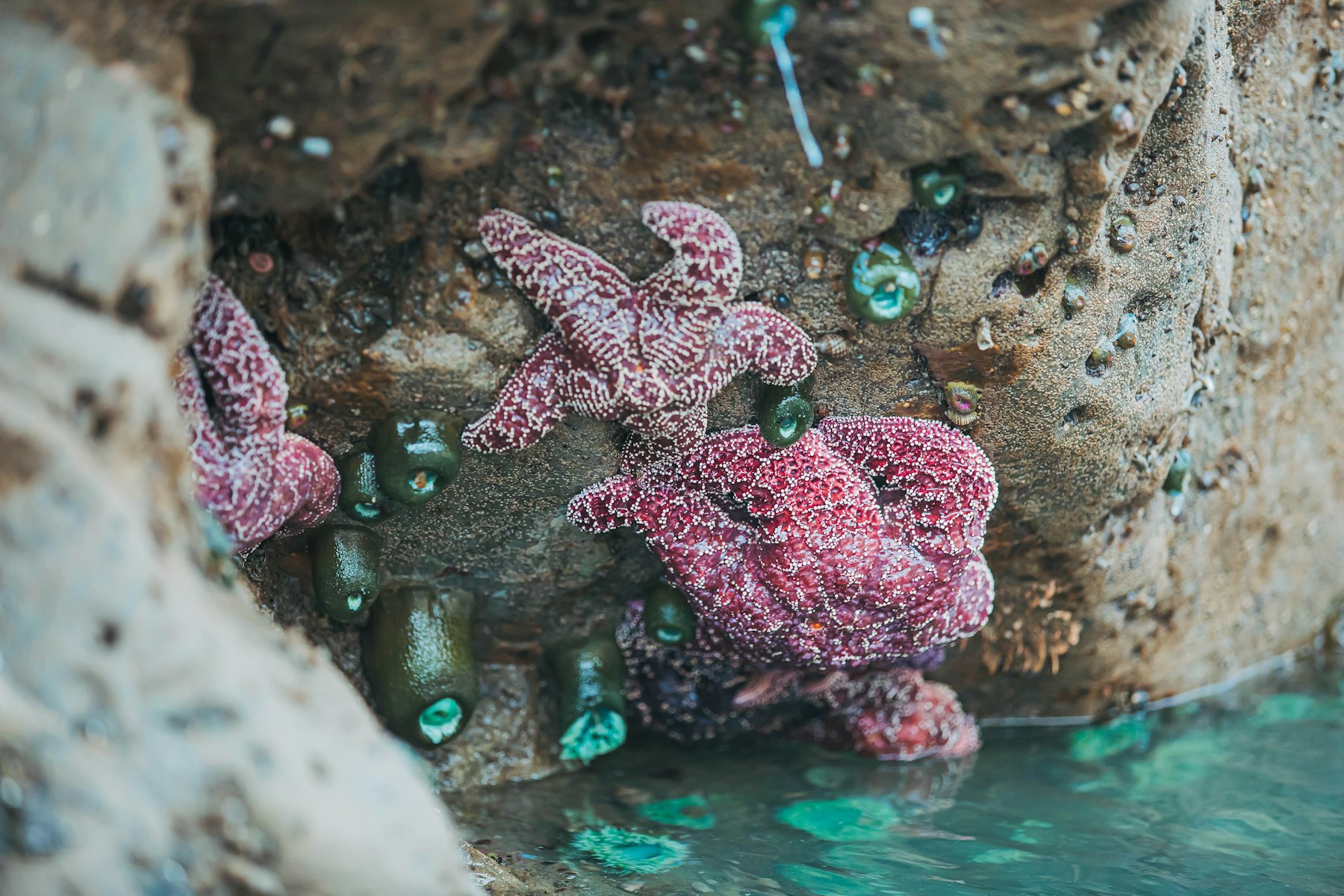
Learn the tide table before you learn anything else. The tide pools at Haystack are great at low tide and completely underwater at high tide, so the same trip is either a highlight or a shrug depending entirely on the hour you arrive. Check it the night before and plan the day around it. This is the single highest value bit of planning on the whole coast.
US Route 101 is the spine and it is slow. It runs the full length from the California border to the Columbia River at Astoria. It is beautiful and it is two lanes, with towns, log trucks and viewpoints you will want to stop at. Do not plan it at highway speeds. Plan roughly 45 miles an hour including the stops you are definitely going to make.
Astoria is the one coastal town with a proper rainy day answer. The Columbia River Maritime Museum is 18 dollars for adults, 15 for over 65s, 8 for children 6 to 17 and free under 6, open daily 9.30 to 5. The Lightship Columbia is another 5 dollars and boarding a floating lighthouse is the bit children remember. It is one of the best museums on this coast.
When to Go
Oregon has a narrow best window, and the rain statistics are less frightening than their reputation once you look at which months they fall in.
July, August and early September are the answer, and it is not close. Portland gets 36.92 inches of rain a year, but July averages just 0.51 inches. December averages 5.77. The famous Oregon rain is real and it is almost entirely a winter phenomenon. A July week in Portland is one of the driest, mildest city weeks in America.
What Portland has is 157 days a year with measurable rain. That is the honest statistic. It is not heavy rain, it is frequent gray drizzle spread across autumn, winter and spring. If you come outside summer, bring a hood rather than an umbrella and copy the locals, who simply do not acknowledge it.
Summer is also when the permits bite. The Multnomah Falls timed use permit runs late May to early September between 9am and 6pm, which is exactly when you want to be there. Book it two weeks out. If you miss it, arrive before 9am or after 6pm, or take the Columbia Gorge Express, because arriving by shuttle, bike or transit needs no permit at all.
Late September is the underrated week. The permit season has ended, the coast is often clearer than in August, Crater Lake is still open, and the crowds have gone back to school. If your family can travel outside school breaks, this is the week I would pick.
Winter is for Mount Hood and very little else. Crater Lake is largely inaccessible, the coast is wild and beautiful in a lashing sort of way, and the Gorge waterfall trails ice over. Hood is the exception and it is a real winter destination. Just do not plan a general Oregon sightseeing week in February.
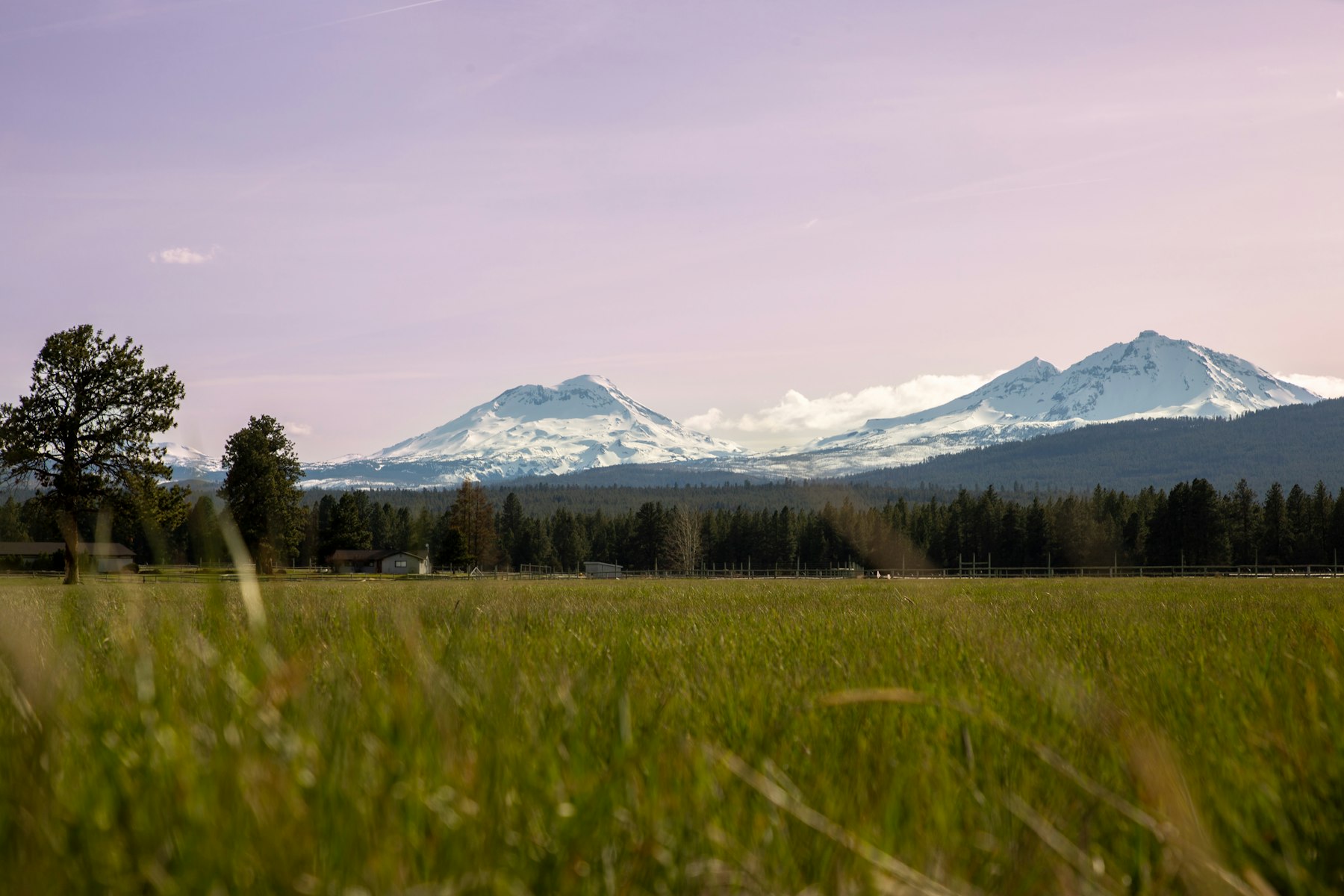
The Three Sisters from the Bend side. Same state, three and a half hours from Portland, ten inches of rain a year instead of thirty seven. This is why you pick a side
How Many Days & First-Trip Routing
How many days do we need in Oregon? A week covers one side of the mountains well. Portland and the coast on the wet side, or Bend and Smith Rock on the dry side.
Ten days does both.
Fly into Redmond for the Bend half and you skip a three and a half hour mountain crossing.
Bend and the High Desert Are a Different Country
If you only take one thing from this page, take this one. The Cascades split Oregon into two climates and most visitors only find out after they have packed.
Bend sits at 3,623 feet and gets about 10.6 inches of rain a year. Portland gets 36.92. That is not a small regional variation, that is a cold semi arid climate on one side of a mountain range and a mild wet one on the other, about a hundred and sixty miles apart. Pack for both or commit to one.
Altitude changes the day with children. Three and a half thousand feet means stronger sun, colder evenings and faster dehydration than the coast. Sun cream in Bend in July matters more than it does in Portland, and a fleece for the evening matters more than a raincoat.
Smith Rock is the family headline and it is free to look at. World famous climbing, a river running through a canyon, and a walk along the base that small children can do. You do not need to climb anything to make the visit worth it.
The High Desert Museum just south of Bend is the rainy day and the hot day answer. Live otters, birds of prey and living history exhibits, and it is the one indoor attraction on this side of the mountains that holds a mixed age group. Check current admission on the day, as their published rates move seasonally.
Fly into Redmond if the east side is your trip. It is about twenty minutes from Bend and it removes a three and a half hour mountain crossing from both ends of your trip. Most families who love their Oregon trip did this and most families who found it exhausting did not.

Smith Rock near Bend, the dry side of the mountains.
Regions at a Glance
Portland and the Gorge
The city, OMSI, the food carts, Multnomah Falls and the Columbia River Gorge. Two hours covers most of it.
The Coast
Astoria, Cannon Beach, Tillamook, Newport and 362 miles of public sand. Cold water, tide pools and sea stacks.
Mount Hood and the Cascades
Timberline Lodge, year round snow, and the passes that split the state into two climates.
Central and Southern Oregon
Bend, Smith Rock, the Painted Hills and Crater Lake. Dry, sunny, three thousand feet up, and a different country.
Must See and Do
Six specific things with real prices attached. Every figure here was checked against the operator or the managing agency in August 2026.



This is what the Oregon coast actually looks like. Headlands, cold surf and wind. Nobody is swimming in that, and the sooner your children know it the better the day goes
Crater Lake, and What Is Open in 2026
This is the section I would most want a family to read before booking, because Crater Lake in 2026 is a partly closed park and a lot of guidebooks have not caught up. I checked all of this directly against the National Park Service in August 2026.
The Cleetwood Cove Trail and the marina are closed, and they are closed for three years. The Park Service has it shut for a major rehabilitation project. That trail is the only legal way down to the water, which means for the whole 2026 season there is no swimming, no boat tour, and no landing on Wizard Island. If your children were promised a boat on the bluest lake in America, change the promise now rather than at the rim.
East Rim Drive is only partly open. The East Rim Drive Rehabilitation Project has the road closed between Park Headquarters and Phantom Ship Overlook, and while that is going on there is no access to the Sun Notch or Crater Peak trailheads. West Rim Drive and the North Entrance Road are open. You can still see the lake, and it is still astonishing. You just cannot do the full 33 mile loop.
The season is short, and the numbers explain why. Crater Lake averages 41 feet of snow a year. The North Entrance closes around 1 November, or earlier if the snow comes early, and does not reopen until somewhere between mid May and late June. The Park Service says it plainly on its own site. Winter sometimes begins in October and ends in July.
Entry is 30 dollars a vehicle from 22 May to 31 October and 20 dollars from 1 November to 21 May. A motorcycle is 25 dollars in summer and 15 in winter, and walking or cycling in is 15 dollars per adult with under 16s free. A Crater Lake annual pass is 55 dollars. The park has been card only since January 2023.
If you are visiting from outside the United States, this is the good news. From 1 January 2026 international visitors aged 16 and over pay an extra 100 dollars per person at eleven national parks including Yosemite, Yellowstone, Grand Canyon and Zion, and the non resident annual pass went from 80 dollars to 250. Crater Lake is not one of the eleven. Your family pays the same 30 dollars per car as everyone else here.
Crater Lake Lodge and the Cabins at Mazama Village are open for the season. Lost Creek Campground is closed. Book the lodge absurdly far ahead, because it has very few rooms and a very short year, and that combination does what you would expect to availability.
Crater Lake charges by the car in summer. If your child is in fourth grade, you drive in free and so does everyone with you, all school year. It takes about ten minutes at everykidoutdoors.gov.
Doing It With Children
Specific, priced and tested against the ages I book for. Mine are 13, 10 and 9, so this is roughly the range I have in mind.
OMSI in Portland is the best value family attraction in the state. Adults 13.50 dollars, children 3 to 13 and over 63s 9.75. The submarine is an extra 6.75, the planetarium runs 5.75 to 7.50 and the Empirical Theater 6 to 8.50. Summer hours are 9.30 to 7. A family of five gets a full day here for less than one theme park lunch in Florida.
The Portland Japanese Garden is 22.50 dollars for an adult and it is not a children’s attraction. It is beautiful and it is quiet and it expects quiet. If your children are the sort who can do an hour of calm, it is one of the finest gardens outside Japan. If they are not, spend that money at OMSI and everybody has a better morning.
Practical warning for Multnomah Falls. The Lodge restrooms are closed for renovation through November 2026. There are portable toilets on site and that is it. With small children, that one sentence changes how you plan the stop, so go before you leave Portland.
Pick short trails with a payoff rather than long ones with a view. The paved path to the Benson Bridge, the base walk at Smith Rock, the tide pools at low tide. Oregon rewards half mile walks enormously. It does not require you to march anybody up a mountain to see the good bit.
Layers, and one waterproof each, in every single month. A coast morning can be 55 Fahrenheit and gray and the same afternoon inland can be 85 and blazing. This is the state where the family with three thin layers each is comfortable and the family with one thick coat each is miserable by noon.
Who It Suits and Who Should Skip It
It suits families who want outdoors without a theme park budget. The beaches are free, the viewpoints are free, the shopping is untaxed and the headline park is 30 dollars a car. Oregon is one of the affordable American states for a family that likes being outside.
It suits children who are curious rather than thrill seeking. Tide pools, volcanoes, waterfalls, otters, a lightship, a working river port. It rewards the child who asks how things work far more than the child who wants a roller coaster.
It suits a slow one base week. Portland with four day trips, or Bend with four day trips, is close to a perfect family week here and requires almost no packing and unpacking.
Skip it if your family measures a trip in beach swimming. The Pacific here is cold in every month of the year. If the trip in everybody’s head involves warm water and lying on sand, you want Hawaii or Florida and you will be happier there.
Skip Crater Lake specifically in 2026 if the boat was the point. With Cleetwood Cove closed for three years there is no way down to the water. The view from the rim is still one of the great sights in America, but go knowing that is what you are getting.
Skip a winter sightseeing week unless you ski. Between November and April the mountain roads close, the lake is unreachable and the daylight is short. Mount Hood is the exception, and it is a good one, but it is one destination and not a state tour.
How Oregon Compares to Its Neighbors
Washington is the same landscape with a bigger city and a sales tax. Seattle has more urban pull than Portland and the Olympic peninsula rainforest has no Oregon equivalent. But you pay tax on everything and the beaches are not all public. The two states pair beautifully in one long trip, and we did exactly that drive years ago.
California is the opposite trade. Warmer water, more famous attractions, considerably more money and considerably more traffic. If the children want Disneyland and a swimmable ocean, go to California. If the adults want quiet and space, Oregon wins outright.
Nevada and Utah are the dry southern alternative. Red rock, guaranteed sun and national parks that are open far more of the year than Crater Lake manages. If your window is spring or autumn rather than high summer, Utah is the more reliable trip.
Nobody comes to Oregon for attractions. There is no major theme park, no enormous aquarium, no headline resort. That is a feature if you want a landscape trip and a serious problem if anybody in the group is expecting to be entertained on a schedule.
Worth the Money in Oregon
Oregon is a cheap state to eat and drive in, which leaves room for one mountain night and one boat.
A night at Timberline Lodge. A hand built 1930s lodge at six thousand feet on Mount Hood, the exterior of The Shining, skiing in July on the glacier and a bike park in summer. The one Oregon night worth the rate.
A Crater Lake boat tour when the trail reopens. The Cleetwood Cove trail and the marina are closed in 2026, so check the park before you promise anyone the boat. When it runs, the trip to Wizard Island is the best two hours in the park.
A beach house at Cannon Beach or Manzanita. Haystack Rock out the window, the tide pools at low tide, a fire on the sand in the evening. Book by winter for summer.
OMSI with the submarine. Adults about 13.50, children under ten dollars, the submarine a few dollars more. The splurge here is the whole day and it is still the cheapest great museum on the west coast.
Things That Surprise First Timers
The price on the tag is the price you pay. It catches out almost every visitor at the first till. No mental arithmetic, no surprise at the card machine. It is a small daily pleasure and it adds up across a week.
You can drive onto some beaches, and walk on all of them. The public trust rule really means every beach, everywhere, including the sand directly in front of the most expensive house on the coast. No gates and no fees anywhere along 362 miles.
Summer mornings on the coast are often gray until eleven. The marine layer burns off late. Families schedule the beach for 9am, get fog, and conclude the weather is bad. Do the indoor thing first and hit the sand after lunch, and it is a different trip.
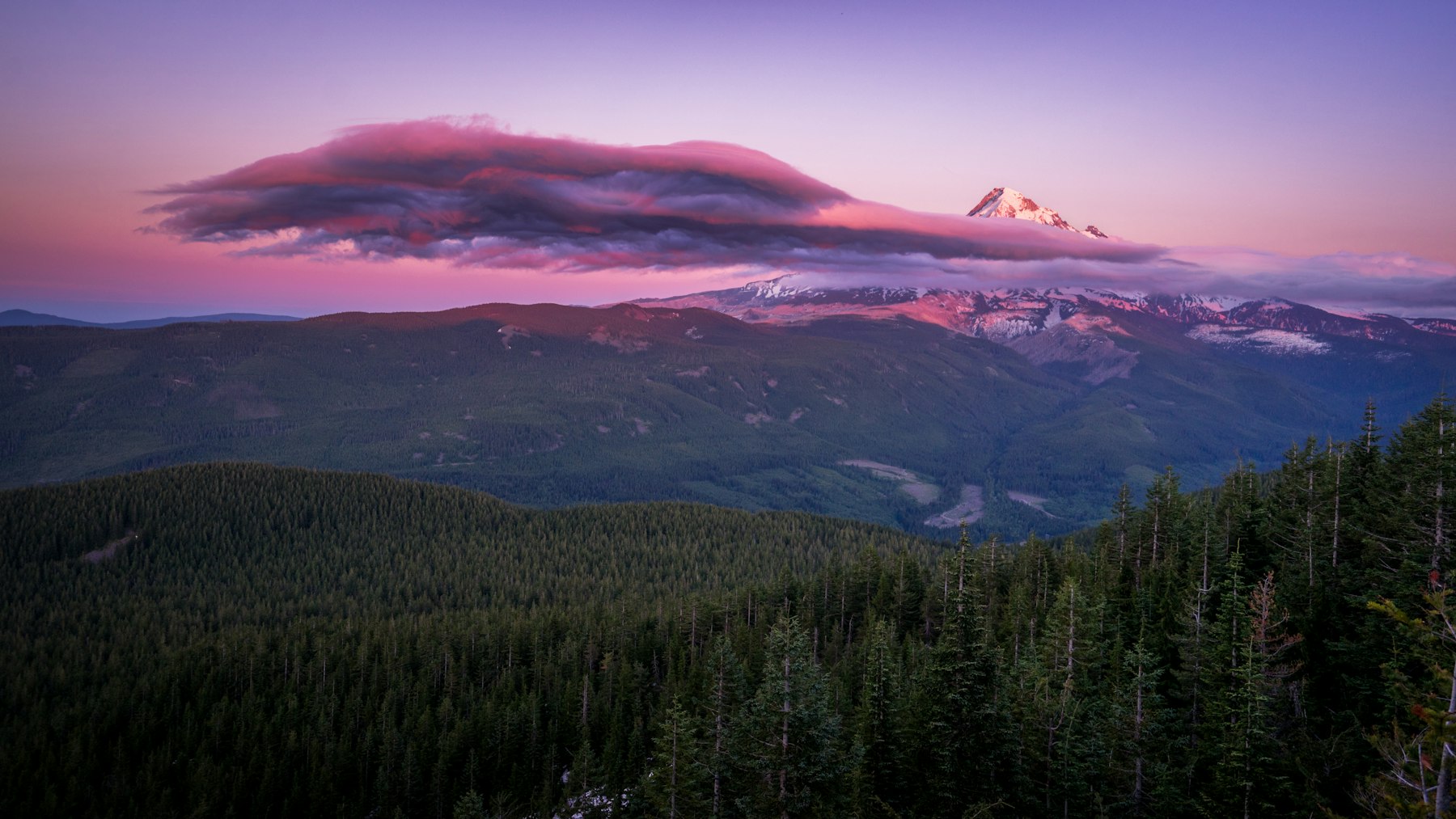
Mount Hood is visible from Portland on a clear day and it is 11,000 feet. People do not expect a glaciated volcano on a city skyline. On the clear days it looks close enough to touch, and it is still an hour and a half away.
The puffins are seasonal and most visitors miss them. Tufted puffins nest on Haystack Rock roughly March to September. Arrive in October and the rock is just a rock. Arrive in June with binoculars and it is the wildlife highlight of the coast.
Phone signal on the 101 and in the Cascades is patchy. Download your maps before you leave the city. This is not a wilderness expedition, but there are real dead stretches and the coast road is one of them.
Where I Would Start
Five people, late September, and the west side only.
Two nights in Portland. OMSI with the submarine, Powell’s, a food cart pod for dinner, and the trains out the window if you get the right room. Kit the family out for rain with no sales tax.
The Gorge for a day. Multnomah Falls before nine or by the shuttle after the permit season, the Benson Bridge, Hood River for lunch, and the drive back on the old Historic Highway.
Three nights on the coast. Cannon Beach for Haystack Rock and the tide pools at low tide, Tillamook on the way, Astoria for the column and the Goonies house. Layers, always.
Mount Hood or Bend for the last two. Timberline Lodge for the night if the budget allows, or over the pass to Bend for sun, Smith Rock and the high desert. Crater Lake is a separate trip until the trail reopens.
Oregon by the numbers
Facts to know before you go
Ways to travel
Oregon is not one kind of trip
How you move through it changes the trip more than which places you pick.
Road trips
Highway 101 down the coast and the Columbia River Gorge route are both built for a car with kids who like looking out the window.
For example: Astoria to Newport on 101 over three days with Tillamook in the middle.Walking and hiking
Multnomah Falls has a short paved trail that ends at the Benson Bridge, and Crater Lake’s rim trail has views the whole way.
For example: the paved path to the Benson Bridge before nine in the morning.Guided and small group travel
A Columbia River Gorge waterfall tour or a Crater Lake boat tour takes the guesswork out of timing and parking, which matters more here than you would think.
For example: a Gorge waterfall tour from Portland with the permit handled.Pair it with a cruise
Portland is a common pre or post stop for Alaska cruises out of Seattle, so some families tack on a few Oregon days either side.
For example: three Oregon coast days before an Alaska sailing from Seattle.Explore by interest
What families come to Oregon for

Sports
Timbers, Ducks and Beavers
The Timbers and Thorns at Providence Park with the loudest supporters in American soccer, the Trail Blazers, and the Ducks and Beavers rivalry every autumn.

History
End of the trail
The Oregon Trail ending at Oregon City, Lewis and Clark’s winter at Fort Clatsop, and Astoria, the oldest American town west of the Rockies.

Food and drink
Carts and marionberries
Portland’s food cart pods, marionberry pie, Tillamook cheese, Dungeness crab on the coast, and no sales tax on any of it.

Nature
Crater Lake to the Painted Hills
Crater Lake, the Painted Hills, the entire Columbia River Gorge. Oregon packs a wide range of landscapes into one state.
Only In Oregon
Only in Oregon

Read
A Volcano That Became A Lake
Mount Mazama collapsed on itself nearly 8,000 years ago and rain and snowmelt filled the crater over centuries. No rivers feed it, which is part of why the water is so clear.Photo via Unsplash.

Watch
The Goonies
Astoria at the mouth of the Columbia doubled as Goon Docks in 1985, and the town leans into it now with murals and a real Goonies house you can drive past.Photo via Unsplash.

From Here
Visible From The Parking Lot
Most big waterfalls make you hike for the view. Multnomah Falls drops it in your lap the second you get out of the car, which is exactly why it’s Oregon’s most visited natural attraction.Photo via Unsplash.

Only Here
Millions Of Years, Layer By Layer
The Painted Hills’ colored bands each mark a different ancient climate. It looks unreal in photos and looks even more unreal in person.Photo via Unsplash.
Combine It With
The country guide this page sits under. Entry rules, driving, tipping and how the rest of the states compare.
Straight down the I-5 and the obvious pairing. Warmer water, bigger attractions and a sales tax you will notice immediately after Oregon.
The dry, sunny, wide open counterweight if the Pacific Northwest gray gets to you. Very different trip, same region of the map.

Plan Oregon with Nicole
Tell me who is coming, and when.
Oregon is two trips separated by a mountain range, and the mistake is booking both in one week and spending the difference in the car. Send me the ages and the dates and I will tell you which side, and build the days around the permits and the tide table.
Nicole Damiano, ASTA Verified Travel Advisor with FG Luxury Travel. Adventures We Seek is my travel blog and planning resource. Trips are booked through Favorite Grampy Travels.
Oregon, Answered
Can we swim on the Oregon coast? Not really. The water is cold all year and the surf is rough. Kids wade, boogie board in wetsuits in summer and spend the rest of the time in tide pools, on the dunes and flying kites. The lakes inland and the Deschutes in Bend are where the swimming happens.
Portland or the coast? Both, easily. Portland is ninety minutes from Cannon Beach. Two days in the city for Powell’s, the food carts and OMSI, then three or four days working down the coast. Add the Columbia Gorge waterfalls as a day trip from Portland.
Is Crater Lake open when we visit? From about July to early October, fully. The rim drive is under snow the rest of the year and the boat tours run only in summer. The lodge on the rim books a year ahead.
What about the rain? It rains from October to June west of the mountains and then it stops. July through September are dry and glorious. Bend and central Oregon are sunny most of the year. Pack the rain jacket and go anyway.
Is the Oregon Dunes sandboarding safe for kids? Yes, with a rented board from a shop in Florence and a gentle slope. It is slower than it looks and the landing is soft. Honeyman State Park has a dune that runs straight down into a lake, which is the kids’ favorite.
Keep exploring from Oregon
The rest of the states, and the wider map.
Click any card to open that page
More of the United States
 Montana
 South Carolina
 Louisiana
 Alaska
 Massachusetts
 Washington
 Wyoming
 Maine
Maine Texas
Texas New York City
 Illinois
 Nevada
 Washington, D.C.
 North Carolina
 Hawaii
 Georgia
 Tennessee
 Arizona
 Colorado
 Utah
Utah California
 Florida
 All of the United States
 All of North America
 Explore the world
 The Travel Library