
Romans call this one the wedding cake and once you see it you cannot unsee it · photo: Nicole Damiano
Italy Family Travel Guide
“I taught ancient Rome for eight years. Then I stood inside the Colosseum and could not believe it was real.”
Nicole Damiano, ASTA Verified Travel Advisor with FG Luxury Travel
Do we need anything to enter, beyond passports?
Not a visa. US passport holders get 90 days in any 180 day period across the Schengen area, and this country counts toward that same 90 days. Your passport has to be valid for at least three months beyond the day you leave Europe. Check the kids' passports too. Child passports are only good for five years and they expire quietly. Since October 2025 the EU has been taking fingerprints and a facial image at the border under the new Entry and Exit System. There is no fee and no form. It just means the first arrival can be slower than you remember, so build a real cushion into any connection. ETIAS, the paid travel authorization you may have read about, is not running yet. It is expected in late 2026. When it starts I will tell every family I am working with, well before they fly.
When should we go to Italy with kids?
May, or late September into October. Warm enough for the coast, cool enough to walk a city all day, and the crowds are a fraction of what they are in summer. July and August are hot and packed, and a lot of family run places close in August because Italians are on holiday too. If those are your only weeks, go north to the lakes and the Dolomites rather than Rome in the heat.
How many cities can we do?
Two properly, or three if you have two weeks and the trains between them are short. Rome, Florence and Venice is the classic run and it works because the fast trains connect all three in a couple of hours. Add the Amalfi Coast or Sicily and you have added a travel day at each end, not just a stop. With children under eight I would do two bases and day trip out. Packing up is the part that wears everyone down, not the sightseeing.
Do we have to book the big sights in advance?
Yes, and earlier than feels reasonable. The Colosseum, the Vatican Museums, the Uffizi and the Accademia all run on timed entry, and the good slots go months out. Booking the right time of day matters as much as booking at all. A nine in the morning Colosseum with a guide who talks to children is a different experience from a two in the afternoon queue in August.
Is Italy actually good with young children?
It is one of the easiest countries in Europe for it. Children are welcome in restaurants at proper dinner hours, gelato is a legitimate daily plan, and nobody minds a toddler in a piazza at nine at night. The practical friction is different from what people expect. Cobbles are miserable with a stroller, lifts are rare in older buildings, and a lot of hotel rooms simply will not take five people. That is the part worth planning around.
Nicole’s Perspective
Why families hire me for Italy

I was a social studies teacher for eight years before I was a travel advisor. I taught ancient Rome. Gladiators, the Colosseum, Pompeii, the Renaissance, a whole city built on water. I put those places on a classroom wall for almost a decade. Then Adam and I went and I could not believe any of it was real. A living country holding every single thing I had ever shown on a projector screen.
We did it in an RV on almost no money. We pulled into Rome on a Saturday, parked on the side of the road less than a mile from the Colosseum, and six euros in the meter marked us paid until Monday morning. We could not afford to eat out so we made pasta inside the camper, then walked out into one of the greatest cities on earth.
Honest framing. I went before we had kids, so the memories here are mine and Adam’s. Rome, Sicily and Tuscany are booked for this winter and this time Gavin, Jake and Avilene are coming.
Beyond the Bookshelf
Stories to carry you deeper into Italy. This is our own family shelf, real books, films, music and a cookbook tied to the place, not a generic reading list. Read it before you go and the trip means more when you get there.

- My Brilliant FriendElena Ferrante
- The Name of the RoseUmberto Eco
- Invisible CitiesItalo Calvino
- PinocchioCarlo Collodi
- The Thief LordCornelia Funke
- Essentials of Classic Italian CookingMarcella Hazan
Book links go to Bookshop.org, which supports local bookstores. Film and music links go to JustWatch and Spotify. As an affiliate we may earn from qualifying purchases.
Why this country, for this family
Why Italy (For Families)
 Poppy marks the family parts. Wherever you see her, that section is written for traveling with children.
Italy with kids is the easiest big European trip you can plan, and the reason is not the art. It is the food. Pizza and pasta every day and nobody argues. I have watched trips fall apart over dinner in countries where the kids would not eat.
Who it is for. Anyone taught about ancient Rome who never let it go. People who want to walk. First timers to Europe, because Italy is forgiving. Who should skip it. If you need quiet and empty, do not come in July or August. If your family cannot walk several miles a day on uneven stone, this will be a grind. If you want to sit still on a beach for a week, Croatia or Greece will serve you better. Italy asks you to move.
Nobody Goes Hungry
Ten to fifteen euros a plate and the pickiest eater in your family finds something. People underrate how much this matters.
History You Can Walk Into
Not a display case. The floor of the Colosseum, the streets of Pompeii, a square where a horse race has run since the 1600s.
The Trains Work
Rome to Florence in ninety minutes. Florence to Venice in two hours. Fast, comfortable, and you skip the parking problem entirely.
“I could not believe that people were lucky enough to live there.”
Nicole DamianoWhere to go
Italy City by City
Eight places that shape a first trip. They are not interchangeable. Italy only became one country in 1861 and still reads like a stack of old ones. Milan does not feel like Palermo. Venice does not feel like anywhere.


Anthem Il Canto degli Italiani, usually called Fratelli d’Italia. It gets sung at full volume before every football match. Language and money Italian, with English in the cities and the coast. The euro. A coffee at the bar costs a euro and the same coffee sitting down costs four.

Amalfi Coast

Cinque Terre

Florence

Milan

Rome

Sicily

Tuscany

Venice
Culture, Etiquette & What to Expect
Italians are warm and direct and loud, and none of it is aimed at you. Something I noticed and never forgot: Italy is absolutely a tourist destination, but it does it with class. Nobody haggles in your face or stands between you and the thing you came to see.
The coperto is not a scam. A small per person cover charge, two to four euros, printed on the menu. It pays for the bread and the table. Getting angry about it marks you.
Coffee has rules and they are cheap. Standing at the bar costs about a euro. Sitting at a table can cost three times that for the same cup.
Church dress codes are enforced, not suggested. Shoulders and knees covered at the Vatican and most working churches. They will turn you around at the door. Keep a light scarf in your bag.
Carry coins. Always. Public bathrooms cost money all over Italy. Finding out you have no change at the wrong moment is a very specific kind of suffering.
Children are welcome. Not tolerated. Welcomed, loudly, by waiters and strangers and grandmothers. Your kids will get more attention here than anywhere else in Europe.

The Trevi Fountain on a Saturday night, on a walk we took because dinner was pasta cooked in the camper · photo: stock
Food
Pizza first, because it has to be. Italian pizza is not what you think pizza is. Thin, simple, four things on it, and the four things are good enough that they do not need help.
After that it is all regional and the regions do not overlap. Rome is cacio e pepe and fried artichokes. Tuscany is bistecca and pappardelle with wild boar. Venice is seafood that came out of the Adriatic that morning. Sicily is arancini and cannoli and a Greek and Arab influence you can taste. Ordering Roman food in Bologna is legal but it wastes a meal.
Italian grocery stores are excellent and I want to say that plainly, because it saved our trip. Supermarket pasta cooked in an RV in Rome is still one of the best meals I have eaten. Gelato is expensive relative to everything else and worth it, but check the price first. We paid fifteen euros for cones in Florence because we did not ask.
The best rule I have: walk away from the landmark. Photos of the food on the menu, six languages, a man outside waving you in, all of it means a place that does not need you to come back. Go three streets over and find the handwritten menu.


Getting Around
Italy is longer than people picture and it is basically one spine with everything hanging off it. The good news is the spine has a very fast train on it.
Take the train between cities. Trenitalia’s Frecciarossa and the private Italo both run the main line, and booking a few weeks out costs a fraction of walk up price. Cheap regional tickets are different: stamp them in the machine on the platform or it is a fine.
ZTL zones are what cost people money. Nearly every historic center is a limited traffic zone with cameras at the entrance. Drive in without a permit and the ticket arrives at your house months later with an admin fee from the rental company on top. Park outside the walls and walk in.
Rent a car for the countryside, never for the cities. A car in Rome, Florence or Venice is a liability with wheels. In Tuscany, Umbria, Puglia or Sicily it is the whole point. Venice has no cars at all, so park at Piazzale Roma and buy a vaporetto pass.
Autostrada tolls add up. Take the ticket, pay on exit. And the small roads are often the better drive. The SS12 through the Po Valley is one of the most beautiful roads I have ever driven, though Adam spent most of it a shade of green.
Pompeii is a train ride from Naples. The Circumvesuviana runs to Pompei Scavi and drops you at the gate. Scruffy little train, far easier than driving.

Pompeii with Vesuvius right behind it. An entire city stopped in one morning in 79 AD · photo: stock
Money & Practical Basics
Italy is more affordable than people expect, right up until they eat every meal within sight of a monument.
Euros, and cards work nearly everywhere. Still carry twenty or thirty in cash for small trattorias and markets, and keep coins separate for bathrooms.
Schengen days count. Ninety days inside any rolling one hundred and eighty on a US passport. If Italy is one leg of a longer Europe trip, count the whole thing. This is the number that trips up long stay families.
ETIAS is coming, not here yet. The EU travel authorisation has been pushed back more than once. Check the official EU site close to your date rather than trusting a blog, including this one.
There is a city tax on every night. One to seven euros per person per night, collected at the property and often in cash. For five people over two weeks that is real money.
Book the big two ahead. Colosseum entry is around eighteen euros and Pompeii is similar, both timed online. The line without a ticket, in July, with children, is a bad hour.
What things cost. Pizza or pasta at a local restaurant, ten to fifteen euros. House wine, three to five. Gelato, three to five. Hotels from eighty a night at the budget end to two hundred and fifty mid range, Venice higher because everything arrives by boat. Tipping is not the system. Round up.
When to Go
I will be blunt because a lot of guides are not. Italy in high summer is hot and mobbed, and that is the version most Americans see. It is the worst one on offer.
Spring
April into early June is close to perfect. Warm without being punishing and the crowds have not fully landed. Easter week is the exception and Rome fills right up.
Summer
Hot, crowded and expensive. Rome can sit in the high nineties with no shade in the Forum, and around Ferragosto on the fifteenth family run places simply shut. If it is your only window, start at seven and hide indoors from one until five.
Autumn
September and October are the other right answer and my favorite. We drove Italy in October. Gold light, turning hills, harvest food, and the famous places merely busy instead of impossible.
Winter
Quiet, cheap and underrated. Museums you can move in, Rome pleasant, Sicily mild. Venice gets fog and acqua alta, atmospheric until it is in your shoes. Some coastal towns close entirely.
How Many Days & First-Trip Routing
The most common mistake on an Italy itinerary with kids is too many stops. Five cities in ten days is not five cities, it is ten days of packing. Two nights is the floor, three is better.
Four days. One city. Rome, and you will still leave things undone. It rewards depth more than anywhere in Europe.
Seven days. Two cities on the fast train. Rome and Florence, with a day out to Siena or Pisa.
Ten days. The classic triangle. Rome, Florence with Tuscany, Venice. All on trains, no car. If it is your first trip, just do this one. It is famous because it works.
Two weeks. Add Naples, Pompeii and the Amalfi Coast, or give Sicily a full week on its own. Do not bolt Sicily onto a northern trip. It is a different country wearing the same flag.
Land in one, leave from another. Open jaw into Rome and out of Venice or Milan costs about the same as a round trip and saves a day of backtracking.

Siena, one of ours from 2010
Regions at a Glance
The North
Milan, the lakes, the Dolomites, Venice and the Veneto. Wealthier, cooler, more Alpine. Where Italy touches Austria and Switzerland, and you can taste it in the food.
Tuscany & Central Italy
Florence, Siena, Pisa, Umbria. Hill towns, vineyards and the Renaissance. The landscape everyone pictures. Best with a car and no fixed plan.
Rome & Lazio
Three thousand years stacked on top of each other in one walkable center, plus the Vatican sitting inside it as its own country.
The South & the Islands
Naples, Pompeii, Amalfi, Puglia, Sicily, Sardinia. Hotter, louder, cheaper, more Greek and Arab in its history. The food changes completely, mostly for the better.
Where to Go in Italy
Some of these I have walked and some I am booking for this winter. I will say which.
Rome. If you only ever travel to one place, make it this one. It does not ease you in. You turn a corner and the Colosseum is just sitting there, in the middle of town, taller than every photo. St Peter’s Square makes you feel small in a way that has nothing to do with religion. The old Jewish Quarter is the most moving part of the city and most visitors never walk it.
Florence. The Duomo rising above a city that should not be able to hold it, and the David, which is not really a statue so much as an argument for coming. The Uffizi is one of the great museums on earth and you will not see it all, so pick three things and look at them properly.
Venice. My first thought stepping into it was that I could not believe people were lucky enough to live there. Get lost on purpose. Honest warnings: the canals smell in summer, the day tripper crush from ten to four is unpleasant, and the restaurants nearest San Marco are the worst value in Italy. Sleep in the city and walk it at seven in the morning. That is the Venice people write about.
Siena. A medieval city people still live in, going about ordinary lives inside walls that are centuries old. The Piazza del Campo is one of the great public spaces in Europe and still hosts a bareback horse race twice a summer. It took ten locals and a five kilometer detour to find our camper again.
Pompeii. Time simply stopped. Kitchens, baths, political slogans still painted on plaster, the casts of people who did not get out. As a former social studies teacher it is the most important thing I have ever stood in. Give it a full day.
The Amalfi Coast. Booked for this winter. The coast road is spectacular and in August it is a four hour traffic jam on a cliff. Base in one town, use the ferries, and do not drive it in high season.
Sicily. Also booked. Give it a week and treat it as its own trip. Greek temples older than the Roman ones, Etna, Baroque towns in the southeast, street food in Palermo, prices below the mainland.
Milan and Cinque Terre. Milan is a working city most people use as an airport, which is fair, but the Duomo is incredible and the Last Supper needs booking months ahead. Cinque Terre is as pretty as the pictures and more crowded. Go early and off season, and walk between two of the villages.
Pisa, Maranello and the driving. Pisa is a quick stop and the tower is beautiful, white marble against a blue sky. Maranello is for one specific person in your family and Adam was that person. Do not skip the driving either. The Po Valley and the road down to Trieste were two of the best hours of the whole trip and neither is in a guidebook.
Family Travel Considerations
Italy is made for families and it will still wear you out, and almost all of that is the walking. Here is what I wish someone had told me first.
Comfortable shoes. Not cute shoes. Hills and cobblestones and stairs built for different feet than ours. I do not know how the influencers manage it in heels. Get this wrong and it hurts by day one.
Strollers lose to cobblestones. A carrier beats a stroller in almost every historic center. If you bring one, bring real wheels and expect to fold and carry it up steps in Venice.
Dinner is late. Kitchens often do not open until half past seven and half past eight is normal. Give the kids a real snack at five so nobody melts down at a table.
Rome’s water fountains are free and safe. The little cast iron nasoni run cold drinking water across the city. Bring bottles and save a fortune in July.
Gelato is a negotiating tool. I am not being cute. One a day, promised in advance, buys you a whole extra museum.
Poppy can come. Italy is one of the more dog friendly countries in Europe. Dogs ride trains and sit outside cafes. You need the EU pet passport paperwork and a muzzle in the bag for public transport. Most museums still say no.
Let the history be physical. Kids who learned about ancient Rome in a classroom and then stand on the floor of the Colosseum do not forget it. Mine are almost thirteen, ten and nine. I waited because I wanted them old enough to remember.

Venice at the end of the day, after the day trippers have gone back to the mainland. Stay the night · photo: stock
Splurge-Worthy Experiences
A Licensed Guide at Pompeii or the Forum
The upgrade I recommend hardest. Without context these are handsome piles of stone. With a good guide they become somebody’s kitchen, somebody’s election poster, somebody’s last morning.
The Vatican Before It Opens
Early entry gets you into the Sistine Chapel before the crush. That room with forty people instead of four hundred is a different experience entirely.
A Gondola After Dark
Expensive and touristy and completely worth doing once. At night, when the city goes quiet and the water holds the lights, the world shrinks to the boat you are in.
A Tuscan Agriturismo With a Kitchen
Room for five, a pool and a kitchen so you are not eating out three times a day. Cheaper than city hotels, and the slow week is usually the one everyone remembers.
What Surprises First-Timers
How theatrical the streets are. In Rome we watched locals running tug of war matches, gladiator games and a kind of tennis played with tambourines, right out in the open. Italy plays up its own history with a joy that is contagious.
Naples divides people. We came off the train from Pompeii, did not feel comfortable walking around, and left. That is our honest experience and it is not the whole story. Plenty of people love Naples. Go with someone who knows it, and do not judge the whole south on one afternoon.
Where I Would Start
First time in Italy with kids? Rome, Florence, Venice by train is the classic for a reason. Three cities, no car, gelato in all of them.
Rome. Four nights. The Colosseum with a guide, the Forum, the Pantheon, a fountain a day, pizza by the slice. We watched gladiator games in the street and the kids still talk about it.
Florence. Two nights. The Duomo climb for kids over eight, the Boboli gardens, the market, a day trip to Pisa to hold the tower up.
Venice. Two nights. The vaporetto is the ride, the bridges are the playground, and getting lost is the plan. Then fly home from Venice.
Numbers Worth Knowing
Italy, by the numbers
Ways to travel
Italy is not one kind of trip
How you move through it changes the trip more than which places you pick.
Rail Journeys
The Frecciarossa high speed trains connect Rome, Florence and Venice fast enough that a car becomes optional for a classic Italy trip.
For example: Rome to Florence in about an hour and a half on the FrecciarossaRoad Trips
We drove France into Italy in a camper and it is the drive I would do again tomorrow. Tuscany and the Amalfi Coast both reward having your own car.
For example: the SS12 through the Po Valley toward TuscanyOcean Cruising
Venice and Rome’s port at Civitavecchia are two of the busiest Mediterranean cruise stops there are, either as a start, end or single stop.
For example: a Western Mediterranean cruise calling at Civitavecchia for RomeGuided and Small Group
Pompeii and the Vatican Museums both reward a guide who can tell you what you are actually looking at instead of just what it is called.
For example: a guided morning through Pompeii before the tour buses arriveExplore by interest
What families come to Italy for

History
Rome and Pompeii
The Colosseum, the Forum, the Vatican and a coin in the Trevi, then a day south to Pompeii with Vesuvius behind it. The history children can walk through rather than read about.

Art
Florence and Tuscany
David, the Duomo climb and the Ponte Vecchio, then the hill towns and a farm stay with a pool. The part of Italy that rewards slowing down.

Water
Venice and the Cinque Terre
A city with no cars where the bus is a boat, and five fishing villages joined by a footpath and a train. Both are easier with children than people expect.

Food
Pizza, pasta and gelato
Margherita from a wood oven in Naples, fresh pasta in a trattoria with a checked tablecloth and a gelato every afternoon. The reason picky eaters do well here.
Something unexpected
Only in Italy

Read before you go
Galileo’s gravity experiments
Legend says Galileo dropped weights from the Leaning Tower of Pisa to test how fast objects fall. Historians aren’t sure it really happened, but the tower still leans and the story still gets told standing under it.

Watch before you go
The Ferrari Museum in Maranello
Enzo Ferrari founded the company here in 1947, and the museum still sits a few miles from the factory. Adam went straight there and did not want to leave.

From here
The Margherita pizza
Made in Naples in 1889 for Queen Margherita, topped in the colors of the Italian flag. Naples still insists it is the only place that makes it correctly.
Photo via Unsplash.
Only in Italy
Pompeii
Buried under ash by Mount Vesuvius in 79 AD and left frozen since. Nicole calls it the most important thing she has ever stood in.
Photo via Unsplash.Pair it up
Countries That Pair Well With Italy

France
Nice to the Italian border is half an hour. We drove France into Italy in the camper and it is the drive I would do again tomorrow.
Read the guide
Switzerland
Milan to Lucerne is three and a half hours and the train ride itself is half the reason to do it.
Read the guide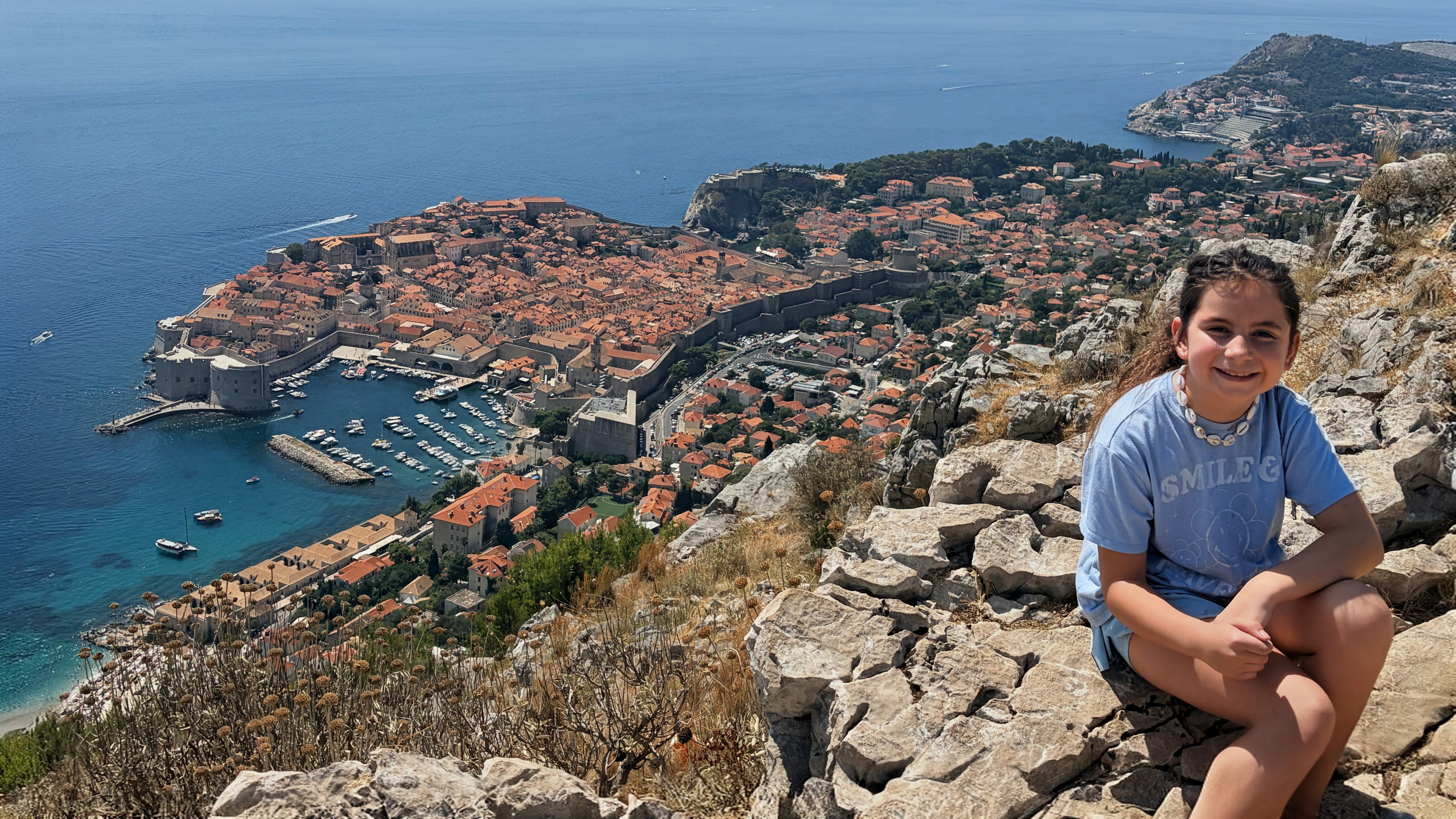
Croatia
Venice to Croatia is a ferry or a short flight. Italy for the food and the crowds, Croatia for the water and the room to breathe.
Read the guide
Plan Italy with Nicole
Tell me who is coming, and when.
Italy works as a Rome and Florence week, a longer loop that adds Venice or the Amalfi Coast, or a cruise that anchors in Civitavecchia and lets someone else handle the driving. Which one makes sense depends on the ages you are traveling with and how much time you have, since Italy rewards slowing down more than most places. Send me the ages, the dates, and what you are hoping this trip feels like. I will come back with what is really available.
Nicole Damiano, ASTA Verified Travel Advisor with FG Luxury Travel.
Questions families ask about Italy
The ones that come up in almost every planning call. If yours is not here, ask me.
Do we need anything to enter, beyond passports?
Not a visa. US passport holders get 90 days in any 180 day period across the Schengen area, and this country counts toward that same 90 days.
Your passport has to be valid for at least three months beyond the day you leave Europe. Check the kids’ passports too. Child passports are only good for five years and they expire quietly.
Since October 2025 the EU has been taking fingerprints and a facial image at the border under the new Entry and Exit System. There is no fee and no form. It just means the first arrival can be slower than you remember, so build a real cushion into any connection.
ETIAS, the paid travel authorization you may have read about, is not running yet. It is expected in late 2026. When it starts I will tell every family I am working with, well before they fly.
When should we go to Italy with kids?
May, or late September into October. Warm enough for the coast, cool enough to walk a city all day, and the crowds are a fraction of what they are in summer.
July and August are hot and packed, and a lot of family run places close in August because Italians are on holiday too. If those are your only weeks, go north to the lakes and the Dolomites rather than Rome in the heat.
How many cities can we do?
Two properly, or three if you have two weeks and the trains between them are short.
Rome, Florence and Venice with kids is the classic run and it works because the fast trains connect all three in a couple of hours. Add the Amalfi Coast or Sicily and you have added a travel day at each end, not just a stop.
With children under eight I would do two bases and day trip out. Packing up is the part that wears everyone down, not the sightseeing.
Do we have to book the big sights in advance?
Yes, and earlier than feels reasonable. The Colosseum, the Vatican Museums, the Uffizi and the Accademia all run on timed entry, and the good slots go months out.
Booking the right time of day matters as much as booking at all. A nine in the morning Colosseum with a guide who talks to children is a different experience from a two in the afternoon queue in August.
Is Italy actually good with young children?
It is one of the easiest countries in Europe for it. Children are welcome in restaurants at proper dinner hours, gelato is a legitimate daily plan, and nobody minds a toddler in a piazza at nine at night.
The practical friction is different from what people expect. Cobbles are miserable with a stroller, lifts are rare in older buildings, and a lot of hotel rooms simply will not take five people. That is the part worth planning around.
Keep exploring from Italy
Cities, neighbors, and the wider region.
Click any card to open that page
 Venice
 Florence
 Rome
RomeMore of Europe
 Austria
 Belgium
 Croatia
 Cyprus
 Czechia
 Denmark
 France
 Germany
 Greece
 Hungary
 Iceland
 Ireland
 Netherlands
 Norway
 Poland
 Portugal
 Spain
Spain Sweden
 Switzerland
 Turkey
 United Kingdom
 All of Europe
 Explore the world
 The Travel Library
Family trip plans
Planning Italy with kids?
