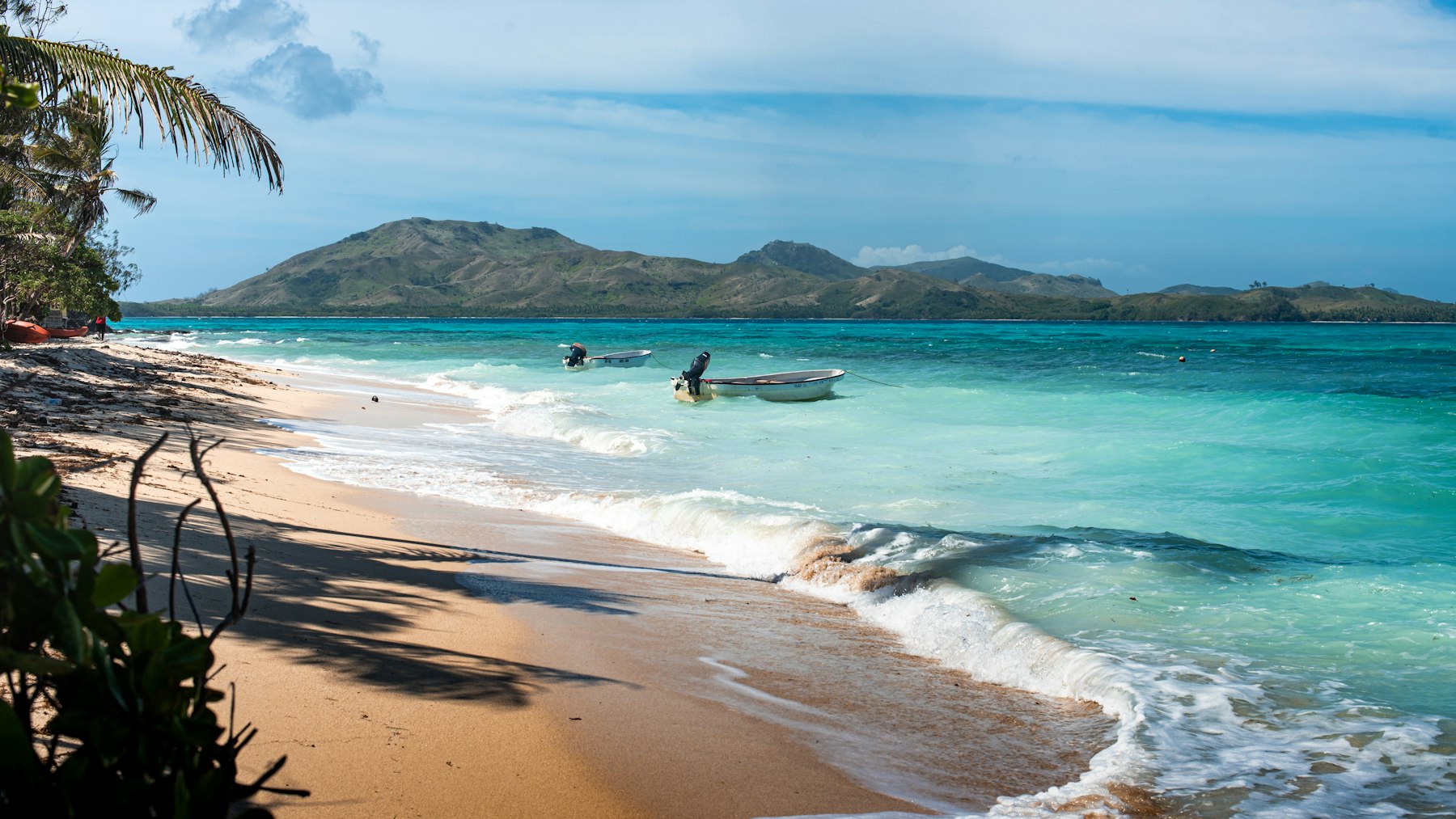
Nanuya, out in the Yasawa group of Fiji. Half the reason to plan an Oceania trip properly is that a beach like this sits directly on the flight path between everything else
Oceania Family Travel Guide
“Everything about this part of the world comes back to one number. It is fifteen hours in the air minimum, and every good decision you make about Oceania starts by respecting that.”
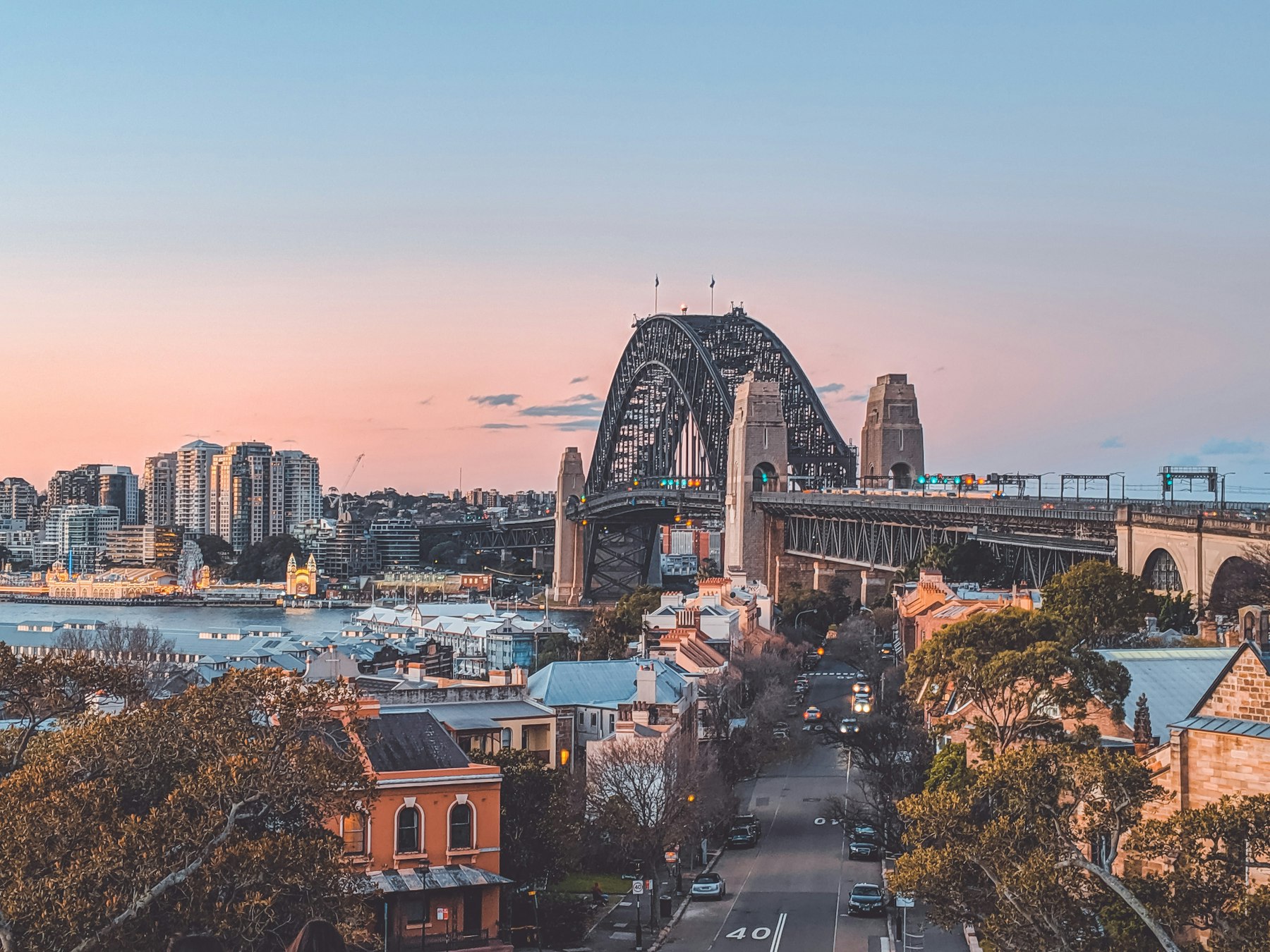
Australia, New Zealand and Fiji are the three doors into this part of the world. What I have is a long list of families I have priced this trip for, and a very clear pattern in how it goes wrong. It almost never goes wrong on the ground. Oceania is one of the easiest regions on earth once you are in it. English speaking, safe, clean water, excellent healthcare, and cultures that are relaxed about children.
It goes wrong at the planning stage, and it goes wrong the same way every time. People underestimate the flight and overestimate how much they can fit in. Then they book fourteen days for a place that needs twenty one, and they spend the first three days of it asleep at the wrong times.
So this page runs in the order the decisions actually happen. Which country, how long, how to combine them, and when. The country guides underneath go deep on each one. I have tried not to repeat myself here.
Explore Oceania by Country
Three guides so far, each one written the same way. Click through for the detail. The order below is the order I would recommend them to a family who has never been.


Which Country First
Four different families, four different answers. Find yours.
If you have two weeks, go to New Zealand. This is the answer I give most often and I give it with confidence. New Zealand is small enough that two weeks on one island is a full, unhurried trip rather than a compromise. Australia in two weeks is a compromise and everybody feels it.
If you have three weeks and children who like variety, go to Australia. Sydney and the tropical north gives you a real city, a reef, rainforest, beaches and wildlife in one country. It needs the third week to work, and with the third week it is superb.
If your children are under five, go to Fiji. Not because the other two are unsuitable, but because a resort week with a free kids club is the only version of a long haul trip that a family with a toddler will actually enjoy. And Fiji is three hours closer.
If you have teenagers, go to New Zealand and let them pick the activities. Jet boats, luge, glacier walks, mountain biking, caving. This is the country where a fifteen year old stops being bored on a family trip.
The Flight Decides Everything
Every mistake families make in this region traces back to not taking this seriously enough.
Fifteen hours minimum, and usually more once you connect.Los Angeles to Sydney is around fifteen. To Auckland around thirteen. To Nadi about eleven. From the middle of the country add a domestic leg and a layover and twenty four hours door to door is the normal number.
You cross the date line and lose a calendar day going out.Leave Monday evening, arrive Wednesday morning. Coming home you land before you took off. It confuses children more than the hours do.
Budget three days of jet lag each way, not one.A sixteen to nineteen hour shift is the hardest kind. Plan the first two days to be a pool, a park and an early night. Do not book anything with a deposit for day two.
Which is why three weeks is the number.Two weeks leaves you about ten usable days. Three weeks leaves seventeen. New Zealand is the one exception where two weeks really works, and only if you stay on one island.
Or break the flight, which is the smarter fix.A stop in Fiji or Hawaii on the way turns one brutal journey into two manageable ones. Fiji in particular is often free or close to free as a stopover on the fare.
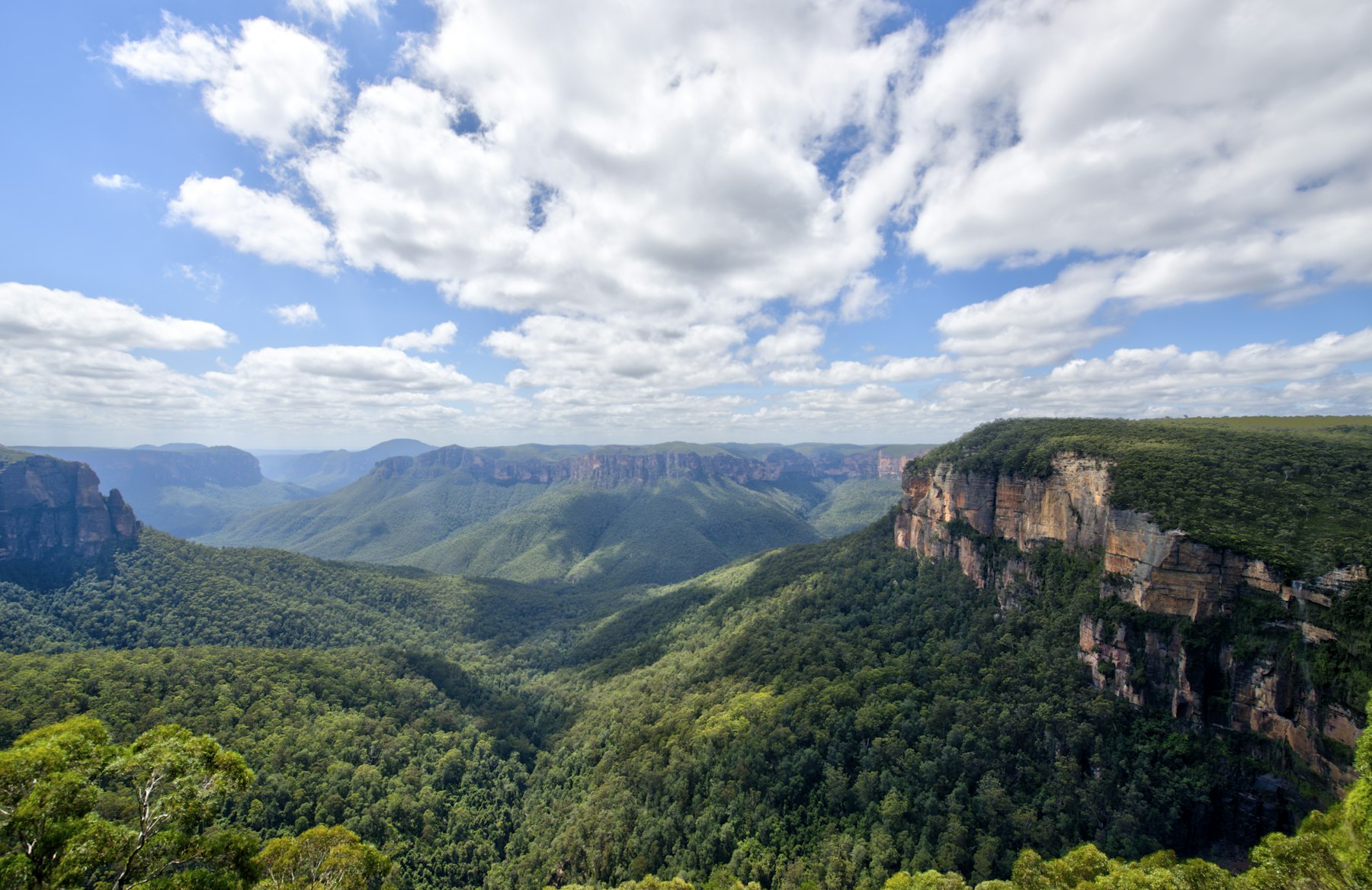
The Blue Mountains, ninety minutes on a train out of Sydney. Proof that you do not need an internal flight to get somewhere completely different in Australia
Combining Them, and When Not To
These three countries look adjacent on a map. Two of them are three hours apart. That does not always mean you should do both.
Australia and New Zealand together needs four weeks. Sydney to Auckland is about three hours, so the hop is easy. The problem is that each country needs its own two to three weeks to be worth the effort of getting there, and squeezing both into three weeks produces a trip that is all transit. If you only have three weeks, do one properly. You will go back.
Anything plus Fiji is almost always right. This is the combination I recommend most in the whole region. Nadi is on the route home from both Sydney and Auckland, the flight is three to four hours, and four or five nights at the end of a long trip resets the entire family. It is the cheapest good idea in Oceania.
Fiji on its own, from the US, is a harder sell. Eleven hours each way for a resort week is a lot of flying for what you could get closer to home. If Fiji is the only thing you want, go, and take at least ten nights. But most American families should be using it as the second half of a bigger trip.
The sequence matters. Do the active country first while everyone has energy, and put the beach at the end. Every family I have sent the other way round has told me they wished they had swapped it.
What It Costs Across the Region
Three countries, three quite different price shapes.
Australia is the expensive one. City hotels are pricey and small, family rooms for five are hard to find, and eating out adds up fast. The saving graces are that there is no tipping, prices include tax, and holiday parks and apartment rentals outside the cities are good value.
New Zealand is the middle, and the best value of the three for a large family. Motels almost always have kitchens, family units sleeping five are normal, and holiday park cabins are cheap. The activities are where the money goes. Pick two big ones and spend the rest of your time on the walks, which are free and are the best part anyway.
Fiji is the cheapest, if you read the small print. Mid range family resorts are good value and the included kids club and children’s meals move the real number a long way. Then boat transfers and compulsory meal plans on remote islands quietly undo it. Compare the total week, not the nightly rate.
The flights are the dominant cost in all three and they do not vary much between them. That is the argument for staying longer, or for combining two countries in one trip, rather than making this journey twice.
When to Go
The seasons are inverted and the three countries do not share a best month. If you are combining two, this is the section that decides your dates.
September to November
The best all region window. Spring in Australia and New Zealand, dry season still running in Fiji, outside everybody’s school breaks for most of it. If you are doing two countries, this is when I would go.
February and March
The best New Zealand window by a distance, and good in southern Australia. It is the tail of cyclone season in Fiji and the wet season in tropical Queensland, so it suits a South Pacific trip less well.
December to February
Peak southern summer, peak prices, and cyclone season in Fiji and northern Australia. Sydney and Melbourne are wonderful and everything else is complicated. This is the window I steer families away from unless the school calendar leaves no choice.
June to August
Winter in the south, which is cold and short of daylight in New Zealand and Melbourne. But it is dry season in Fiji and in tropical Australia, and Uluru is bearable. Good for a Fiji and Queensland trip, poor for a South Island one.
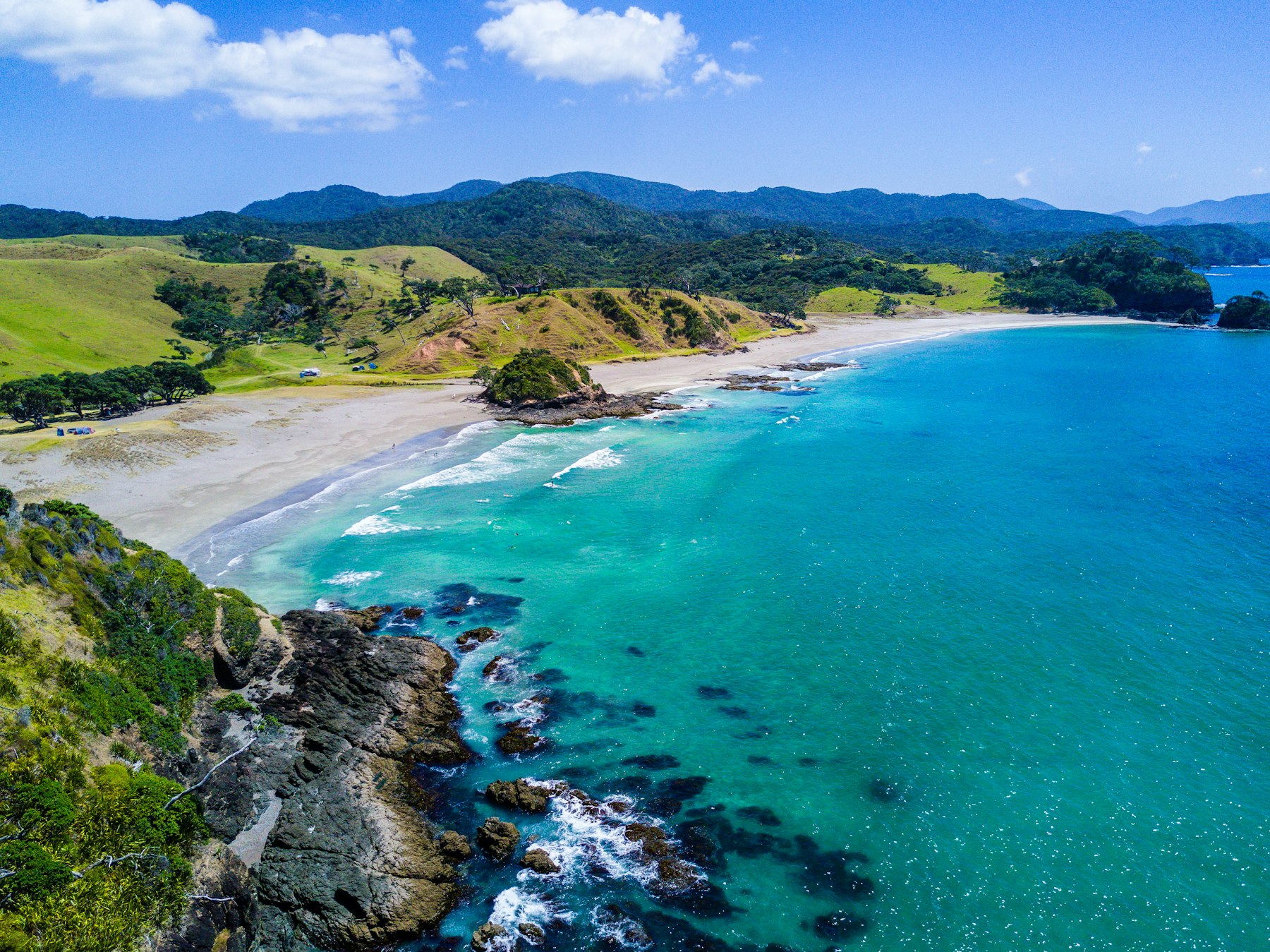
New Zealand coastline. Three countries is not Oceania. This is the start of a region, not a complete map of it
The Wider Pacific, and What Is Missing Here
Oceania is thousands of islands across a third of the surface of the planet. We have three guides. Here is the honest shape of the rest.
Australasia. Australia and New Zealand, the two big ones, and both have guides above. This is where the overwhelming majority of American family trips to the region go, and for a first visit that is the right instinct.
Melanesia. Fiji, which has a guide, plus Papua New Guinea, Vanuatu, the Solomon Islands and New Caledonia. Vanuatu and New Caledonia are both realistic family destinations and neither has a page here yet. That is a gap, not an oversight.
Polynesia. French Polynesia and Tahiti, Samoa, Tonga, the Cook Islands and Niue. The Cook Islands in particular are worth knowing about, because Rarotonga is a excellent and much cheaper alternative to Bora Bora for families. No guide yet.
Micronesia. Guam, Palau, the Marshall Islands, the Federated States. Palau is one of the great diving destinations on earth and is a serious trip rather than a family beach week. No guide yet.
So the list of what is missing here is longer than the list of what is built, and I would rather say that than let three pages stand in for a third of the planet. Vanuatu, the Cook Islands and French Polynesia are the three I would add next.
Doing Oceania With Children
 Poppy marks the family parts. Wherever you see her, that section is written for travelling with children.
Once you land, this is one of the easiest regions in the world for a family. All three countries share the same advantages.
English is spoken across all three, which removes an entire layer of friction. Tap water is drinkable in Australia and New Zealand and at resorts in Fiji. Medical care is excellent in Australia and New Zealand and adequate in the main towns of Fiji. There are no vaccination requirements to plan around and no malaria anywhere in these three countries.
All three have outdoor cultures that assume children are part of life rather than an inconvenience. Playgrounds are everywhere and they are good. Restaurants are relaxed. Beaches are patrolled in Australia and calm inside the reef in Fiji.
The shared hazard is the sun, and Americans consistently underestimate it. The UV in this part of the world is stronger than at home. Rash guards, hats, shade in the middle of the day. More family trips here are ruined by sunburn than by anything else on any list.
The other shared issue is age minimums, but they bite differently in each country. Australia is largely open to all ages. Fiji is open to all ages and actively better with the youngest. New Zealand is where the adventure activity minimums catch people out, and that is worth checking before you promise a child anything.
The Paperwork Nobody Warns You About
None of this is hard. All of it is easy to forget until the check in desk asks for it, and then it is very hard, because you are standing in a line with three kids and a dog carrier.
🇦🇺 Australia wants an ETA before you fly. It is the Electronic Travel Authority, subclass 601. US passport holders apply through the official Australian ETA app, it costs about twenty Australian dollars, and it lets you come and go as often as you like for twelve months with each stay capped at three months. Approval is usually minutes. Do it the week you book, not the week you leave, because the occasional application gets kicked to a human and that takes days.
🇳🇿 New Zealand wants two things, and people only remember one. The first is the NZeTA, which starts around seventeen New Zealand dollars in the app and is good for two years. The second is the International Visitor Levy, currently one hundred New Zealand dollars per person, and it is charged at the same time you request the NZeTA. For a family of five that levy alone is five hundred New Zealand dollars before anyone has eaten a meal. Budget it now so it is not a surprise later.
🇫🇯 Fiji is the easy one. US passport holders are stamped in on arrival for a stay of up to four months. Nothing to file in advance.
📘 Six months of passport validity, for everyone. Children included. Check the babies and the almost teenagers, because kid passports run five years and they expire at inconvenient times. If any passport in your group has under eight months on it when you book, renew it before you do anything else.
🧾 Australia and New Zealand both take biosecurity seriously. You will fill in an arrival card that asks about food, wooden items, hiking boots and anything that has touched a farm. Answer it truthfully. Declaring an apple costs you nothing. Not declaring it can cost you a fine on the spot. Clean the mud off the kids’ shoes before you pack them, especially for New Zealand.
Getting Around Once You Land
The single most common planning mistake in this region is looking at a map and thinking it is the size of Europe. Australia alone is roughly the size of the lower forty eight states.
Australia is a flying country. Sydney to Cairns is about three hours in the air. Sydney to Uluru is about three and a half. Melbourne to Perth is four. Nobody drives these routes on a two week holiday. Qantas, Virgin Australia and Jetstar cover the map between them, and domestic fares booked a couple of months out are reasonable. What is not reasonable is booking a domestic connection on the same day as your international arrival. Give yourself the night in Sydney or Brisbane first.
New Zealand is a driving country, and the times lie to you. Two hundred kilometers on a South Island map can be a four hour day, because the road bends, climbs, and passes places you will want to stop at. Assume you cover about sixty kilometers an hour in real life, not a hundred. If your itinerary has you changing accommodation every night, cut it. Three nights in fewer places beats one night in more.
The two islands are joined by a boat, not a bridge. The Interislander and Bluebridge ferries run Wellington to Picton in about three and a half hours through the Marlborough Sounds. It is one of the prettiest ferry rides anywhere and it books out in summer, particularly if you are taking a vehicle across. Book that leg the moment your dates are firm. The alternative is flying and picking up a second rental car, which is often cheaper and always faster, and you lose the Sounds.
Everyone drives on the left. Australia, New Zealand and Fiji all do. It takes most Americans about two days to stop reaching for the door handle instead of the gear stick. The part that catches people out is not the straight road, it is the roundabout and the right turn across traffic. Book an automatic. Put an adult in the left seat as the designated lane spotter for the first day.
Campervans are wonderful and not free. New Zealand is built for them, with holiday parks and dump stations everywhere, and for a family it really can undercut hotels. Just know that a self contained certified vehicle is what lets you use the freedom camping spots, and that a six berth van in January books out months ahead.
🐕 Car seat rules are stricter than at home. Australia and New Zealand both require an approved child restraint well past the age most US families have moved on. Rental companies hire them, and they are not always the ones you would choose. If your child is between seats sizes, bring your own.
Fiji is boats and small planes. The Yasawa Flyer runs up the island chain daily from Denarau and is the backpacker and family workhorse. The Mamanucas are a thirty to ninety minute boat ride from the mainland, which is why they suit families with young children. Anything further, and you are on a small plane or a longer transfer, and those transfers only run at certain times of day. Your resort choice is really a transfer choice.
The Great Barrier Reef Question
This is the thing most families are actually flying fifteen hours for, and where you base yourself changes the whole day.
Cairns is the practical choice. It has the international airport, the widest range of operators, and the cheapest beds. It is not a beach town. There is a man made lagoon on the waterfront instead, which children love more than adults expect. Reef boats leave from the marina and take about ninety minutes to reach the outer reef.
Port Douglas is an hour north, smaller, prettier, and considerably calmer. It is my pick for a family with younger children, mostly because of the Low Isles. That is a small coral cay about forty five minutes out with a sand beach and shallow water, so a seven year old can stand up and still see fish. Port Douglas is also the door to the Daintree, which is the oldest rainforest on earth and a very good half day.
The Whitsundays are a different trip entirely. Airlie Beach and Hamilton Island are the two bases, and the appeal there is sailing, Whitehaven Beach and island hopping more than the reef itself, which sits further offshore. If your picture of Australia is a white sand spit and turquoise water, that is the Whitsundays, not Cairns.
About the non swimmers. Several of the big operators run permanently moored pontoons on the outer reef with underwater viewing chambers, glass bottom boats and a semi submersible. It means the grandparent who will not put a mask on and the four year old who cannot swim still see coral. If anyone in your group is nervous in water, pick a pontoon trip over a two site dive boat.
Stinger season runs roughly November to May. Box jellyfish and irukandji are in the water along the tropical Queensland coast in those months. Operators supply full stinger suits and this is a normal, managed part of visiting. Wear the suit. Swim inside the netted enclosures at mainland beaches.
And the true part. The reef has been through repeated bleaching events and it is not the reef of the 1990s documentaries. It is still, on a good site on a good day, one of the best places I could send you. Outer reef sites recover better than inshore ones, which is another argument for the longer boat ride. Go in with real eyes rather than brochure eyes and you will not be disappointed.
The Sun Down Here Is Not Your Sun
I would put this above almost everything else on the practical list, because it is the thing that quietly ruins family days and nobody plans for it.
UV levels across Australia and New Zealand run higher than almost anywhere in the northern hemisphere at the same latitude. Fair skin can burn in about ten minutes in the middle of a Queensland day. Australians grew up being taught to slip on a shirt, slop on sunscreen and slap on a hat, and it is not a cute slogan, it is a public health campaign in a country with the highest skin cancer rates in the world.
What this means for your packing. Rash guards for every child, worn in the water, not just at the beach. A real hat with a brim, not a baseball cap, because ears and necks are where it gets them. Sunscreen bought locally, since Australian sunscreen is regulated to a higher standard and is cheaper there than airport prices. Sunglasses for the kids too.
What it means for your schedule. Plan the beach and the reef for morning, and put the aquarium, the museum or the nap in the middle of the day. This is the same reason so many Australian playgrounds are built under shade sails. Follow the locals.
🏊 And swim between the flags. Patrolled Australian beaches mark a safe corridor with red and yellow flags and lifeguards watch that corridor and no other part of the beach. Rips are the real hazard, not sharks. Teach your children the flags on day one, the same way you would teach them a street crossing at home, and then never let them swim anywhere else.
Where I Would Actually Start
If a family called me tomorrow and said they had three weeks and had never been.
Two weeks on the South Island of New Zealand, driving slowly with six bases, in February or March. Then five nights in Fiji on the Coral Coast on the way home. Fly home from Nadi.
That itinerary has one hard driving country and one country where nobody drives at all. It has the beach at the end rather than the beginning. It breaks the flight home in half. It fits in three weeks without any of it feeling rushed. And it costs less than most people expect, because New Zealand motels and a mid range Fijian resort are both good value.
If the children are under five, cut the New Zealand half and do ten nights in Fiji instead. If they are teenagers, keep it exactly as written. And if the family insists on Australia for the first trip, give it the full three weeks on its own and save New Zealand for next time. Do not try to have both.
Combine It With
The other way round the world. Singapore and Tokyo are both common stopovers on the Australia route and both are excellent places to break the journey.
Where this journey starts. Hawaii sits on the same flight path and is the other sensible way to cut the flying in half.
The other long haul continent, and the other one where the planning matters more than the destination.
Every Oceania guide, in one place
Country by country, city by city. Start anywhere.
Countries in Oceania
Also worth knowing
Ways to travel
Oceania is not one kind of trip
How you move through it changes the trip more than which places you pick.
 01Road TripsYour own pace, your own stops.Open this guide →
 02Rail JourneysThe space between two places, made part of the trip.Open this guide →
 03Ocean CruisingYou unpack once and the world comes to you.Open this guide →
 04River CruisingEurope from the middle of it.Open this guide →
 05Walking & HikingThe slowest way, and often the best one.Open this guide →
 06Guided & Small GroupSomebody else handles it.Open this guide →
 07Independent TravelYou handle it, and it is cheaper.Open this guide →
 08Yacht & ExpeditionFewer people, further out.Open this guide →
