
Gyeongbokgung Palace, Seoul · photo: Unsplash
South Korea Family Travel Guide
“Korea is the country I know like the back of my hand. Two years of my life live there, and I still know which subway exit to take.”
Korea City Guides
Every one of these gets its own page as I write it. This is the order I actually lived them in, not alphabetical.
Busan
The beach city where I was pregnant with Gavin.

Gimhae
Gwangju
Where this whole Korea story started.
Jeju
A volcano in the sea, an hour off the end of the country.

Jinhae
Seoul
Palaces, street food, and everything that makes Seoul with kids so easy to fall for, even three jet lagged ones.

Suncheon

Yeosu
Themed Vacations
Not every trip has to cover the whole country. Sometimes you go for one reason. These are the theme trips I am building out first, alongside a full Seoul family itinerary for the trip most people actually take.
K-Pop Fan Experiencesoon Korean Spa & Wellness Retreatsoon Cherry Blossom in Koreasoon K-Drama Filming Locationssoon K-Beauty Shoppingsoon Korean FoodsoonThe 2026 festival ran March 27 to April 5. Plan around late March to early April 2027. Read the answer
Nicole Damiano, ASTA Verified Travel Advisor with FG Luxury Travel
How many days do you need?
Plan on 10 to 12 days minimum for a first trip. Seoul alone earns 4 to 5 days, and Busan for the coast is another three or four. Don't try to check off every city, Korea gives more back when you slow down in one neighborhood instead of racing between them.
Do you need cash?
Card works almost everywhere, big stores, chains and the KTX all take it without a thought. But small vendors, market stalls and a lot of street carts are cash or card machine specific, so keep some won on you.
What is a T-money card?
It's the one card that covers almost everything, subways, city buses, most intercity buses and a huge share of convenience stores. Load it once at any subway station or the airport. A Wowpass does the same thing and also lets you load a foreign card and pull won straight from the kiosk.
When should you go?
Autumn is my favorite window, the foliage around Naejangsan and Seoraksan rivals Japan's and the humidity finally breaks. Spring brings cherry blossoms in early April around Jinhae and Yeouido, gorgeous but crowded, so book early. Summer is hot and humid with a real monsoon stretch in July.
Is it stroller friendly?
It's extremely walkable, but plan for stairs. Subway stations can involve real staircases, so a carrier beats a stroller in a lot of spots.
Is Korea safe for kids?
It's about as safe as travel gets. I've let my kids walk ahead of me on a Seoul sidewalk in a way I wouldn't at home, and it never once felt like a risk.
Nicole’s Perspective
Why families hire me for South Korea

Korea will forever be one of my most favorite countries in the world. I lived there twice. Gwangju in 2009, teaching English and riding my bike everywhere. Busan in 2011, where I got pregnant with Gavin and adopted a puppy out of a pet store and flew her home to America under the seat in front of me. On my days off I took the bus to the ferry ports and camped alone on islands most people cannot find on a map. I know it the way you only know a place you have actually unpacked boxes in. When a family hires me for Korea they are not getting someone who read a forum. They are getting someone who knows which subway exit to take.
Beyond the Bookshelf
Stories to carry you deeper into South Korea. This is our own family shelf, real books, films, music and a cookbook tied to the place, not a generic reading list. Read it before you go and the trip means more when you get there.

- The VegetarianHan Kang
- Kim Jiyoung, Born 1982Cho Nam-Joo
- Please Look After MomShin Kyung-sook
- The Name JarYangsook Choi
- The Ocean CallsTina Cho
Book links go to Bookshop.org, which supports local bookstores. Film and music links go to JustWatch and Spotify. As an affiliate we may earn from qualifying purchases.
Why this country, for this family
Why Korea (For Families)
 Poppy marks the family parts. Wherever you see her, that section is written for traveling with children.
Korea will forever be one of my most favorite countries in the world. I know it like the back of my hand and I am not neutral about it. Planning South Korea with kids looks nothing like the backpacking version I lived on my own, and that gap is exactly what this guide is for.
I lived there twice before I ever brought my own kids into it. Gwangju from 2009 to 2010, teaching English, riding my bike everywhere, taking the bus down to the ferry ports and camping by myself on islands most people never hear of. Then Busan from 2011 to 2012, where I got pregnant with Gavin and adopted a scruffy puppy named Eunee, which means lucky in Korean, and flew her home to America with me.
What I miss is not the landmarks. It is walking home at midnight through a busy city with not one worry in my body. It is neighbors in Gwangju pulling me in for tea. It is strangers at a restaurant sending a dish over to the foreigner just so she would try it, wanting nothing back. It is a giant block of fresh tofu at Bujeon Market for one dollar. I still think about that tofu.
In 2018 I brought all three kids. Eleven hours on Korean Air, four suitcases, no sleep, then a subway out of Incheon that ended with us dragging luggage through Hongdae at 8pm. Avilene had a birthday at a park in Seoul and my old coworker Rachel brought her a cupcake made of rice cake. We rode city buses because the kids loved them. We could not find KidZania to save our lives and it was worth every wrong turn.
I do not recommend Korea because it photographs well. I recommend it because it is the kindest, safest, most generous country I have set foot in, and because it gave me two years of my life before it gave my kids a piece of it too. Go. Then go again.
Safe
Low crime, orderly, easy to relax in. Your kid can walk a few steps ahead of you on a subway platform and you are not white knuckling it.
The KTX and Subway Do the Heavy Lifting
High speed rail between cities, clean and easy to read subways in Seoul and Busan, you do not need a car to see the country.
Something for Every Age, Same Trip
Palaces and history for the older kids, kid cafes and jumping gyms for the little ones, street food everybody actually agrees on.
The map
South Korea Place by Place


Anthem Aegukga, the patriotic song. It gets sung at the baseball too. Language and money Korean, with the Hangul alphabet that takes an afternoon to learn. The won, and cards work everywhere including the subway.
“Korea doesn’t ease you in. It’s louder, faster, and more vertical than people expect, and somehow completely safe for a kid to run ahead of you in.”
Nicole DamianoCulture, Etiquette & What to Expect
Korea doesn’t expect you to get it perfect, but a few habits go a long way, and they make the trip feel less like pushing through as a tourist and more like a family who did their homework.
A small bow or nod when you greet someone. Kids don’t need a full bow, a little head dip goes a long way, especially with anyone older.
Shoes come off indoors. Homes, guesthouses, some restaurants, anywhere with heated ondol floors. Look for the shoe rack by the door.
Age shapes how people speak to each other. You’ll hear it in restaurants and on the street. It isn’t rudeness, it’s respect built directly into the language.
Drinking has its own etiquette. Soju is the default, poured for others, never yourself, and you turn slightly away when you drink in front of someone older. You likely won’t be doing this with the kids underfoot, but it’s worth knowing.
Tipping is not expected, anywhere. Slide extra cash into a bill and you’ll usually just get it handed back to you.
Subways and buses are quiet and orderly. Priority seating is respected without question. Teach the kids to let people off before getting on.

Adam and I, toasting with soju on a rooftop in Seoul.



Food
Korean food is one of the easier cuisines in the world to travel with kids on, once you understand how a meal actually works.
Banchan comes with everything. A wall of little side dishes lands on the table before the main dish does, free, unlimited refills, which means there’s almost always something even a picky eater will touch.
Spice is more adjustable than people think. A lot of the famously fiery dishes have a mild version, or a kid can just eat around the sauce. Most places will work with you if you ask.
Korean BBQ is basically built for families. Everyone cooks their own, everyone picks what they want, and there’s always rice and lettuce wraps to fall back on if a kid isn’t feeling adventurous that night.
Street food is everywhere and cheap. Tteokbokki, hotteok, fish-shaped bread stuffed with red bean. Good way to let the kids try things in small bites without committing to a whole meal.
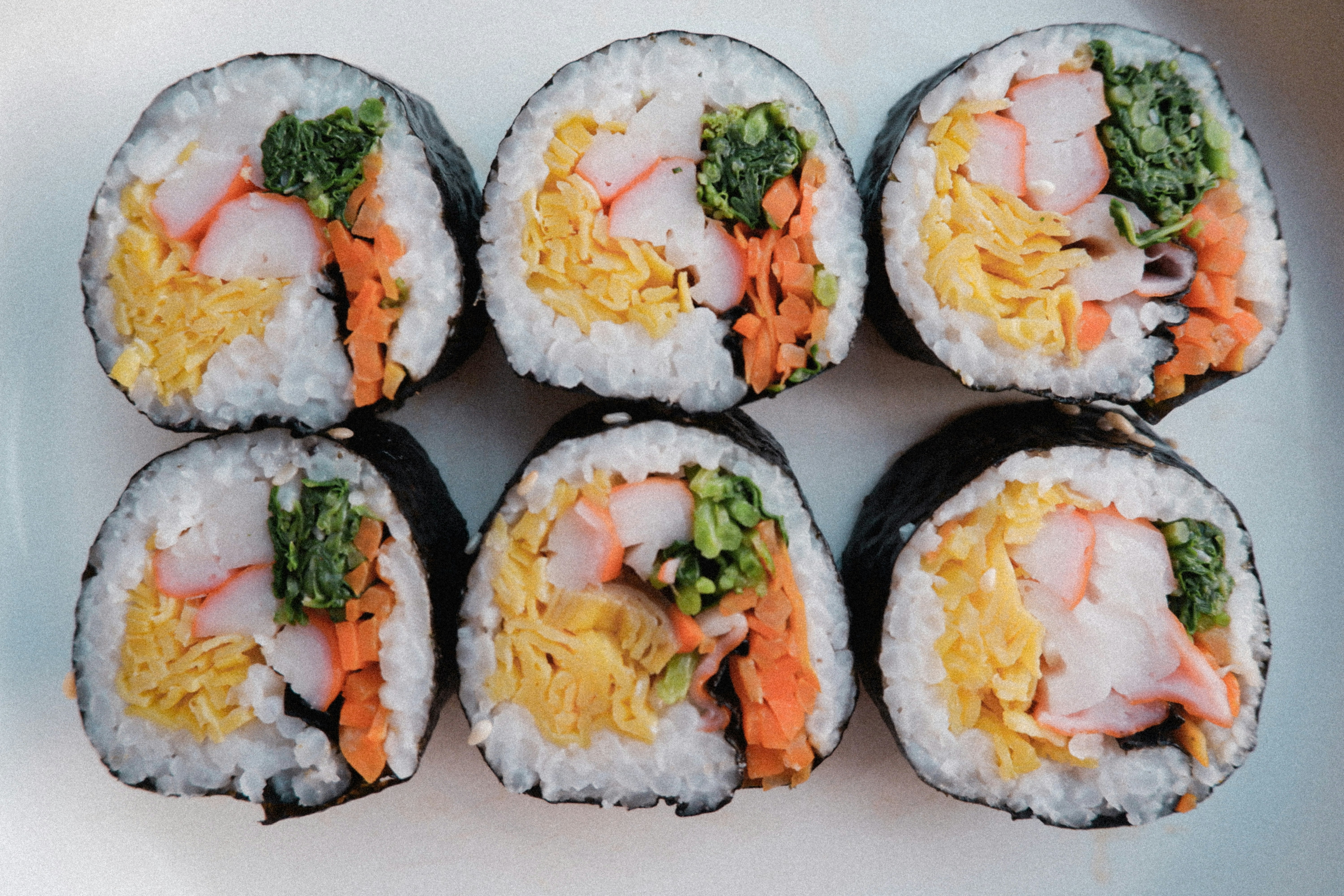
Convenience stores are a real meal category, not a last resort. Triangle kimbap, warm eggs, instant ramen you make right there. Some of our easiest family lunches in Korea have come out of a GS25 or CU.
Getting Around
Korea might be the easiest country in Asia to move a family through, once you understand three things: the trains are fast, one card covers almost everything, and Google Maps barely works here.
KTX high-speed rail. Connects Seoul to Busan in under three hours and is the backbone of any multi-city Korea trip. Book ahead around trips.
T-money card. Load it once, tap it on every subway, city bus, and most intercity buses, plus a huge share of convenience stores. Pick one up at any subway station or the airport.
Seoul and Busan subways are excellent. Clean, frequent, full English signage. One of the least stressful metro systems we’ve used anywhere with kids.
Intercity buses fill in the gaps. Wherever the KTX doesn’t reach, a bus usually does, and Korea’s bus system is comfortable and reliable.
Use Naver Map or Kakao Map, not Google Maps. Google Maps’ directions are badly limited in Korea. Download one of the Korean apps before you land, it’s not optional.


Seoul at night
Money & Practical Basics
The currency is the Korean won. Prices look enormous with all the zeros, budget a beat to do the math in your head for the first day or two.
Card works almost everywhere, except when it doesn’t. Big stores, chains, and the KTX all take cards without a thought. Small vendors, market stalls, and a lot of street carts are cash or card-machine-specific.
A Wowpass or T-money card solves most of it. Wowpass lets you load a foreign card and pull won straight from the kiosk, and it doubles as your transit card.
Get a SIM or eSIM before you land, or at the airport. Coverage is excellent everywhere, including underground on the subway.
Outlets are Type C/F, 220V. Bring an adapter. Most modern electronics handle the voltage fine, check yours before you go.
When to Go
Spring
Cherry blossoms in early April, especially around Jinhae and Yeouido. Gorgeous, crowded, book early.
Summer
Hot and humid, with a real monsoon stretch in July. Still a full festival and water park season.
Autumn
My favorite window. Foliage around Naejangsan and Seoraksan rivals Japan’s, and the humidity finally breaks.
Winter
Cold and dry. Ski resorts near Pyeongchang, fewer crowds, and cities strung with lights.

Cherry blossom season, a short window worth planning a whole trip around.
How Many Days & First-Trip Routing
For a first trip, plan on 10 to 12 days minimum and center it on Seoul, then branch out. Seoul alone earns 4 to 5 days. Add Busan for the coast and a completely different pace, three or four more days, and if you have room, Gyeongju or a stop through Jeolla-do rounds it out with the history and food side most first-timers never see. Don’t try to check off every city in one trip. Korea gives more back when you slow down and actually live in a neighborhood for a few days instead of racing between them.
“Slow down and let one neighborhood become familiar before you move to the next. That’s when Korea stops feeling like a trip and starts feeling like a place you know.”
Nicole Damiano
Busan, where we lived in 2011
Regions at a Glance
Korea is smaller than people expect, but its regions still feel different from each other, and where you go should shape the whole trip.
Seoul / Gyeonggi
The capital region. Modern, dense, endless. The first stop for almost every trip.
Busan / Gyeongsang Coast
Korea’s second city. Beaches, mountains, a slower rhythm than Seoul.
Jeolla-do (incl. Gwangju)
The food region. Fewer tourists, deep flavor, where I actually lived.
Jeju Island
Korea’s own island getaway. Volcanic coastline, a completely different pace.
Where to Go in Korea
Start here, then go deep on each city as its own guide.
Seoul. Where every trip should start. Palaces, Myeongdong, Hongdae, and enough kid stuff, Kidzania, Lotte World, to fill a week on its own.
Busan. The coast, and one of my favorite cities anywhere. Haeundae beach, the fish market, Gamcheon’s painted hillside. A completely different pace than Seoul.
Jeju. An island trip inside your Korea trip. Volcanic landscape, beaches, hiking, a place families go to slow all the way down.
Gyeongju. Korea’s open-air history museum. Temples and ancient tombs in a city small enough to actually see without rushing.
Gwangju. The city I lived in first, and the one most visitors never see. Real, unpolished, food-forward, and our first Korea city guide is live now.

Seoul, easy to fall for from a hillside or a stroller both.
Family Travel Considerations
It’s about as safe as travel gets. I’ve let my kids walk ahead of me on a Seoul sidewalk in a way I wouldn’t at home, and it never once felt like a risk.
Extremely walkable, but plan for stairs. Subway stations can involve real staircases. A carrier beats a stroller in a lot of spots.
Jjimjilbang (spa) culture is family-friendly. Kids are welcome, and a proper Korean spa day is one of the best rainy-day plans you’ll find anywhere.
Kids’ menus aren’t really a thing. Pack snacks or plan to order a shareable dish. Most restaurants aren’t built around a kid-specific plate the way US restaurants are.
Playgrounds and kid cafes are everywhere. Even a random neighborhood in Seoul will have a play space tucked into it somewhere.
Splurge-Worthy Experiences
A Hanok Stay
A night in a traditional Korean hanok, heated floors and all, is worth building into the trip at least once.
A Full Jjimjilbang Day
Hot tubs, saunas, and a nap room, an entire afternoon built around doing absolutely nothing. We’ve gone back for this specifically.
KTX First Class
Wider seats and a quieter car for the Seoul to Busan run. A small upgrade that makes a long travel day with kids feel short.
A Real Hotel Splurge
We stayed at the Pullman Ambassador Seoul Eastpole, and the breakfast view over the city alone was worth the upgrade, that and the location made it an easy favorite.
What Surprises First-Timers
How safe it feels letting the kids range a little further than you would at home.
How good, and how cheap, the food is. A full family meal can run less than a fast food stop back home.
How much of daily life still runs on cash, even in a country this wired for technology.
How vertical everything is. Restaurants and shops stack up floors two through eight of a single building, with barely a sign at street level.
24-hour convenience stores are basically a public utility. Need a diaper, a phone charger, or dinner at 11pm, there’s a GS25 or CU within a block, always.
Where I Would Start
First time in South Korea with kids? Seoul, then Busan by train. Two cities, one line, and the kids will want to stay in both.
Seoul. Five nights. Gyeongbokgung with rented hanbok, Bukchon village, Lotte World or Everland, a night market, a baseball game with cheer squads.
Busan. Three nights, two and a half hours by KTX. Haeundae beach, the Gamcheon painted village, the sky capsule train along the coast, the fish market.
Jeju. Three nights if you have them. A volcanic island an hour’s flight south. Lava tubes, black sand, the sunrise peak, tangerine farms.
“It got its hooks in me before I ever brought my kids there. Now I can’t imagine our family without it.”
Nicole DamianoCity Guides
Every one of these gets its own page as I write it. This is the order I actually lived them in, not alphabetical.
Gwangju Busan Seoul Jeju Jinhaesoon Yeosusoon Suncheonsoon GimhaesoonNumbers Worth Knowing
South Korea, by the numbers
Ways to travel
South Korea is not one kind of trip
How you move through it changes the trip more than which places you pick.
Rail Journeys
The KTX high speed line makes Seoul to Busan a straight shot, and Korea’s subway systems are some of the cleanest and most reliable in the world.
For example: Seoul to Busan in under three hours on the KTXWalking and Hiking
Seoul is a walking city once you are in a neighborhood, and Bukhansan National Park puts a real mountain hike inside the city limits.
For example: the Bukchon Hanok Village walk between Gyeongbokgung and ChangdeokgungIndependent Travel
Korea is easy to navigate independently. English signage is common, the subway apps work well, and it is one of the safer countries we have traveled with kids.
For example: a self guided week between Seoul, Gyeongju and BusanGuided and Small Group
The DMZ has to be visited on an organized tour, and a guide there is not optional, it is how you get in at all.
For example: a half day DMZ and Joint Security Area tour from SeoulExplore by interest
What families come to South Korea for

History
Palaces and the DMZ
Gyeongbokgung with the changing of the guard, Changdeokgung’s secret garden, and the DMZ and Joint Security Area a short trip north of the city. The war memorial fills the rainy afternoon.

Food
Barbecue, chicken and the markets
Korean barbecue at the table, fried chicken delivered to the park, and street food markets like Gwangjang. Children eat well here and the kid cafes are a whole category of their own.

Nature
Jeju and the mountains
Bukhansan National Park inside Seoul’s city limits, and Jeju Island’s volcanic coastline, lava tubes and the sunrise peak a short flight away.
Culture
K pop, dramas and taekwondo
A film industry that won Best Picture with Parasite, esports stadiums, K pop stores in Hongdae and a taekwondo lesson for the children who asked for it.
Something unexpected
Only in South Korea

Read before you go
The story of Hangul
King Sejong invented the Korean alphabet in 1443 specifically so ordinary people could learn to read. It is still considered one of the most logical writing systems ever designed.

Watch before you go
Parasite
The 2019 film won Korea its first Best Picture Oscar, and it is as much about Seoul’s neighborhoods and hillsides as it is about the story itself.
Photo via Unsplash.
From here
Korean fried chicken
Double fried for a shatter crust that regular fried chicken does not have. It has spread to menus worldwide, but it started here.
Photo via Unsplash.
Only in South Korea
The DMZ
The most heavily fortified border on earth is a real, bookable half day trip from Seoul. Nothing else about the country prepares you for how it feels standing there.
Photo via Unsplash.Combine It With
If you have the time to add a second country, these are the ones I would actually pair this one with. Not a list of neighbors. A list of trips that work.


From the blog: our years in Korea
We lived in Busan. These were written while we were there.
- Kid Cafe’s & Jumping Gyms
- Routine is key
- Moving to Korea With Kids, The Honest Reality Behind the Beautiful Photos
- We Made It to Korea: Jet Lag, Kidzania and Three Kids Who Proved Everyone Wrong
- You’re Doing What?!: How We Afford Travel Health Insurance School and Everything Else With Three Kids
- Our Expat Life in Japan and Korea, A Year in Review (2012)
- How to Fly Your Dog From South Korea to the US: Complete Step by Step Guide
- Leaving Korea Early, The Goodbye Letter We Left for Our Neighbors and Why We Had to Go Home
- The Goodbye Dinner in Busan, Until Next Time to the People Who Made Korea Feel Like Home
- A Letter to Our Baby at 8 Weeks: Fetal Heart Rate Development and One Dad’s Horsepower Comparison
- Korea With Kids, the complete guide, from someone who lived there twice
- Japan With Kids, the complete family travel guide
- How We Sold Everything in 9 Weeks and Left for Korea With Three Kids: Our Honest Preparation Story
- Why I Use a Paper Planner: Korean Stationery Culture and the Best Planners We Have Found
- Great American Smokeout: Smoking Culture in Korea and the Bad Habits Worth Breaking
- Korean Couples Fashion, Denver Street Art and Why Matching Sweaters Are Actually Kind of Adorable
- 5 Weeks Pregnant in South Korea: Weekly Ultrasounds the Go Mom Card and Baby’s First Typhoon
- 9 Things That Frustrated Me in Korea Today, An Honest Expat Bad Day in Busan
- Eating Clean in Korea: My Morning Workout Routine and the 25 Diet Busting Foods You Should Avoid

Plan South Korea with Nicole
Tell me who is coming, and when.
Korea works as a Seoul city trip, a longer loop through Seoul, Gyeongju and Busan, or a stop paired with Japan. Which one makes sense depends on the ages you are traveling with and how much time you have. I have lived in Korea twice, not just visited, so send me the ages, the dates, and what you are hoping this trip feels like. I will come back with what is really available.
Nicole Damiano, ASTA Verified Travel Advisor with FG Luxury Travel.
South Korea, Answered
How many days do you need? Plan on 10 to 12 days minimum for a first trip. Seoul alone earns 4 to 5 days, and Busan for the coast is another three or four. Don’t try to check off every city, Korea gives more back when you slow down in one neighborhood instead of racing between them.
Do you need cash? Card works almost everywhere, big stores, chains and the KTX all take it without a thought. But small vendors, market stalls and a lot of street carts are cash or card machine specific, so keep some won on you.
What is a T-money card? It’s the one card that covers almost everything, subways, city buses, most intercity buses and a huge share of convenience stores. Load it once at any subway station or the airport. A Wowpass does the same thing and also lets you load a foreign card and pull won straight from the kiosk.
When should you go? Autumn is my favorite window, the foliage around Naejangsan and Seoraksan rivals Japan’s and the humidity finally breaks. Spring brings cherry blossoms in early April around Jinhae and Yeouido, gorgeous but crowded, so book early. Summer is hot and humid with a real monsoon stretch in July.
Is it stroller friendly? It’s extremely walkable, but plan for stairs. Subway stations can involve real staircases, so a carrier beats a stroller in a lot of spots.
Is Korea safe for kids? It’s about as safe as travel gets. I’ve let my kids walk ahead of me on a Seoul sidewalk in a way I wouldn’t at home, and it never once felt like a risk.
Keep exploring from South Korea
Cities, neighbors, and the wider region.
Click any card to open that page
 Jeju
Jeju Seoul
Seoul Busan
Busan Gwangju
 Cambodia
 China
China India
India Indonesia
 Japan
Japan Laos
Laos Malaysia
 Philippines
 Singapore
 Taiwan
 Thailand
 Vietnam
 All of Asia
 Explore the world
 The Travel Library
Family trip plans
Planning Korea with kids?
