
The walled city, Cartagena. This is the photograph that sells Colombia and it is also about four percent of the country
Colombia Family Travel Guide
“Colombia has a reputation problem that is roughly twenty five years out of date, and a heat problem in Cartagena that nobody warns you about at all.”
Nicole Damiano, ASTA Verified Travel Advisor with FG Luxury Travel
Is Colombia actually safe for a family trip?
The tourist regions are, and the transformation is real and measurable. Medellin was the most dangerous city in the world in 1991 and its homicide rate has fallen by well over ninety percent since. Cartagena, Medellin, Bogota and the coffee region have been ordinary tourist destinations for years. The US advisory is by department, not by country, and certain border and rural areas still sit in a do not travel band, which has nothing to do with where you would actually take your kids.
Do we need a visa?
Not for most Western passports. US, Canadian, UK and EU visitors get ninety days on arrival. If you are heading to the Amazon or parts of Tayrona, check if a yellow fever certificate is required for that specific leg.
When is the best time to go?
December through March is the dry season and the best window, though it is also peak, and Christmas through mid January books up fast and prices climb. July and August are a second dry spell that lines up nicely with northern school breaks. April, May, October and November bring afternoon downpours rather than all day rain, plus lower prices, and are perfectly travelable if your schedule is flexible.
Medellin or Bogota with kids?
Medellin is the easier one. It sits at fifteen hundred meters with spring weather every day, and the cable car network doubles as sightseeing. Bogota is the harder one and still worth a day, sitting at twenty six hundred meters with real altitude and often gray skies, but the Gold Museum is one of the great museums anywhere.
Is the coffee region worth it with kids?
Yes, it is the family sweet spot. The Zona Cafetera around Salento sits fifteen hundred meters up so the temperature stays mild, and a working finca stay lets kids pick, pulp and roast their own coffee. The Cocora valley walk under the sixty meter wax palms is an easy jeep ride from Salento, with a long loop and a short loop that gives you the same view.
How do we get around the country?
Fly between regions. Avianca, LATAM and Wingo make Bogota to Cartagena or Medellin to Pereira an hour long flight, often under a hundred dollars, and Colombia is the least painful South American country to move around by air. Do not drive between cities, since mountain roads turn two hundred miles into six hours. Medellin has a real metro plus cable cars that are clean and safe, while Bogota relies on the crowded TransMilenio bus system, so stick to ride apps there instead.
Nicole’s Perspective
Why families hire me for Colombia

The coffee region is the part of Colombia nobody arrives asking for and everybody leaves talking about. Green hills at five thousand feet, wax palms taller than anything else around them, working farms that will walk a family through the whole process from bean to cup.
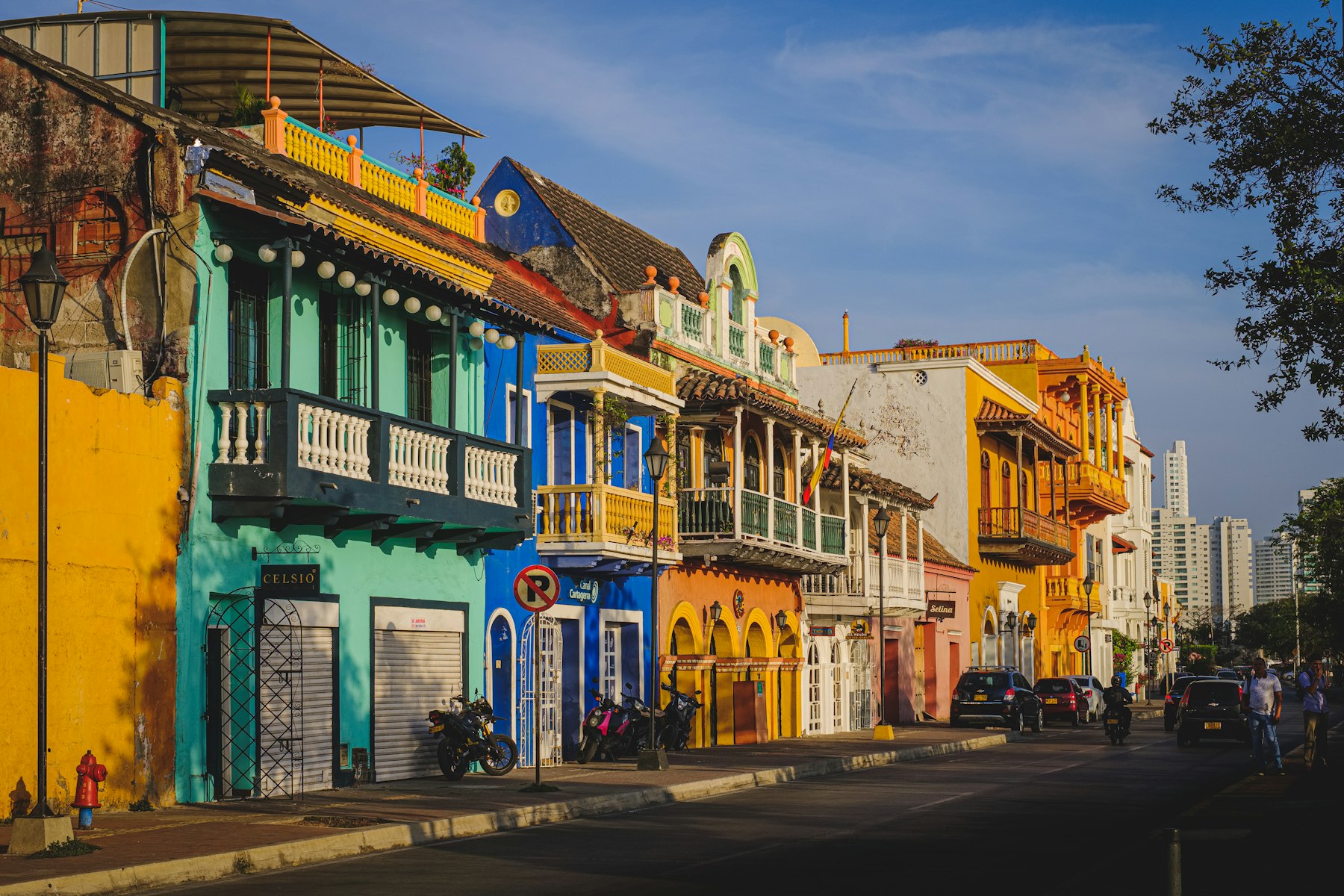
Cartagena’s walled old town is color on every wall, balconies dripping with bougainvillea, horse carts still working the cobblestones at night.
Medellin has remade itself completely, cable cars running up into hillside neighborhoods that used to be no go zones, now full of street art and genuinely good food.
Colombia rewards people willing to see past what they think they already know about it. Almost everyone who goes says the same thing when they get home.
Beyond the Bookshelf
Stories to carry you deeper into Colombia. From García Márquez to Encanto, here is what to read, watch, listen to and cook before you go.

- One Hundred Years of SolitudeGabriel García Márquez
- Love in the Time of CholeraGabriel García Márquez
- Rafael Pombo
- Ivar Da Coll
- Yolanda Reyes
- Encanto
- Embrace of the Serpent
- Ciro Guerra
- Secrets of Colombian CookingPatricia McCausland-Gallo
- Leonor Espinosa
- Lonely Planet Colombia
- Colombia: A Concise Contemporary HistoryMichael J. LaRosa and Germán R. Mejía
- Fernando Botero
As an Amazon/Bookshop/affiliate partner, we may earn from qualifying purchases.
Why this country, for this family
Why Colombia
 Poppy marks the family parts. Wherever you see her, that section is written for traveling with children.
Colombia has a reputation that is twenty five years out of date and a welcome that is one of the warmest in the Americas. Cartagena, the coffee region and Medellin are family trips now, and they are good ones.
Who it is for. Families who want color, music and warmth. Coffee drinkers, the coffee region is gentle and green and perfect with kids. Anyone who has done Costa Rica and wants the next step.
Who should skip it. Anyone who cannot handle heat and humidity, because Cartagena is both, all year. Skip it too if you want a beach week, the Caribbean coast is pretty but the Caribbean islands do beaches better.
Cartagena is the walled city
Colonial streets, balconies with flowers, horse carts. Three nights, early mornings, a pool for the afternoon heat.
The coffee region is the calm part
Salento, the wax palms in the Cocora valley, coffee farms with pools. Cool air at five thousand feet. Four nights.
Medellin is the surprise
Cable cars over the hills, the best climate in the country, and a city that reinvented itself. Two nights and everyone wants three.
The Reputation Versus What Is True
Colombia spent the nineteen eighties and nineties as a byword for one thing, and a whole generation of American parents still hear that word when you say the country name. Here is the honest current position, without either the scaremongering or the breezy dismissal.
The transformation is real and it is measurable. Medellin was the most dangerous city in the world in 1991. Its homicide rate has fallen by well over ninety percent since. Cartagena, Medellin, Bogota and the coffee region have been ordinary tourist destinations for years, with tourism numbers to match.
Colombia is regional, and so are the advisories. The United States advisory has always been by department, not by country. The tourist regions sit in the reassuring bands. Certain border and rural areas sit in the do not travel band and have for decades. Both facts are about Colombia and only one of them is about your trip.
The practical risk is opportunistic theft. Phones and bags, in crowds, in exactly the way it happens in Barcelona and Naples. There is a local phrase, no dar papaya, which roughly means do not hand somebody the opportunity. That is the whole security briefing.
Use apps for cars and do not walk at night in unfamiliar areas. Uber, Cabify and DiDi all work. This is not Colombia specific advice, it is city advice, and it is what people who live there do.
Where I would not take a family. The Pacific coast beyond Nuqui, the Venezuelan border departments, and most rural areas away from the coffee triangle. Not because they are all dangerous, but because the margin for a family is thinner and the country has enough excellent alternatives.
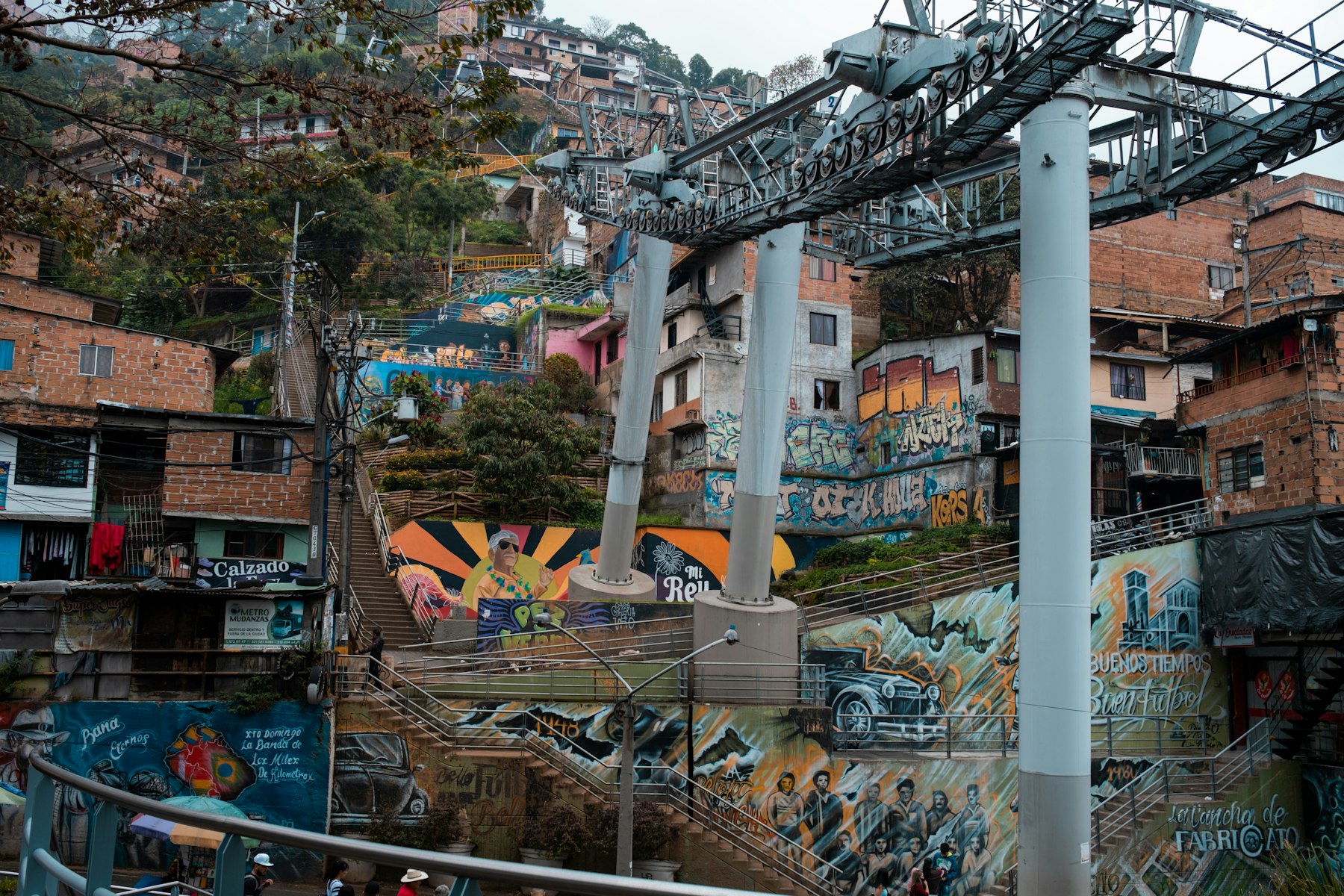
Comuna 13 in Medellin. Public escalators up a hillside that was once the most violent square mile in the country. It is the clearest thing in Colombia to point at when somebody asks what changed.
Cartagena, and the Heat Nobody Warns You About
Cartagena is beautiful. Sixteenth century walls, bougainvillea over balconies, horse carriages, and a Caribbean color palette that photographs like nowhere else in South America. It is also hot in a way that catches families completely off guard.
Thirty two degrees, ninety percent humidity, all year. There is no cool season. Walking the old city between eleven and four with children is not a plan, it is an argument. Do the walls at seven in the morning and again at six in the evening, and book somewhere with a pool for the middle of the day.
It is very busy and it is a cruise port. Two or three ships in a day floods the old town. Getsemani, just outside the walls, is where the better food and the more interesting evenings are, and it is a five minute walk.
The beaches in the city are not the postcard. Bocagrande is gray and busy. The good water is at Baru or the Rosario Islands, an hour by boat, and worth a day. Do not book a Cartagena hotel expecting Caribbean sand outside it.
Two nights, not five. I have never had a family come back wishing they had given Cartagena more time. I have had several wishing they had given it less and the coffee region more.

Coffee cherries at a farm in the Zona Cafetera. The good stuff used to be exported wholesale and drunk somewhere else. That has changed and the farms will now sell you their own.
The Coffee Region Is the Family Sweet Spot
The Zona Cafetera around Salento, Filandia and Manizales is the part of Colombia I push hardest and the part nobody asks for. Fifteen hundred meters up, so it sits in the low twenties all year. Green hills, working farms, and the strange sixty meter wax palms in the Cocora valley that look like something drawn wrong.
The farm stays are the point. You sleep on a working finca, you walk the rows, you pick, you pulp, you roast and you drink it. Children who have never thought about where coffee comes from are completely absorbed by this, and it takes half a day.
Cocora is an easy walk. A jeep from Salento, then a valley walk under the wax palms. There is a long loop and a short one and the short one gives you the same view. Mud is guaranteed, so bring the boots.
Salento and Filandia are small and painted. Balconies in nine colors, a main square, and a game called tejo which involves throwing metal discs at gunpowder. That is not a joke and children find it extremely funny.
The temperature is the real gift. After Cartagena, walking outside in the middle of the day without wilting resets everybody. If you build one Colombia itinerary, make it Bogota or Medellin, then the coffee region, then Cartagena at the end for the beach days.

La Candelaria, Bogota. Twenty six hundred meters up, cold, gray and much better than its reputation, particularly the Gold Museum.
Medellin and Bogota
Two very different cities and most families only have room for one.
Medellin is the easier one. Fifteen hundred meters, spring weather every single day, and a cable car network that doubles as public transport and sightseeing. El Poblado and Laureles are the neighborhoods. It is the city that has changed the most and it knows it.
Bogota is the harder one and worth a day. Twenty six hundred meters, which means altitude, and it is cold and often gray. The Gold Museum is one of the great museums anywhere, La Candelaria is beautiful, and Monserrate above the city is a funicular ride with a view.
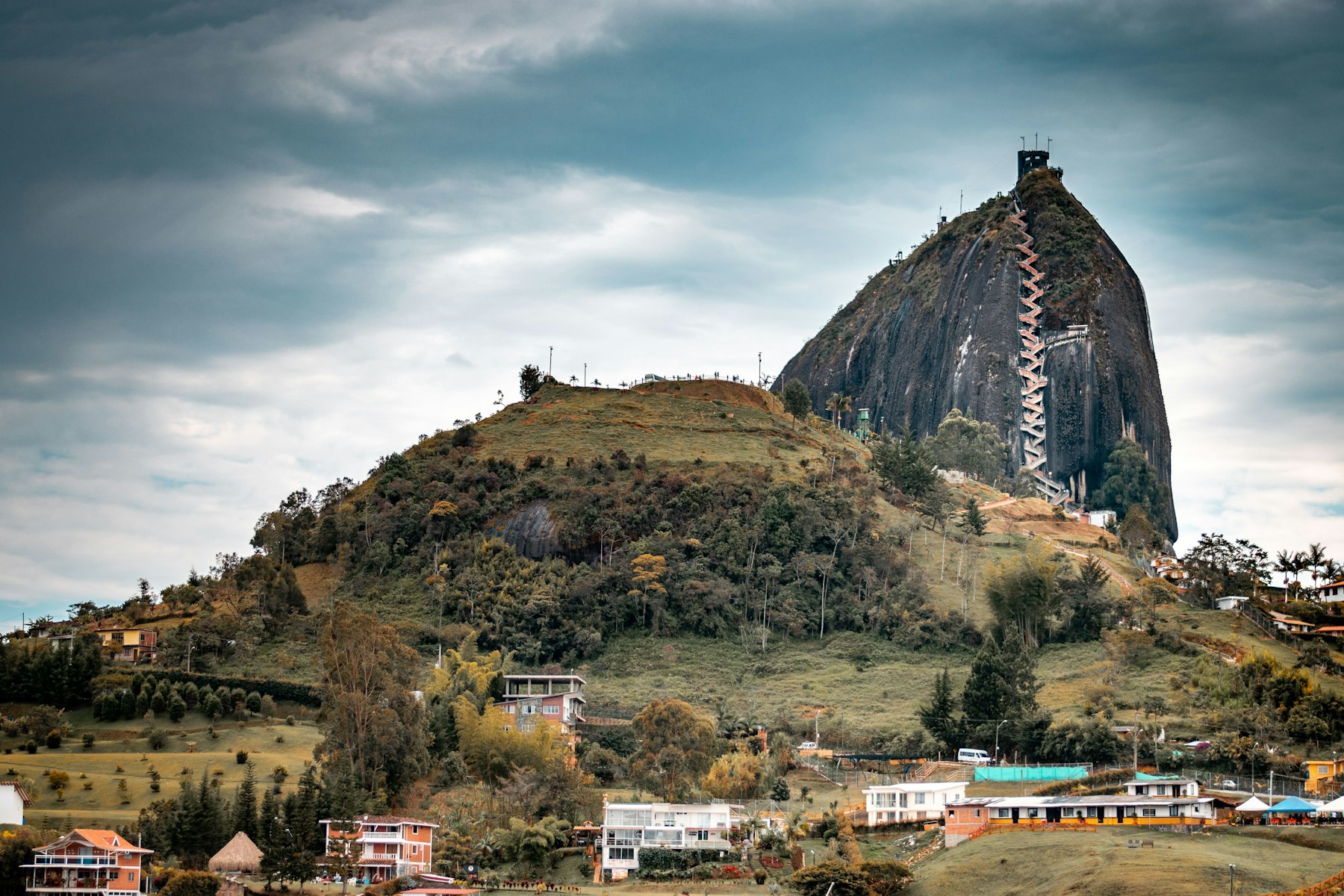
Guatape is the day trip. Two hours from Medellin. A seven hundred step staircase zigzagged up a granite monolith, and a town below it where every building has a painted relief along the bottom. It is the single most photographed thing in Colombia after the walls of Cartagena.
The map
Colombia Place by Place
Eight places worth naming. Two of them plus the coffee region is a proper ten day trip. All eight is a month.


Anthem Oh gloria inmarcesible, played on every radio station at six in the morning and six at night by law. Language and money Spanish, some of the clearest in South America. The Colombian peso, with a lot of zeros.

Bogota
Cartagena

Coffee Region
Guatape

Medellin

San Andres
Santa Marta

Tayrona
Colombian Culture
A country that spent years being known for the wrong things is now one of the best comeback stories in travel.
Coffee is identity, not just export. the coffee triangle around Salento and Manizales is a UNESCO listed cultural landscape, not just farmland.
Medellin rebuilt itself in public. Comuna 13’s murals and escalators are the most visible sign of a city that turned its hardest years into something worth visiting.
The coast sounds different than the interior. vallenato and cumbia carry the Caribbean coast, while the Andean cities lean toward salsa and a slower pace.
Two coasts give it two personalities. the Pacific side is wetter, wilder and far less visited than the Caribbean beaches around Cartagena and Santa Marta.
Food
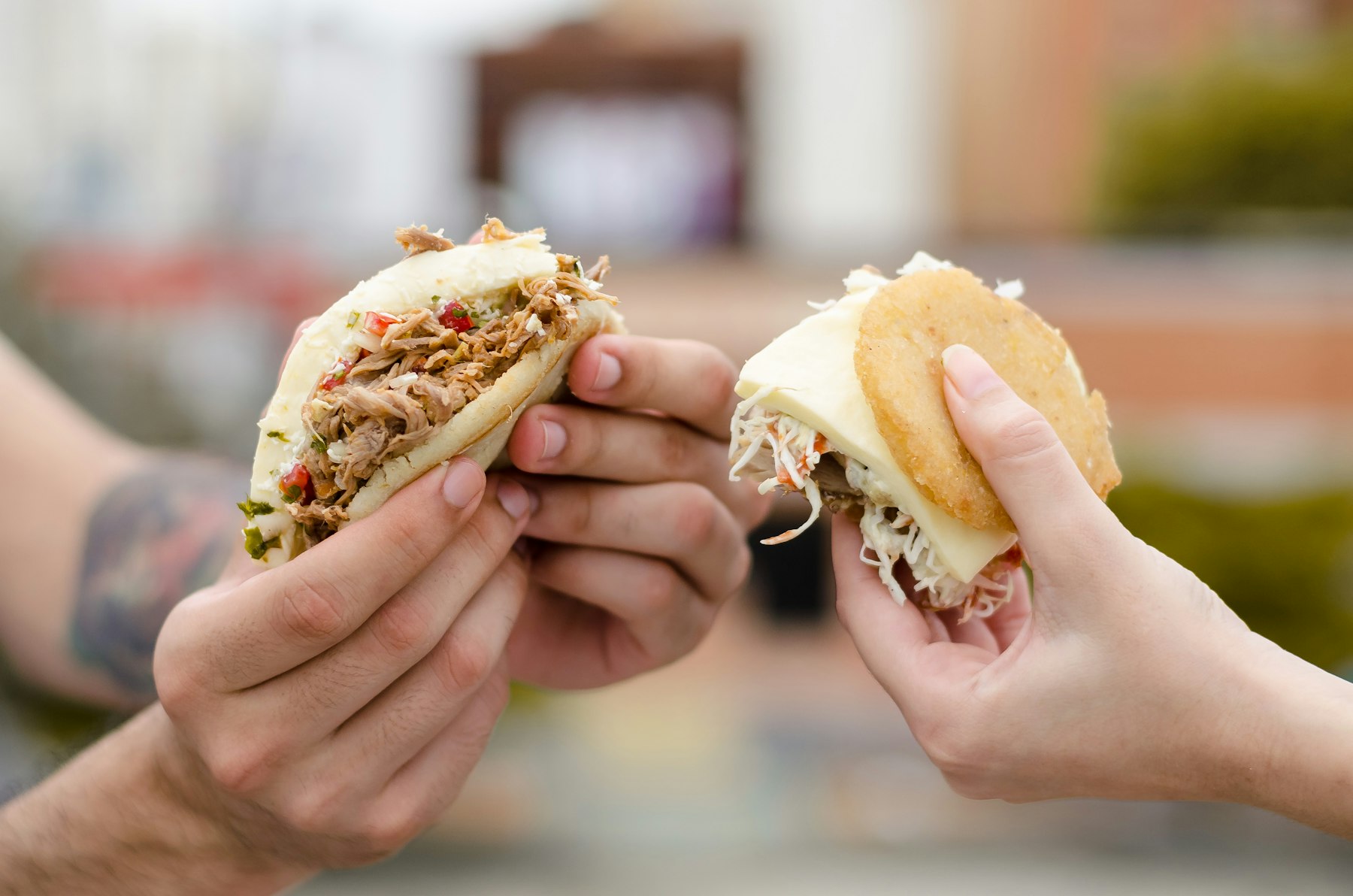
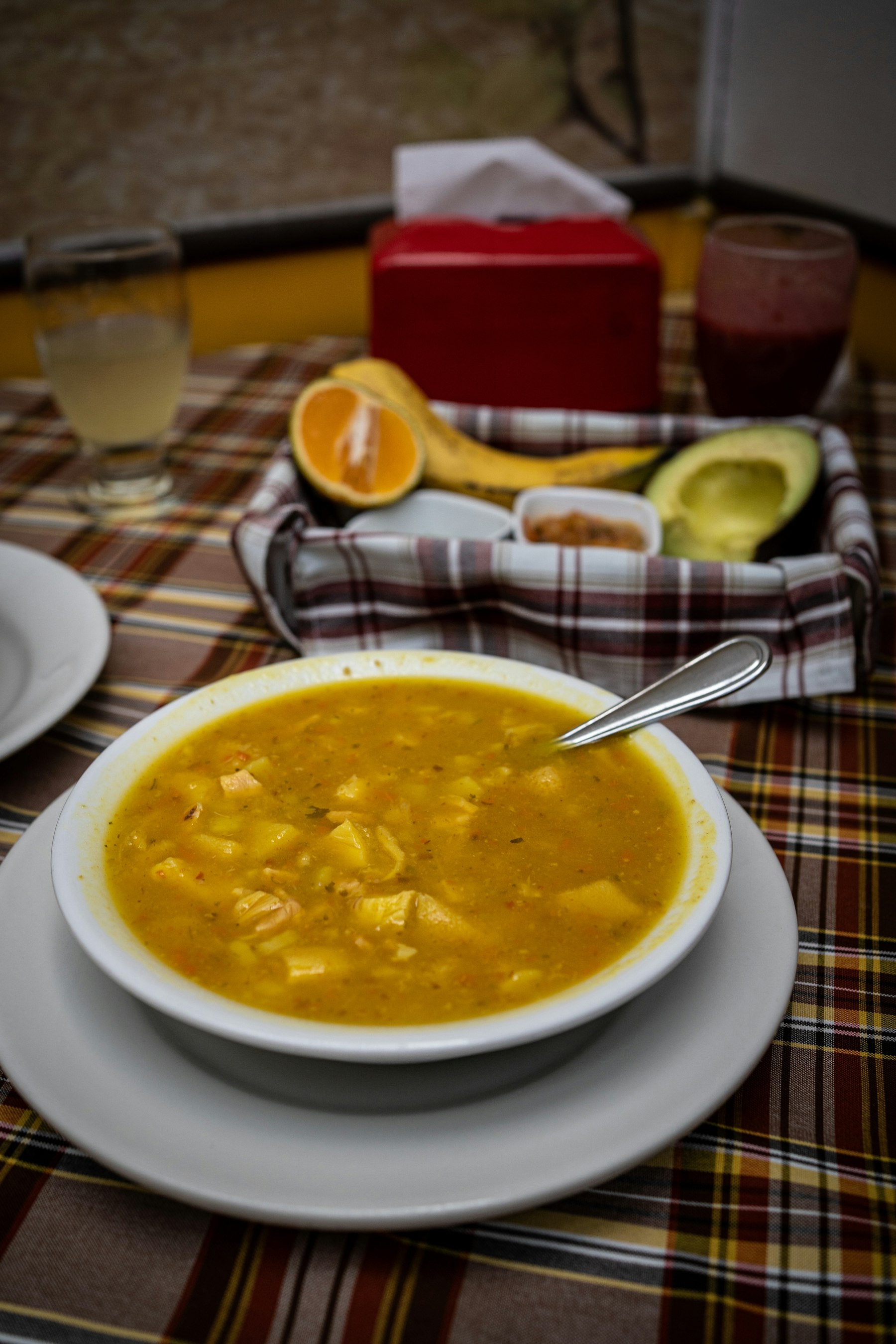
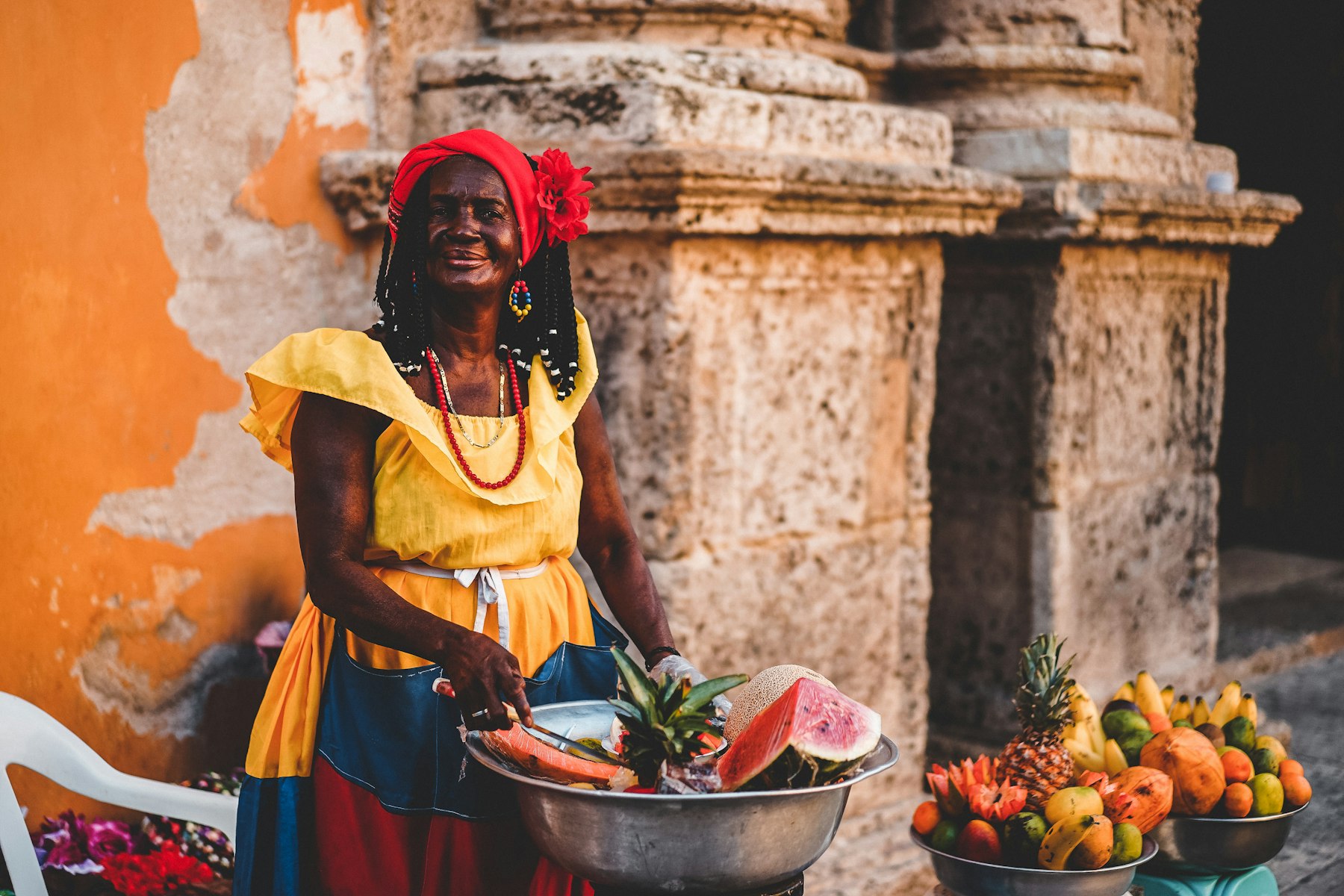
Colombian food is not spicy and it is not what people expect. It is corn, plantain, beans, rice, good beef and the best fruit you will ever eat. The regional cooking is much better than the reputation, and the fruit alone is worth the trip. Ask for the hot sauce on the side, because it will not arrive otherwise.


Getting Around
Fly between regions and it is cheap. Avianca, LATAM, Wingo and Avianca low cost cover everything. Bogota to Cartagena or Medellin to Pereira is an hour and often under a hundred dollars. Colombia is the least painful South American country to move around by air.
Do not drive between cities. The mountain roads are slow, the trucks are slower, and what looks like two hundred miles is six hours. In the coffee region a car or a driver for a few days is useful, and nowhere else.
Medellin has a real metro and Bogota does not. Medellin metro plus the cable cars is clean, cheap and safe. Bogota has the TransMilenio bus system, which is crowded and pickpocketed. Use ride apps in Bogota.

Tayrona. The Caribbean coast most people do not picture when they hear Colombia.
Money and Practical Basics
Pesos, and carry small notes. Cards work in cities and hotels and not at street stalls or small towns. The numbers look alarming because a coffee is six thousand pesos. Take cash out at a bank ATM inside a branch rather than one on the street.
Tap water is drinkable in Bogota and Medellin., and it surprises people. On the Caribbean coast and in small towns, stick to bottled.
No visa for most Western passports. Ninety days on arrival for United States, Canadian, UK and EU visitors. Yellow fever certificate if you are going to the Amazon or some national parks including parts of Tayrona, so check that leg specifically.
Spanish, and clearly spoken. Colombian Spanish is widely considered the clearest in Latin America, which makes it the best country on the continent for a family that is learning. English drops off fast outside hotels.
When to Go
Colombia sits on the equator, so it does not have seasons in the way you are used to. Altitude decides the temperature and the rain decides the calendar.
December to March is the dry season and the best window. Least rain almost everywhere, Caribbean at its best, and the country in a good mood. It is also peak, and Christmas through mid January is fully booked and priced accordingly.
July and August are a second dry spell. Colombians call it the veranillo. Good weather, and it lines up with the northern school breaks, which is convenient. Cartagena is at its most brutal for heat.
April to May and October to November are the wet ones. Afternoon downpours rather than all day rain, everything is greener, and the prices are noticeably lower. Perfectly travellable if you are flexible.
Routing Colombia
The country’s three big anchors are connected by flights, not roads, and that should shape the plan.
Bogota, Medellin and Cartagena are each their own stop. the terrain between them is mountainous enough that flying, not driving, is the normal way to connect them.
The coffee region sits between Bogota and Medellin. Salento and the Cocora valley work well as a stop on the way between the two, two or three days is enough.
The Caribbean coast is its own beach block. Cartagena, Tayrona and Santa Marta pair naturally together for a beach heavy back half of a trip.
The Amazon is a real extension, not a side trip. Leticia requires its own flight and its own days, treat it as an addition rather than folding it into a shorter trip.

Guatape. 740 steps, and the kids will beat you to the top.
Regions at a Glance
The Caribbean Coast
Cartagena, Santa Marta, Tayrona. Colonial, hot, colorful.
The Coffee Region
Salento, Armenia, Manizales. Cool hills, coffee farms, the wax palms.
Medellin and Antioquia
The city of eternal spring, Guatape, cable cars over the hills.
Bogota and the Andes
The capital at eight thousand feet, the gold museum, the salt cathedral at Zipaquira.
Where to Go in Colombia
Colombia is three trips in one country. Five places, and ten days does three.
Cartagena. Three nights. The walled city early and late, a day boat to the Rosario islands, a pool for the middle of the day.
Salento and the Cocora valley. Three nights. Wax palms two hundred feet tall, a coffee farm tour, a finca with a pool.
Medellin. Two nights. The metro cable up to the hill neighborhoods, Comuna 13 with a guide, a day at Guatape to climb the rock.
Bogota. Two nights. The gold museum, Monserrate by cable car, the salt cathedral an hour out.
Tayrona National Park. A day or a night. Jungle down to Caribbean beaches, monkeys overhead, a real walk in.
Doing It With Children
Colombia with kids is easier than people expect once you stop picking cities and start picking altitude. A colombia family itinerary works best in stacked climates, hot coast then cool mountains. I have helped families build a family trip to colombia around exactly that rhythm.
It works from about five up
Short flights, warm people, easy food, and no serious altitude outside Bogota. Colombia is one of the gentler introductions to South America for a young family.
Pick your altitude, not your month
Cartagena thirty two degrees, Medellin twenty two, Bogota fourteen. You can have any climate you want in the same week and the flights between them are an hour. Use that deliberately.
The fruit does a lot of heavy lifting
A child who will not try a new dinner will absolutely try nine unfamiliar fruit juices. It is the easiest food adventure in the country.
The Caribbean Coast Beyond Cartagena
Most people fly into Cartagena, spend four days inside the walls and go home. The four hours of coast east of it is where the country stops being a city break.
Tayrona is the headline and it takes planning. Jungle running straight down into the Caribbean, palms leaning over the sand, and the walk in from the main gate is about two hours on a hot forest path. Not every beach is swimmable, because the currents on this stretch are truly dangerous and the park marks which ones are safe. Cabo San Juan is the postcard bay and the one worth the walk. There is a horse option for the way in and a boat option for the way back, and with children under ten I would take both.
The park closes. Tayrona shuts for several weeks a year so the indigenous communities who own this land can carry out their own ceremonies and let the ground rest. The closures move, so check the dates before you build an itinerary around it, and if it is shut, do not sulk. Go to Minca instead.
Minca is the one people come back raving about. It is a small town in the mountains behind Santa Marta, about forty five minutes up a rough road, and it is fifteen degrees cooler than the coast. Coffee farms, waterfalls, hammocks strung over a valley, and a bird list that will convert a child who has never looked at a bird. Two nights here fixes the heat exhaustion that four days in Cartagena creates.
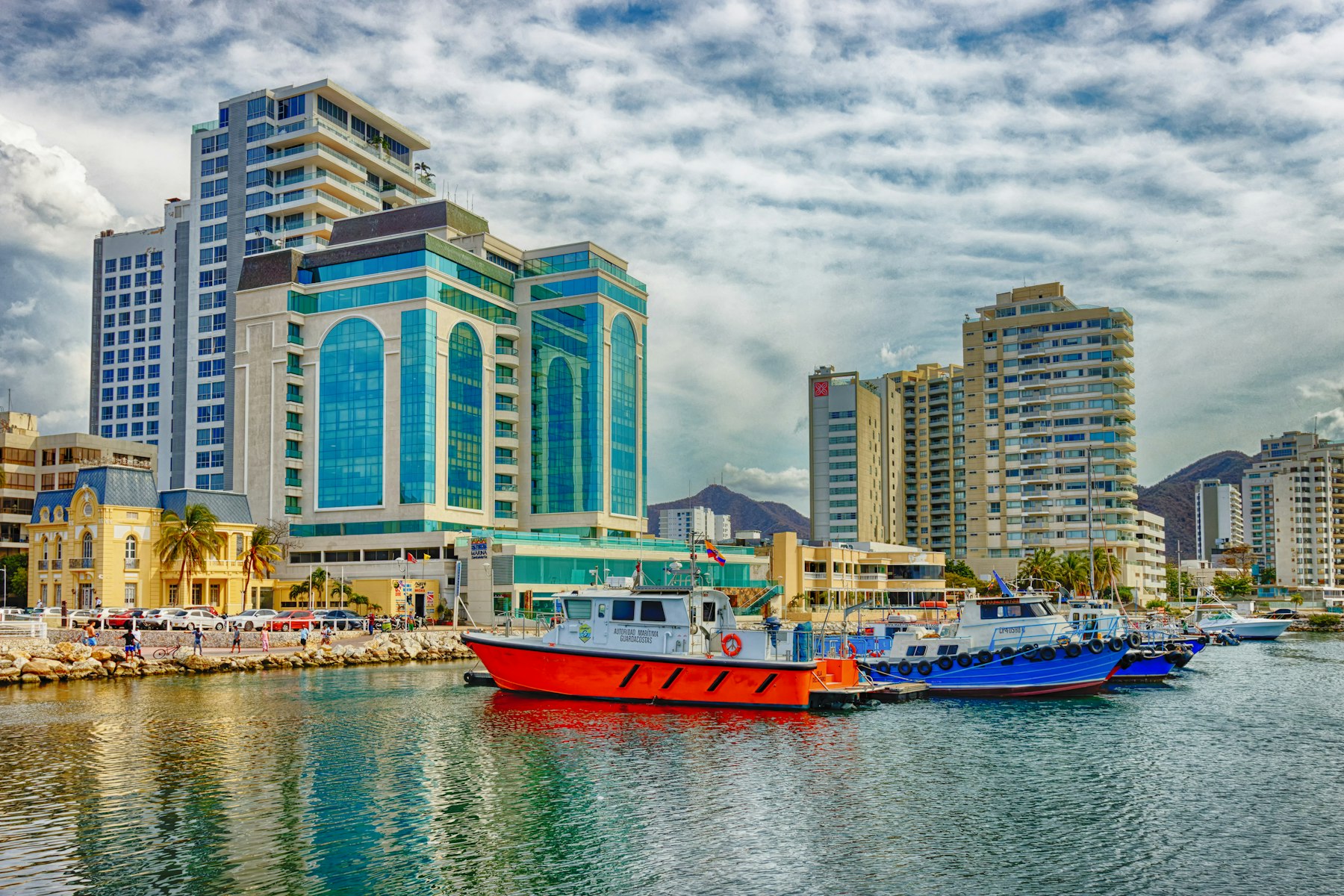
Santa Marta is the base, not the destination. It is where the airport and the supermarkets are. Palomino, further east, is a long wild beach with a river you can float down on an inner tube, which is one of the great cheap afternoons in South America.
💉 The vaccination note. Yellow fever is not required to enter Colombia and is not needed for Bogota, Medellin or Cartagena. It is recommended for the Amazon and the jungle parts of the Caribbean coast, and the certificate can be asked for at national park gates and on domestic flights into those areas. It has to be given at least ten days before you need it, so this is a decision you make weeks out, not the night before.
The Wildlife Calendar, Because Colombia Runs on One
This country has more bird species than any other on earth and several of its best natural events only happen for a few weeks a year. If any of these matter to your family, they set your dates rather than the other way round.
🐋 Humpback whales, July to October. They come up from Antarctica to calve in the warm water on the Pacific coast, and Nuqui and Bahia Solano are where you go. This is not a boat trip past a distant fin. Mothers and calves come close, and the season is reliable. The Pacific coast is remote, reached by small plane, with simple lodges and no roads, which is exactly why it is still like this.
🌈 Cano Cristales, roughly June to November. A river in the Meta region that turns red, pink, yellow and green for a few months a year when a particular aquatic plant flowers. It is dry the rest of the year and simply a river. Access is by flight to La Macarena with a permitted guide and the daily numbers are capped. Older children love it. Under eight it is a long way to go to look at a river.
🦜 Birds, all year, everywhere. Around one in five bird species on the planet lives in Colombia. You do not need a specialist trip. A morning at a coffee farm in the Andes or a lodge in Minca will produce toucans, tanagers and a dozen hummingbirds on a feeder without leaving the terrace. Bring binoculars per child, as always.
🌸 And the flower festival. Medellin’s Feria de las Flores runs for a week in August, ending with hundreds of farmers carrying enormous flower arrangements on their backs through the city. It is the single best week of the year to be in Medellin and hotel prices know it. Book six months ahead or come a fortnight either side.
Who Colombia Suits, and Who Should Skip It
Book it if you want warmth, value and short flights. It is the cheapest of the six big South American countries by some distance, the closest to the United States, and the easiest first step onto the continent for a family.
Skip it if you need everybody at home to be comfortable with it. This is a real thing. If grandparents are going to spend the fortnight anxious, that cost is real even if the risk is not. Costa Rica gives you a similar trip with none of that conversation.
Skip it if you came for ruins or big wildlife. There is no Machu Picchu here and there is no Pantanal. Colombia is cities, coast, coffee and color.
How it compares to its neighbors. Peru and Ecuador have the history, Brazil and Argentina have the scale, Colombia has the value and the ease. It is closer to the Caribbean guides on this site in feel than to the Andean ones, and it costs about half what Chile or Argentine Patagonia costs.
Worth the Splurge in Colombia
A few places where paying more changes what the day actually looks like.
A private guide for Ciudad Perdida. the trek to the Lost City requires a guide by law, and a smaller private group moves at your family’s pace instead of a stranger’s.
A boutique hotel inside the walled city. staying inside Cartagena’s walls instead of outside them turns the old town from a day visit into where you actually live for a few days.
A working coffee farm stay. a night or two on a finca that still grows and processes its own coffee is a different experience than a roadside tasting stop.
A private Comuna 13 guide. a guide who grew up in the neighborhood tells a version of the story a group tour cannot.
What Surprises First-Timers
Bogota is cold. Eight thousand six hundred feet, sweaters in the evening, and the kids feel the altitude the first day. Take it slow and drink water. Cartagena is the opposite, hot and heavy from the minute you land.
The coffee region feels like a different country from the coast. Green hills, cool air, fincas with pools, and nobody in a hurry. It is the part of Colombia I send families to when they want to slow down.
How normal it feels in the places families go. Guides, daylight, the tourist neighborhoods. Ask at the hotel each morning where to walk and where not to, the same as anywhere. The old reputation and the current trip are not the same thing.
Where I Would Start
First time in Colombia with kids? Cartagena, the coffee region, Medellin. Three flights, three climates, ten days.
Cartagena. Three nights. The walled city early and late, a boat to the Rosario islands, a pool for the middle of the day.
Salento. Three nights. The wax palms of the Cocora valley, a coffee farm tour, a finca with a pool and horses.
Medellin. Two nights. The metro cable over the hills, Comuna 13 with a guide, a day at Guatape to climb the rock.
Numbers Worth Knowing
Colombia, by the numbers
Ways to travel
Colombia is not one kind of trip
How you move through it changes the trip more than which places you pick.
Ocean Cruising
Cartagena is a regular Caribbean cruise stop, and a short cruise or island hop can add San Andres or the Rosario Islands to a Colombia trip.
For example: a Caribbean cruise with a call in Cartagena.Road Trips
The coffee triangle around Salento and the Cocora valley is made for a slow self driven loop through small towns and working coffee farms.
For example: a self driven loop through Salento and the Cocora valley.Independent Travel
Bogota, Medellin and Cartagena are connected by short, cheap domestic flights, which makes city hopping on your own straightforward.
For example: flying yourself between Bogota, Medellin and Cartagena.Guided and Small Group
The Ciudad Perdida trek to the Lost City requires a licensed guide by law, and it is worth doing properly with a small group.
For example: a multi day guided trek to Ciudad Perdida, the Lost City.Explore by interest
What families come to Colombia for

Sports
Cycling
Colombia has produced Tour de France winners, and the weekly Ciclovia closes Bogota’s streets to cars for riders and runners.

History
Cartagena’s walls
The walled colonial city dates to 1533, ringed by Spanish fortifications built to hold off pirates and rival empires.

Food and Drink
Arepas and coffee
Arepas, bandeja paisa, ajiaco soup, buñuelos, and coffee grown a few hours from wherever you happen to be drinking it.

Nature and Wildlife
Second most biodiverse on earth
Home to more bird species than any other country, nearly 1,950 of them.
Something unexpected
Only in Colombia

Ride up through it
Comuna 13, Medellin
Public escalators built into a hillside once known for violence now carry visitors past murals and street art, with local guides who lived the transformation themselves.

Climb the staircase
The Rock of Guatape
A 740 step staircase built into a giant granite rock outside Medellin ends at a view over a maze of turquoise lakes and green islands.

Walk among them
The Wax Palms of Cocora
Colombia’s national tree grows taller here than almost anywhere else, some over 200 feet, standing in a valley made for a slow morning hike.

Wander its streets
La Candelaria, Bogota
Bogota’s colonial old quarter is a maze of steep painted streets, street art and cafes, and the best introduction to the capital on foot.
Pair it up
Countries That Pair Well With Colombia

Ecuador
A short hop south, the same Andean cities done smaller, and the Galapagos if the budget stretches. The natural second half of a Colombia trip.
Read the guide
Costa Rica
A short flight north and a completely different kind of week. Rainforest and volcanoes instead of cities and coffee towns.
Read the guide
Plan Colombia with Nicole
Tell me who is coming, and when.
Colombia can be a week focused on Bogota, Medellin and the coffee region, a Caribbean coast trip built around Cartagena, Tayrona and Santa Marta, or a longer trip that combines both with an Amazon extension. Which one makes sense depends on how much flying you want to do and how long you have. Send me the ages, the dates, and what you are hoping this trip feels like. I will come back with what is really available.
Nicole Damiano, ASTA Verified Travel Advisor with FG Luxury Travel.
Colombia, Answered
Is Colombia actually safe for a family trip? The tourist regions are, and the transformation is real and measurable. Medellin was the most dangerous city in the world in 1991 and its homicide rate has fallen by well over ninety percent since. Cartagena, Medellin, Bogota and the coffee region have been ordinary tourist destinations for years. The US advisory is by department, not by country, and certain border and rural areas still sit in a do not travel band, which has nothing to do with where you would actually take your kids.
Do we need a visa? Not for most Western passports. US, Canadian, UK and EU visitors get ninety days on arrival. If you are heading to the Amazon or parts of Tayrona, check if a yellow fever certificate is required for that specific leg.
When is the best time to go? December through March is the dry season and the best window, though it is also peak, and Christmas through mid January books up fast and prices climb. July and August are a second dry spell that lines up nicely with northern school breaks. April, May, October and November bring afternoon downpours rather than all day rain, plus lower prices, and are perfectly travelable if your schedule is flexible.
Medellin or Bogota with kids? Medellin is the easier one. It sits at fifteen hundred meters with spring weather every day, and the cable car network doubles as sightseeing. Bogota is the harder one and still worth a day, sitting at twenty six hundred meters with real altitude and often gray skies, but the Gold Museum is one of the great museums anywhere.
Is the coffee region worth it with kids? Yes, it is the family sweet spot. The Zona Cafetera around Salento sits fifteen hundred meters up so the temperature stays mild, and a working finca stay lets kids pick, pulp and roast their own coffee. The Cocora valley walk under the sixty meter wax palms is an easy jeep ride from Salento, with a long loop and a short loop that gives you the same view.
How do we get around the country? Fly between regions. Avianca, LATAM and Wingo make Bogota to Cartagena or Medellin to Pereira an hour long flight, often under a hundred dollars, and Colombia is the least painful South American country to move around by air. Do not drive between cities, since mountain roads turn two hundred miles into six hours. Medellin has a real metro plus cable cars that are clean and safe, while Bogota relies on the crowded TransMilenio bus system, so stick to ride apps there instead.
Keep exploring from Colombia
Cities, neighbors, and the wider region.
Click any card to open that page
 Argentina
 Brazil
 Chile
Chile Ecuador
 Peru
Peru All of South America
 Explore the world
 The Travel Library