
Hohensalzburg Fortress above Salzburg on a gray October morning. Nine hundred years old and still the first thing you see · photo: ours, 2010
Austria Family Travel Guide
“This part of Austria seems to be a pleasant place to be. There were no weird feelings or non smiles. Everyone was helpful, which we have not found everywhere.”
Most open the last week of November. Nuremberg November 27, Prague November 28, Vienna's Schönbrunn November 6. Read the answer
2026 sailings run November 23 to mid December, from about $2,999 per person. Read the answer
Nicole Damiano, ASTA Verified Travel Advisor with FG Luxury Travel
Do we need anything to enter, beyond passports?
Not a visa. US passport holders get 90 days in any 180 day period across the Schengen area, and this country counts toward that same 90 days. Your passport has to be valid for at least three months beyond the day you leave Europe. Check the kids' passports too. Child passports are only good for five years and they expire quietly. Since October 2025 the EU has been taking fingerprints and a facial image at the border under the new Entry and Exit System. No fee, no form. The first arrival can be slower than you remember, so build a real cushion into any connection. ETIAS, the paid travel authorization you may have read about, is not running yet. It is expected in late 2026. When it starts I will tell every family I am working with, well before they fly.
Vienna or Salzburg, if we only have time for one?
Salzburg with younger kids, Vienna with older ones. Salzburg is small enough to walk in a morning, the fortress has a funicular, and the lake district is forty minutes away. Vienna is a capital. Museums, coffee houses, the Spanish Riding School. It rewards a ten year old and wears out a five year old.
Is the Sound of Music tour worth it?
If anyone in the family knows the songs, yes, and do not overthink it. Four hours, the gazebo, the lake, the abbey steps. The kids sing on the bus. If nobody has seen the film, skip it and spend the money on a day at Wolfgangsee instead.
Can we do Austria without a car?
Yes, easily. Vienna, Salzburg and Innsbruck are all on the fast train line and the stations are in the middle of town. OBB trains are clean, on time and cheap when you book a few weeks ahead. You only need a car for the lake district or a mountain village. Even then, three or four days of rental is plenty. We drove the whole country in an RV in 2010 and I would still put a family on the train for the cities.
How many days does Austria need?
Seven is comfortable. Three in Vienna, three in Salzburg, one for the lakes or Hallstatt. Ten lets you add Innsbruck and a real mountain day. Five works if you pick one city and stay put.
Nicole’s Perspective
Why families hire me for Austria

We drove into Austria in a rented RV in October 2010 and it was the easiest country on the whole trip. Six weeks, ten countries, one small red bus with German plates. Austria is the place I remember exhaling.
Salzburg came first, on a Sunday, which turned into our favorite day to walk into a European city. The shops were shut. The locals were hiding somewhere. The town was basically ours. We found parking without a fight, which after what Prague did to us I do not take for granted. Huge churches, bells, open squares with a statue in the middle of every one. Horse drawn carriages. Actual children in lederhosen. Pretzels the size of a dinner plate and chocolate with Mozart’s face on it.
We did not pay to go inside a single museum in Salzburg. We looked from the outside and kept walking. That is still how I would start a family in a new city. Walk it first, buy tickets on day two.
Vienna came at the very end, after we had already decided to cut the trip short and go home. Adam wrote that one up and he called it a diamond. Not one building we walked past was ordinary. The opera house and the palace were the most impressive thing in six weeks, and we had just come from Italy.
Fifteen years later I sell Austria to client families and I sell it with confidence, because it is one of the few countries in Europe where beautiful, easy and reasonable all overlap. It is not cheap. It is also not Switzerland, and that gap is the whole argument for going. A family trip to Austria costs less than an Austria family vacation timed to ski season, and summer is when I book most of mine.
Beyond the Bookshelf
Stories to carry you deeper into Austria. This is our own family shelf, real books, films, music and a cookbook tied to the place, not a generic reading list. Read it before you go and the trip means more when you get there.

- The World of YesterdayStefan Zweig
- A Concise History of AustriaSteven Beller
- Vienna: A Cultural HistoryNicholas Parsons
- The Story of the Trapp Family SingersMaria von Trapp
- Boris the Cat: The Little Cat with Big IdeasErwin Moser
- The New Sacher CookbookAlexandra Gürtler and Christoph Wagner
Book links go to Bookshop.org, which supports local bookstores. Film and music links go to JustWatch and Spotify. As an affiliate we may earn from qualifying purchases.
Why this country, for this family
Why Austria
 Poppy marks the family parts. Wherever you see her, that section is written for traveling with children.
Austria is the country people skip on the way to somewhere louder, and that is exactly why it works. You get imperial cities, real mountains and a functioning train system, without the crowds of Italy or the price tag of Switzerland. It sits in the shadow of its neighbors and it breathes because of it.
Who it is for. Families who want culture and mountains in the same trip and do not want to choose. Anyone traveling with a grandparent or a stroller, because the cities are flat, clean and easy and the mountains are reached by elevator rather than legs. Music families. History families. Anyone who found Italy exhausting and wants Europe at a calmer volume.
Who should skip it. Anyone chasing beaches or heat. Austria is landlocked and it is gray more often than the photos suggest. Skip it too if your kids need constant stimulation, because a lot of what makes Austria great is walking, looking and eating cake, and that is a hard sell to a nine year old on day four.
The trains actually work
Vienna to Salzburg is under two and a half hours, all day. You only need a car deep in the Tyrol.
Euros, not francs
Austria is in the eurozone and in Schengen. After Switzerland or Czechia the money stops being a math problem.
Music is not a museum here
Mozart, Haydn, Strauss and Mahler all worked here. Kids can catch a rehearsal or a short matinee for a fraction of an evening ticket.
We arrived on a Sunday, which has become one of our favorites to visit cities on. The tourism is light and most of the locals are hiding away somewhere.
Nicole Damiano, Salzburg, October 2010Where to go
Austria City by City
Austria is small and the trains are very good, so you can see a lot without moving hotels every night. These are the eight places I would build a first trip around. Pick two or three and do them properly. Ticking all eight is how you spend a week on trains and remember a blur.


Anthem Land der Berge, Land am Strome, land of mountains, land on the river. The words were changed in 2012 to include daughters as well as sons. Language and money German, with a soft Austrian accent, and easy English. The euro. A coffee house is a place to sit for two hours, not a place to hurry.

Graz
Hallstatt

Innsbruck

Melk
Salzburg
Vienna

Wachau Valley
Zell am See
Culture and Etiquette
Austrians are formal on the surface and warm underneath, and the order matters. You get the polite version first. My note from Salzburg was that there were no weird feelings and no non smiles, which we had not found everywhere else on that trip.
Greet the room. Walking into a shop or a small restaurant without saying Grüss Gott or Guten Tag reads as rude. It is a small thing and it changes how you get treated for the next ten minutes.
Volume is a real thing. Americans are loud here and everyone notices. Sunday is quiet by law in a lot of places. So is the middle of the afternoon in residential buildings.
A coffee house table is yours for hours. Order one thing, sit for two hours, read the paper on the wooden stick. Nobody rushes you and nobody expects a tip beyond rounding up. Do not order a drink to go and then sit down.
They are not German. Same language, different country, different history, different food names. Calling Austria a part of Germany is the fastest way to sour a conversation.
Sunday shuts down. Supermarkets close. Most shops close. Restaurants and museums stay open. Plan your grocery run for Saturday or you will be eating from a train station.
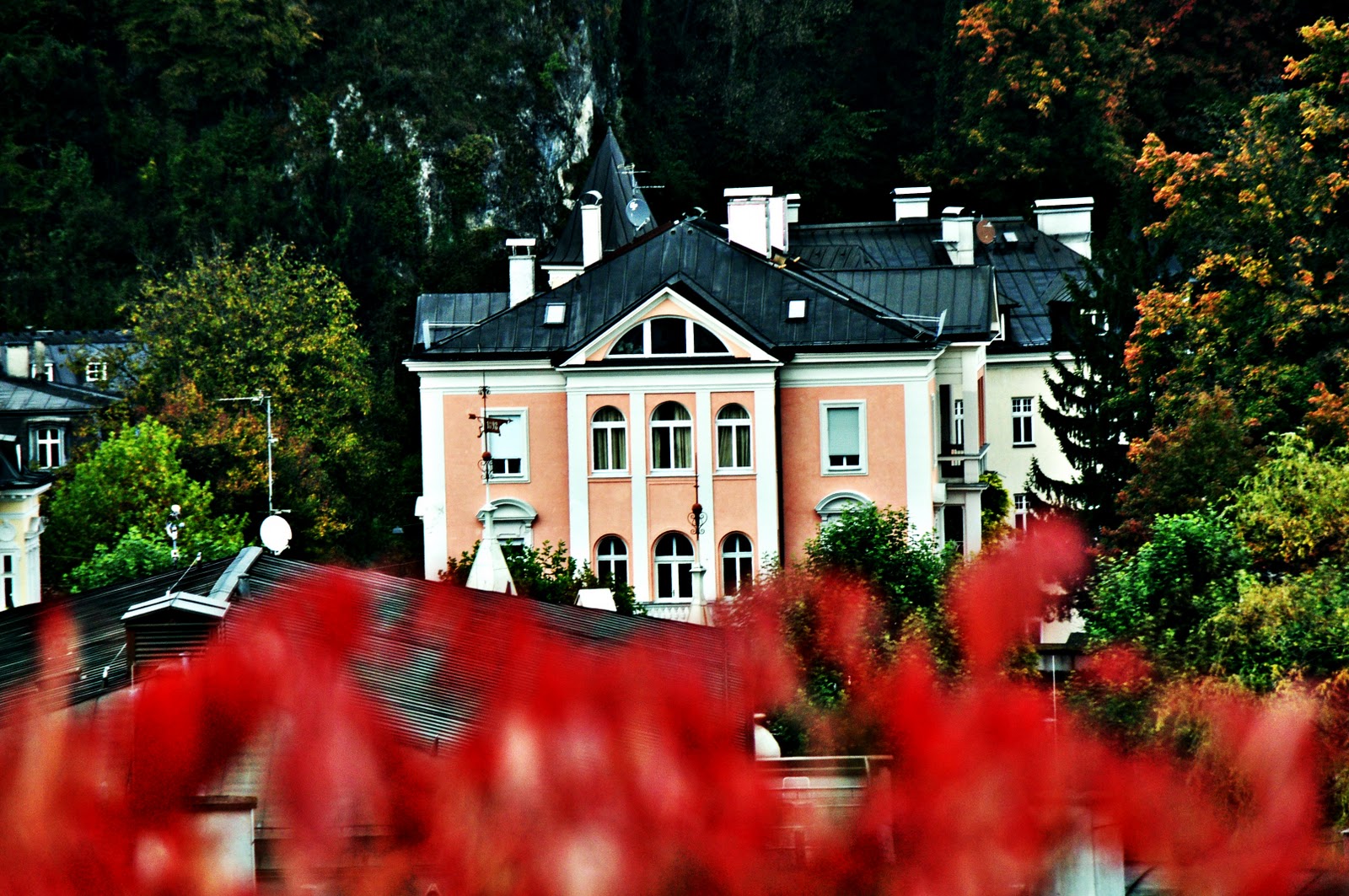
Just outside the old city in Salzburg. The grass is that green and the houses really are that color. Nobody edited this.
Food
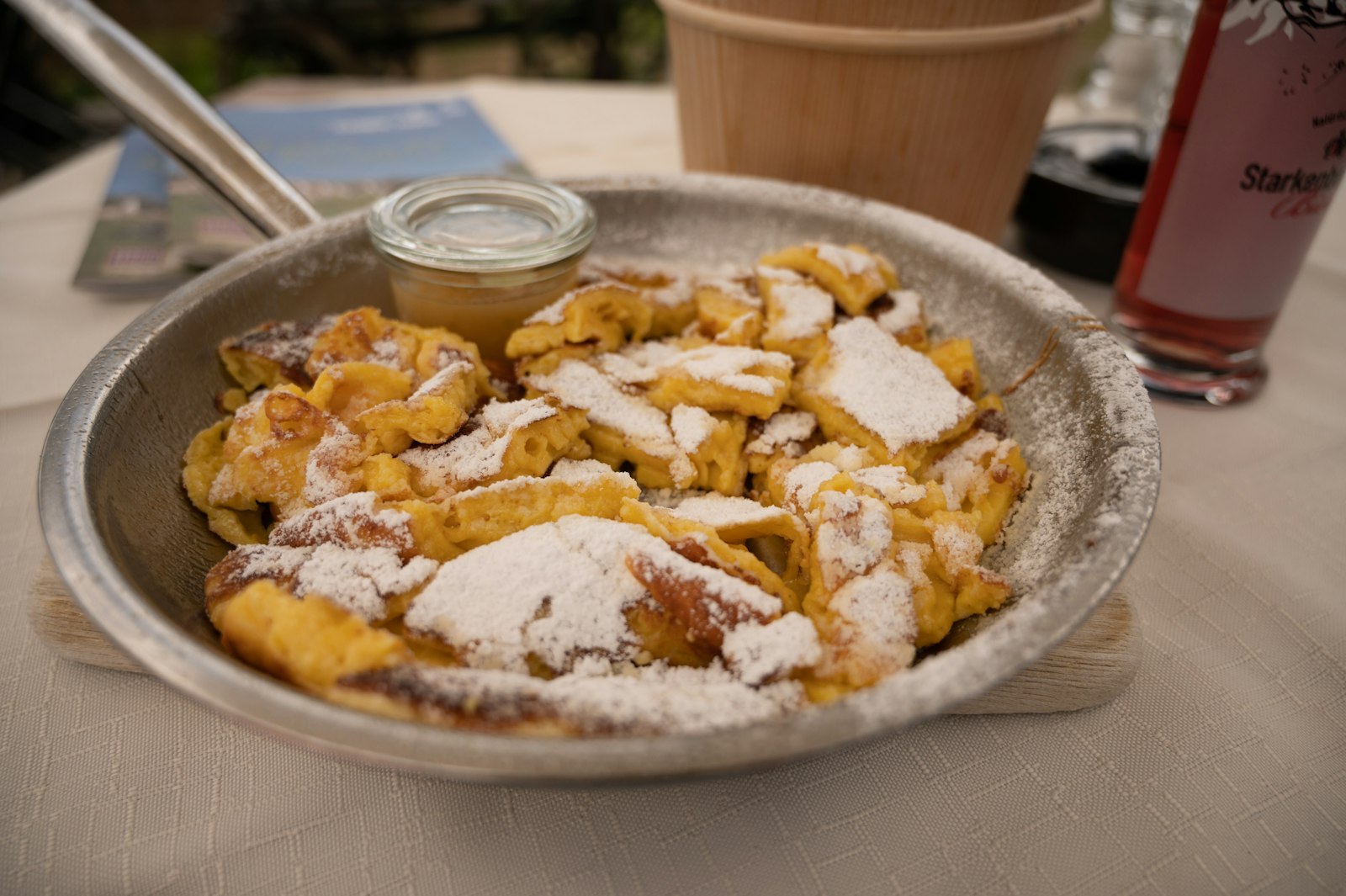
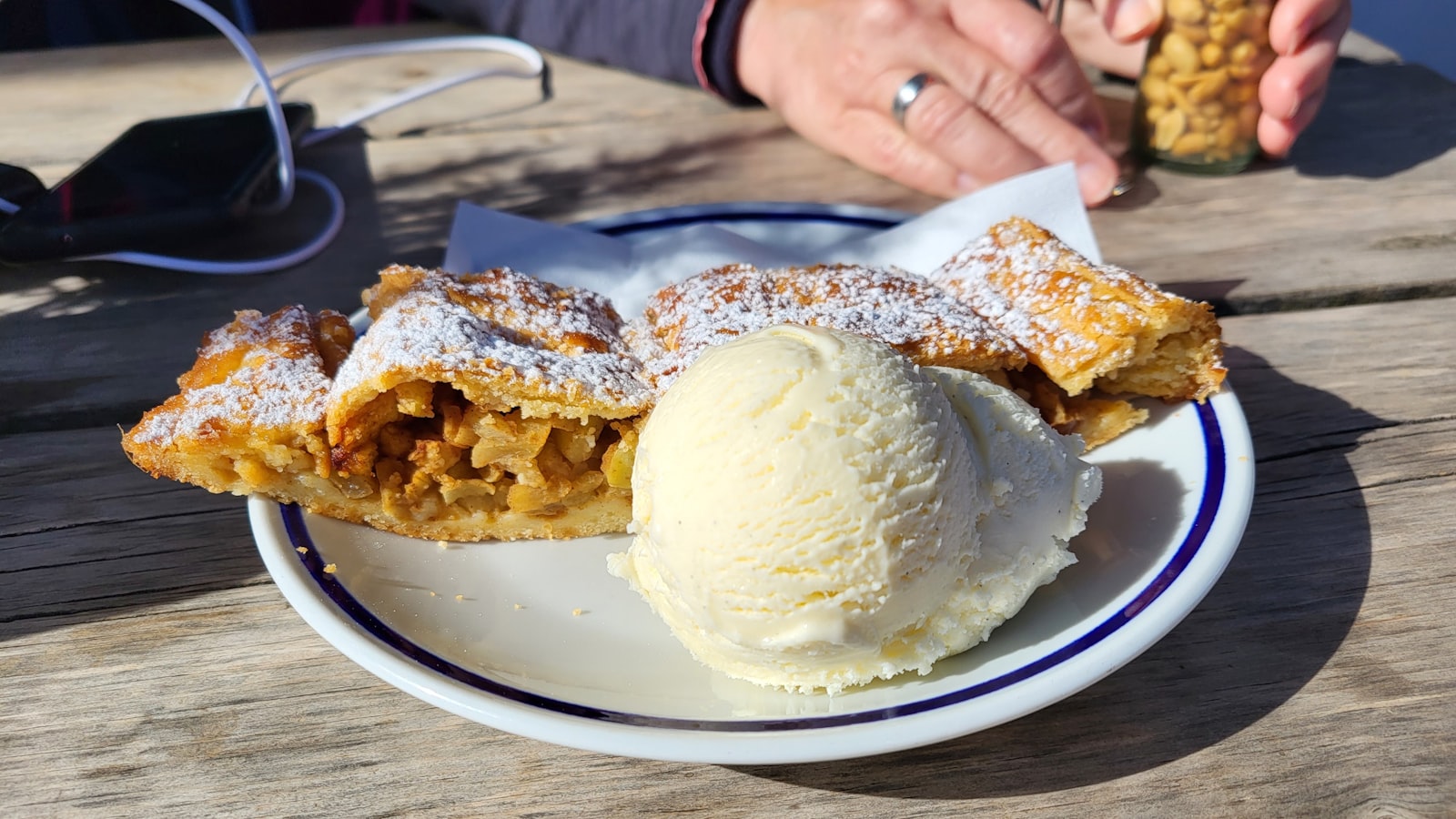
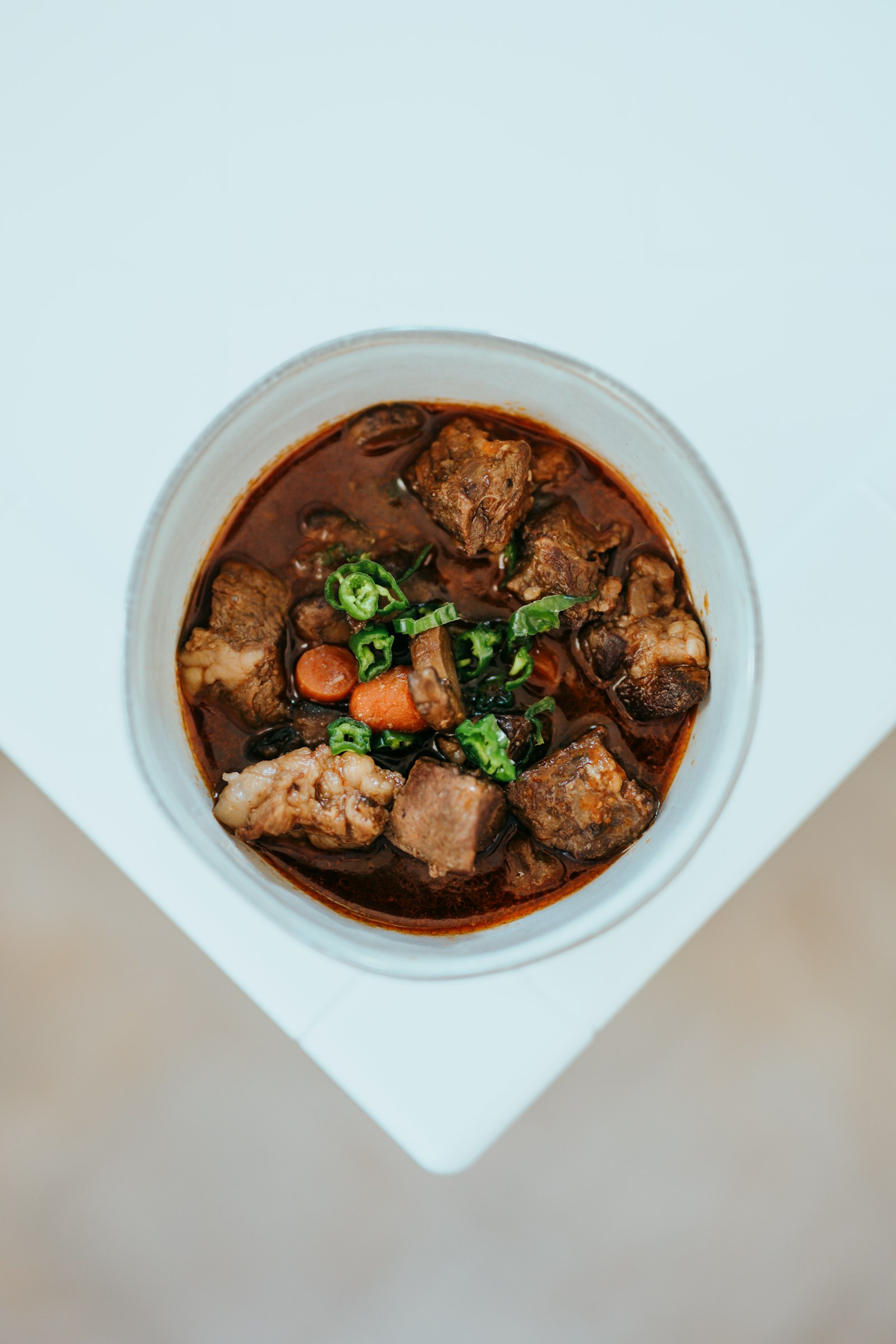
Austrian food is brown, breaded and enormous, and children love it. This is the country where the picky eater on your trip finally relaxes. It is also the country where dessert is treated as a legitimate meal, which I fully support.
Nobody warns you about portion size. One schnitzel will feed an adult and a child, and most places will not blink if you ask for an extra plate. That habit takes a family dinner from ninety euros to sixty.
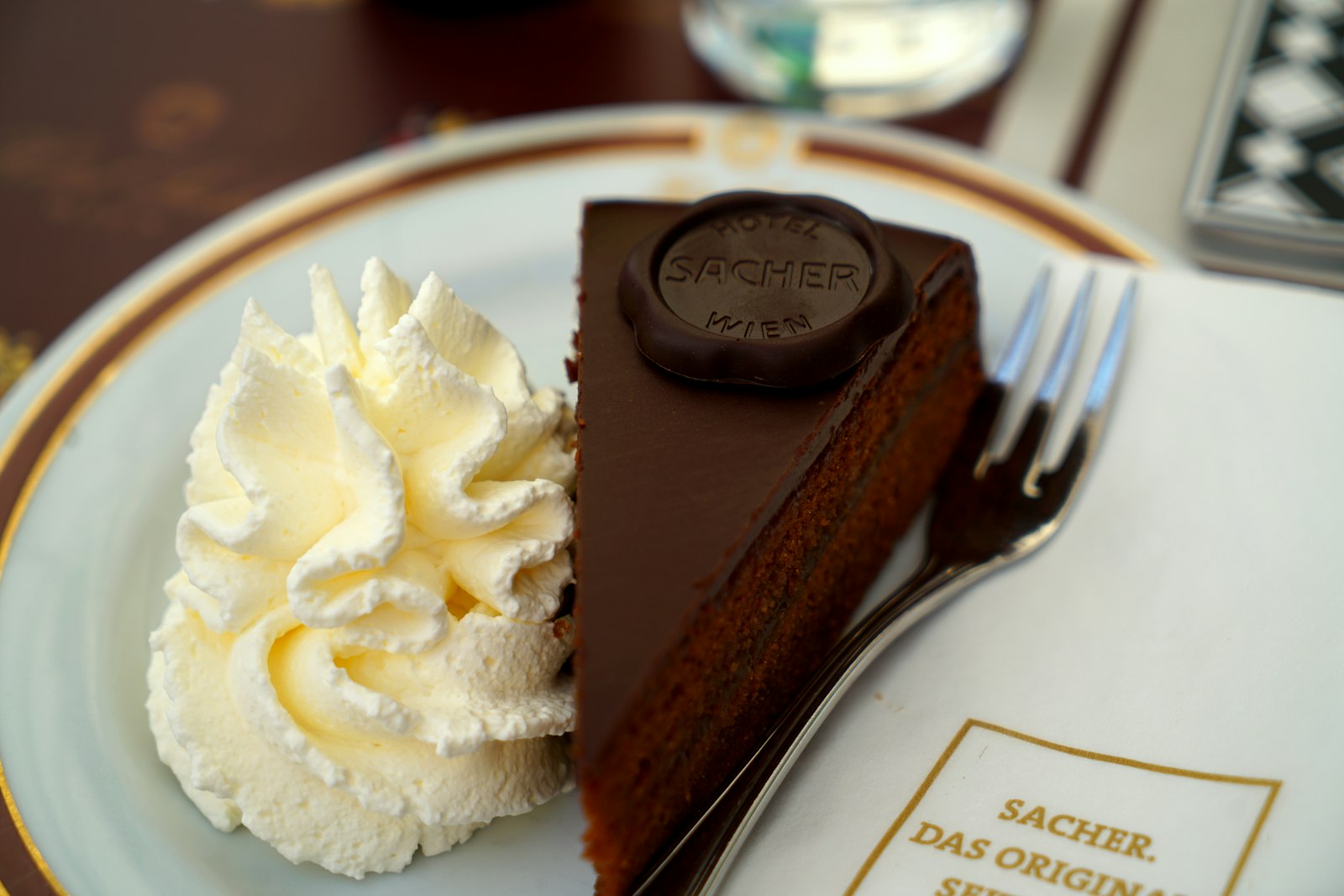
Then there is cake. A Viennese coffee house is not a snack stop, it is an afternoon. One slice each and a melange, and the kids can fall apart quietly in a room where nobody is watching. It costs less than a museum ticket and buys two more hours of goodwill.

Getting Around
Take the train. That is the whole recommendation for most families, and it is not close.
OeBB runs the national network and the trains are clean, punctual and cheap if you book ahead. Sparschiene fares open about six months out and a family of five can cross the country for less than the fuel would cost. Vienna to Salzburg is roughly two hours twenty, Salzburg to Innsbruck about two. Vienna city transport is one flat fare covering metro, tram and bus, and under sixes ride free.
If you do drive, buy the vignette. Austria requires a motorway sticker and it is well signed at every border, which I say with feeling because the country next door is not. Ours cost about seven euros for ten days in 2010. It is around ten now. Buy it at the last gas station before the border, stick it on the windscreen, and do not gamble on this. We learned what happens when you gamble on this in Czechia.
One more driving note. Some Austrian mountain passes are toll roads on top of the vignette. The Grossglockner is the famous one.
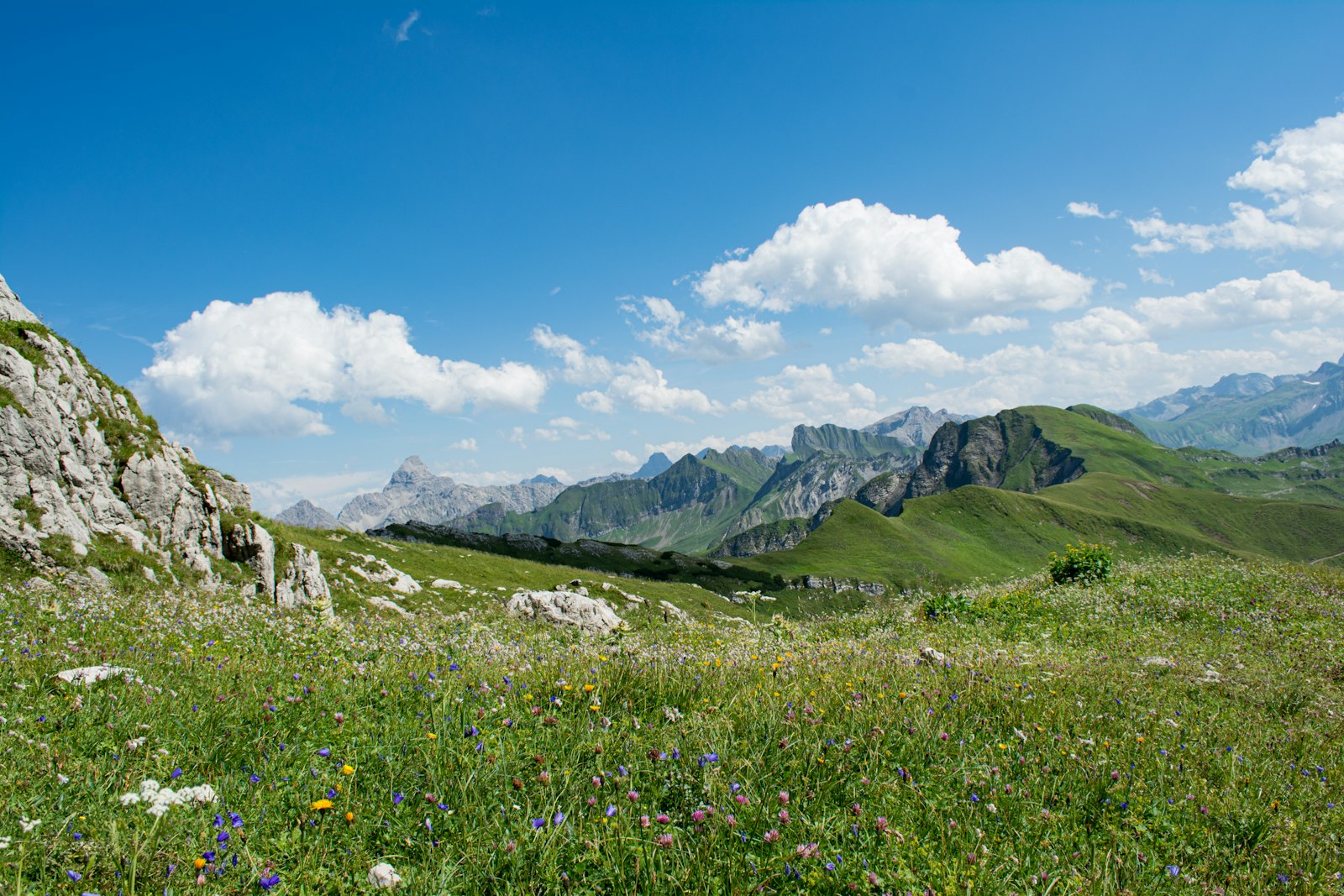
Austrian alpine summer. The elevators run, the meadows are full of flowers and the ski crowds are somewhere else entirely.
Money and Practical Basics
Euro, and cash still matters. Cards work almost everywhere in Vienna and Salzburg. Smaller towns, mountain huts, market stalls and some bakeries are cash only and are not embarrassed about it. Carry fifty or sixty euros.
Tipping is rounding. Five to ten percent, handed to the server, not left on the table. Say the total you want to pay when you hand over the money rather than waiting for change.
Vienna tap water is piped in from the Alps. It is excellent and free everywhere. Restaurants will still charge for bottled if you ask for water, so ask for Leitungswasser.
Public toilets cost money. Fifty cents to a euro, often a coin turnstile. Keep change in a pocket. Museums and department stores are the free workaround.
Roaming is easy. Austria is EU, so an EU SIM or an eSIM works without drama. Free wifi on most OeBB trains and in Vienna city center.
Pharmacies are the first stop. Apotheke, green cross sign. Pharmacists diagnose minor things and sell you what you need without a doctor. Every town posts which pharmacy is on night duty.
When to Go
Austria has two peak seasons, summer in the mountains and winter on the snow, and two quiet shoulders that are better value than either. We went in October and the weather was gray and it did not matter at all.
Spring
April to early June. Cities at their best, gardens open, prices low, school groups everywhere. High mountain elevators and passes may still be shut into June, so do not build an alpine trip around May.
Summer
Late June through August. Everything open, lakes warm enough to swim, long evenings. Hallstatt and Salzburg are unpleasant in July and August. Vienna is hot and half empty because the Viennese leave.
Autumn
September and October, and this is my pick. Warm days, cold mornings, vineyards in the Wachau at harvest, thin crowds. Ours was gray and quiet and the towns felt like they belonged to us.
Winter
December is Christmas markets and it is worth the cold. January to March is ski season and prices in the Tyrol and Salzburgerland double. Cities in February are cheap, dark and completely fine.
How Many Days and How to Route It
Austria rewards going slow, and it is small enough that slow still covers a lot of ground.
Four days. Vienna only. Two full days in the center, one at Schoenbrunn, one for a day trip out to Melk or the Wachau by train or boat. Do not try to add Salzburg.
Seven to eight days. Vienna for four, train to Salzburg for three. That is the classic and it works. If your kids are into the mountains, drop a Vienna day and give it to the Salzkammergut lakes.
Ten to twelve days. Vienna, Salzburg, then west to Innsbruck or south to Zell am See. Three bases, two train legs, no repacking every night. This is the trip I book most often.
Two weeks and a car. Add the Wachau, Graz and a proper alpine valley. A car only earns its keep once you are off the main rail lines, and it costs you parking in every city you visit.

An alpine meadow in summer
Regions at a Glance
Vienna and the East
Vienna, the Wachau Valley, Melk, Krems. Imperial architecture, coffee houses, the Danube and vineyards. The flattest, easiest part of the country.
Salzburg and the Salzkammergut
Salzburg, Hallstatt, St Wolfgang, Bad Ischl. A baroque city plus a string of lakes. The most photographed corner and the most crowded.
Tyrol and Vorarlberg
Innsbruck, the Zillertal, Kitzbuehel, Lech. Serious mountains, ski culture, cable cars everywhere. Go here if the point of the trip is altitude.
Styria and Carinthia
Graz, the wine roads, the Woerthersee lakes. Warmer, greener, cheaper and almost entirely free of foreign tourists. The part of Austria Austrians go to.
Where to Go in Austria
Two of these we walked ourselves in 2010 and they are marked Ours.
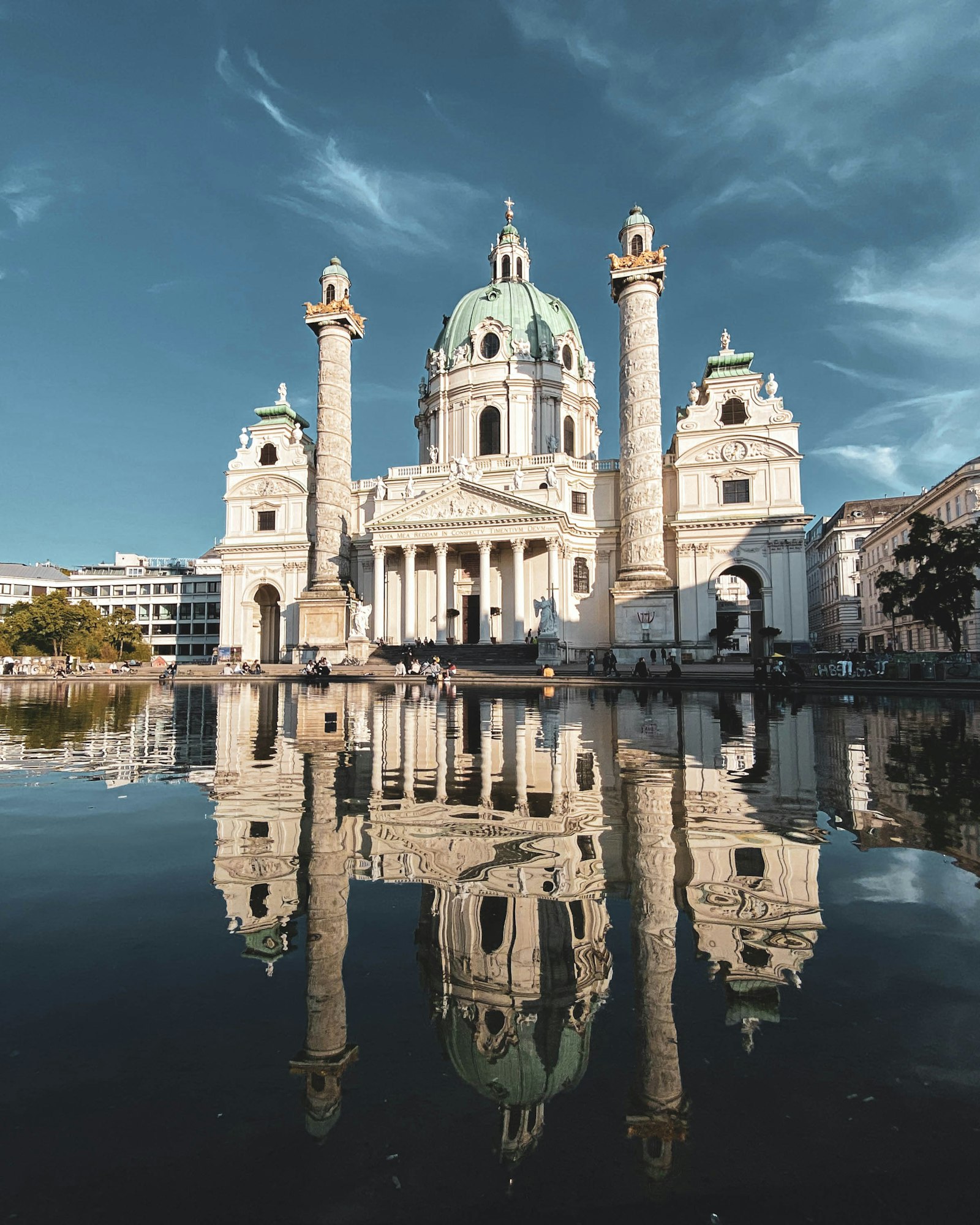
Vienna. Ours. The most impressive city on our whole six week drive, and we came into it straight from Italy. Every corner has something on it. Do the Ringstrasse on foot or on tram 1 and give Schoenbrunn a full morning with the maze and the zoo if you have kids under ten. The Kunsthistorisches has a cafe under a dome that is worth the ticket on its own.
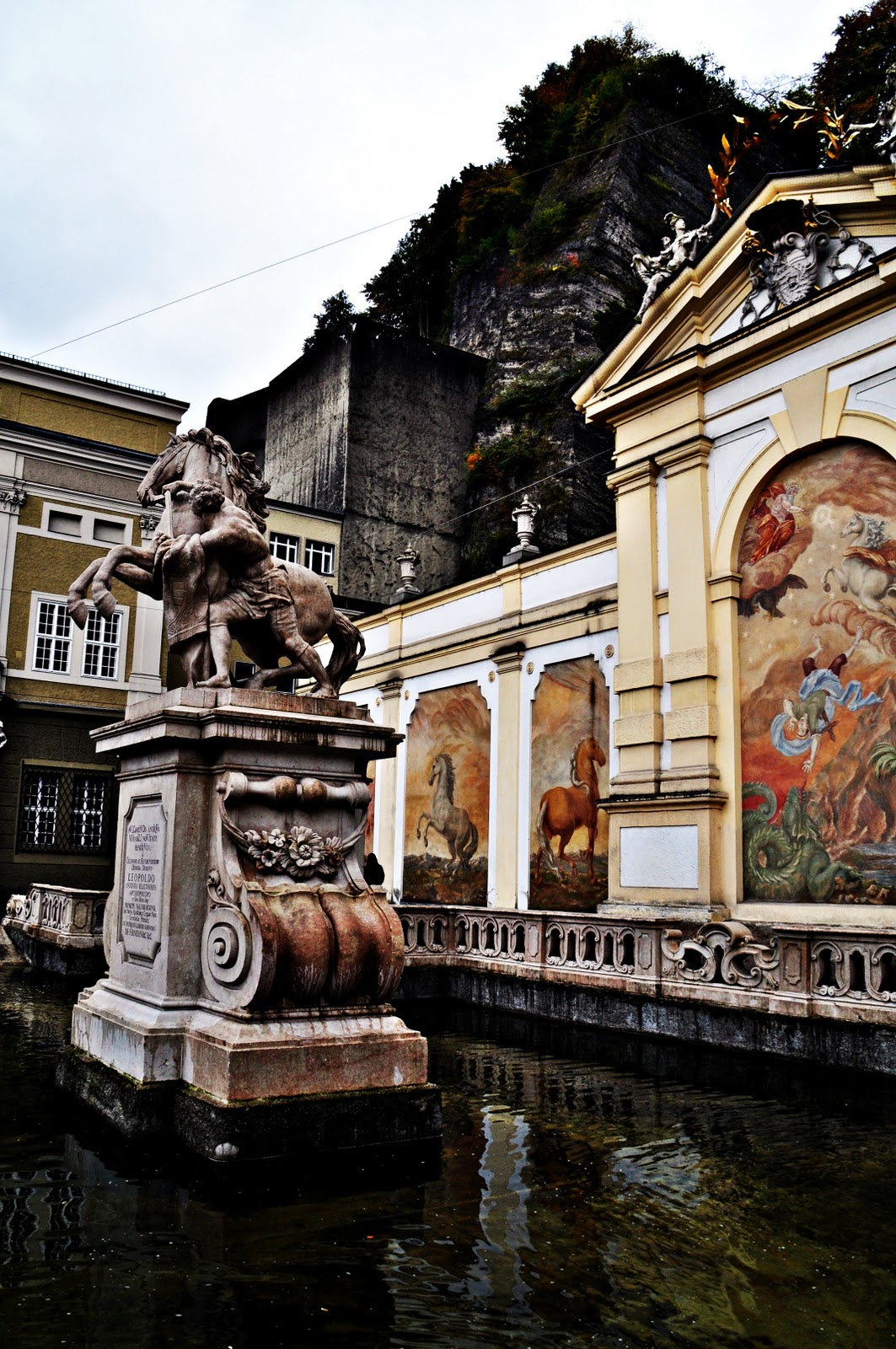
Salzburg. Ours. Quaint, large, clean, full of open squares. Go on a Sunday if you can. The fortress is reached by funicular and the view down over the river is the shot everyone comes for. Mozart’s birthplace is small and busy.
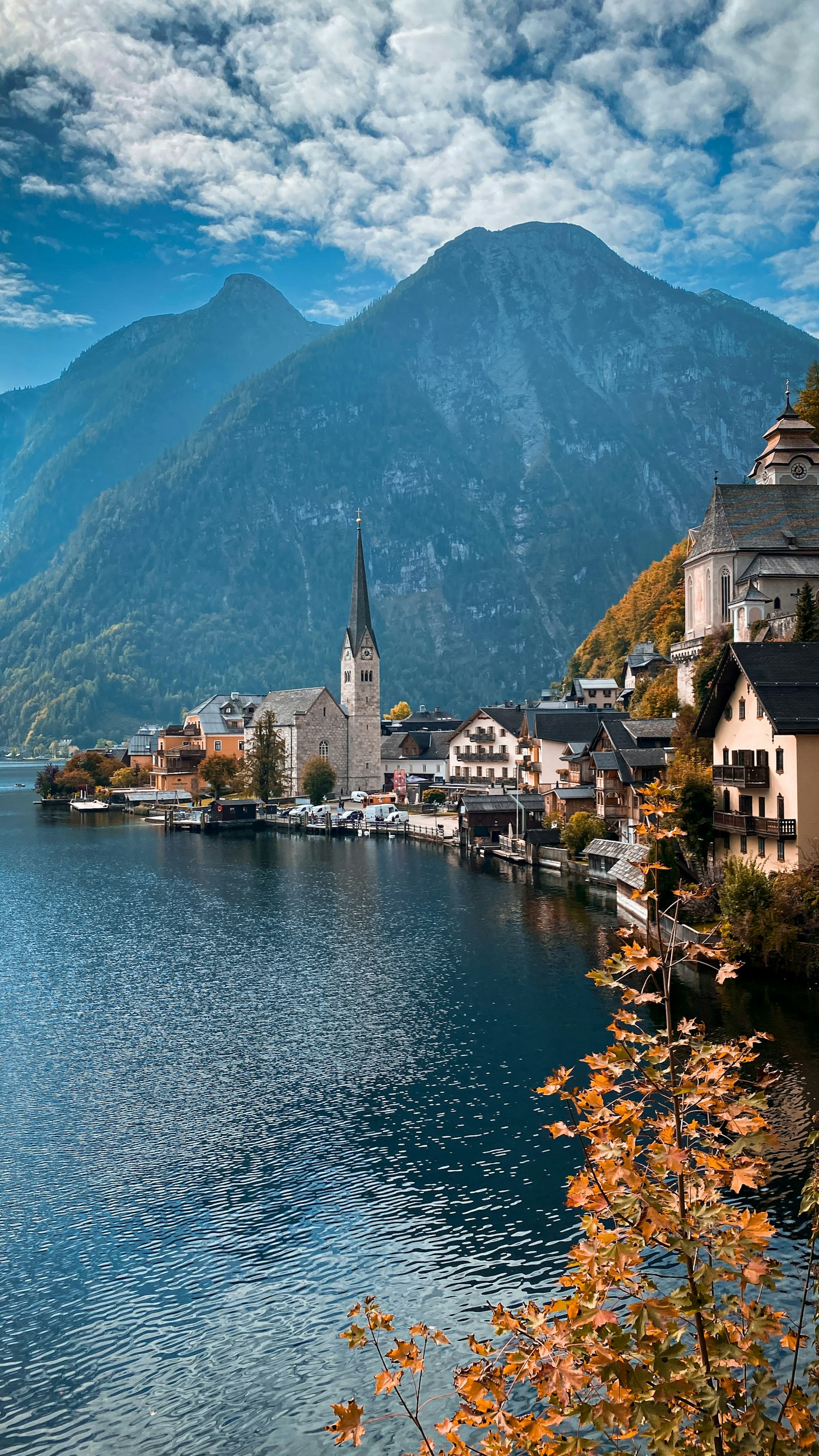
Hallstatt. with a warning. It is as beautiful as the photographs and it has an overtourism problem the village itself has publicly complained about. Roughly a million day visitors a year arrive in a place of about seven hundred people, and the buses unload from ten to four. If you go, sleep there and walk it before eight or after five. Or skip it for the quieter lakes fifteen minutes away.
Innsbruck. The only city in Europe where you can be on a mountain twenty minutes after leaving a cathedral. The Nordkette funicular starts in the city center and ends at two thousand meters. Small enough for a two night stop, real enough not to feel like a stage set.
Melk and the Wachau Valley. An hour and a half west of Vienna. Melk Abbey is a working monastery with a library that stops adults in their tracks. Do it as a boat one way and a train back, so the kids get a Danube cruise without you booking a Danube cruise.
Graz. Austria’s second city and almost nobody outside Austria goes. Red rooftops, a wooden clock tower on a hill in the middle of town, a big student population and food that is better value than Vienna. Two nights.
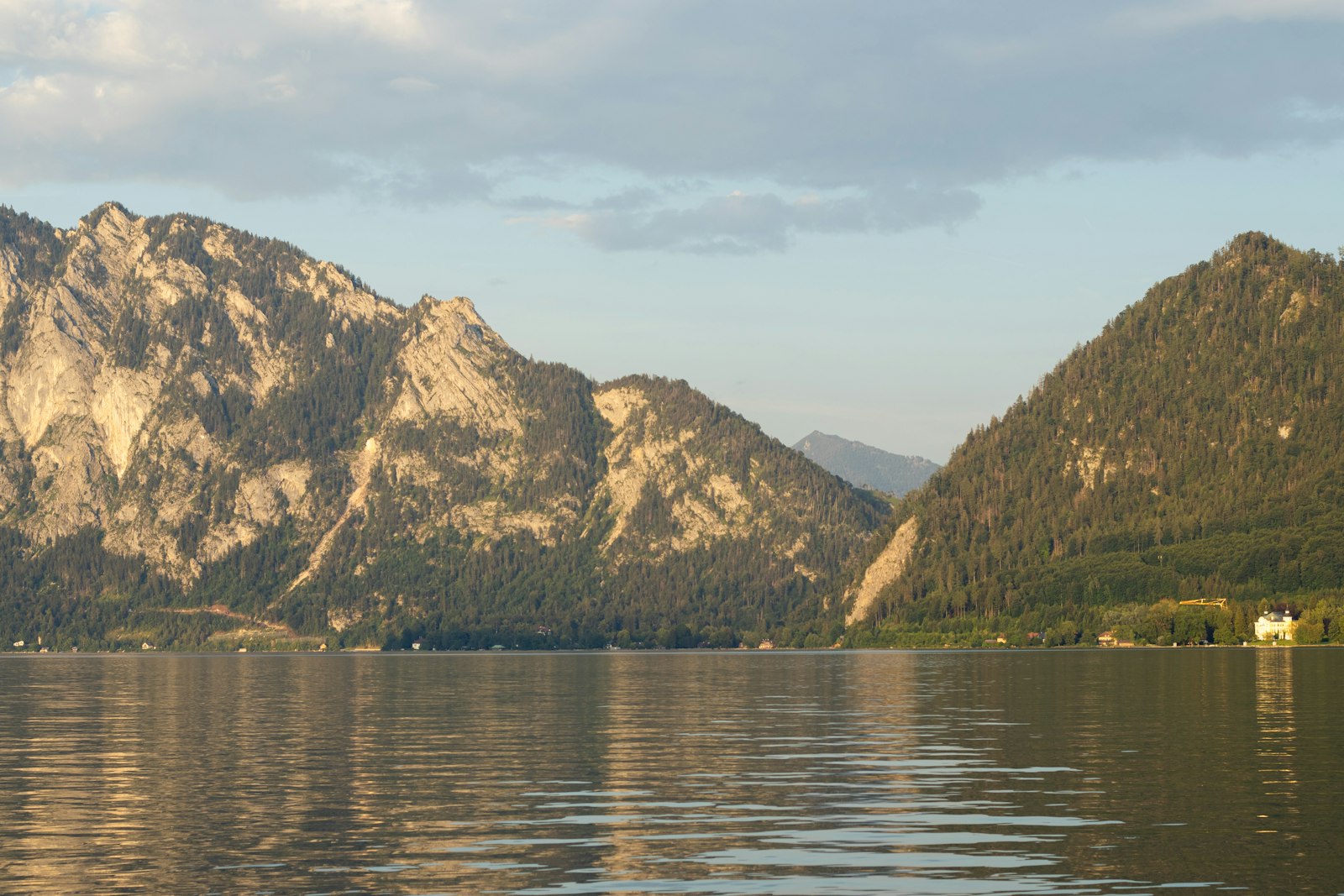
Zell am See and Kaprun. Lake plus glacier in one small valley. In summer it is swimming, boats and cable cars. In winter it is a family ski base that is cheaper and gentler than Kitzbuehel. Also the base for the Grossglockner road.
The Salzkammergut lakes. St Wolfgang, Bad Ischl, Mondsee, Attersee. Green water, wooden boats, small towns and a fraction of the crowd Hallstatt gets. If you want the postcard without the line, this is the answer.
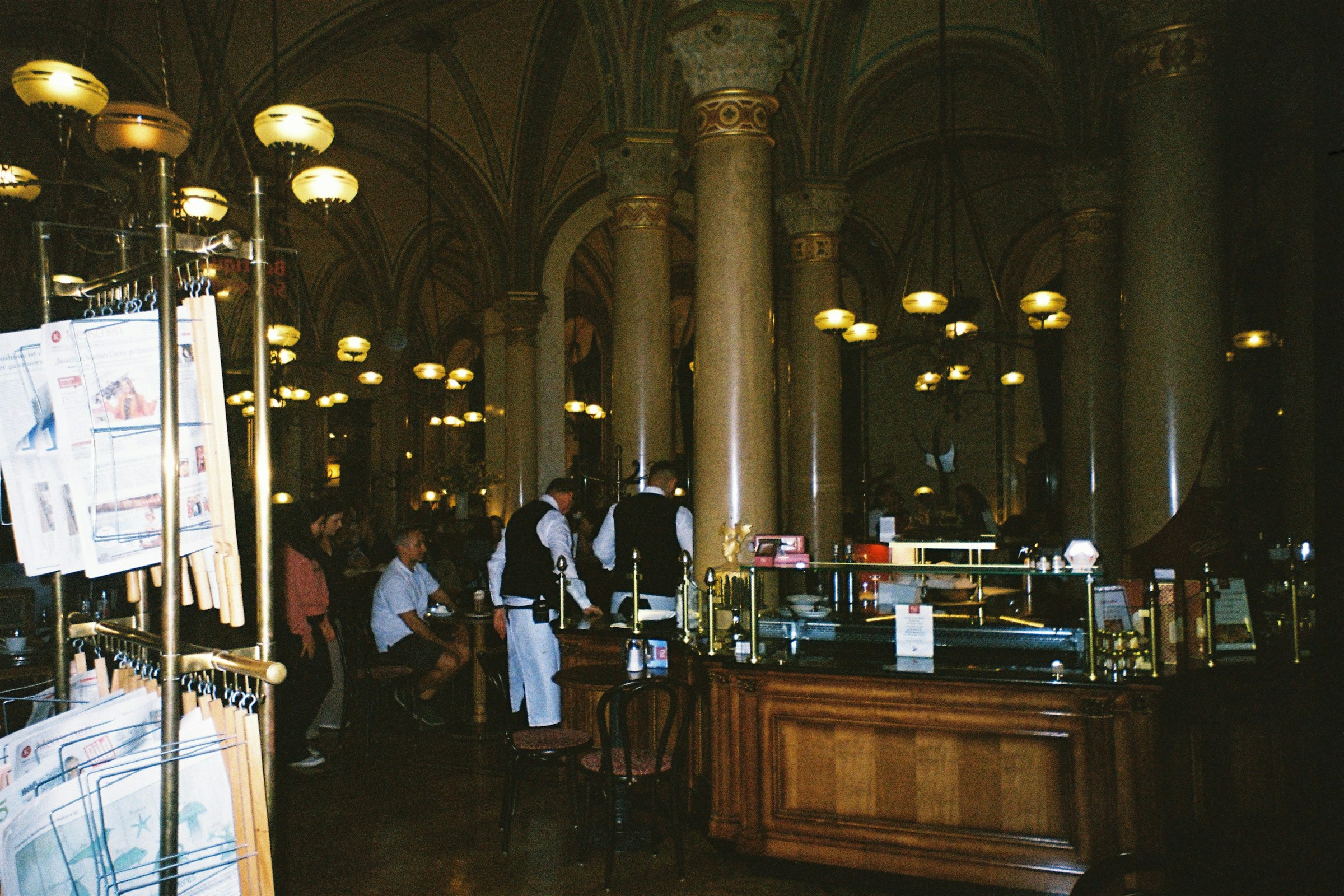
Cafe Central in Vienna. One order buys you the table for as long as you want it, which is the best deal in the city when the children are done · photo: stock
Family Travel Considerations
Austria with kids is easier than people expect. We drove it before we had any of our three, and this list is built from what I book for client families now and what they tell me afterwards.
Vienna is unusually good with young kids. Schoenbrunn has the oldest zoo in the world, a maze and a strudel show in the same grounds. The Prater has a free public park attached to the fairground. The Zoom children’s museum is built for under twelves and books out, so reserve it.
Do not book a full evening concert for a child under ten. Book a forty five minute matinee, a church concert or a Vienna Boys Choir Sunday mass instead. Same music, a fraction of the price, and nobody has to sit still for two hours in a jacket.
The Sound of Music tour is a trade, and it is fine. Most Austrians have never seen the film and find the whole business funny. If your family loves the movie, take the tour and enjoy it. If they have not seen it, skip it and spend the four hours in the Salzkammergut instead. Just do not sell it to your kids as history.
Cable cars do the climbing. This is the reason Austria works with small legs and older knees. You buy altitude instead of earning it, then walk downhill or take an easy loop at the top. Check if the elevator runs in shoulder season before you build a day on it.
Family rooms are normal here. Austrian and Tyrolean hotels routinely sleep four or five in one room in a Familienzimmer, which is not true across most of Europe. For a family of five that alone can save a few hundred euros a week.
Splurge-Worthy Experiences
A box at the Vienna State Opera
Not the tourist concert in period costume. The actual house, an actual production. Standing room tickets go on sale eighty minutes before curtain for a few euros, so you can test if your family can hack it before spending real money.
The Grossglockner High Alpine Road on a clear day
Forty eight kilometers of switchbacks to a glacier viewpoint at two and a half thousand meters. Around thirty euros for the car. Worth every cent in sunshine and wasted in cloud, so check the webcam and be willing to bail.
A Wachau wine boat with lunch
Melk to Krems on the Danube past terraced vineyards and castle ruins, then the train home. Adults get apricot schnapps and a view, kids get a boat, and nobody has to drive.
A night in a Tyrolean mountain hut
Take the last elevator up, eat with strangers, sleep at altitude and watch the valley go dark. Cheaper than a hotel and it will be the thing your children talk about for a decade.
What Surprises First-Timers
There is more than one Salzburg. Put it into a GPS carelessly and you can end up pointed at a different one entirely. It is Salzburg, not Salsburg and not Salzberg, and it is in Austria, not the United Kingdom. We learned this the annoying way.
It costs less than people assume. Austria is not Switzerland. A family dinner, a hotel room and a train ticket all land closer to Germany than to Zurich, and the mountains are the same mountains.
The weather is gray more often than the brochure. Ours was overcast for most of a week and Salzburg was somehow better for it. Bring a rain layer and stop waiting for the sky to cooperate.
You can skip almost every entrance fee and still have a great trip. Walk the streets, stare at the buildings, and pay to go inside only the two things you actually care about.
Where I Would Start
First time in Austria with kids? Fly into Vienna, then take the train west. The whole country is one rail line and every stop is a good one.
Vienna. Four nights. The Prater, Schonbrunn and its zoo, a concert the kids can leave early. Direct flights from the US and trains in every direction from the main station.
Salzburg. Two hours west by train. The fortress by funicular, the Sound of Music hills, and a lake district twenty minutes out.
Innsbruck or Hallstatt. One more stop. Innsbruck for cable cars into the Alps, Hallstatt for the lake village everyone photographs. Book the second one well ahead.
Numbers Worth Knowing
Austria, by the numbers
Ways to travel
Austria is not one kind of trip
How you move through it changes the trip more than which places you pick.
River Cruising
Vienna, Melk and Durnstein are classic stops on a Danube river cruise, making Austria an easy fit inside a longer Central Europe itinerary.
For example: a Danube river cruise with two nights in Vienna added on either endRail Journeys
Austria’s Railjet trains connect Vienna, Salzburg and Innsbruck quickly and comfortably, and overnight Nightjet trains can save a hotel night entirely.
For example: Vienna to Salzburg in under three hours by railRoad Trips
The Grossglockner High Alpine Road and the lake villages of the Salzkammergut, including Hallstatt, are made for a slower pace behind the wheel.
For example: Salzburg to Hallstatt in about an hour and a half, with mountain views the whole wayGuided and Small Group
Schonbrunn Palace and the Hallstatt salt mines both go from good to memorable with someone explaining what you are looking at.
For example: a guided morning at Schonbrunn, then the gardens at your own paceExplore by interest
What families come to Austria for

Cities
Vienna
Schonbrunn with its maze and zoo, the Spanish Riding School, a cake at Cafe Central and the Prater ferris wheel. The grandest city in Europe and an easy one with children.

Music
Salzburg
Mozart’s birthplace, the fortress on the hill we climbed in 2010, the Mirabell gardens from The Sound of Music and a puppet theatre. Two nights, more if the lakes are next.

Lakes
Hallstatt and the Salzkammergut
The village on the lake everyone photographs, the salt mine with the slides inside the mountain and the ice cave above. Half a day from Salzburg by boat and train.

Mountains
Innsbruck and the Tyrol
Cable cars straight out of the city, summer luge runs, alpine lakes at Zell am See and skiing that is cheaper and calmer than Switzerland. The active week.
Something unexpected
Only in Austria

Read before you go
Two books, one each
For the kids. Any picture book biography of young Mozart works, and it makes his childhood home in Salzburg land differently once you are standing in it.
For you. The Story of the Trapp Family Singers by Maria von Trapp, the real memoir behind The Sound of Music, written by the actual mother.

Watch before you go
The Sound of Music
Filmed almost entirely in and around Salzburg, and the gazebo, the gardens, and the abbey are all places you can actually visit. A genuine family classic, no warnings needed.
Photo via Unsplash.
From here
The Sachertorte
Invented in 1832 by a 16 year old apprentice chef in Vienna, this dense chocolate cake with apricot jam still comes from a recipe the Hotel Sacher guards like a state secret.
Photo via Unsplash.
Only in Austria
Hallstatt
A lakeside village so photogenic that a full-scale replica of it was built in Guangdong, China in 2012. The real one is still smaller and quieter than most people expect.
Photo via Unsplash.Combine It With
If you have the time to add a second country, these are the ones I would actually pair this one with. Not a list of neighbors. A list of trips that work.

Czech Republic
Vienna to Prague is about four hours on a train and the two cities do not feel alike at all. We drove this stretch in the camper in 2010.
Read the guide
Hungary
Vienna to Budapest is under three hours and Budapest is the cheaper half of the trip. Two very different Habsburg hangovers.
Read the guide
Germany
Munich to Salzburg is an hour and a half. If you are already doing Bavaria you are halfway into Austria if you planned it or not.
Read the guide
Plan Austria with Nicole
Tell me who is coming, and when.
Austria works as a long weekend in Vienna, a wider loop that adds Salzburg and the lake district, or the easy bookend to a Danube river cruise. Which one makes sense depends on the ages you are traveling with and if skiing is part of the plan. Send me the ages, the dates, and what you are hoping this trip feels like. I will come back with what is really available.
Nicole Damiano, ASTA Verified Travel Advisor with FG Luxury Travel.
Questions families ask about Austria
The ones that come up in almost every planning call. If yours is not here, ask me.
Do we need anything to enter, beyond passports?
Not a visa. US passport holders get 90 days in any 180 day period across the Schengen area, and this country counts toward that same 90 days.
Your passport has to be valid for at least three months beyond the day you leave Europe. Check the kids’ passports too. Child passports are only good for five years and they expire quietly.
Since October 2025 the EU has been taking fingerprints and a facial image at the border under the new Entry and Exit System. No fee, no form. The first arrival can be slower than you remember, so build a real cushion into any connection.
ETIAS, the paid travel authorization you may have read about, is not running yet. It is expected in late 2026. When it starts I will tell every family I am working with, well before they fly.
Vienna or Salzburg, if we only have time for one?
Salzburg with younger kids, Vienna with older ones.
Salzburg is small enough to walk in a morning, the fortress has a funicular, and the lake district is forty minutes away. Vienna is a capital. Museums, coffee houses, the Spanish Riding School. It rewards a ten year old and wears out a five year old.
Is the Sound of Music tour worth it?
If anyone in the family knows the songs, yes, and do not overthink it. Four hours, the gazebo, the lake, the abbey steps. The kids sing on the bus.
If nobody has seen the film, skip it and spend the money on a day at Wolfgangsee instead.
Can we do Austria without a car?
Yes, easily. Vienna, Salzburg and Innsbruck are all on the fast train line and the stations are in the middle of town. OBB trains are clean, on time and cheap when you book a few weeks ahead.
You only need a car for the lake district or a mountain village. Even then, three or four days of rental is plenty. We drove the whole country in an RV in 2010 and I would still put a family on the train for the cities.
How many days does Austria need?
Seven is comfortable. Three in Vienna, three in Salzburg, one for the lakes or Hallstatt.
Ten lets you add Innsbruck and a real mountain day. Five works if you pick one city and stay put.
Keep exploring from Austria
Cities, neighbors, and the wider region.
Click any card to open that page
City guides in Austria
 Vienna
More of Europe
 Belgium
 Croatia
 Cyprus
 Czechia
 Denmark
 France
 Germany
 Greece
 Hungary
 Iceland
 Ireland
 Italy
Italy Netherlands
 Norway
 Poland
 Portugal
 Spain
Spain Sweden
 Switzerland
 Turkey
 United Kingdom
 All of Europe
 Explore the world
 The Travel Library