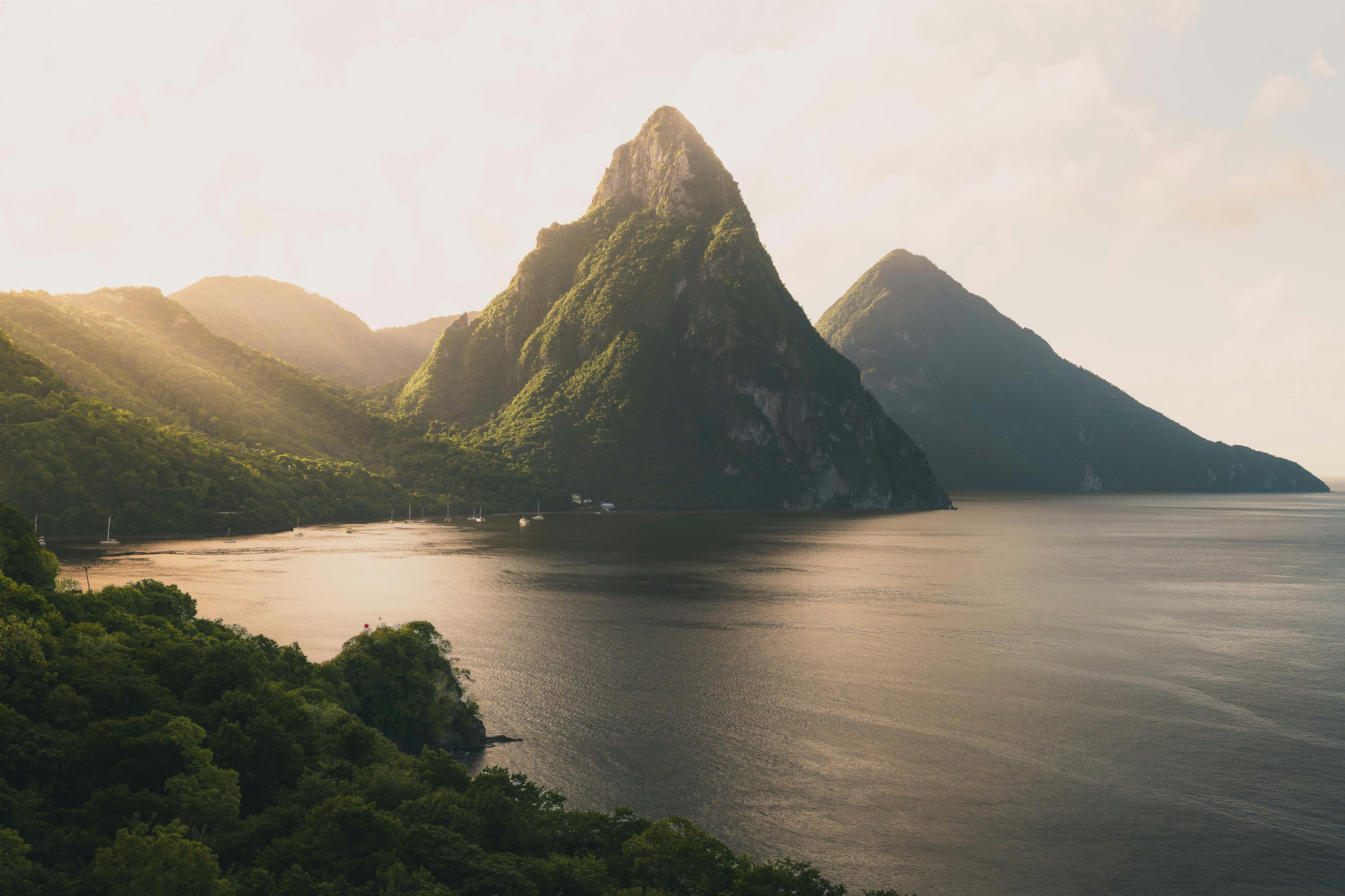
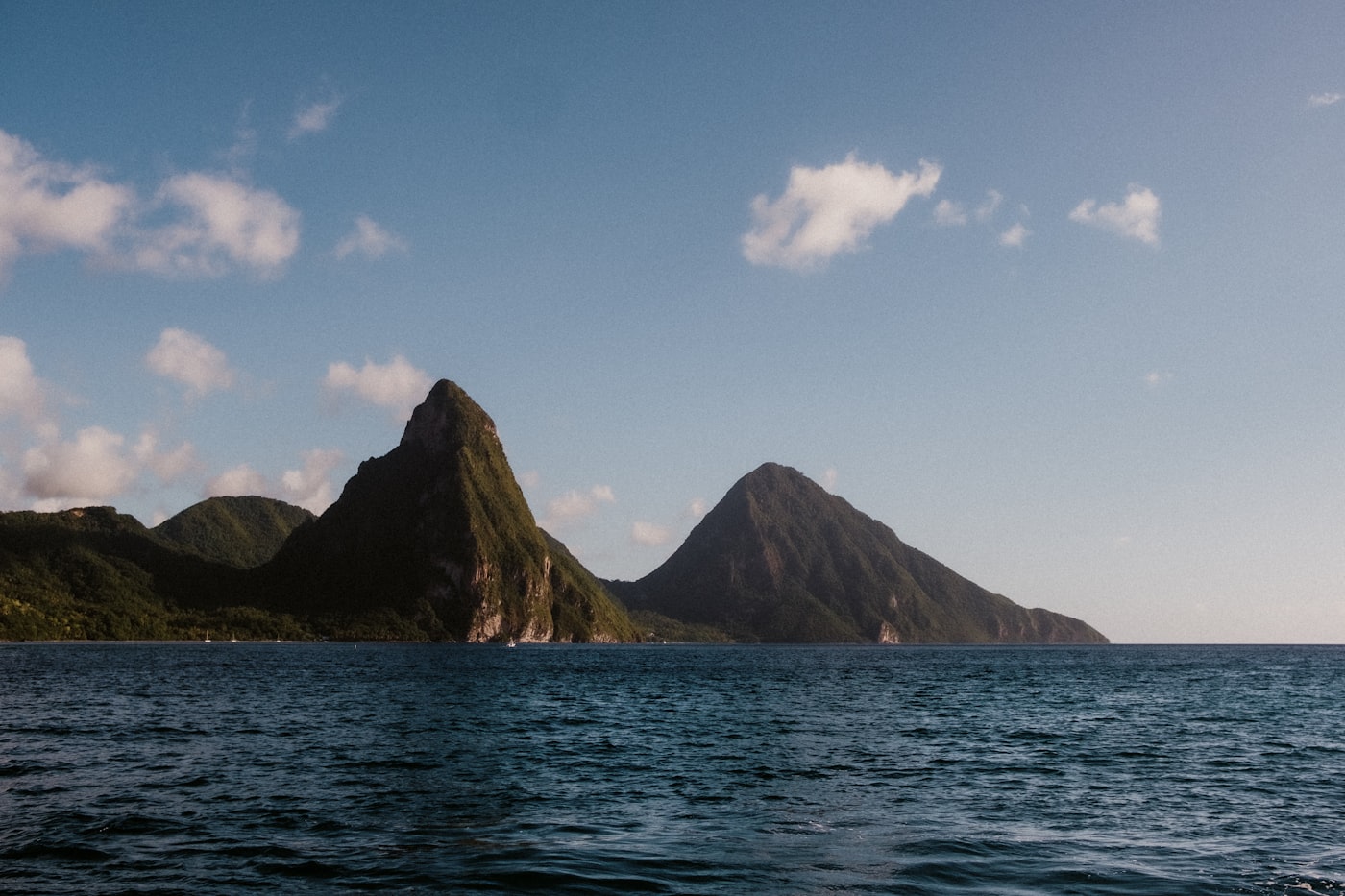
The Pitons from the water. Two volcanic plugs coming straight out of the sea, and the reason this island looks like nowhere else in the Caribbean
St Lucia Family Travel Guide
“St Lucia is the most beautiful island in the Caribbean and it is also the one families most often book by accident. It is built for honeymooners. That does not make it wrong for children. It does mean you have to choose your hotel very carefully.”
Nicole Damiano, ASTA Verified Travel Advisor with FG Luxury Travel
How far is the airport from the hotels?
Hewanorra International is in Vieux Fort at the southern tip, and most hotels are in the north. It is roughly forty miles and takes an hour and a half on a good day. Book the transfer ahead, don't try to improvise it after a long flight.
Should you do all inclusive?
Yes, and it is worth it here. Restaurants outside the resorts are scattered and reaching them means a taxi on a mountain road at night. For a family, this is one of the islands where the fixed price package earns its keep.
When should you go?
December through April is the dry season and the island at its best, but it books out early and costs the most. May and early June is the value window, rates drop and the dry season is only just ending. August through October is wet and peak hurricane season, buy named storm cover at booking if you go then.
Do kids get carsick on the roads?
It's a real planning factor. The west coast road is narrow with mountain switchbacks for an hour at a time. Sit anybody who suffers in the front, bring the tablets, and take the water taxi where you can.
Is St Lucia good for a family with a toddler?
Think it through first. The family room stock is thin, it's priced for couples, and a long transfer with a two year old at the end of a long flight is a hard start to a week. A few properties in the north do family rooms and kids clubs well, ask an advisor rather than booking off a honeymoon ad.
What is the best day trip with kids?
The chocolate estates. Working cocoa plantations where children pick pods, roast beans and grind their own bar to take home. Two or three hours, educational, and it's the activity families mention most often afterward.
Nicole’s Perspective
Why families hire me for St Lucia

There is no St Lucia trip report on this site and none of these pictures are mine. What I have is a lot of couples and a fair number of families sent here, and a very clear sense of who comes home thrilled and who comes home saying it was lovely but exhausting.
This island is spectacular. The Pitons are not overhyped. It is volcanic, mountainous, green in a way Aruba and the Bahamas are not, and the drive from the airport in the south to the hotels in the north crosses a proper landscape rather than a strip.
The thing to understand before you book is that St Lucia sells itself to honeymooners. A large share of the best hotels are adults only, and the family friendly ones cluster in the north around Rodney Bay while the famous views are an hour and a half south. Booking the picture without checking the age policy is the single most common mistake made here.
And the roads. They are narrow, steep and slow, and children who get carsick will get carsick. That is not a reason to skip the island. It is a reason to base yourself once and stay put rather than planning a different beach every day.
Beyond the Bookshelf
Stories to carry you deeper into St Lucia. This is our own family shelf, real books, films, music and a cookbook tied to the place, not a generic reading list. Read it before you go and the trip means more when you get there.

- OmerosDerek Walcott
- Another LifeDerek Walcott
- Dream on Monkey MountainDerek Walcott
- Island Counting 1 2 3Frané Lessac
- Caribbean DreamRachel Isadora
- My Name Is CeliaMonica Brown
- Kwéyòl/CreoleNina Compton
- Caribbean PotluckSuzanne & Michelle Rousseau
Book links go to Bookshop.org, which supports local bookstores. Film and music links go to JustWatch and Spotify. As an affiliate we may earn from qualifying purchases.
Why this country, for this family
Why St Lucia
 Poppy marks the family parts. Wherever you see her, that section is written for traveling with children.
St Lucia is the most beautiful island in the Caribbean and the one families most often book by accident. It is built for honeymooners. It works for families who pick the right coast and the right resort.
Who it is for. Families with kids over six who want a view, a rainforest and a real island rather than a beach with a fence. Anyone who has done the flat islands and wants mountains.
Who should skip it. Anyone who wants calm, shallow, endless beach. St Lucia’s beaches are small and the sea is lively. Skip it too if you hate winding roads, every drive is a hairpin.
The Pitons are the reason
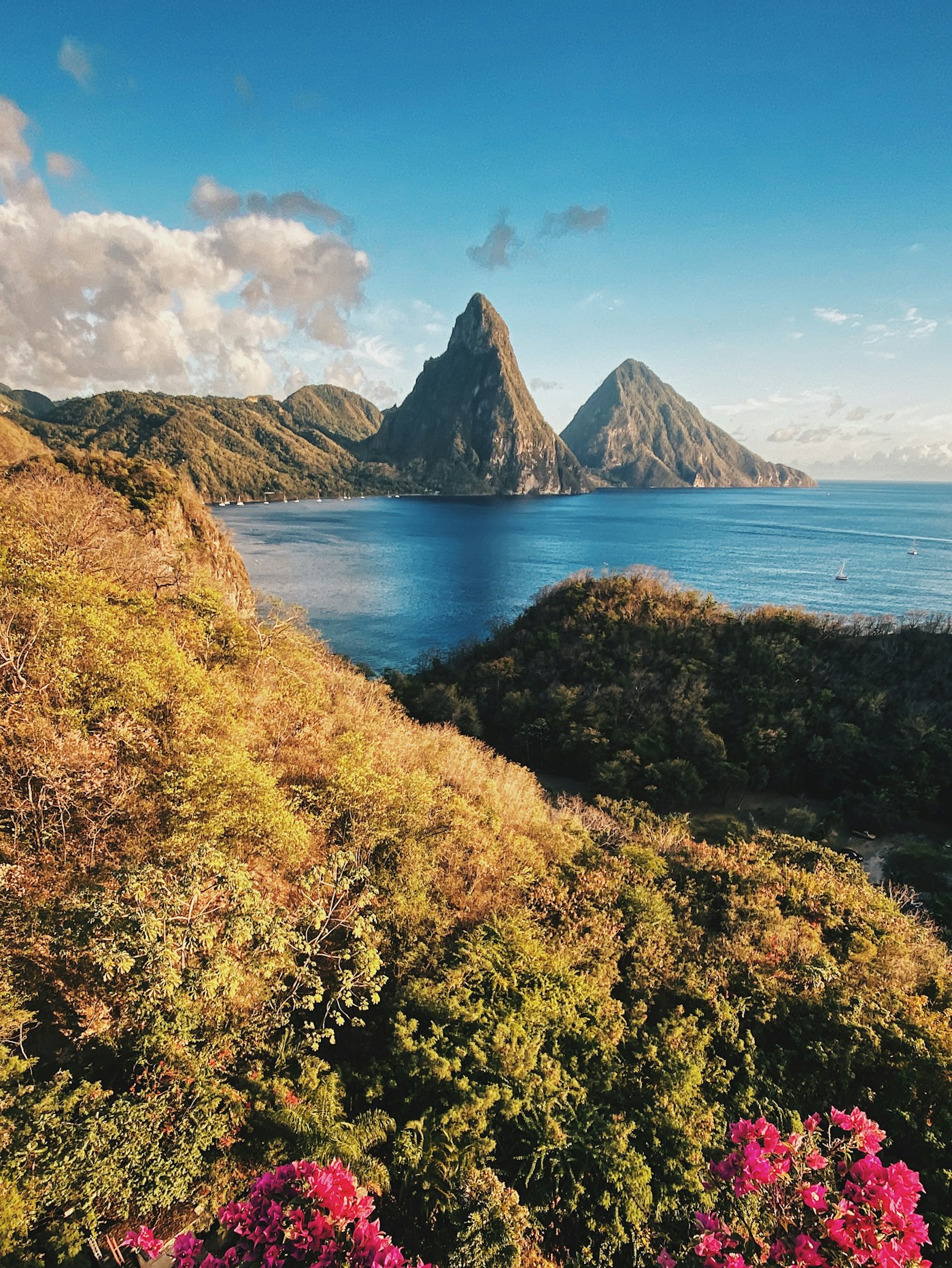
Two volcanic peaks straight out of the sea. See them from Sugar Beach, from a boat, from a hike. They are the whole postcard.
North or south, not both
Rodney Bay for beaches and restaurants, Soufriere for the Pitons. Two hours of hairpins between them.
The drive in volcano
Sulphur Springs at Soufriere. Drive into the crater, mud bath in the warm stream. Kids love it and smell of eggs for a day.
The Pitons, and What You Can Do With Them
Two volcanic spires straight out of the water, a UNESCO World Heritage Site, and the thing every photograph of this island is really about. Here is what is realistic with a family attached.
Gros Piton is the one you can climb and it is a real hike. About two and a half thousand feet, four hours up and down, guide compulsory, steep and rooty rather than technical. Fit teenagers manage it. Ten year olds mostly do not enjoy it.
Petit Piton is not a family climb. It is steeper, has rope sections, and people get hurt on it. If somebody in your group is set on a summit, make it Gros Piton.
The best way to see them is from a boat. A west coast catamaran day from Rodney Bay or Castries down to Soufriere and back gives you the view, a snorkel stop and no car sickness. This is the day I would book first on this island.
Sugar Beach sits right between them and it is public. The resort occupies it but Saint Lucian beaches are public by law. You can arrive by water taxi, use the sand, and buy a drink. Nobody will move you on.
The famous view is not from the beach. It is from the road above Soufriere and from the water. If a picture matters to you, drive the hill or take the boat, because from most hotel loungers you can only see one of them.
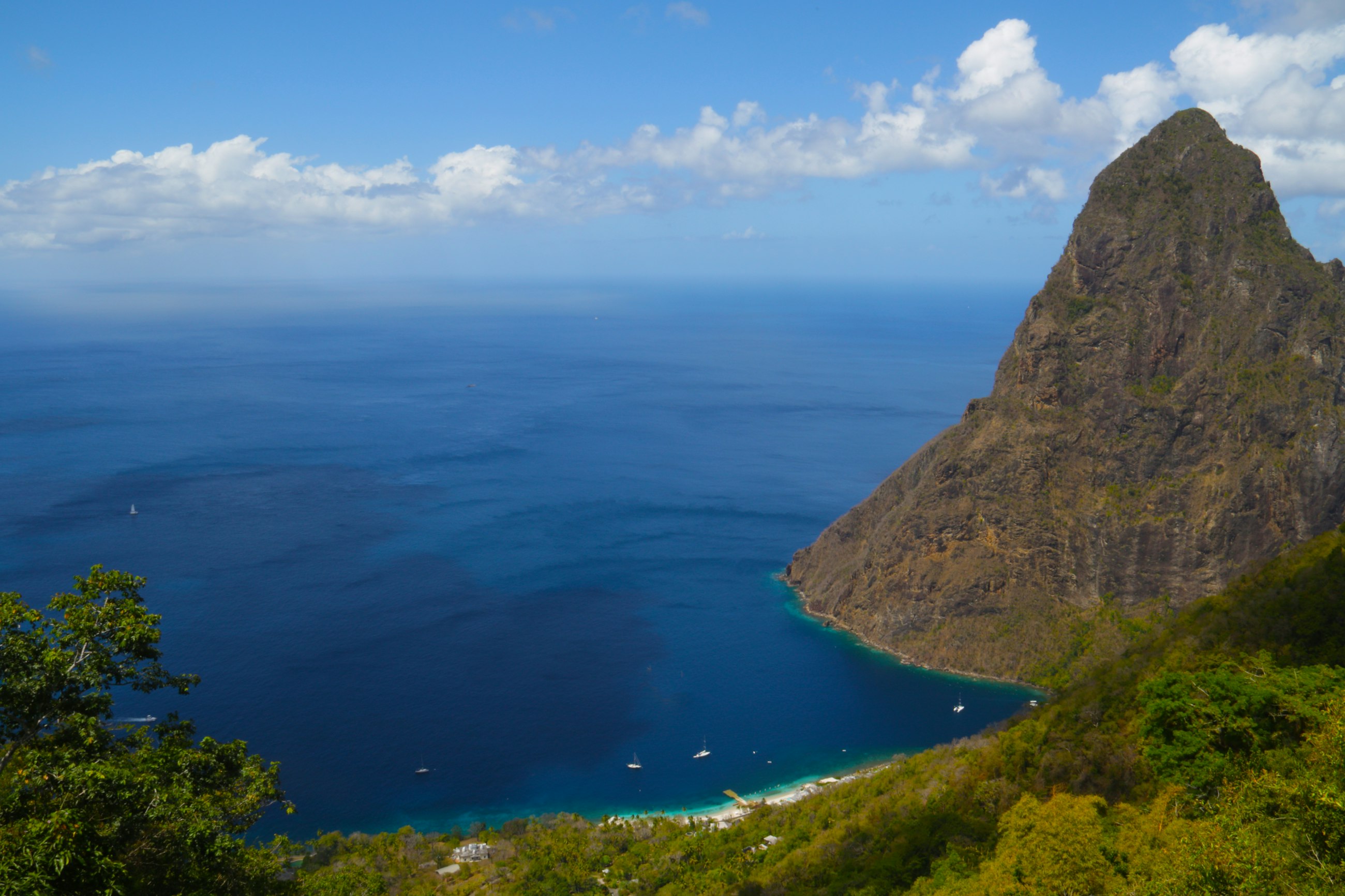
The water goes deep almost immediately at the foot of the Pitons, which is why the diving here is good and why there is very little shallow sand on this stretch
It Is the Honeymoon Island, and What That Means for a Family
St Lucia has built its tourism around couples and it has done it very well. That shapes the hotel stock in ways that catch families out at the booking stage rather than on arrival.
A lot of the famous hotels are adults only. Including several of the ones in the photographs people arrive with. Check the age policy before you fall in love with a room, because the answer is often sixteen or eighteen and it is not negotiable.
The family friendly stock is mostly in the north. Rodney Bay, Gros Islet and the Cap Estate end. Bigger resorts, kids clubs, calmer water, restaurants you can walk to, and a supermarket. That is where I put families almost every time.
Couples pricing raises the floor for everybody. Rooms here are priced against honeymoon budgets rather than family ones, and a room that sleeps five is scarce and expensive. Interconnecting rooms are usually the answer and they need booking early.
It is a wonderful honeymoon. If that is what you are actually booking, this is the island. Nothing else in the region does drama, privacy and a plunge pool with a view as well, and I sell a lot of it.
The map
St Lucia Place by Place
Twenty seven miles long and fourteen wide, but the mountains in the middle mean nothing is as close as the map suggests. The north is developed and easy. The south west is dramatic and slow. Almost everything a visitor wants is on the western side.


Anthem Sons and Daughters of Saint Lucia. The island also has a Nobel prize winning poet, Derek Walcott, whom the kids will meet at school one day. Language and money English, and a French Creole called Kweyol at home. The East Caribbean dollar, and US dollars are taken.

Anse Chastanet

Castries

Gros Islet
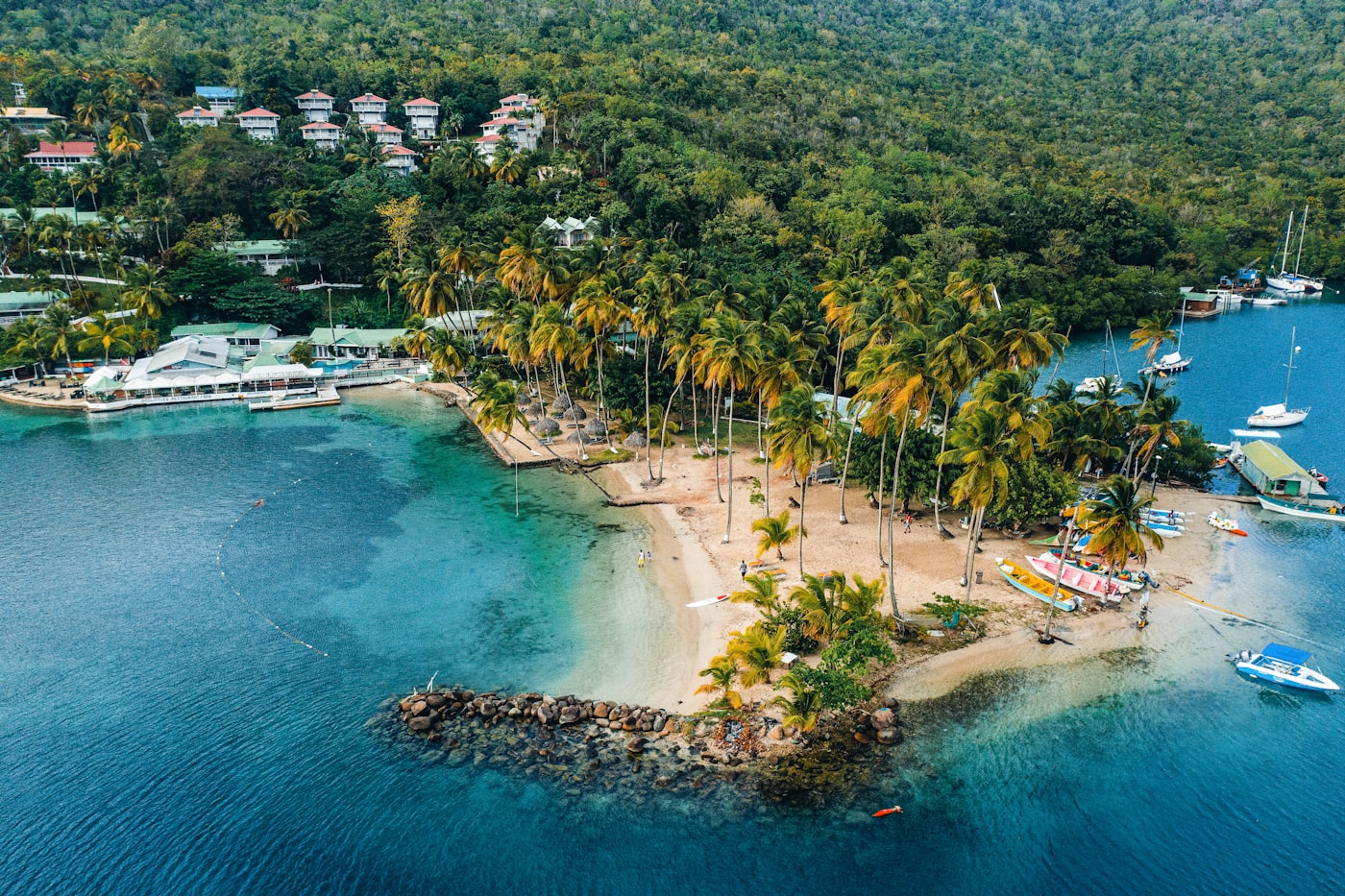
Marigot Bay
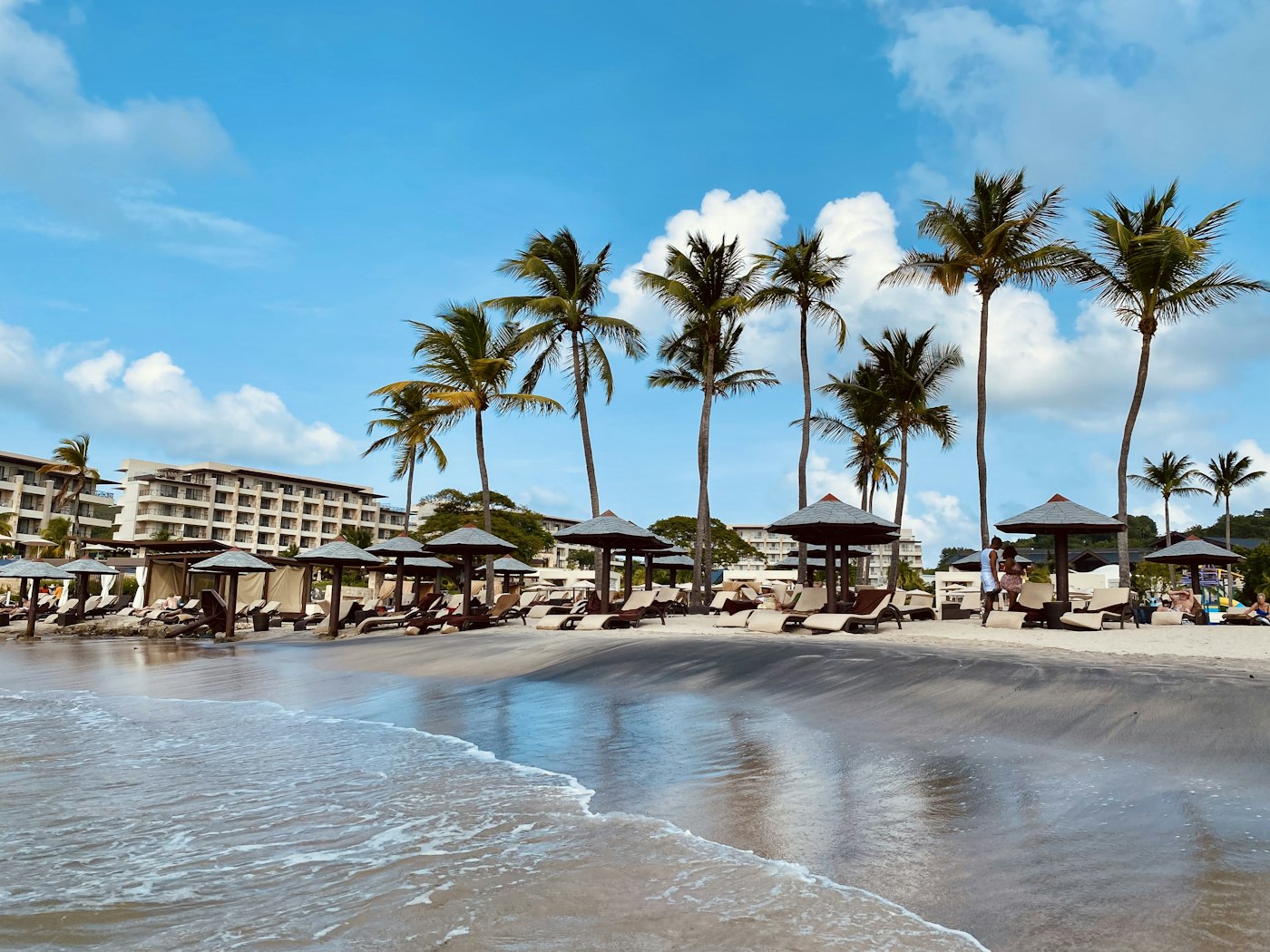
Rodney Bay
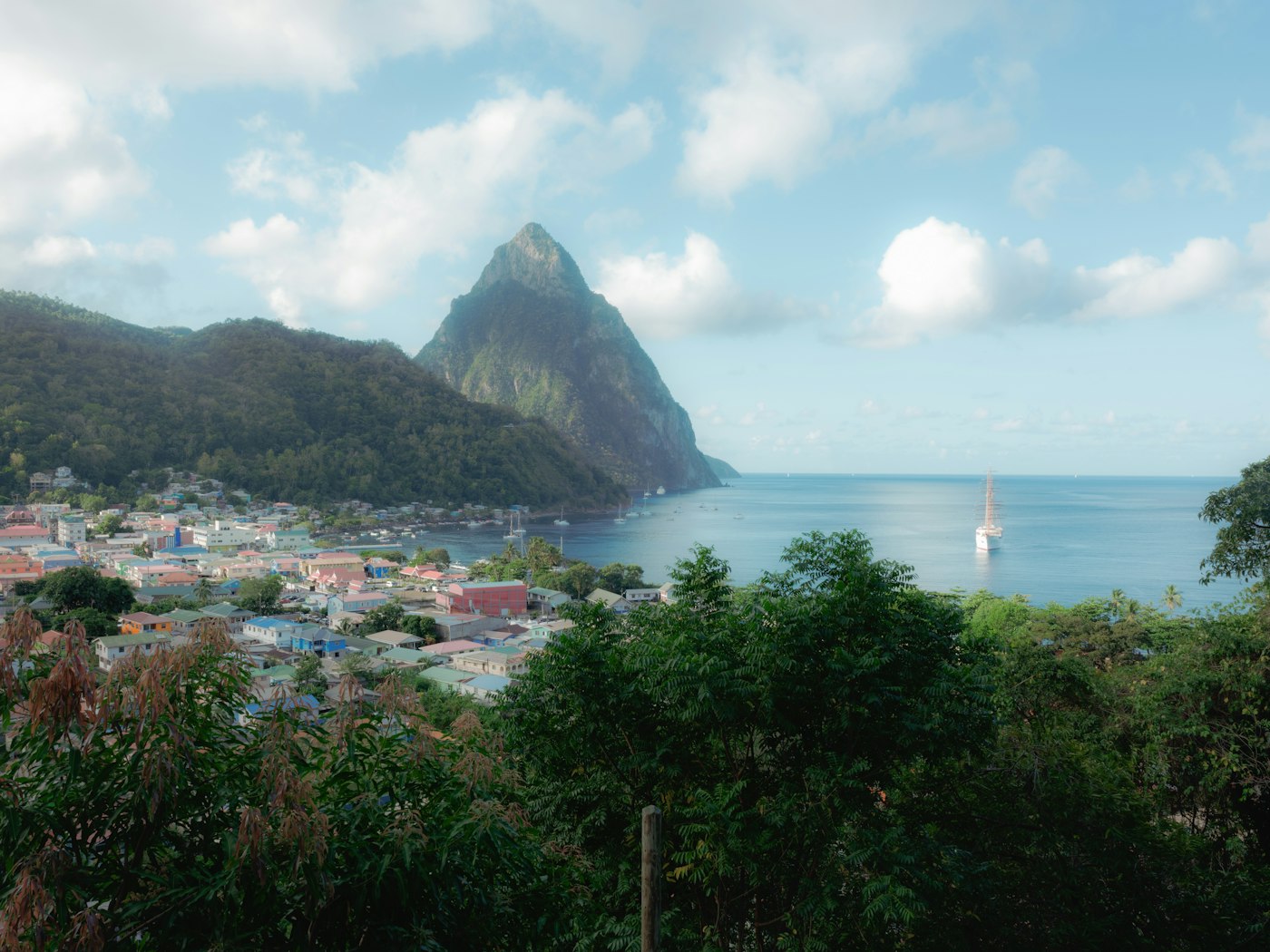
Soufriere
Sulphur Springs
The Pitons
Culture and Etiquette
St Lucia is French and British by history and Creole by heart. It is a working island, not a resort with a flag, and it likes visitors who notice.
Good morning, always. Bus drivers, shopkeepers, the woman selling mangoes. Skip it and the service cools.
Friday night is Gros Islet. The street party. Grilled fish, music, locals and visitors together. Go early with kids and leave by ten.
Kweyol is the second language. Everyone speaks English. A bonjou back gets a grin.
Tip ten percent, and check if it is already added. Many resorts add service. Eastern Caribbean dollars or US dollars both work, US is easier.
Cover up in town. Swimwear is for the beach. Castries and Soufriere are towns where people work.
Food
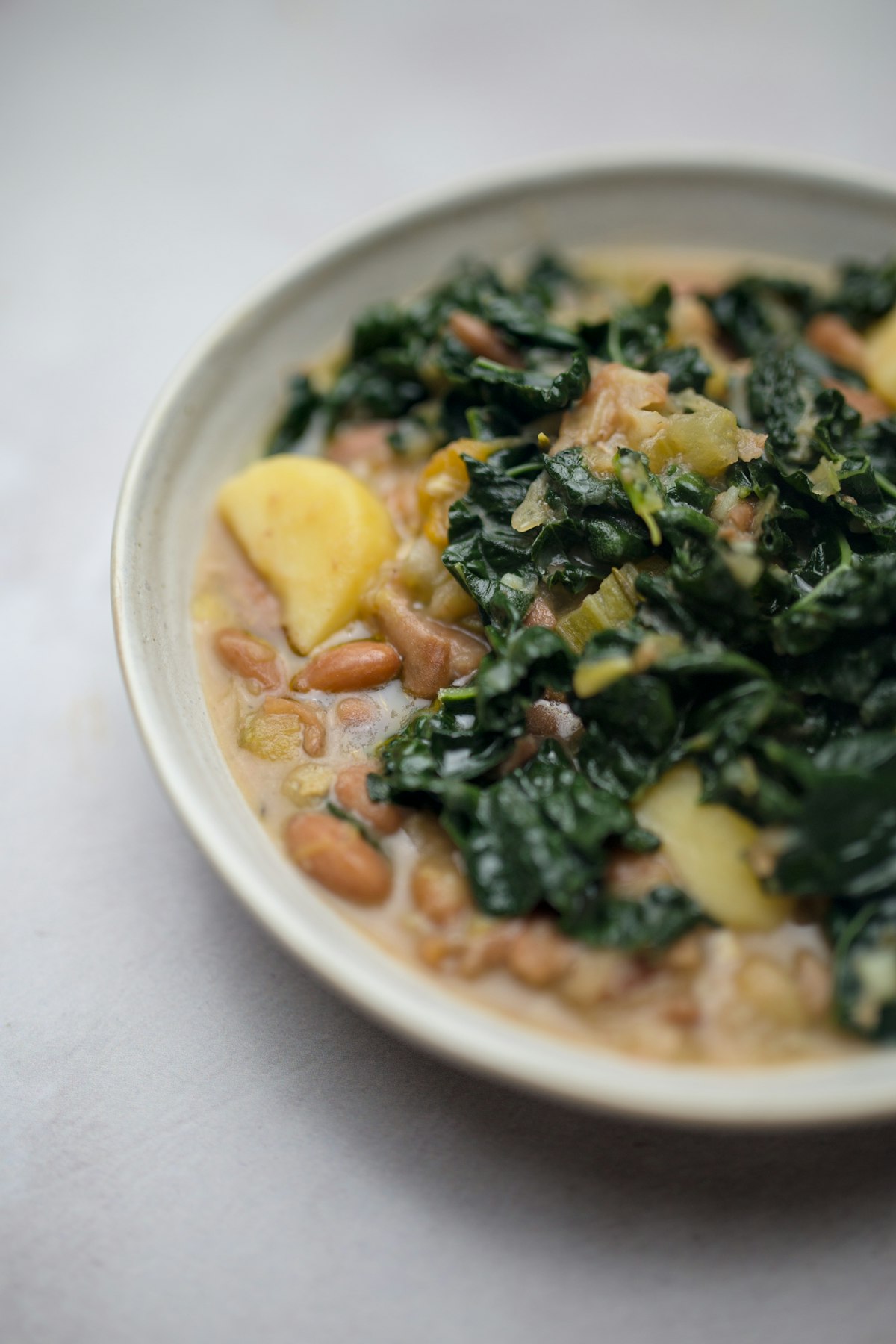
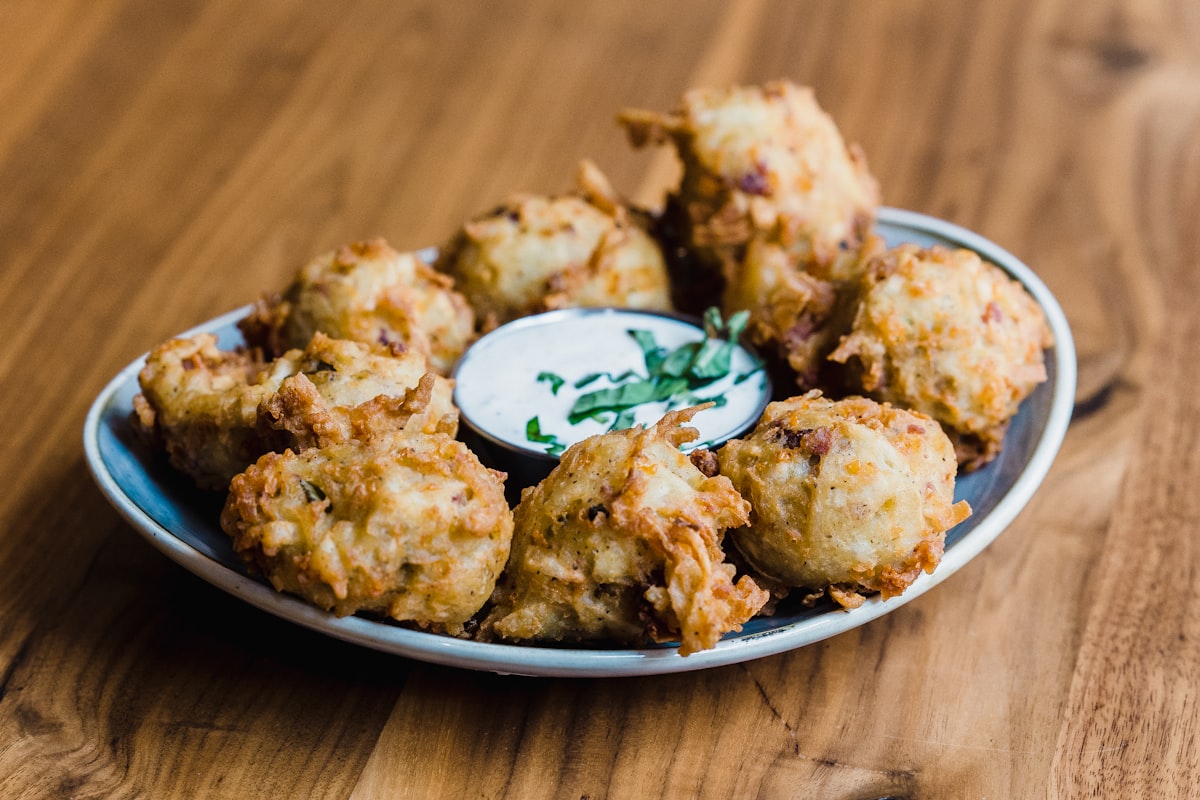
Saint Lucian cooking is Creole with a French accent, which is what happens when an island changes hands fourteen times. Ground provisions, saltfish, coconut and a lot of thyme. The Friday night street food in Gros Islet is where you actually meet it.

The Roads Are Slow and You Should Plan Around It
Airport to the north takes ninety minutes
Hewanorra International is in Vieux Fort at the very southern tip and most hotels are in the north. It is roughly forty miles and it takes an hour and a half on a good day. Book the transfer, do not improvise it after a long flight.
The west coast road is a mountain road
Narrow, steep, blind corners, minibuses coming the other way at speed. It is not dangerous if you drive it slowly and it is exhausting if you are not used to it. They also drive on the left.
The helicopter and the water taxi are real options
A ten minute helicopter transfer from the airport costs real money and saves ninety minutes with tired children. Water taxis run up and down the west coast and are often quicker and far more pleasant than the road.
Base once and stay put
This is the practical conclusion. Pick north or south west and accept that you will see the other end on one long day out or from a boat. Families who try to do both ends properly spend the week in a car.
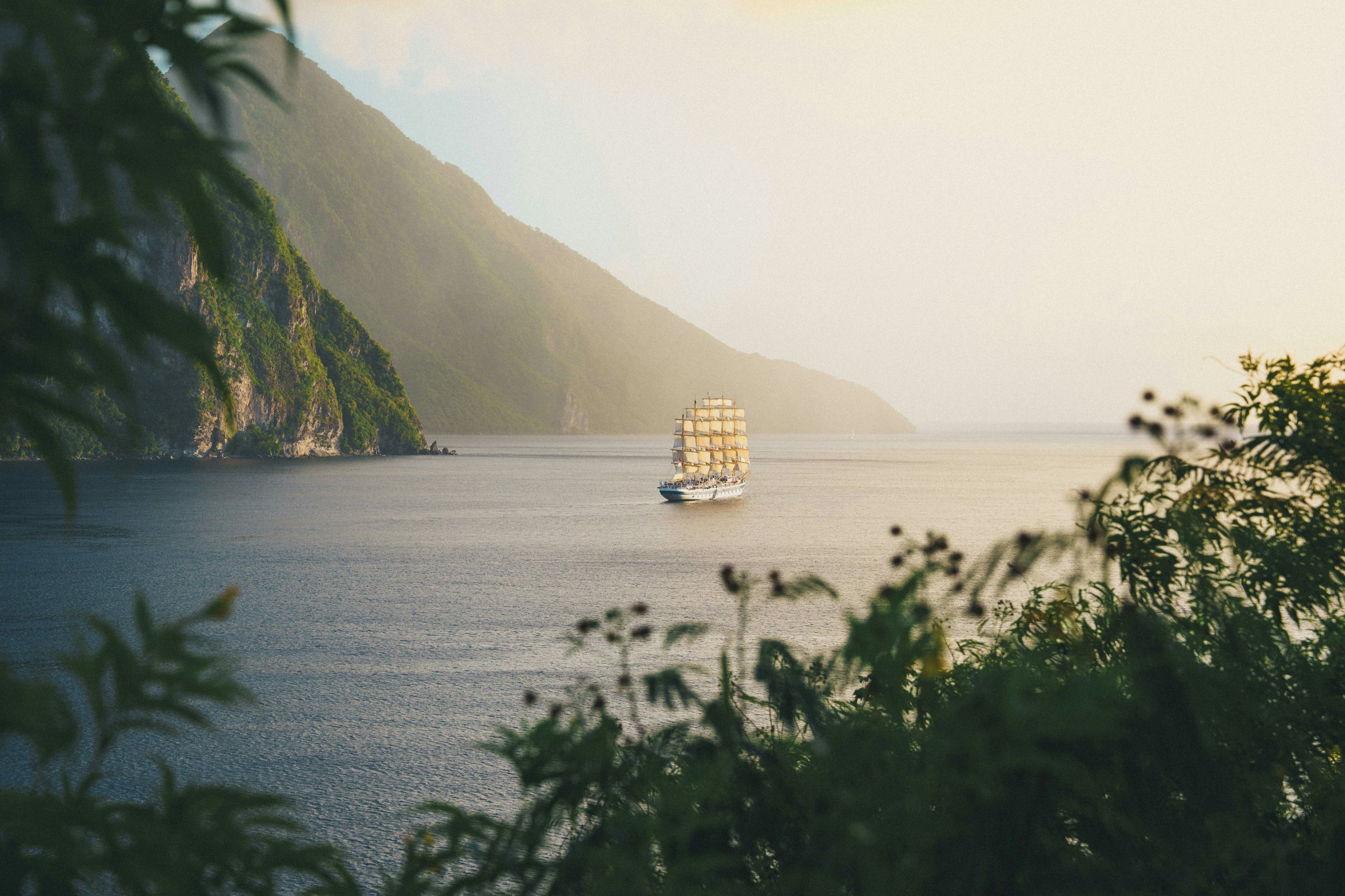
The west coast by water. An hour by boat covers ground that takes twice that by road, and nobody is carsick at the end of it
Sulphur Springs and the Rest of the Volcano
Soufriere sits inside the collapsed caldera of an old volcano, which is why the whole area steams and smells. It is marketed as the world’s only drive in volcano, which is a stretch, but the day out is good.
What the drive in bit actually is. You park, walk a short boardwalk, and look at a gray steaming field of vents and boiling pools. Twenty minutes with a guide. Interesting, quite small, and it smells strongly of eggs the whole time.
The mud baths are the bit children love. Warm mineral pools where you coat yourself in gray volcanic mud, let it dry and rinse it off. Take swimwear you do not care about, because the sulphur stains it permanently and no wash gets it out.
Diamond Falls next door is the better looking half. A botanical garden with a waterfall streaked orange and yellow by the mineral water. Easy, flat, shaded, and it works for the whole age range in a way the volcano field does not.
Go early or go late. This is the standard cruise excursion and between ten and two it is coach after coach. At half eight in the morning it is quiet and the light is better.

Rodney Bay, the family end of the island
What It Costs
St Lucia sits in the upper middle of the Caribbean on price. Less than Cayman, more than the Dominican Republic, and the gap is mostly in the room rate rather than in daily life.
The currency is the East Caribbean dollar and it is pegged. About two point seven to one US dollar, fixed. US dollars are accepted almost everywhere but you will usually get change in EC and often at a rounder rate than the true one. Small amounts, so do not fight it.
All inclusive is the dominant model and it is worth it here. Restaurants outside the resorts are scattered and reaching them means a taxi on a mountain road at night. For a family this is one of the islands where the fixed price package earns its keep.
Taxis are expensive because the distances are real. Rates are set and published. Castries to Soufriere and back for a family is a serious number. Factor it in before you assume you will explore casually.
Tax and service are added and they add up. A ten percent service charge and a government tax on top of quoted rates is normal. Ask if a quoted room rate is inclusive, because half the time it is not.
When to Go
Dec to Apr
Dry season, high season, and the island at its best. Least rain, most breeze, highest prices. Christmas and February book out early because this is a peak honeymoon window as well as a family one.
May and early June
The value window. The dry season is only just ending, rates drop hard, and the Jazz and Arts Festival lands in early May. This is when I would go if the dates were mine to choose.
Aug to Oct
Wet season and peak hurricane season, and St Lucia is in the belt. Tomas in 2010 did serious damage. It is also cheap and green and the rain often comes in short heavy bursts rather than all day. Buy named storm cover at booking.
Carnival and Jounen Kwéyòl
Carnival is in July, and Creole Day in late October is the one I would actually plan around. Whole villages cook, dress and speak Kwéyòl for the day. It is the island being itself rather than performing.
How Many Days and How to Route It
The island is small but the roads are slow. Pick north or south and stay there.
Five nights. One resort. Rodney Bay in the north for calm beaches and restaurants, or Soufriere in the south for the Pitons. Do not try both.
Seven nights. Four north, three south, or the reverse. The drive between them is two hours of hairpins. Do it once, in daylight.
Ten nights. Add a boat day to Martinique or a catamaran down the coast. Or just stay longer at the second base. Nobody regrets it.
Getting there. Hewanorra airport in the south is the international one. Rodney Bay is ninety minutes away. Soufriere is forty. Plan the first night accordingly.

Soufriere under Petit Piton
Regions at a Glance
Rodney Bay and the North
The calm beaches, the family resorts, Pigeon Island and the Friday party. Where families with small children should stay.
Castries and Marigot
The capital, the cruise port, the market and the prettiest bay on the island half an hour south.
Soufriere and the Pitons
The volcano, the waterfalls, the honeymoon hotels and the two peaks. Ninety slow minutes from the north, worth a night or a long day.
The East and the Interior
The Atlantic coast, the rainforest, the ziplines and the villages. The side of the island most visitors never reach.
Where to Go in St Lucia
The roads are slow, so this is an order of days rather than a route. A week does the first four without hurrying.
Rodney Bay. The base. Reduit Beach, the marina restaurants and calm water. Most families should sleep here and go south by boat.
Soufriere by water taxi. The Pitons from the sea, Sulphur Springs, Diamond Falls and lunch under the peaks. The single best day on the island.
Anse Chastanet. The snorkel from the beach with the reef right there. Book the loungers and go early.
Pigeon Island. The fort, the climb and the beach below. A half day at the north end that suits every age.
The rainforest. A zipline or an aerial tram at Babonneau, then the east coast villages on the way back. For a second week or older children.
With Kids
The chocolate estates are the best day here
Working cocoa plantations where children pick pods, roast beans and grind their own bar to take home. Two or three hours, educational, and it is the activity families mention most often afterwards.
Beaches vary a lot and some are volcanic
The north has pale sand and calm water. Around Soufriere the sand is dark gray and the water gets deep fast. Neither is bad, but if you pictured white sand and shallow shelving, book north.
Car sickness is a real planning factor
Mountain switchbacks for an hour at a time. Sit anybody who suffers in the front, bring the tablets, and take the water taxi where you can. Every advisor who has sent families here has had this call.
St Lucia with kids works best in the north
Base near Rodney Bay or Gros Islet. Shorter transfer, calmer beaches, and the drive south to the Pitons becomes a day trip instead of the whole vacation.
Watch out for the manchineel trees
Small green apples, common on Caribbean beaches, painted with a red band here. The sap burns skin and the fruit is poisonous. Do not shelter under them in rain and tell your children the rule on day one.
Splurge-Worthy Experiences
Jade Mountain
Rooms with no fourth wall and a private pool facing the Pitons. Adults only in most rooms, so it is a night away while the kids stay with the grandparents at Anse Chastanet below.
Sugar Beach
A Viceroy resort between the two Pitons with a real beach, a kids’ club and a rainforest spa. The family version of the Piton view.
A private catamaran to the Pitons
Sail down from Rodney Bay, snorkel at Anse Chastanet, lunch in Soufriere, home by sunset. It is the day the kids talk about.
A helicopter transfer from the airport
Twelve minutes to the north instead of ninety on the road, with the Pitons out the window. Worth it on arrival day with tired kids.
How It Compares, and Who Should Skip It
This is where an advisor earns the fee. Nobody chooses St Lucia in a vacuum, and here is what I actually say when the shortlist comes in.
Skip it if you want an easy flop and drop. The transfer is long, the roads are hard, and getting to the good bits takes effort. If the family just wants a beach and a pool with no friction, Aruba or the Bahamas does that better.
Skip it if you have a toddler and a tight budget. The family room stock is thin, it is priced for couples, and a long transfer with a two year old at the end of a long flight is a hard start to a week.
A St Lucia all inclusive family resort is out there, you just have to look past the couples marketing. A few properties in the north do family rooms and kids clubs well. Ask an advisor rather than booking off a honeymoon ad.
Choose it over Barbados if you want landscape. Barbados is flat and gentle and better for independent travel. St Lucia has mountains, rainforest, a volcano and the most dramatic view in the region. They are ninety minutes apart and completely different trips.
Choose it over Jamaica for a smaller, quieter version of the same idea. Both are green and mountainous. Jamaica has more culture, more music and more scale. St Lucia is smaller, calmer and easier to get your head around in a week.
Who it is perfect for. Honeymooners, obviously. And families with children old enough to hike, snorkel and sit in a car, who would rather have a spectacular week in one place than a convenient one.

The west coast at the end of the day. Every hotel on this island faces this direction, which is the one thing the honeymoon marketing gets completely right
Things Worth Knowing Before You Book
It changed hands fourteen times between Britain and France. Which is why the official language is English, the everyday language is a French based Creole called Kwéyòl, and the place names are French while the road signs are British. Everybody speaks English to you.
Friday night in Gros Islet is a street party and it is for locals. Music, grills on the pavement, the whole village out. Go early with children, eat, and leave by nine when it becomes an adult night. It is the best food on the island.
Two Nobel laureates from a population of under two hundred thousand. Arthur Lewis for economics and Derek Walcott for literature. St Lucians will tell you this and they are entitled to. It is the highest rate per head anywhere in the world.
There are two airports and it matters enormously. Hewanorra in the far south takes the long haul flights. George Charles in Castries takes small regional ones and is ten minutes from the north hotels. Check which one your ticket says before you book a transfer.
A St Lucia family vacation needs one extra day built in for the transfer. Between the flight and the drive north or south, day one is mostly travel. Plan a slow first evening rather than an activity.
Where I Would Start
First time in St Lucia with kids? The north for the calm beaches and the resorts, the south for the Pitons. Stay north, day trip south, and go by boat.
Rodney Bay. Five nights. Reduit beach, calm water, a resort with a kids’ club, Pigeon Island for the fort and the view.
Soufriere by boat. A day. The Pitons from the water, the drive in volcano, the mud baths, a swim at Anse Chastanet.
The rainforest. A day. The aerial tram, a zip line for older kids, the botanical gardens and the waterfall.
Numbers Worth Knowing
St Lucia, by the numbers
Ways to travel
St Lucia is not one kind of trip
How you move through it changes the trip more than which places you pick.
Beach and resort
Many resorts here face the Pitons directly, which is a view worth booking around, honeymooners or not.
For example: a week at a Rodney Bay resort with one day down to the Pitons by boatAdventure and outdoors
Ziplining through the rainforest canopy, snorkeling Anse Chastanet’s reef, or hiking the Tet Paul Nature Trail for a Piton view without the full climb.
For example: the Tet Paul trail, the mud baths at Sulphur Springs and a zipline in the rainforestOcean cruising
A regular eastern Caribbean stop, usually docking in Castries with the Pitons and Marigot Bay both an easy excursion away.
For example: a Southern Caribbean sailing that stops in Castries, with the Pitons booked as the dayGuided and small group
The mountain roads on the west coast are winding and slow. A driver who knows them is worth it, especially with kids in the back.
For example: a private driver for the Soufriere day, the road is the reasonExplore by interest
What families come to St Lucia for

Mountains
The Pitons
Twin volcanic spires rising almost straight out of the sea, side by side. Gros Piton is a hard four hour climb for teenagers, the Tet Paul trail is the photo of both without the summit.

Snorkelling
Anse Chastanet
A reef you can swim to straight from the beach, with the Pitons rising up behind you the whole time. The best easy snorkel on the island for children.

Volcano
Sulphur Springs and Diamond Falls
The drive in volcano with the mud baths children love, and the mineral streaked waterfall in the botanical garden next door. Both in Soufriere, both a morning.

Bays
Marigot Bay and Pigeon Island
One of the most beautiful bays in the Caribbean, sheltered enough to hide from storms, and the fort on Pigeon Island at the north end for a climb with a view.
Something unexpected
Only in St Lucia

Read before you go
Omeros
Derek Walcott’s epic poem reimagining the Iliad and Odyssey through Caribbean fishermen, the work that won him the 1992 Nobel Prize in Literature.

Watch before you go
Water
The 1985 comedy with Michael Caine was filmed on location in St Lucia and used the island’s own volcanic landscape as its backdrop.

From here
Chocolate at Fond Doux
The estate still grows and processes cacao the traditional way, one of the working plantations you can walk through, and children make their own bar.

Only in St Lucia
The Friday street party
Gros Islet shuts its streets every Friday night for grilled fish, music and half the island. Early evening is fine with children, then back to the hotel.
Combine It With
If you have the time to add a second country, these are the ones I would actually pair this one with. Not a list of neighbors. A list of trips that work.

Plan St Lucia with Nicole
Tell me who is coming, and when.
St Lucia gets sold as a honeymoon island, but it works well for families too if you pick the right side of it. I steer that decision based on who is coming along, not just the postcard shot of the Pitons. Send me the ages, the dates, and what you are hoping this trip feels like. I will come back with what is really available.
Nicole Damiano, ASTA Verified Travel Advisor with FG Luxury Travel.
St Lucia, Answered
How far is the airport from the hotels? Hewanorra International is in Vieux Fort at the southern tip, and most hotels are in the north. It is roughly forty miles and takes an hour and a half on a good day. Book the transfer ahead, don’t try to improvise it after a long flight.
Should you do all inclusive? Yes, and it is worth it here. Restaurants outside the resorts are scattered and reaching them means a taxi on a mountain road at night. For a family, this is one of the islands where the fixed price package earns its keep.
When should you go? December through April is the dry season and the island at its best, but it books out early and costs the most. May and early June is the value window, rates drop and the dry season is only just ending. August through October is wet and peak hurricane season, buy named storm cover at booking if you go then.
Do kids get carsick on the roads? It’s a real planning factor. The west coast road is narrow with mountain switchbacks for an hour at a time. Sit anybody who suffers in the front, bring the tablets, and take the water taxi where you can.
Is St Lucia good for a family with a toddler? Think it through first. The family room stock is thin, it’s priced for couples, and a long transfer with a two year old at the end of a long flight is a hard start to a week. A few properties in the north do family rooms and kids clubs well, ask an advisor rather than booking off a honeymoon ad.
What is the best day trip with kids? The chocolate estates. Working cocoa plantations where children pick pods, roast beans and grind their own bar to take home. Two or three hours, educational, and it’s the activity families mention most often afterward.
Keep exploring from St. Lucia
Cities, neighbors, and the wider region.
Click any card to open that page
More of the Caribbean & Central America
 Antigua & Barbuda
 Aruba
Aruba Bahamas
 Barbados
 Belize
 Cayman Islands
 Costa Rica
 Curaçao
 Dominican Republic
 Guatemala
 Jamaica
 Panama
 Puerto Rico
 Turks & Caicos
 All of the Caribbean & Central America
 Explore the world
 The Travel Library