
The Parliament building from the Buda side, where every first walk in Budapest ends up
Hungary Family Travel Guide
“Passau to Budapest. This is my top recommendation for families doing their first river cruise. Budapest is stunning.”
Nicole Damiano, ASTA Verified Travel Advisor with FG Luxury Travel
Do we need anything to enter, beyond passports?
Not a visa. US passport holders get 90 days in any 180 day period across the Schengen area, and this country counts toward that same 90 days. Your passport has to be valid for at least three months beyond the day you leave Europe. Check the kids' passports too. Child passports are only good for five years and they expire quietly. Since October 2025 the EU has been taking fingerprints and a facial image at the border under the new Entry and Exit System. No fee, no form. The first arrival can be slower than you remember, so build a real cushion into any connection. ETIAS, the paid travel authorization you may have read about, is not running yet. It is expected in late 2026. When it starts I will tell every family I am working with, well before they fly.
Which thermal bath works with kids?
Szechenyi. The big outdoor pools are warm, shallow enough at the edges, and there is a whirlpool current that kids ride for an hour. Go in the morning before the tour groups. Gellert is prettier and more adult. Children under fourteen are not allowed in most of the indoor thermal pools there, so check before you buy tickets.
Do we need forints?
Yes. Hungary is in the EU and does not use the euro. Some tourist places quote euros and round up in their favor. Use a bank ATM, decline the machine's conversion, and get used to the zeros. A thousand forint is a small note, roughly three dollars.
How many days for Budapest?
Three. Castle Hill and the baths, the Parliament and the river, the market hall and a ruin bar courtyard for lunch. That covers it for a family. A fourth day for Szentendre or a Danube Bend boat trip if you have it.
Is it safe to walk around?
Yes. Central Budapest at night is well lit and busy, and the metro runs late. Watch for taxi overcharging, use Bolt instead.
Nicole’s Perspective
Why families hire me for Hungary

Budapest is really two cities facing each other across the Danube, hilly Buda on one side and flat, grand Pest on the other, tied together by bridges lit up gold every night.
The thermal baths are not a tourist add on. They are a real piece of daily life going back to Ottoman rule, and soaking in one at dusk while the Parliament building glows across the water is one of those things that does not photograph as well as it feels.
Ruin bars fill old abandoned buildings with mismatched furniture and string lights, a very Budapest answer to what to do with a beautiful, half broken building instead of tearing it down.
Give the city itself real time rather than rushing through on the way to somewhere else. It has enough in it to fill days on its own.
Beyond the Bookshelf
Stories to carry you deeper into Hungary. Budapest and beyond, here is what to read, watch, listen to and cook before you go.

- The DoorMagda Szabó
- The Adventures of Bogyó and BabócaErika Bartos
- Son of SaulLászló Nemes
- Franz Liszt: Piano WorksAnnie Fischer
- Béla Bartók: Concerto for OrchestraChicago Symphony Orchestra, Sir Georg Solti
- Culinaria HungaryAnikó Gergely
As an Amazon/Bookshop/affiliate partner, we may earn from qualifying purchases.
Why this country, for this family
Why Hungary
 Poppy marks the family parts. Wherever you see her, that section is written for traveling with children.
Because it is the best value capital city in Europe right now and nobody who has been there argues with that. Budapest gives a family the scale and the grandeur of Vienna or Paris at a fraction of what those cities take out of you, and it does it without pretending it is not a real working city with a hard century behind it.
It is also easy in a way that matters when you are traveling with three kids. One city. One flat. A tram that runs along the river. Everything a ten year old wants to look at is within about forty minutes of everything else.
The water is the whole point
Budapest sits on a hundred and twenty thermal springs and has been building baths over them since the Romans. Szechenyi and Gellert are the two everybody names, and both take children. A bath afternoon is the cheapest way to buy back a tired day.
Your money goes further here
A sit down family dinner, museum tickets, a taxi across town. All of it lands closer to half of what the same day costs in Vienna, which is two and a half hours up the same river. That gap is the single strongest argument for Hungary.
It looks like the story book
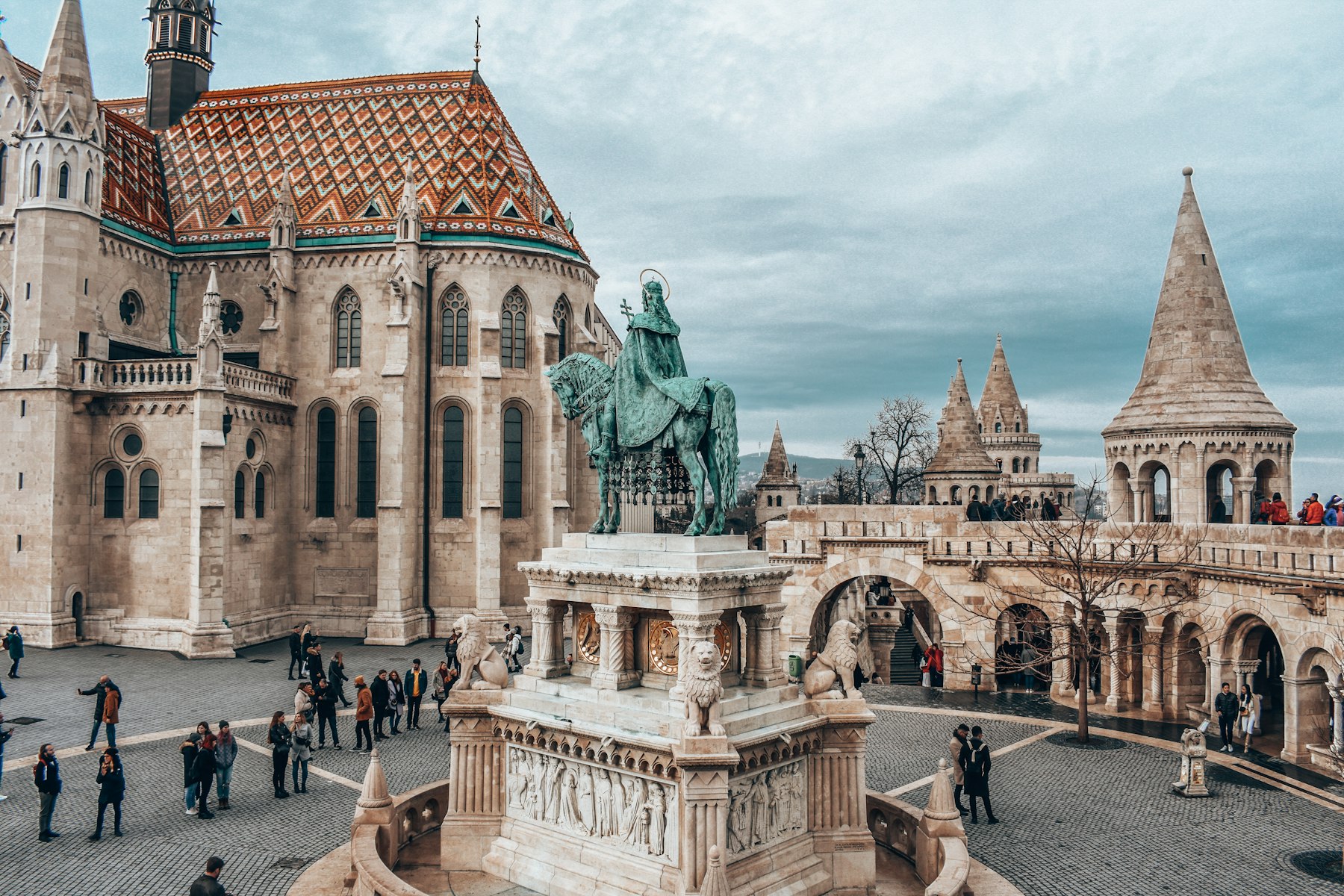
Castle hill, a bastion with white turrets, a parliament that looks drawn rather than built. Kids who are bored by churches are not bored by Budapest. There is enough spectacle in the skyline to carry a whole day of walking.
Passau to Budapest. This is my top recommendation for families doing their first river cruise. Budapest is stunning.
Nicole, River Cruising With Kids, June 2026Where to go
Hungary City by City
Eight places worth knowing about, in the order I would actually send a family. Budapest is not first out of habit. It is first because for most families it is the whole trip, and everything under it is a decision about if you want a second base or a day out.


Anthem Himnusz, a prayer, so Hungarians stand very still for it. They also have the Szozat, which they call the second anthem. Language and money Hungarian, related to nothing you know, and English in the capital. The forint, not the euro, and prices are kind.


Culture and Etiquette
Hungarians are direct and they are not performing warmth at you. A flat answer is not rudeness. Once you stop reading it as coldness you will find people go a long way out of their way for you, especially for your kids.
Say koszonom. Thank you. It is pronounced roughly kur-sur-nurm and you will mangle it. Say it anyway. Hungarian is not related to anything you know and no one expects you to have any of it, which is exactly why the attempt lands.
Do not clink beer glasses. The story goes back to 1849 and Austrian officers toasting after the executions at Arad. Anyone still minds or they do not, but older Hungarians notice. Clink wine, not beer.
Shoes off indoors. In a home or a rented flat with a Hungarian host, shoes come off at the door. Pack slippers or thick socks for everyone if you are staying in an apartment.
Smoking is still very present. Banned indoors, but terraces and doorways are thick with it. If you have a kid who reacts to smoke, ask for an inside table and mean it.
Cash still matters outside Budapest. Budapest is card everywhere. A market stall in Eger, a bath locker, a village bakery, a bus ticket. Carry small forint notes and do not assume.
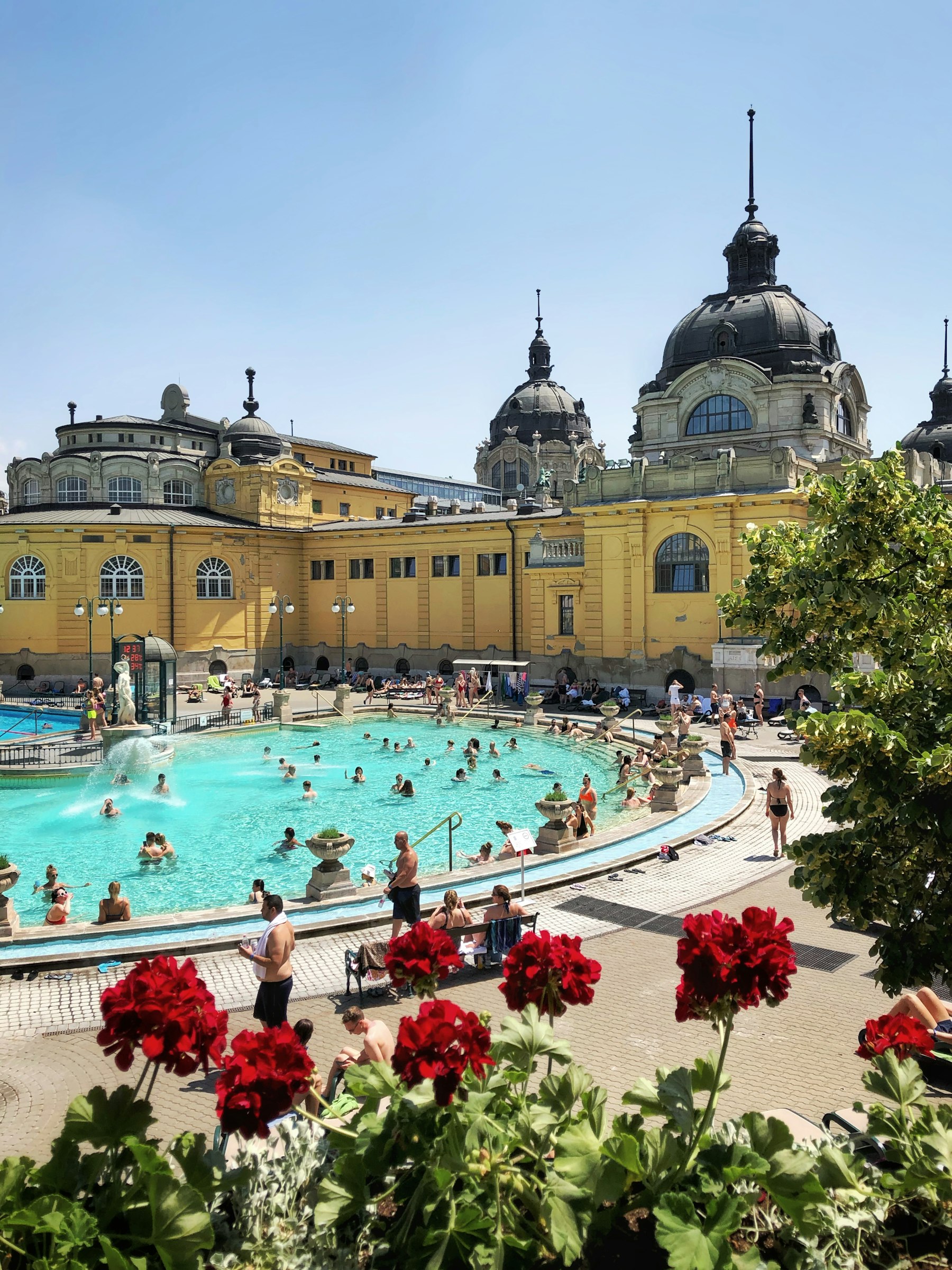
Szechenyi Baths, Budapest
Szechenyi, the big yellow one in the City Park. Children are allowed in the outdoor pools and there is a proper kids area. Gellert is the prettier one and the stricter one. Rudas has adults only hours you need to check before you turn up with a nine year old.
What to Eat
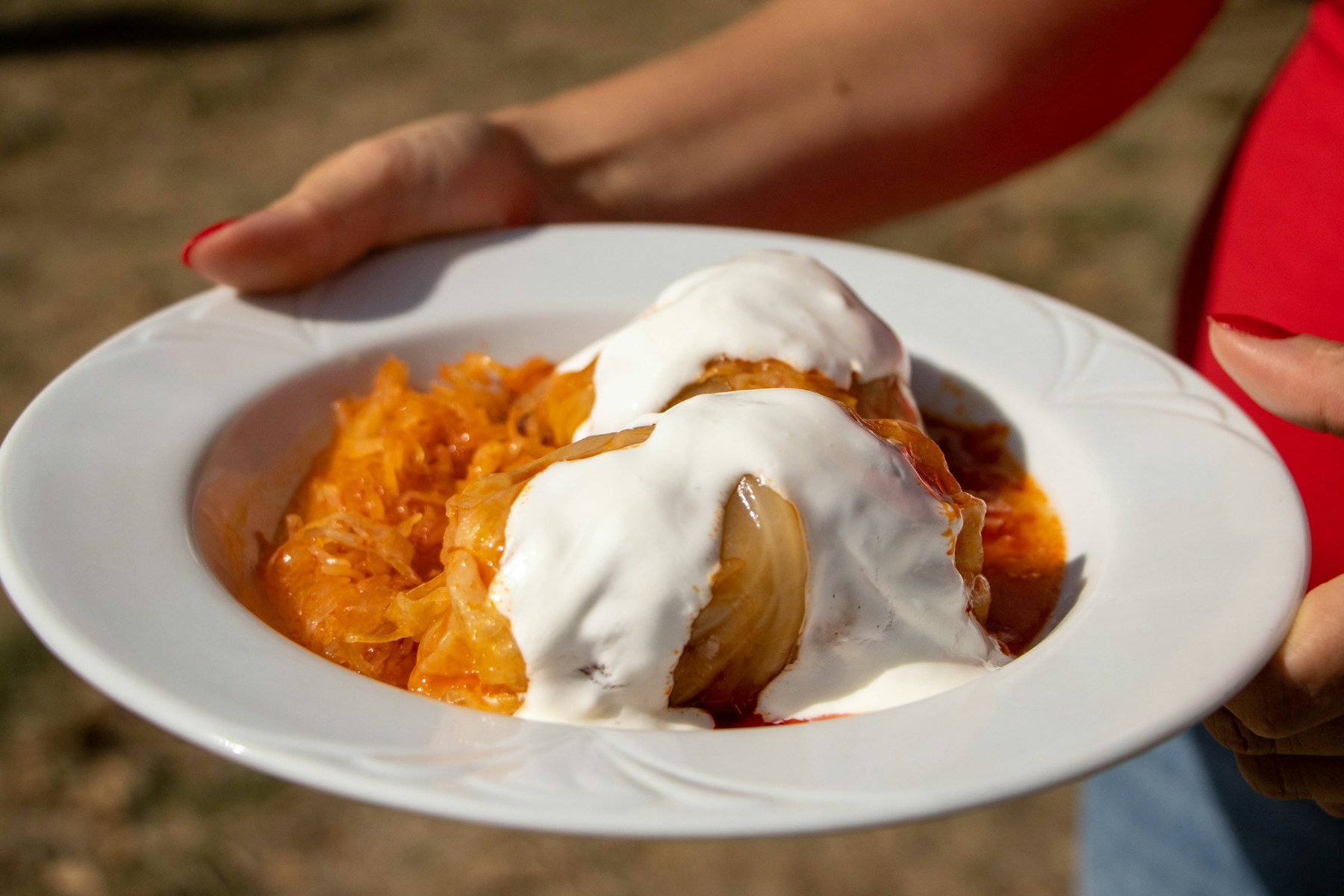
Hungarian food is paprika, pork, sour cream and bread, and it is a lot heavier than most families expect in July. Order one shared starter, not five. Also: langos, the fried dough plate with sour cream and grated cheese, is on every market and every bath line and it is the single food my kids would lose their minds over. Get it once and understand that it is a meal.

Getting Around
Budapest has one of the best public transport systems in Europe and it costs almost nothing. Three metro lines, trams, trolleybuses and boats, all on the same ticket. Buy a travelcard for the length of your stay on day one and stop thinking about it. Children under six ride free.
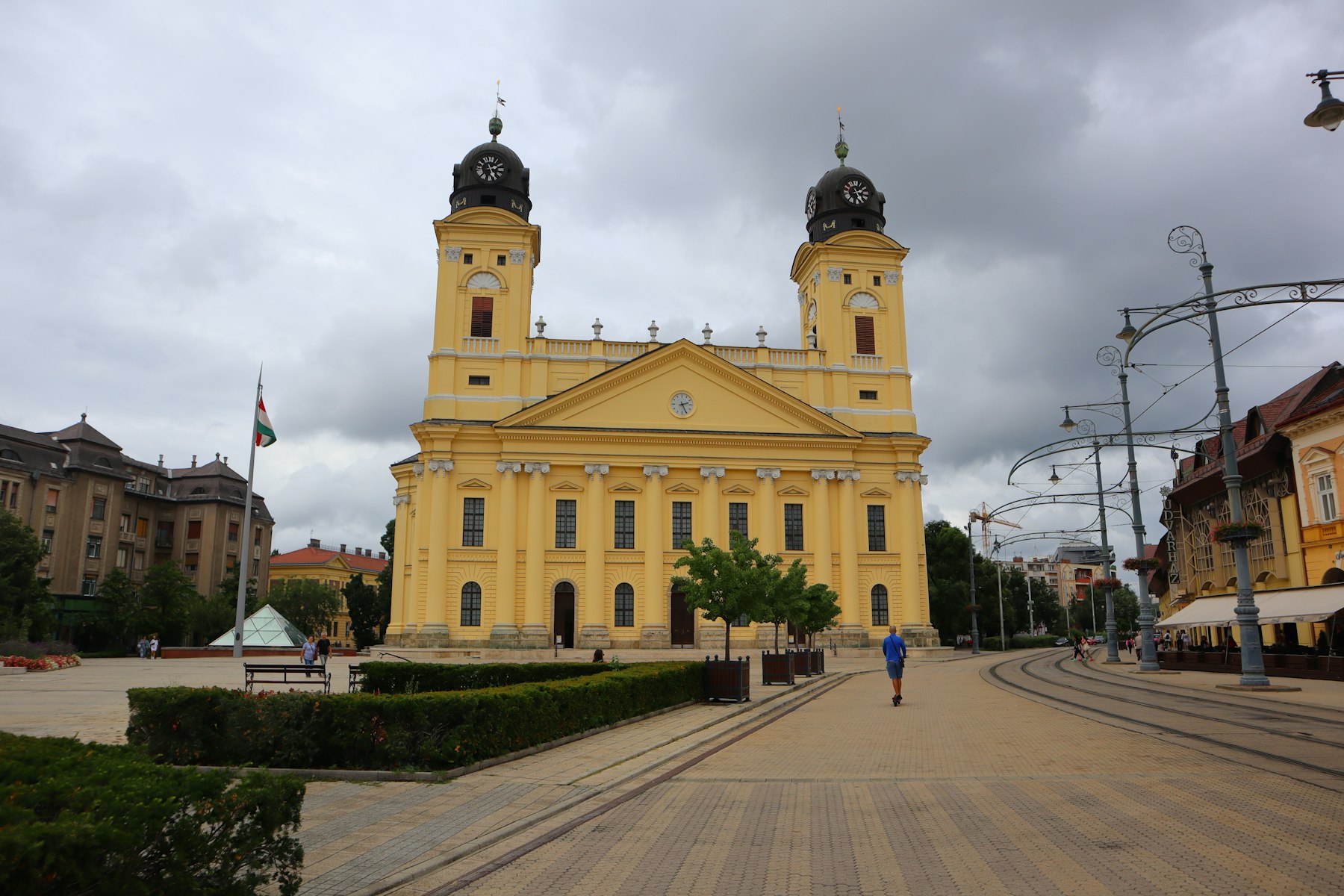
Outside the capital, trains run to everywhere on this page but they are slow and they are not the German railway. Eger is about two hours. Pecs is closer to three. Debrecen is three. If you want Holloko or the far side of Balaton in a day, rent a car. Roads are good, motorways need an e-vignette bought online before you drive on them, and the police do check.
Do not rent a car for Budapest itself. Parking is a punishment and you will not use it.

Tram 2 runs along the Pest embankment with the river on one side and the Parliament on the other. It costs the same as any other tram and it is a better city tour than anything sold as one. Ride it at dusk.
Money and Practical Basics
The forint is not the euro. Hungary is in the European Union and does not use the euro. The currency is the forint, HUF, and prices carry a lot of zeros. A thousand forint is a small note. Get your head around the scale before you order, because the numbers are alarming until they are not.
Refuse euros. Shops and restaurants that accept euros give you a terrible rate and keep the difference. Pay in forint. Always.
Avoid Euronet. Those blue and yellow standalone ATMs in every tourist street charge brutal fees and push dynamic currency conversion at you. Use a bank ATM, always choose to be charged in forint, always decline the machine conversion.
Tap water is fine. Drinkable everywhere in Hungary. Restaurants will try to sell you bottled and may charge for tap. Ask anyway, carry bottles, refill at the baths.
Plugs and phones. Type C and F, two round pins, 230 volts, same as the rest of continental Europe. EU roaming rules apply, so a European SIM works here without extra charges.
When to Go
Hungary is landlocked and continental, which means the summers are hotter and the winters are colder than the maps make you expect. Budapest in August regularly sits in the mid thirties Celsius with no sea breeze anywhere. That is the one thing I would plan around.
Spring
April into June is the best window. Warm without being punishing, the city parks are green, the baths are still uncrowded and the prices have not moved yet. If someone asks me for one month, I say May.
Summer
July and August are hot and busy and Balaton is full of Hungarians on a trip, which is charming and also why there is no room. The upside is long light and the outdoor pools. The downside is walking a castle hill at 34 degrees with a nine year old.
Autumn
September and October are quietly the best value of the year. Vineyard season in Tokaj and Eger, warm afternoons, cold mornings, and the tourist crush gone by the end of September.
Winter
Cold, gray and magic for about four weeks. The Christmas markets on Vorosmarty Square and outside St Stephens are among the best in Europe and the thermal baths are at their best when it is freezing and steaming. January and February have nothing going for them.
How Many Days and How to Route It
I get asked for three days in Budapest constantly and I push back every time. Here is how the math actually works with kids.
Three days is a stopover, not a trip. You will get castle hill, one bath and one long walk along the river. It is enough to know you want to come back. It is not enough to have been.
Five or six days is the right answer. One flat, one neighborhood, two bath afternoons, the Great Market Hall, the Parliament tour booked in advance, Margaret Island for a day when everyone needs grass, and one day where you do nothing on purpose.
Ten days lets you add a second base. Budapest for six, then either Eger and the north for the castle and the wine cellars, or Balaton for the water. Pick one. Do not do both.
If you are cruising, add nights. Every Danube itinerary ends or begins in Budapest and gives you an afternoon. Book two or three nights on land either side. It is the cheapest upgrade on the whole trip and it turns a photo stop into a city.

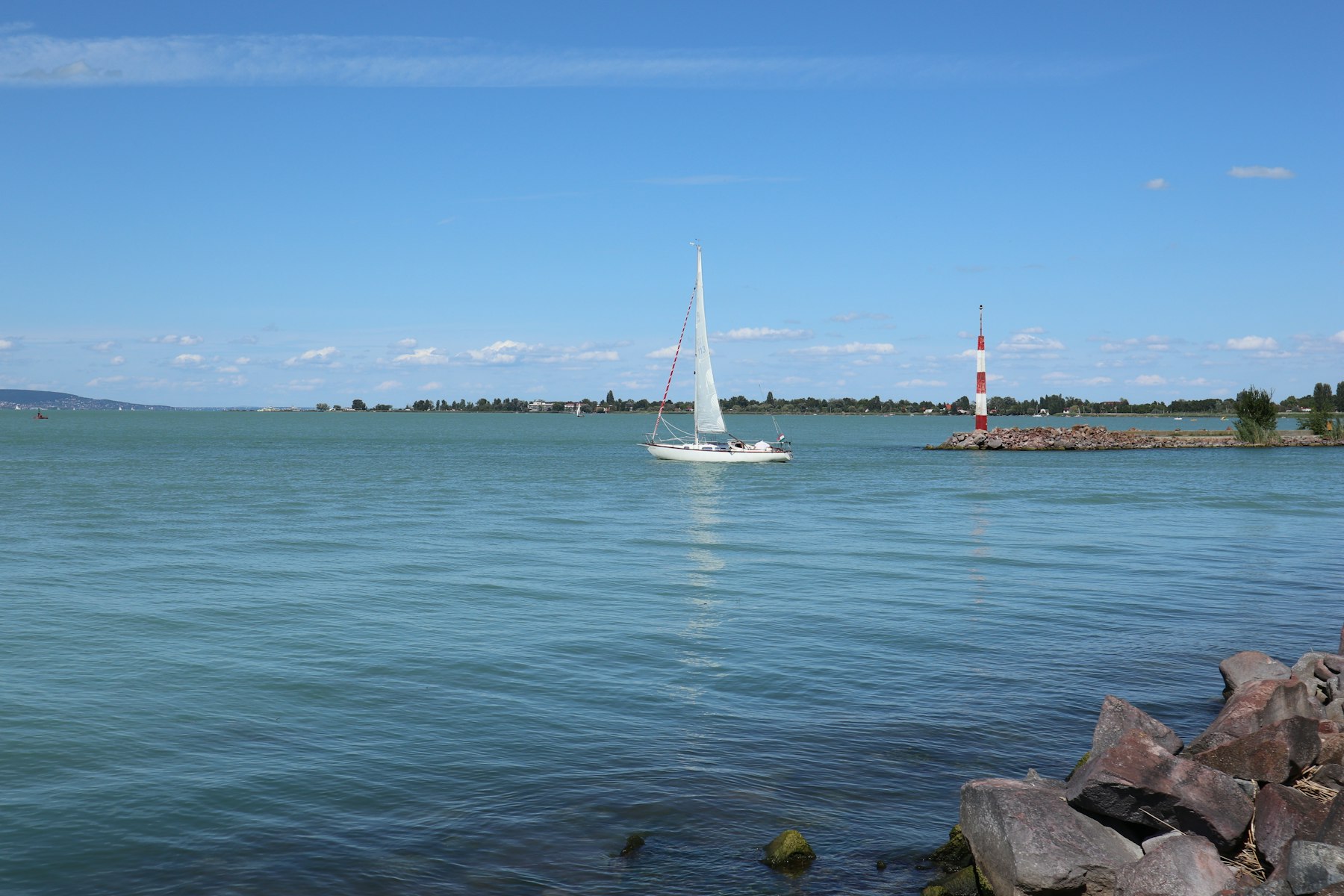
Lake Balaton, the Hungarian sea
Regions at a Glance
Budapest and the Danube Bend
The capital plus Szentendre, Visegrad and Esztergom, all inside an hour by train or boat. This is where ninety percent of family trips to Hungary happen and it is the right call.
Lake Balaton
The inland sea. Shallow, warm, no tide, no waves, and Hungarians have been triping on it for a hundred years. The south shore is the family shore. Tihany on the north side is the pretty one.
The Northern Uplands
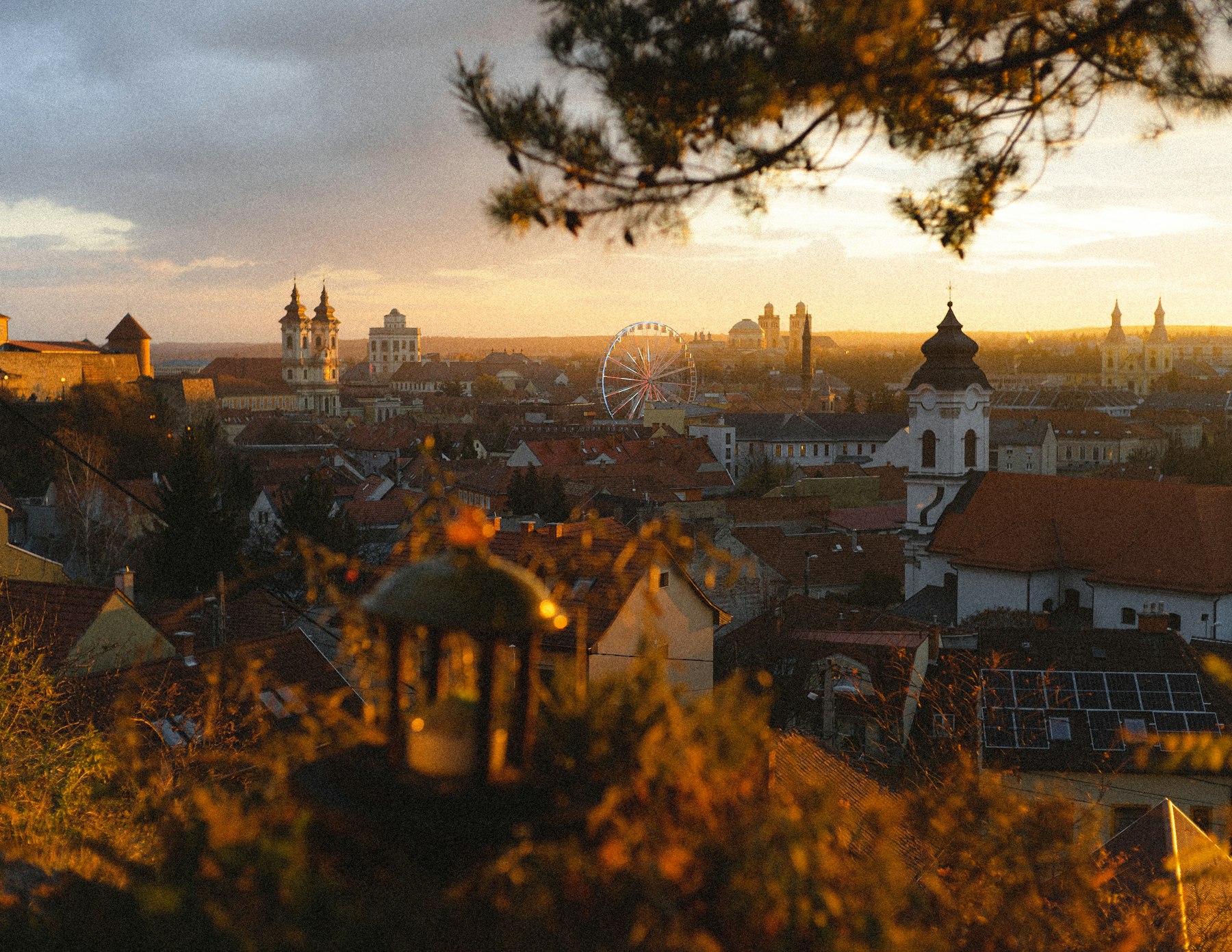
Eger, Holloko, the Bukk hills and the wine cellars of the Valley of the Beautiful Women. Castles, caves and the only real hills in the country. Best in autumn.
The Great Plain and the South
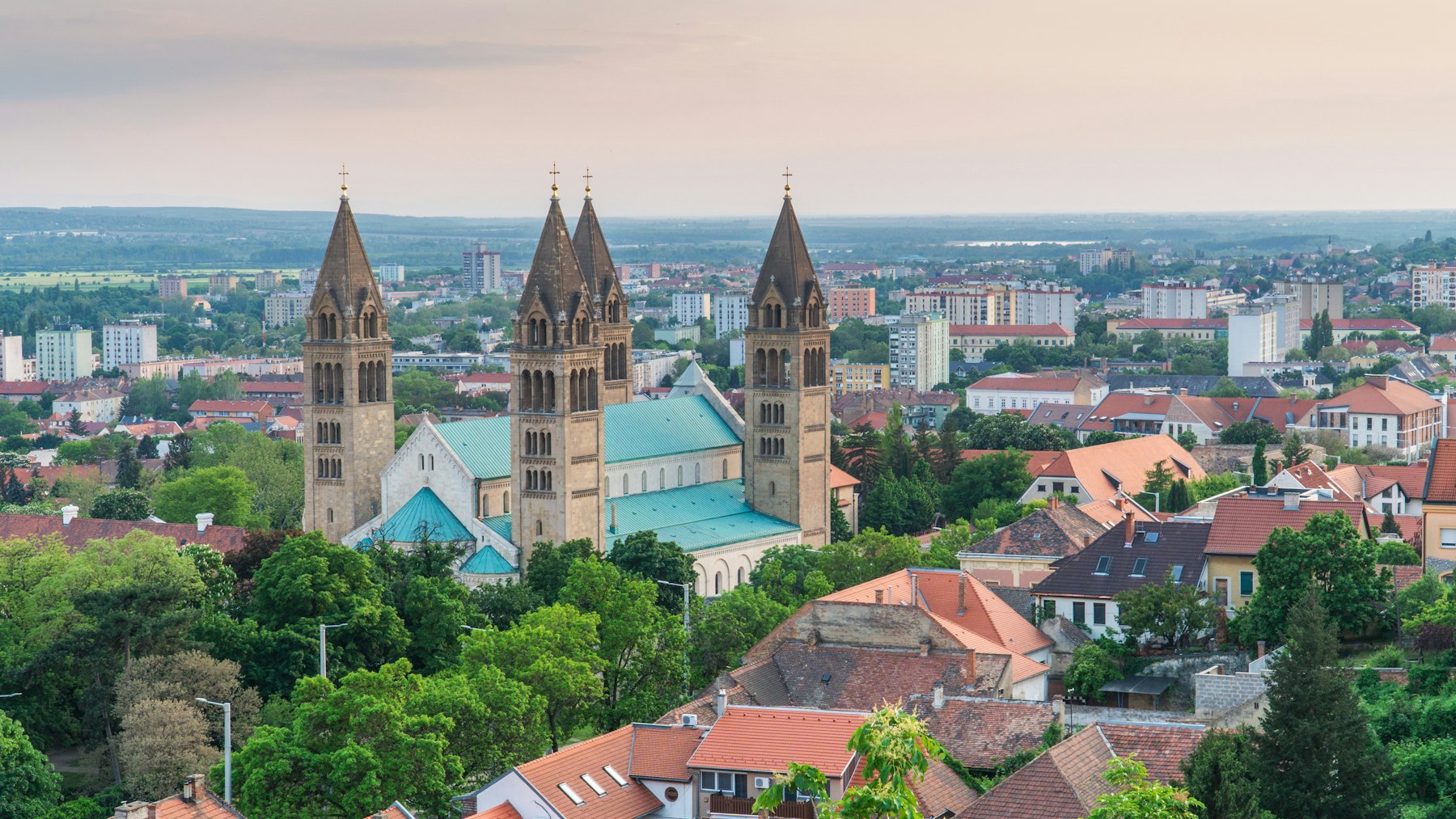
Debrecen, Hortobagy with its horsemen and gray cattle, Pecs and its Roman tombs down near Croatia. Flat, hot, less visited, and the part of Hungary that feels least like a city break.
Where to Go in Hungary
In the order I would actually build a trip, with the reason attached.
Budapest, first and mostly. Castle hill and the Bastion, the Parliament from the water, the Great Market Hall for langos and paprika, the House of Terror if your kids are old enough for it and the Hospital in the Rock if they are not quite. Margaret Island for the day everyone runs out of patience.
Szentendre, forty minutes out. A riverside town of painted houses, marzipan museums and a lot of ice cream. It is touristy and it does not pretend otherwise. Take the suburban train from Batthyany ter, it costs almost nothing.
Eger for the castle. Two hours northeast. A real fortress with tunnels, an Ottoman minaret at the top of the town, and Bull Blood wine in cellars cut into the hillside. The best single overnight outside Budapest.
Balaton if you want water. Not the sea, and anyone who tells you it is has not seen the sea. It is a huge warm shallow lake with beaches, waterslides and paddleboats, and small children are safe in it in a way they are not on a coast.
Tokaj if the adults get one day. Northeast, near the Slovak border, and the only region here I would go out of my way for without kids. Sweet aszu wine, cellars in volcanic rock, vineyards on hills. Long drive. Worth it once.
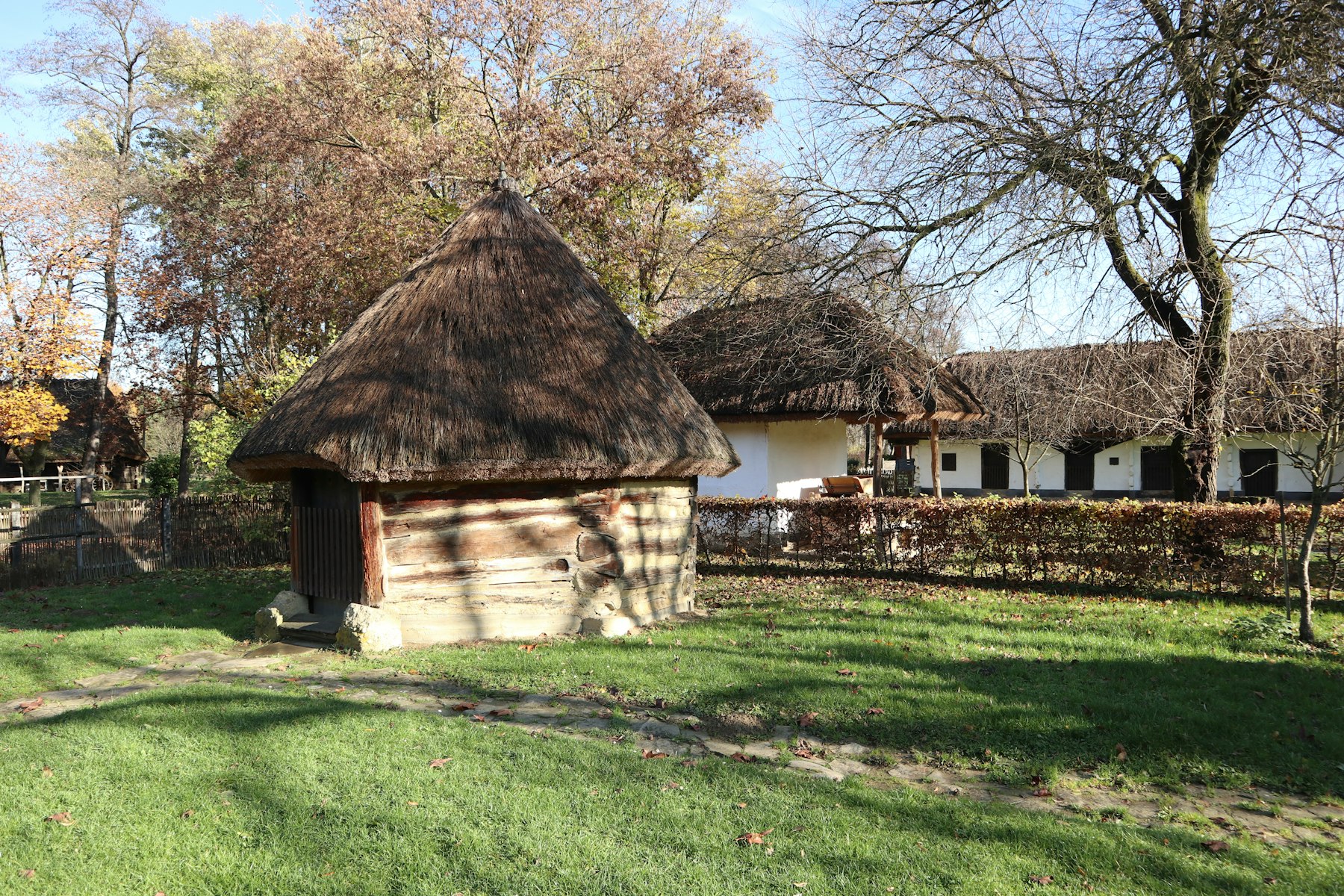
Holloko for one hour, not one day. A preserved Palocs village, whitewashed houses, a UNESCO listing and about four streets. Beautiful and small. Do not build a day around it, build a lunch stop around it.

Chain Bridge, Budapest
The Chain Bridge after dark. Every guide tells you to do the night river cruise and for once they are right, it is cheap and it is the view the city was built for. The public boat on the transport ticket does most of the same route for the price of a tram.
Family Travel Considerations
Budapest with kids is easier than people expect once you sort out the baths and the heat. Hungary with kids means castle hill in the morning and a thermal pool in the afternoon, and a family trip to budapest of four or five days is enough to do both properly.
Check the age rules at each bath. Szechenyi takes children in the outdoor pools and has a proper kids section. Gellert is stricter. Rudas has adults only and single sex hours. Turning up with three kids at the wrong bath at the wrong hour is a completely avoidable bad afternoon.
Rent a flat, not two hotel rooms. Budapest apartments are large, central and cheap by European standards, and a kitchen changes what a week costs with five people. District V, VI and VII all work. District VII is the ruin bar quarter and it is loud until three in the morning, so read the street, not just the district.
Plan around August heat. Mid thirties, no sea, stone streets. Do castle hill before ten, be in water by two. This is the single biggest mistake families make in Hungary.
Book the Parliament tour weeks out. Limited English slots, they sell out, and children under six are free. It is one of the few things in Budapest you cannot fix on the day.
Dogs are welcome nearly everywhere. Hungary is one of the easier countries in Europe for a traveling dog. Cafes, trams and most parks are fine with a lead. Poppy would do well here.
Splurge-Worthy Experiences
A private bath at Gellert or Rudas
Not the general pools. The private cabin hour, booked ahead, in the art nouveau half of Gellert. It is one of the few beautiful indoor spaces in Europe you are allowed to be in a swimsuit in, and it costs less than a family dinner in Vienna.
The Great Synagogue and the Shoe Memorial
Do it with a guide and do it with kids old enough. The largest synagogue in Europe, the memorial garden behind it, and then the iron shoes on the embankment. Fifteen minutes at the shoes will do more than a year of school.
Dinner at a proper cukraszda
Gerbeaud or Ruszwurm. Marble, chandeliers, a Dobos torte and a coffee, at prices that would be a joke in Paris. Do it in the afternoon and call it the treat of the trip.
A night on the river
Not the tourist dinner boat with the bad microphone. Just an hour on the water after dark, or two or three nights either side of a Danube cruise so Budapest stops being a port and starts being a city.
What Surprises First-Timers
It is not the Balkans and it is not Vienna. Hungary sits in the middle of Central Europe and it does not read as either of the things people expect. The language belongs to no family you know. The architecture is Habsburg, the food is Ottoman inflected, and the twentieth century is right there on the walls.
Ruin bars are actually fine before eight. Szimpla Kert is a bombed out courtyard full of junk furniture and it is a legitimate afternoon stop with kids. It is a very different building at midnight.
Hungary is cheaper than its neighbors but not cheap. Budapest prices have climbed hard since 2022 and the gap to Vienna has narrowed. It is still the best value capital in the region. It is no longer the bargain it was five years ago and anyone telling you otherwise has old information.
The metro is a museum piece. Line M1 opened in 1896 and it is the oldest underground on continental Europe. Tiny yellow trains, wooden fittings, shallow stations. Kids notice. Ride it for its own sake.
Where I Would Start
First time in Hungary with kids? Budapest is the trip. Four nights covers it, and the baths are the reason the kids will want to come back.
Budapest. Four nights. Szechenyi baths, the castle by funicular, the parliament from a river boat, the Great Market Hall for lunch, the chairlift up Janos hill.
Margaret Island. An afternoon. Rent a four seater bike, the musical fountain, the little zoo, the pool. It is the city’s back garden.
Lake Balaton or Eger. Two nights in summer. Balaton for the shallow warm lake ninety minutes away, Eger for the castle and the wine valley.
Numbers Worth Knowing
Hungary, by the numbers
Ways to travel
Hungary is not one kind of trip
How you move through it changes the trip more than which places you pick.
River Cruising
The Danube is the reason most families see Hungary at all. Passau to Budapest is the classic route, and Budapest is where it saves the best for last.
For example: a week from Passau ending with two nights docked in Budapest instead of one afternoonRail Journeys
Vienna to Budapest is under three hours by train, an easy second stop without ever renting a car.
For example: Vienna to Budapest in under three hours, no highway requiredRoad Trips
Lake Balaton and the wine country around Eger are built for a car, the way most of the country outside Budapest is.
For example: Budapest to Eger for a night in a real wine cellar, back in under two hoursGuided and Small Group
The Parliament building and the old Jewish Quarter both make more sense with someone explaining what you are looking at.
For example: a guided walk through the Jewish Quarter, ending at a ruin bar for the older kidsExplore by interest
What families come to Hungary for

Cities
Budapest
The Parliament from the river, Fisherman’s Bastion, the Chain Bridge lit at night and a yellow tram along the embankment. One of the great capitals and one of the cheapest.

Baths
Szechenyi and the thermal pools
Outdoor pools steaming in winter, old men playing chess in the water and a wave pool for the children. The afternoon every family remembers.

Villages
Szentendre, Eger and Holloko
Painted houses and paper lanterns an hour up the Danube, a baroque town with a castle and wine cellars, and a thatched village frozen in the nineteenth century.

Food
Goulash and chimney cake
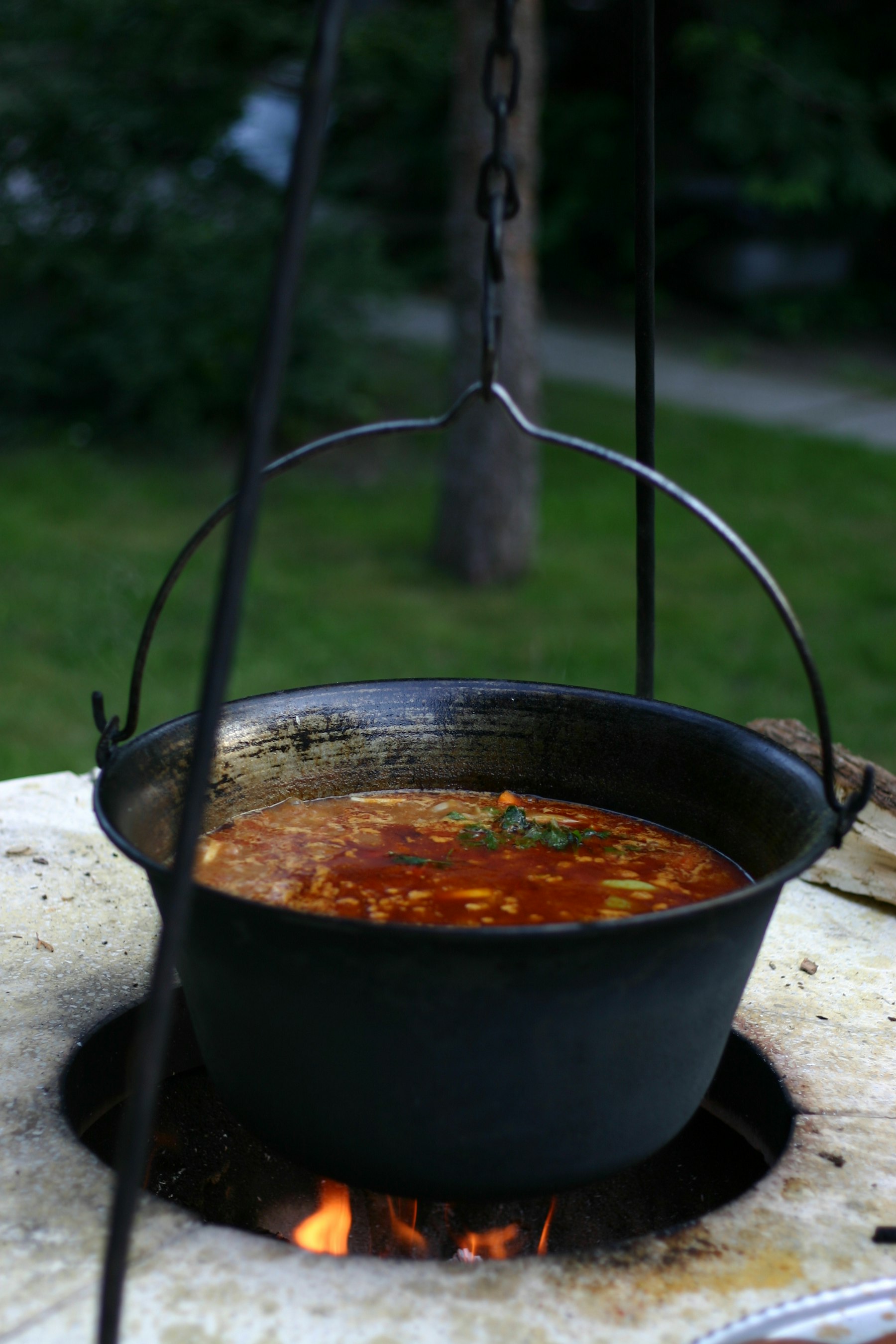
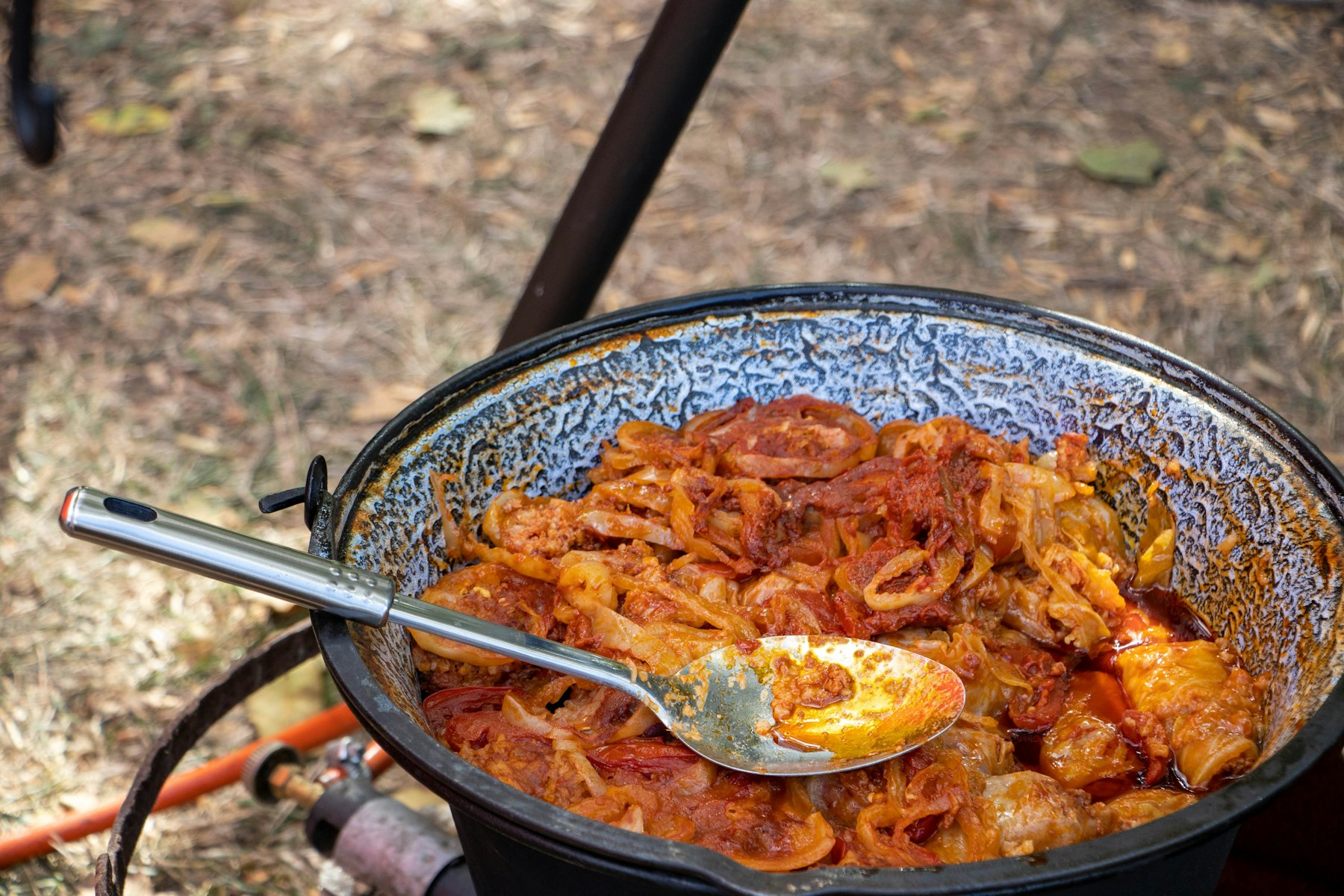
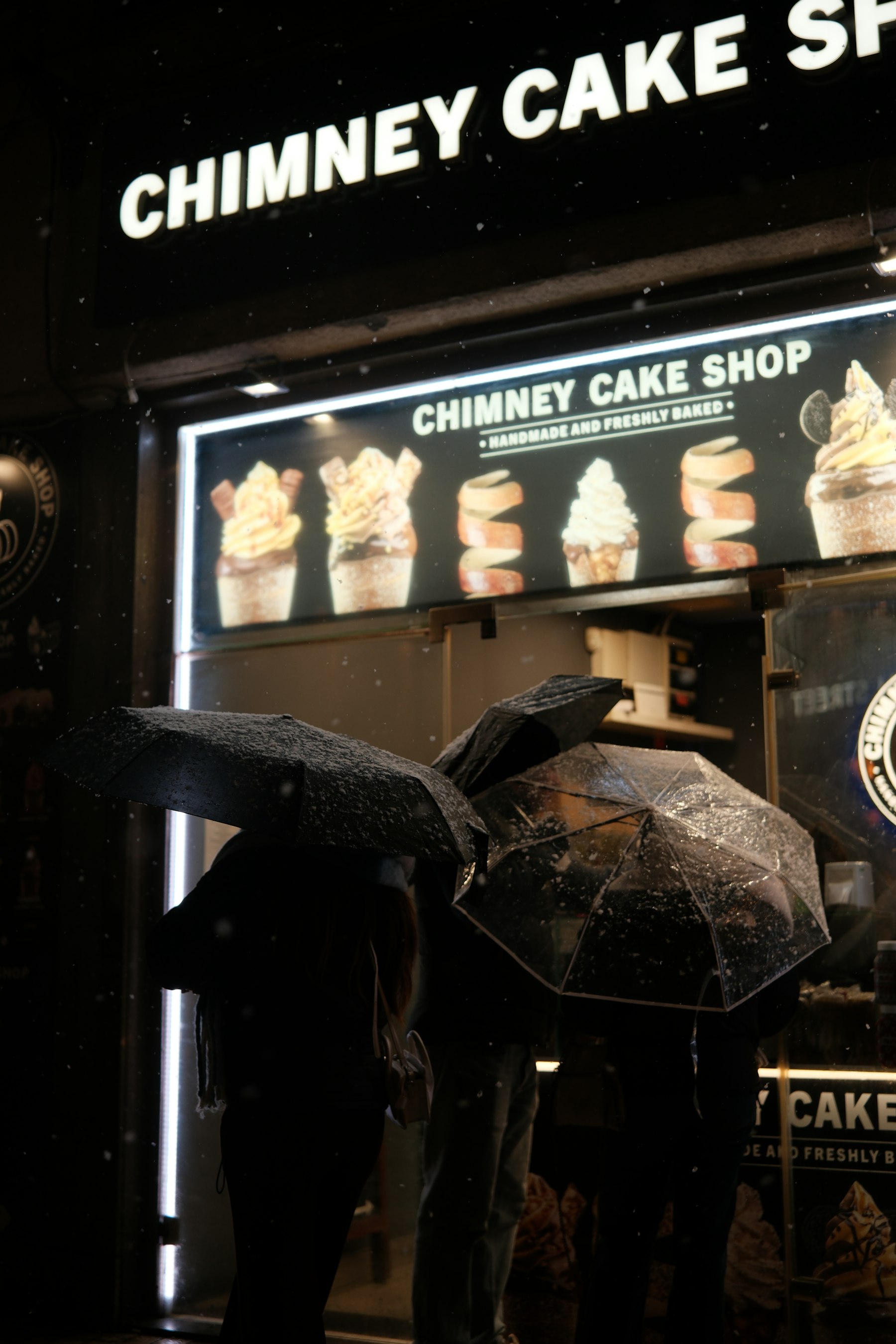
Goulash from a kettle over a fire, paprika in everything, strudel from a market table and a chimney cake turning on a roller. Children eat well and cheaply here.
Something unexpected
Only in Hungary

Read before you go
Two books, one each
For the kids. The Paul Street Boys by Ferenc Molnar. Two rival gangs of Budapest boys defend a vacant lot in this 1906 classic, still assigned in Hungarian schools today.
For you. The Door by Magda Szabo. A strange, devoted relationship between a writer and her housekeeper, set in the same city you are about to walk through.

Watch before you go
Spy
The back half of this Melissa McCarthy comedy is shot and set in Budapest, and it plays exactly like what it is, a movie that fell in love with the city halfway through filming. Easy family watch, plenty of laughs.
Photo via Unsplash.
From here
The ballpoint pen
Laszlo Biro, a journalist from Budapest, patented the modern ballpoint pen in the 1930s. In a lot of the world, including the UK and Australia, people still just call it a biro without knowing why.
Photo via Unsplash.
Only in Hungary
Kalocsa embroidery
The bright folk florals from the town of Kalocsa are hand stitched the same way they have been for generations, and the town is officially recognized as a Hungarikum, a protected national treasure. It also happens to be Hungary’s paprika capital.
Photo via Unsplash.Combine It With
If you have the time to add a second country, these are the ones I would actually pair this one with. Not a list of neighbors. A list of trips that work.

Austria
Vienna to Budapest is under three hours and Budapest is the cheaper half of the trip. Two very different Habsburg hangovers.
Read the guide
Czech Republic
Prague and Budapest are the classic two stop Central Europe trip. Put Vienna in the middle and you have the whole thing.
Read the guide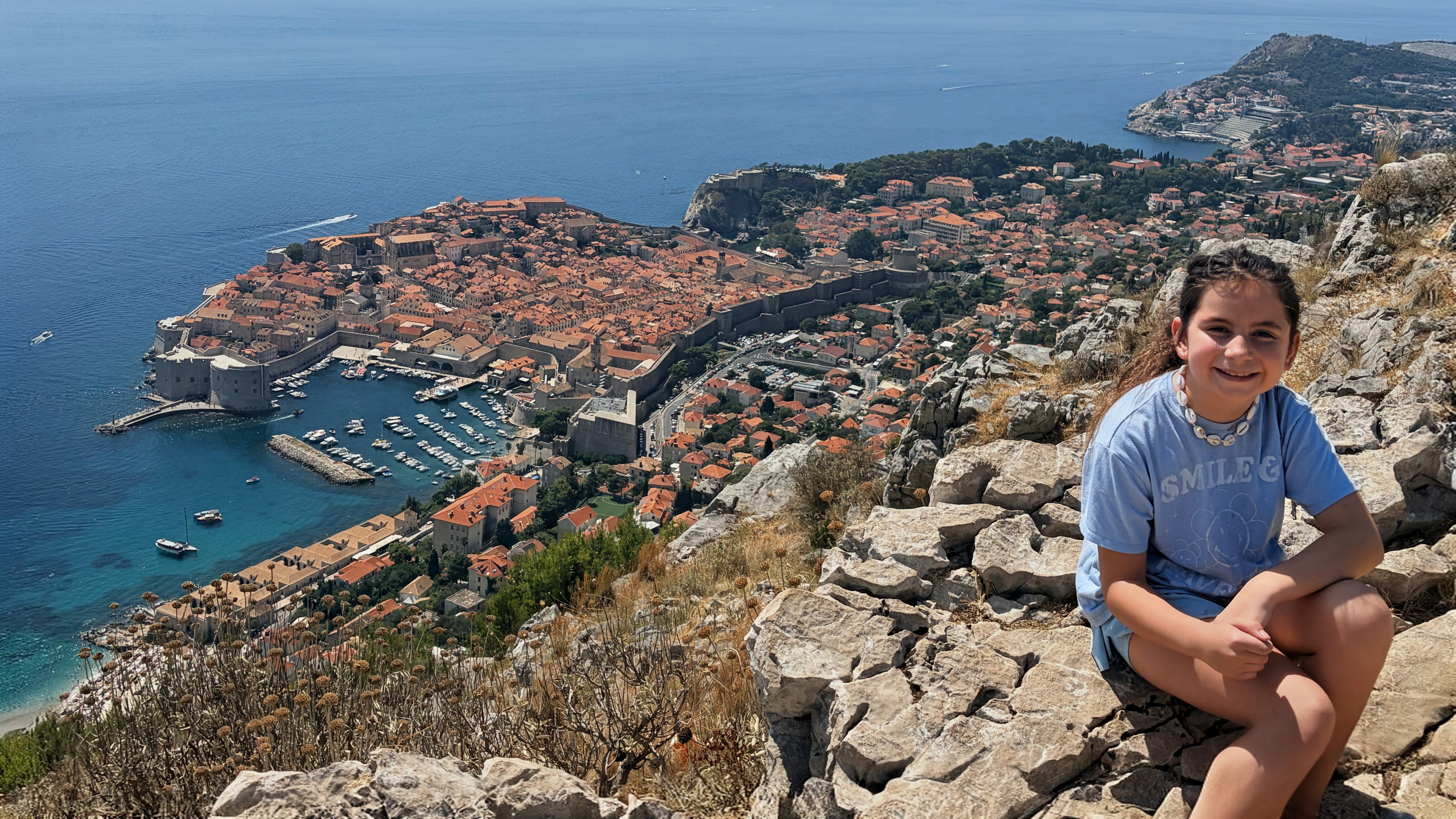
Croatia
Budapest down to Zagreb and then out to the coast. Landlocked to the Adriatic in a day.
Read the guide
Plan Hungary with Nicole
Tell me who is coming, and when.
Hungary works as a river cruise ending, a Budapest city break on its own, or a rail add on to Vienna and Prague, and which one makes sense depends on how much time you have and what else is on the itinerary. Send me the ages, the dates, and what you are hoping this trip feels like. I will come back with what is really available.
Nicole Damiano, ASTA Verified Travel Advisor with FG Luxury Travel.
Questions families ask about Hungary
The ones that come up in almost every planning call. If yours is not here, ask me.
Do we need anything to enter, beyond passports?
Not a visa. US passport holders get 90 days in any 180 day period across the Schengen area, and this country counts toward that same 90 days.
Your passport has to be valid for at least three months beyond the day you leave Europe. Check the kids’ passports too. Child passports are only good for five years and they expire quietly.
Since October 2025 the EU has been taking fingerprints and a facial image at the border under the new Entry and Exit System. No fee, no form. The first arrival can be slower than you remember, so build a real cushion into any connection.
ETIAS, the paid travel authorization you may have read about, is not running yet. It is expected in late 2026. When it starts I will tell every family I am working with, well before they fly.
Which thermal bath works with kids?
Szechenyi. The big outdoor pools are warm, shallow enough at the edges, and there is a whirlpool current that kids ride for an hour. Go in the morning before the tour groups.
Gellert is prettier and more adult. Children under fourteen are not allowed in most of the indoor thermal pools there, so check before you buy tickets.
Do we need forints?
Yes. Hungary is in the EU and does not use the euro. Some tourist places quote euros and round up in their favor.
Use a bank ATM, decline the machine’s conversion, and get used to the zeros. A thousand forint is a small note, roughly three dollars.
How many days for Budapest?
Three. Castle Hill and the baths, the Parliament and the river, the market hall and a ruin bar courtyard for lunch. That covers it for a family.
A fourth day for Szentendre or a Danube Bend boat trip if you have it.
Is it safe to walk around?
Yes. Central Budapest at night is well lit and busy, and the metro runs late. Watch for taxi overcharging, use Bolt instead.
Keep exploring from Hungary
Cities, neighbors, and the wider region.
Click any card to open that page
More of Europe
 Austria
 Belgium
 Croatia
 Cyprus
 Czechia
 Denmark
 France
 Germany
 Greece
 Iceland
 Ireland
 Italy
Italy Netherlands
 Norway
 Poland
 Portugal
 Spain
Spain Sweden
 Switzerland
 Turkey
 United Kingdom
 All of Europe
 Explore the world
 The Travel Library