
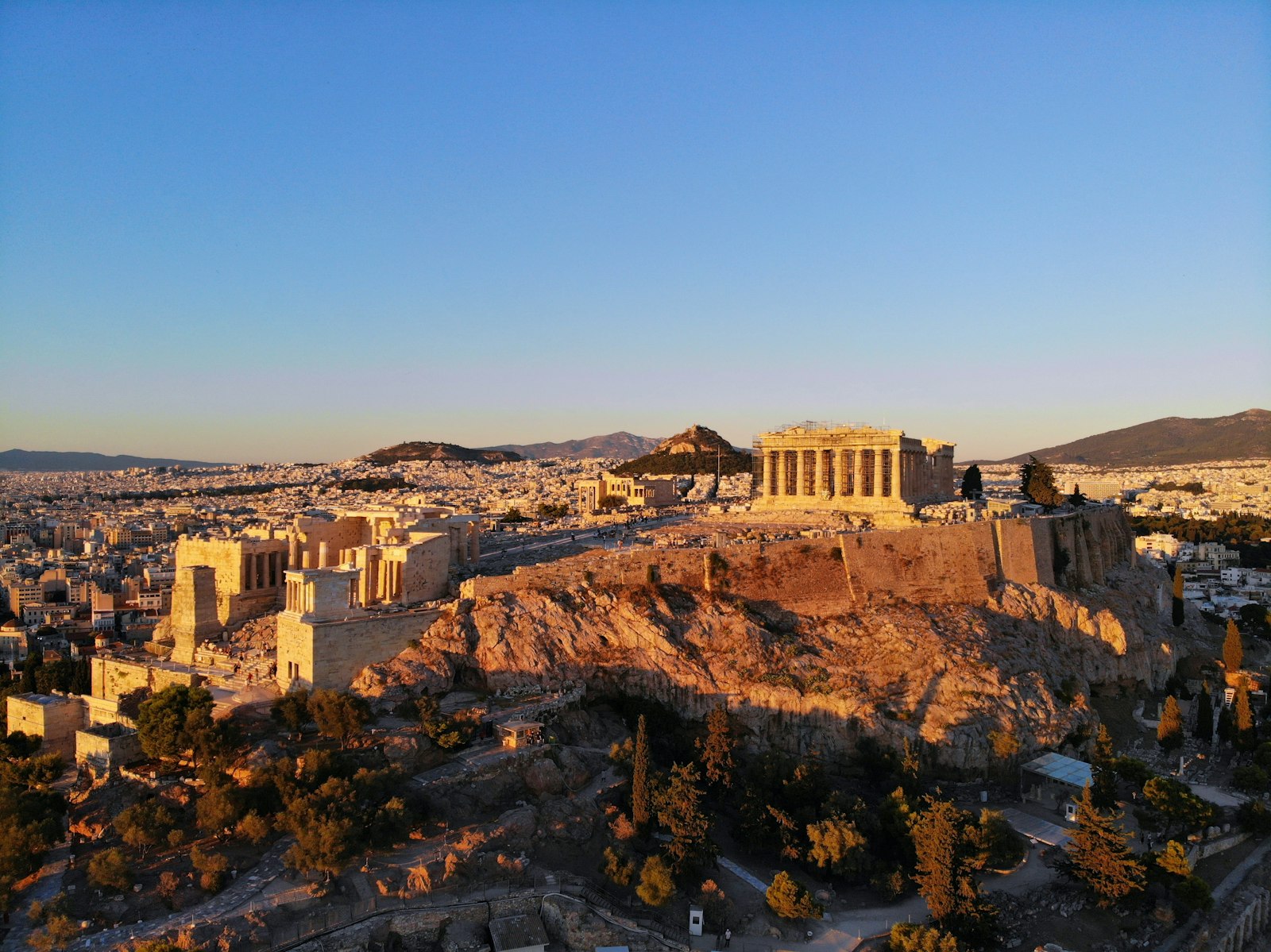
The Acropolis above Athens at the end of the day
Greece Family Travel Guide
“Greece is where a family can do beach and history in the same two weeks without choosing. Start in Athens, and give it more than one day.”
Nicole Damiano, ASTA Verified Travel Advisor with FG Luxury Travel
Do we need anything to enter, beyond passports?
Not a visa. US passport holders get 90 days in any 180 day period across the Schengen area, and this country counts toward that same 90 days. Your passport has to be valid for at least three months beyond the day you leave Europe. Check the kids' passports too. Child passports are only good for five years and they expire quietly. Since October 2025 the EU has been taking fingerprints and a facial image at the border under the new Entry and Exit System. There is no fee and no form. It just means the first arrival can be slower than you remember, so build a real cushion into any connection. ETIAS, the paid travel authorization you may have read about, is not running yet. It is expected in late 2026. When it starts I will tell every family I am working with, well before they fly.
Athens first, or straight to an island?
Athens first, for two or three nights. The Acropolis and the museum land better at the start of a trip than at the end, when everyone is sunburnt and finished. Two nights is enough for most families. Then the island is the reward rather than the interruption.
Which islands work with children?
The ones with a shallow beach, a short transfer and something to do when the sun gets too strong. Naxos and Paros are the two I come back to for families. Crete works because it is large enough to hold a whole trip on its own. Santorini is spectacular and it is a cliff. Volcanic beaches, steep steps, and crowds at sunset. It is a wonderful two nights and a hard week with a five year old.
How do we get between the islands?
Ferries, mostly, and the schedules for the following summer are not published as early as you would like. That is normal, and it is the single most common reason a Greece plan needs rebuilding late. Flying between islands is possible and sometimes cheaper in time than money. I look at both before I lock anything in.
When is it too hot?
Mid July through late August regularly runs into the high thirties Celsius, which is the high nineties Fahrenheit, and heat like that changes what a family can actually do in a day. Late May, June, and September give you the same sea with a workable afternoon. September is my favorite for anyone not tied to a school calendar.
Nicole’s Perspective
Why families hire me for Greece

I taught social studies for eight years, and the ancient world was my favorite part to teach. This page is what I know from that, from building Greek trips for other families, from watching what goes wrong for them, and from the ferry timetables I have been staring at for months.
The one thing I will say with total confidence, because every family I have ever sent comes home saying it, is that Greeks like children. Not tolerate. Like. Your kids will be handed things, talked to, fussed over and fed. In a lot of Europe you are managing your children in public. In Greece you mostly are not.
The rest of this page is the honest part. The island hopping fantasy versus the ferry timetable. August. The reason Athens deserves more than the one day everyone gives it. And which islands are actually built for families and which ones are built for twenty two year olds. Read the full post at Greece With Kids too, because I keep that one updated.
Beyond the Bookshelf
Stories to carry you deeper into Greece. From island tavernas to ancient myth, here is what to read, watch, listen to and cook before you go.

- Zorba the GreekNikos Kazantzakis
- MiddlesexJeffrey Eugenides
- EleniNicholas Gage
- Vefa’s KitchenVefa Alexiadou
As an Amazon/Bookshop/affiliate partner, we may earn from qualifying purchases.
Why this country, for this family
Why Greece
 Poppy marks the family parts. Wherever you see her, that section is written for traveling with children.
Greece is the country I recommend when a family wants beach and history in the same two weeks and refuses to choose. Families ask me what the best greek islands for families actually are, and the honest answer depends on how much sand versus how many ruins you want.
Almost nowhere else does both properly. You can stand in front of a temple that was old when Rome was new in the morning and be in water clear enough to count your toes by lunch. That is the whole pitch and it happens to be true.
Children are welcome
Not tolerated, welcomed. Restaurants at nine at night, waiters who talk to your kids directly, strangers who will hold the baby. Families come home talking about this more than the ruins.
It is cheaper than Italy or France
Not cheap, but noticeably better value. A taverna dinner for five with wine runs 60 to 90 euros. Ferries and domestic flights are affordable. The islands are where the money goes.
The history is not abstract
Delphi, Olympia, Knossos, the Acropolis. Kids who have read a single book of Greek myths will recognize names they already know, which is the difference between a museum and a story.
Greece has a warmth to it that goes beyond the weather. You will not feel like your kids are in the way. You will feel like they belong there.
Nicole Damiano, from the Greece With Kids postThe map
Greece Place by Place
There are more than two hundred inhabited Greek islands and you are not seeing them. These are the eight greek islands with kids that I build family trips around, and the two on the mainland matter more than people expect.


Anthem The Hymn to Liberty, 158 verses long. They sing the first two. Language and money Greek, with its own alphabet, and good English everywhere tourists go. The euro, and cash for the tavernas and the ferries.




Culture and Etiquette
This is what I brief clients on before they go.
Dinner starts at nine. A taverna at seven will be empty and half the kitchen will not be ready. Feed the kids something small at six, then go late with everyone else. Nobody will look at you for having children out at ten.
Everything shuts in the afternoon. Roughly two until five or six, especially on the islands and outside high season. Do not plan your shopping or your sightseeing then. Do what Greeks do and stop.
Paper goes in the bin, not the toilet. The pipes are narrow and old and this is not negotiable in most of the country. Tell the kids on day one, more than once.
Cover shoulders and knees in monasteries. Meteora and the island churches enforce it. Some hand out wraps at the door, some do not. Carry a scarf and long shorts and save yourself the argument.
Do not hold up an open palm at anyone. The moutza, five fingers pushed toward someone, is a serious insult. Wave with your palm turned in. It is the only gesture I brief people on before Greece.

Every Greek island trip is really a chain of harbors. Boats, timetables, and a departure that happens if you found the right gate.
What to Eat
Greek food is the most family friendly cuisine in Europe and it is not close. Simple, grilled, fresh, and served in quantities nobody finishes.
Order mezedes, lots of small plates, and share the whole table. It solves the fussy eater problem before it starts, because everybody finds something.
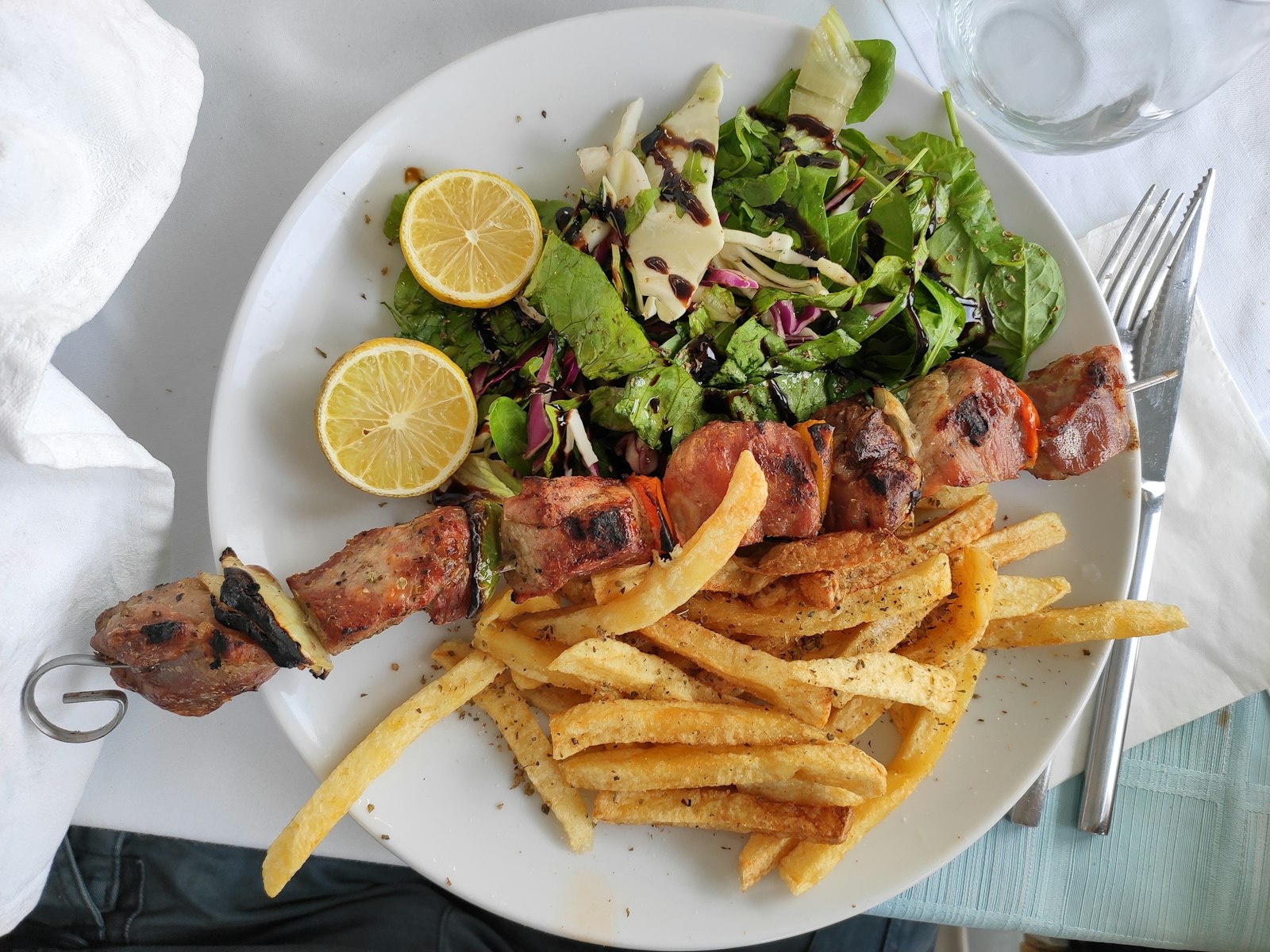
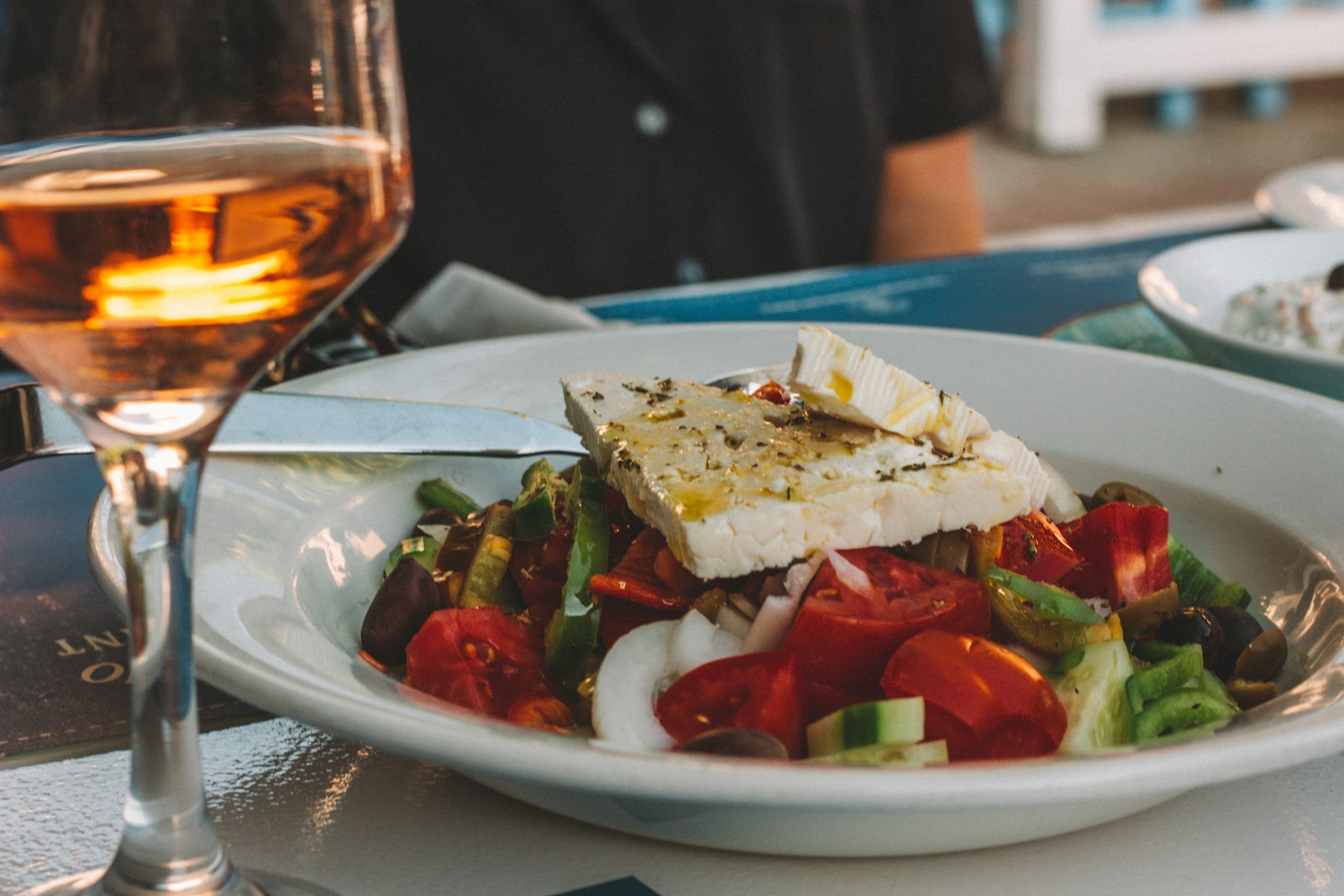

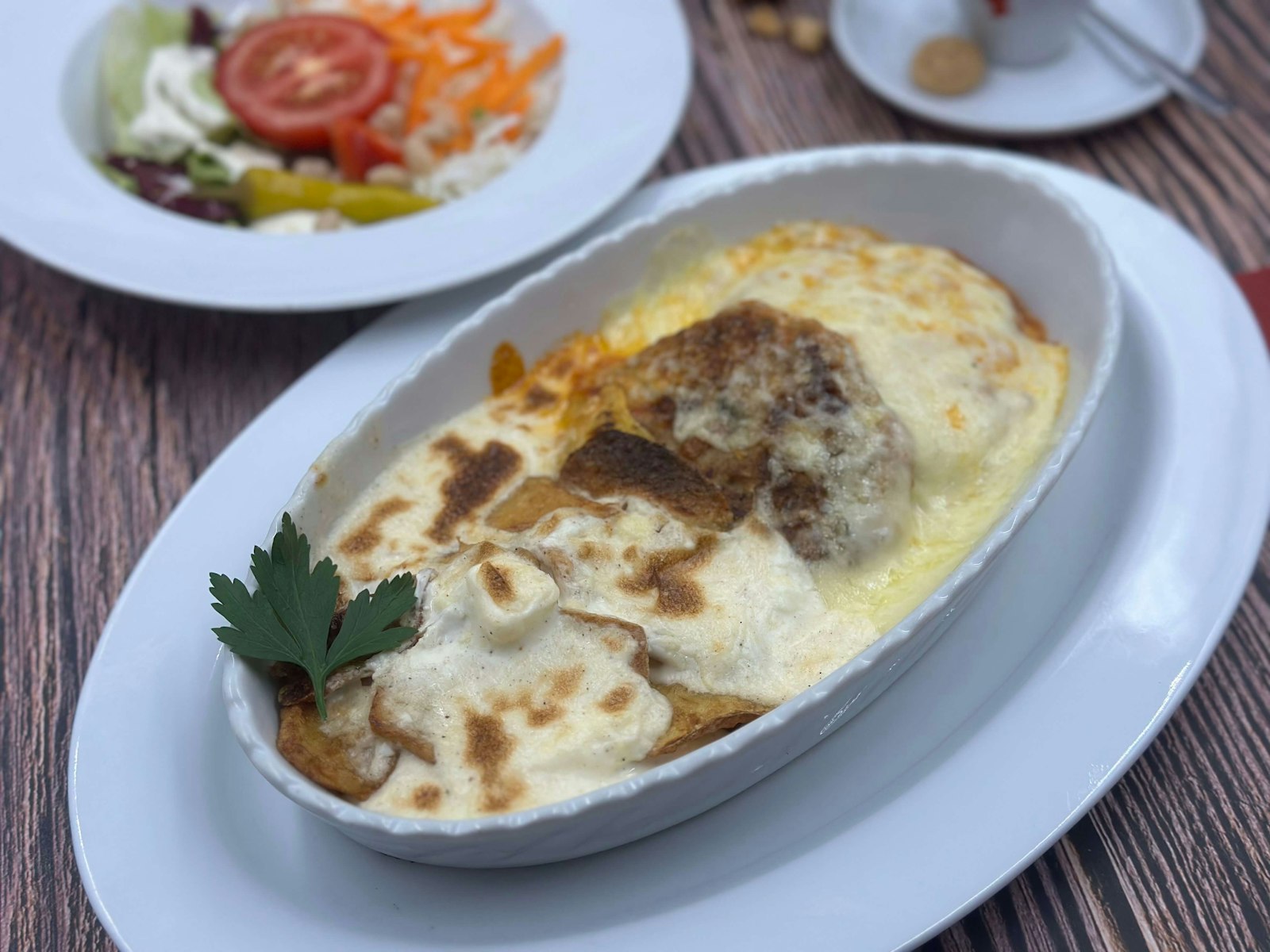
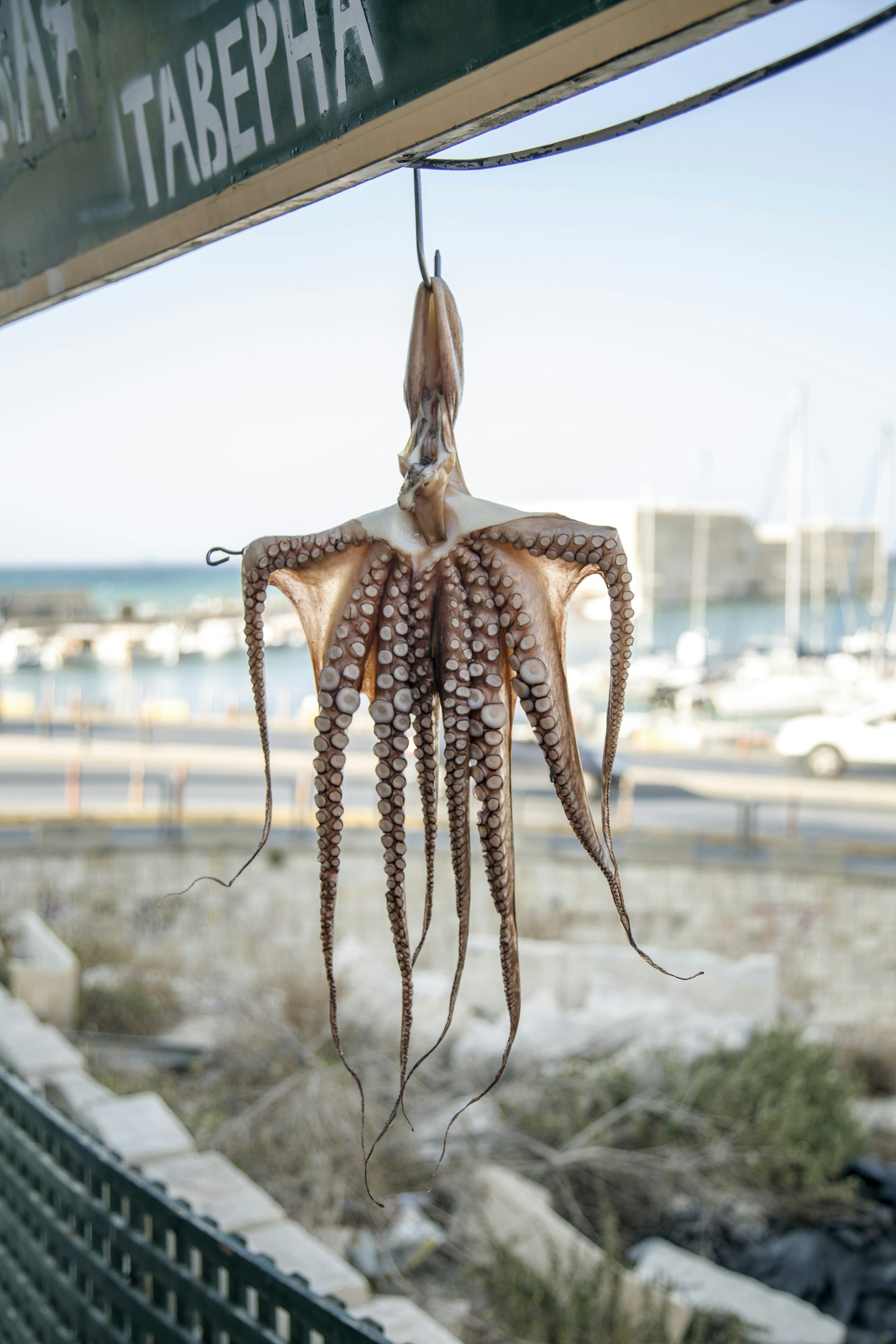
And loukoumades. Small fried dough balls in honey and cinnamon, sold hot in paper cups. Nobody has ever refused one.
Getting Around
This is the section that decides if your Greek trip works, and it is the one people skip.
Almost everyone flies into Athens. From there you either fly on to an island, which takes forty five minutes and costs more, or you take a ferry from Piraeus, which takes anywhere from two to eight hours and shows you the sea.
Here is the honest version of island hopping with children. On paper you skip between four islands in ten days. In practice the fast ferries book out in July and August, they get canceled for wind with no warning and no refund of your onward hotel, the ports are large and hot and confusing, and every move costs you the best part of a day in packing, waiting and unpacking. Two islands in ten days is a trip. Four is a logistics exercise you are running while carrying a toddler.
So the rule I give clients. Fast ferry over slow ferry when there is a choice, because two hours of novelty beats eight hours of endurance. Never connect a ferry to a same day flight home. Build a buffer night in Athens at the end. And check if your islands are actually on the same ferry line, because plenty of them are not and the connection runs back through Piraeus.
On the islands themselves, hire a car for the bigger ones like Crete, Rhodes, Naxos and Corfu. Quad bikes and scooters are everywhere and I would not put children on either. Athens has a clean, cheap metro that runs from the airport to Syntagma and you do not need a car in the city at all.
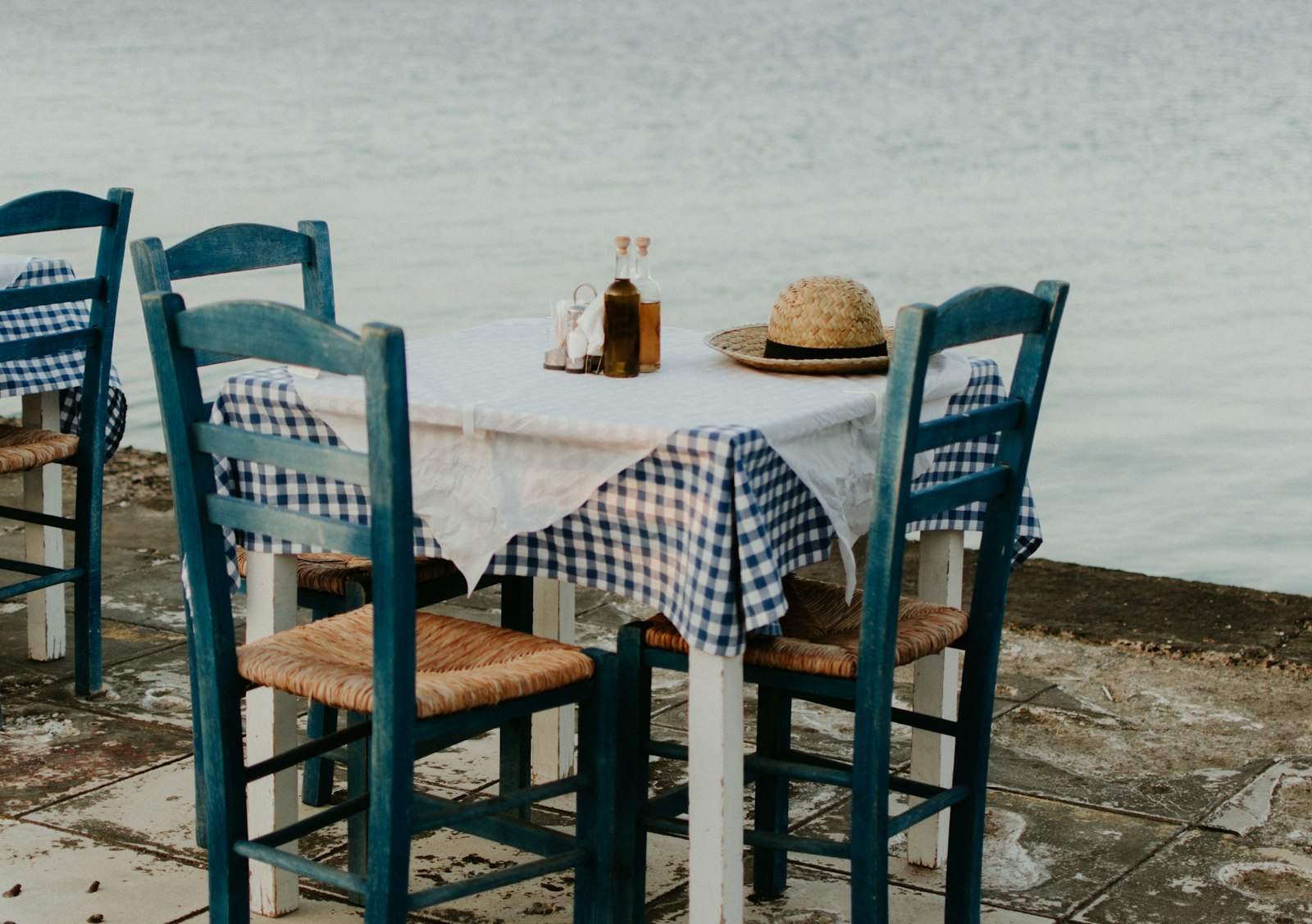
The thing everybody is actually buying. A table, a bit of shade, and the water close enough to hear.
Money and Practical Basics
Euros, and the islands cost double the mainland. Santorini and Mykonos in August are expensive. Naxos, Crete and the mainland are not. A family room runs roughly 120 to 200 euros a night outside the famous islands.
Carry more cash than you would elsewhere in Europe. Small tavernas, beach bars, island taxis and some ferry kiosks are cash only, and island ATMs run empty on summer weekends. Take out money before you leave the mainland.
August heat is a real planning constraint. Athens regularly hits 100 degrees and the Acropolis site has closed in the middle of the day during heatwaves. Sightsee at opening or at five in the afternoon, not at noon.
Buy the Acropolis ticket online with a timed slot. The combined ticket covers six other Athens sites and it is worth it. Go at opening. The line and the heat both build fast.
Use the app, not the street. Athens taxis have a reputation with tourists. Book through the local ride app so the fare is fixed before you get in. The airport to the center is a flat rate by law.
Pharmacies do a lot of the work. Greek pharmacists diagnose and dispense far more than American ones. For a stomach upset or a burn or an ear ache on an island, that green cross is your first stop, not a clinic.
When to Go
The single biggest decision on a Greek trip, and most families get it wrong by defaulting to August.
Spring
April to early June. Wildflowers, green hills, ruins without lines and prices that have not woken up. The sea is cold until about mid June. If your trip is about history rather than swimming, this is the answer.
Summer
July and August. Hottest, busiest, most expensive, and the meltemi wind can cancel ferries for days at a stretch. Everything is open and the water is perfect. Go if the school calendar forces it, and book everything early.
Autumn
September and early October is the sweet spot. Sea still warm from a whole summer, crowds gone by the middle of September, prices down, ferries reliable again. If you have any flexibility at all, go now.
Winter
Wet and quiet. Athens, Delphi and Meteora are excellent and almost empty. The islands largely close, ferries drop to a skeleton schedule and many hotels shut entirely. Mainland only.
How Many Days and How to Route It
Fewer islands than you want. That is the whole lesson.
A week. Athens for three nights, one island for four. That is it. Naxos or Crete. Do not add a second island to a seven day trip with children unless you enjoy packing.
Ten days. Athens three or four nights, then two islands on the same ferry line, four nights and three nights. Naxos and Paros, or Naxos and Santorini. Fly home from the island if you can.
Two weeks. Now you can do the mainland properly. Athens, then Delphi and Meteora by car for three nights, back through Athens and out to two islands. This is the trip I would build for our family.
Always end in Athens. One buffer night before your flight home. If a ferry gets canceled for wind, and it will happen to someone reading this, that buffer night is the difference between an annoyance and a rebooked international flight.

Meteora, the monasteries on the rocks
Regions at a Glance
Athens and Attica
The capital, the Acropolis, the National Archaeological Museum and the coast at Cape Sounion. Also the airport and the port at Piraeus, so almost every trip starts and ends here.
The Cyclades
Santorini, Mykonos, Naxos, Paros, Milos. The white and blue islands everyone pictures. Best connected to each other by ferry, and the most crowded and expensive in high summer.
Crete and the Dodecanese
Crete, Rhodes, Kos. Bigger islands with airports, real towns, mountains and history of their own. The most practical for families because you can fly straight in and stay put.
The Mainland
Delphi, Meteora, Olympia, the Peloponnese. Drivable, green, cheap and largely missed by first timers. This is where the country stops being a postcard.
Where to Go in Greece
I will mark them Ours as we earn them.
Athens. Give it three days, not one. The Acropolis and the new Acropolis Museum, the National Archaeological Museum, the Plaka, the changing of the guard, and a hill at sunset. Most people rush through it to reach a ferry and then say Athens was disappointing. It was not. They gave it four hours.
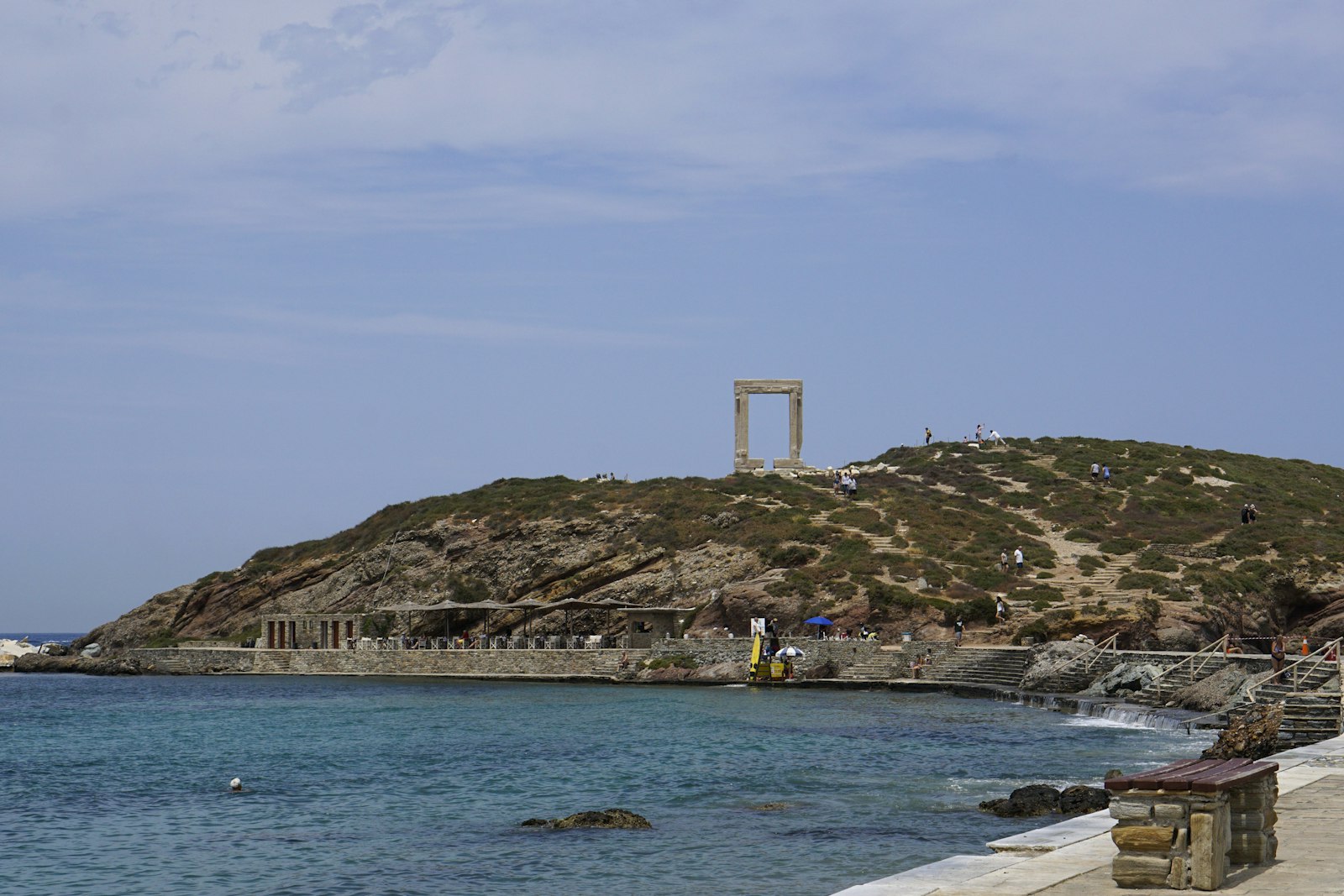
Naxos. The one I would pick first with our three. Big enough to have a real town and real farms, long shallow sandy beaches on the west coast that suit small children, cheap food and almost no cruise traffic. The Portara gateway sits right by the harbor.
Crete. The most practical island in the country. Direct flights, so no ferry at all. Beaches for every mood, the Samaria Gorge for a family that hikes, and Knossos, which is the oldest thing most children will ever touch. Two weeks here alone would work.
Santorini. As beautiful as the pictures and difficult with young kids. It is a cliff. Everything is steps, the donkey path is unpleasant, and cruise days put thousands of people into Oia for sunset. Best for families with teenagers, and best for two nights rather than five.
Rhodes. A walled medieval city you can walk your children through, plus long sandy beaches on the same island. The Street of the Knights really does look like a film set. Direct flights from a lot of Europe.
Meteora. Six working monasteries balanced on pillars of rock hundreds of feet up. Four hours from Athens by train, and the train ride is worth doing on its own. Nothing else in Europe looks like this.
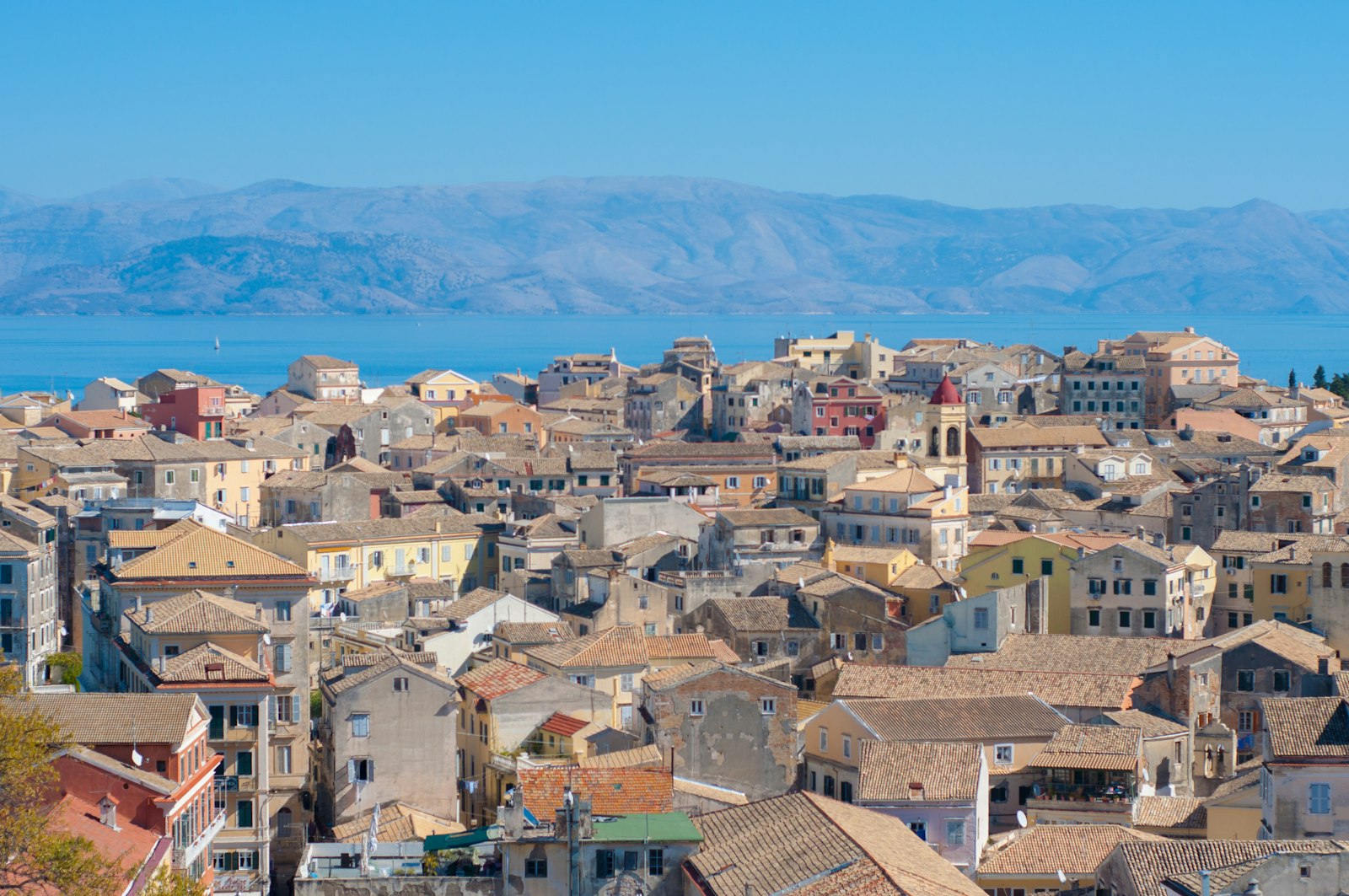
Corfu. Green, Venetian, wetter than the Cyclades and much closer to Italy in feel. Family resorts, an old town that is a UNESCO site, and short flights from northern Europe. A good first Greek island for nervous travelers.
Where I would not send a family. Mykonos and Ios, in high season, if the trip is about the children. Both are beautiful and both are built around a nightlife economy with prices to match. Save Mykonos for a trip without kids.

Water this color is the thing everybody doubts until they see it. This is Crete, which has direct flights and needs no ferry at all.
Family Travel Considerations
Ours are almost thirteen, ten and nine, plus a Cavapoo. This is the list I am working from as I plan our own trip.
Heat is the real risk, not anything else. Ruins have no shade at all. Hats, refillable bottles, and an absolute rule that nothing archaeological happens between eleven and four in July or August.
Book ferries with assigned seats, not deck class. The extra ten euros a head buys you somewhere to put five people and their bags for two hours. Board early. Deck class in August is standing room.
Water shoes, every single person. Most Greek beaches are pebble or rock rather than sand, and sea urchins are real. This is the cheapest thing on the packing list and the one families thank me for.
There are no kids menus and you do not need one. Order mezedes for the table. Grilled chicken, chips, tzatziki, bread, watermelon. A fussy eater will eat here.
Bringing a dog is harder here than in northern Europe. Ferries have specific pet rules and many require a carrier or a designated deck area, and August heat is dangerous for a small dog. We are still working out what we do about Poppy.
Splurge-Worthy Experiences
A private boat day around your island
Roughly 600 to 1,200 euros for a small boat and skipper for a family for the day. It sounds absurd until you divide it by five and compare it to five seats on a crowded catamaran tour. You get the beaches with no road access and you leave when you want.
A licensed guide at the Acropolis
Around 200 to 300 euros for a private family guide for three hours. With children this is the difference between hot rocks and a story they retell. Book someone who is used to kids and say so when you book.
Two nights in a Santorini cave hotel
If you are going to do Santorini, do it properly and briefly. A caldera view room with a plunge pool for two nights costs less than five nights somewhere back from the edge, and the view is the entire point of the island.
Sunset at Sounion instead of Oia
The Temple of Poseidon on a headland an hour from Athens, marble columns going gold, and a fraction of the crowd fighting for a wall in Oia. Hire a driver for the evening. It is the better version of the same photograph.
What Surprises First-Timers
Most beaches are not sand. Pebbles, shingle and slabs of rock are the norm, and the famous sandy ones are usually organized, with paid sunbeds and umbrellas at 20 to 40 euros a set for the day.
The wind cancels ferries. The meltemi blows through July and August and boats simply do not sail. There is no appeal and no compensation for your onward booking. Everyone plans for rain. Nobody plans for wind.
Cats everywhere. Hundreds of them, on every wall and under every taverna table. Mostly healthy, mostly friendly, entirely unbothered. Children love this more than any ruin.
The islands are not one country in feel. Corfu is Venetian, Rhodes is medieval and Ottoman, Crete has its own music and its own pride, and the Cyclades are the white and blue postcard. Picking two very different ones is the better trip.
Where I Would Start
First time in Greece with kids? Athens for two nights, then one island. Not three islands. One, with a beach they can walk to.
Athens. Two nights. The Acropolis at opening, the Plaka for dinner, the changing of the guard, a rooftop with the Parthenon lit up.
Naxos or Paros. Five nights. Beaches with shallow water, tavernas on the sand, a ferry from Athens or a short flight. Naxos is the one I book most for families.
Santorini for a night. If you must. The caldera at sunset is real, the crowds are real, the beaches are black and rocky. Go for one night and a photo, then leave.
Numbers Worth Knowing
Greece, by the numbers
Ways to travel
Greece is not one kind of trip
How you move through it changes the trip more than which places you pick.
Ocean Cruising
One of the most common Mediterranean cruise routes there is. Mykonos, Santorini and Rhodes show up as day stops on a lot of itineraries that never touch the mainland.
For example: Santorini for one long afternoon, then back on board before dinnerRoad Trips
The mainland is built for a car. The Peloponnese loop and the drive up to Meteora and Delphi connect on decent roads without ever needing a ferry schedule.
For example: Athens to Delphi and back in a single long day, temple includedWalking and Hiking
The Samaria Gorge in Crete and the caldera path between Fira and Oia in Santorini are the real reason to pack real shoes, not just sandals.
For example: walking the caldera rim from Fira to Oia and timing the last mile for sunsetGuided and Small Group
The Acropolis, Delphi and Ancient Olympia all make a lot more sense with someone explaining what you are actually looking at, not just a plaque.
For example: a guided morning at the Acropolis before the afternoon crowds and heat arriveExplore by interest
What families come to Greece for

History
Athens and the Acropolis
The Parthenon early before the heat, the new museum with the marbles, the Plaka streets and the changing of the guard in their pom pom shoes. Two nights, then the islands.

Islands
Santorini and the Cyclades
The caldera and the blue domes, then Naxos or Paros next door for the beaches with shallow water and a fraction of the crowds. One famous island, one family island.

Beaches
Crete and Corfu
Big islands with their own airports, a week of beaches, a palace at Knossos, gorges to walk and a Venetian old town. The easiest Greece for a family who wants one base.

Mainland
Delphi and Meteora
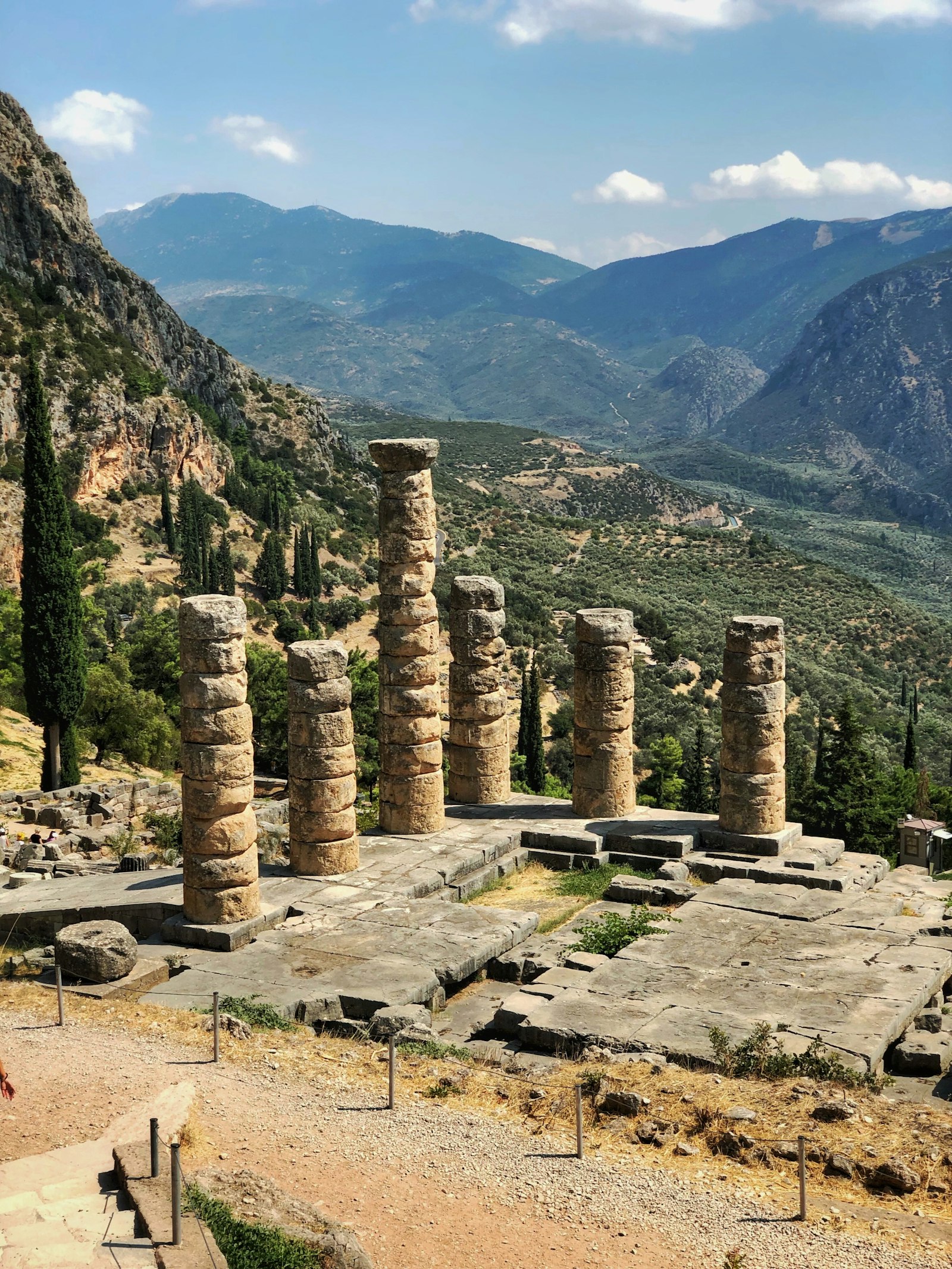
The oracle above the olive groves, then monasteries on top of rock pillars three hours north. The road trip half of Greece that almost nobody adds, and should.
Something unexpected
Only in Greece

Read before you go
Two books, one each
For the kids. Percy Jackson and the Olympians by Rick Riordan. Gods, monsters, and half the places in the series are places you can actually stand in.
For you. Mythos by Stephen Fry. A real retelling of the Greek myths, funny and easy to read, and the version that finally makes all the family trees make sense.

Watch before you go
Mamma Mia!
Filmed mostly on Skopelos, with the harbor scenes shot in the tiny village of Damouchari. It is silly, it is a musical, and it makes an island you have probably never heard of look exactly like the trip you actually want.
Photo via Unsplash.
From here
Democracy
Athens is where it actually started, around 508 BC, when Cleisthenes’ reforms let citizens vote directly instead of through a ruler. The Ancient Agora below the Acropolis is where a lot of that governing actually happened.
Photo via Unsplash.
Only in Greece
Meteora
Six working monasteries built on top of natural sandstone pillars, some of them over a thousand feet up. Monks and supplies used to go up in a rope basket, and a few communities have lived up there since the 1300s.
Photo via Unsplash.Combine It With
If you have the time to add a second country, these are the ones I would actually pair this one with. Not a list of neighbors. A list of trips that work.

Turkey
The Greek islands and the Turkish coast are a short ferry apart. Samos to Kusadasi, Kos to Bodrum, done before lunch.
Read the guide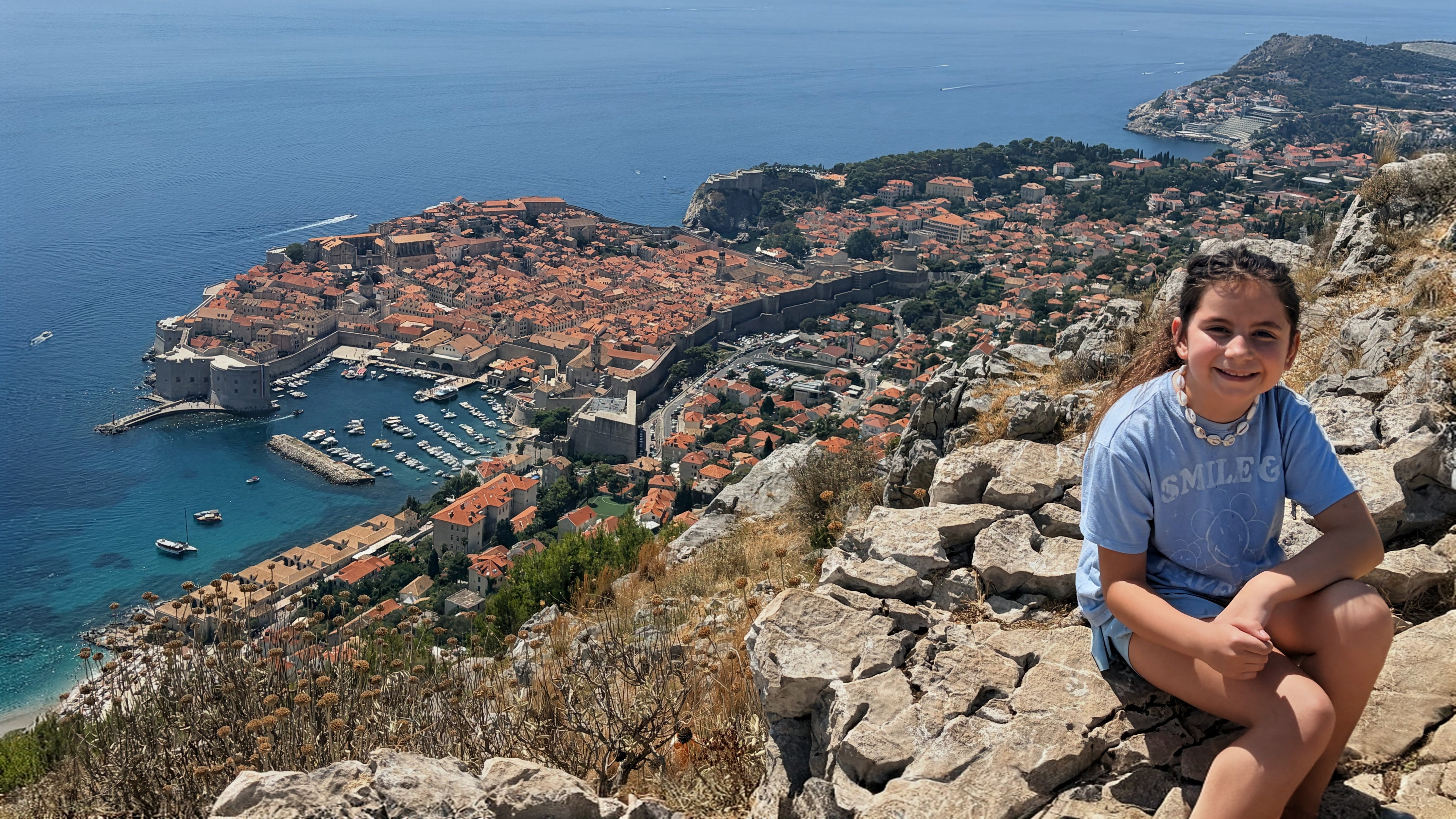
Croatia
Two coastlines, two sets of islands, and Greece is the one that makes the whole trip feel properly far from home.
Read the guide
Cyprus
An hour and a half from Athens and it is a completely different Mediterranean. Cyprus is warm long before Greece is.
Read the guide
Plan Greece with Nicole
Tell me who is coming, and when.
Greece can be one island, a mainland and island combination, or a full week of hopping between two or three. Which one makes sense depends on the ages you are traveling with and how much ferry time everyone can handle. Send me the ages, the dates, and what you are hoping this trip feels like. I will come back with what is really available.
Nicole Damiano, ASTA Verified Travel Advisor with FG Luxury Travel.
Questions families ask about Greece
The ones that come up in almost every planning call. If yours is not here, ask me.
Do we need anything to enter, beyond passports?
Not a visa. US passport holders get 90 days in any 180 day period across the Schengen area, and this country counts toward that same 90 days.
Your passport has to be valid for at least three months beyond the day you leave Europe. Check the kids’ passports too. Child passports are only good for five years and they expire quietly.
Since October 2025 the EU has been taking fingerprints and a facial image at the border under the new Entry and Exit System. There is no fee and no form. It just means the first arrival can be slower than you remember, so build a real cushion into any connection.
ETIAS, the paid travel authorization you may have read about, is not running yet. It is expected in late 2026. When it starts I will tell every family I am working with, well before they fly.
Athens first, or straight to an island?
Athens first, for two or three nights. The Acropolis and the museum land better at the start of a trip than at the end, when everyone is sunburnt and finished.
Two nights is enough for most families. Then the island is the reward rather than the interruption.
Which islands work with children?
The ones with a shallow beach, a short transfer and something to do when the sun gets too strong. Naxos and Paros are the two I come back to for families. Crete works because it is large enough to hold a whole trip on its own.
Santorini is spectacular and it is a cliff. Volcanic beaches, steep steps, and crowds at sunset. It is a wonderful two nights and a hard week with a five year old.
How do we get between the islands?
Ferries, mostly, and the schedules for the following summer are not published as early as you would like. That is normal, and it is the single most common reason a Greece plan needs rebuilding late.
Flying between islands is possible and sometimes cheaper in time than money. I look at both before I lock anything in.
When is it too hot?
Mid July through late August regularly runs into the high thirties Celsius, which is the high nineties Fahrenheit, and heat like that changes what a family can actually do in a day.
Late May, June, and September give you the same sea with a workable afternoon. September is my favorite for anyone not tied to a school calendar.
Keep exploring from Greece
Cities, neighbors, and the wider region.
Click any card to open that page
More of Europe
 Austria
 Belgium
 Croatia
 Cyprus
 Czechia
 Denmark
 France
 Germany
 Hungary
 Iceland
 Ireland
 Italy
 Netherlands
 Norway
 Poland
 Portugal
 Spain
 Sweden
 Switzerland
 Turkey
 United Kingdom
 All of Europe
 Explore the world
 The Travel Library
