
Kuala Lumpur at dusk · photo: Unsplash. Malaysia was never on our itinerary at all. It became one of the best parts of the trip
Malaysia Family Travel Guide
“Penang was the first city we traveled to where Adam and I both felt at ease. We did not have to watch our backs or assume everyone had an agenda. We just enjoyed the people.”
Nicole Damiano, ASTA Verified Travel Advisor with FG Luxury Travel
Do we need a visa?
No. Passport with six months left and you get ninety days. Fill in the Malaysia Digital Arrival Card online within three days of flying, it is free.
Where first?
Penang. Georgetown is walkable, the street food is the best in Asia, and the kids can eat their way through it for a few dollars a plate. We meant to stay two nights in 2010 and stayed five.
Is Borneo doable with kids?
Yes, from about six. Fly to Sandakan for the orangutan center at Sepilok and a river lodge on the Kinabatangan. Three nights. It is the wildlife trip of a lifetime for a ten year old and it is not expensive.
Can the kids eat the food?
Roti canai, satay, chicken rice, nasi lemak without the chili. Every hawker center has a stall a picky eater can handle, and the fruit is extraordinary. Prices are fixed and there is no haggling.
When should we go?
The west coast, Penang and KL, is best December through March. The east coast islands are best March through September. Borneo is year round with a wetter stretch in December and January.
Nicole’s Perspective
Why families hire me for Malaysia

Malaysia was never on our itinerary. Not one night of it. We met a Malaysian couple, Manfred and Christin, on a junk in Ha Long Bay two months earlier, they told us to come, and we rerouted the whole back half of the trip. It turned out to be the best decision we made all year.
We came down from Bangkok on a twenty six hour bus into Penang, meant to stay two nights and stayed five. Then Kuala Lumpur with Manfred, a day in Melaka, and out to Singapore.
Penang arrived at exactly the right moment. I was starting to come apart a bit. Two months of buses and guesthouses and never being in one place, and I wanted a couch and home cooked food and to not be a tourist for a day. What we got instead was Shirley, the woman at the front desk of the Red Inn, who took us out to dinner, paid for everything, refused to let us pay her back, came back on her day off and took us round the botanical gardens with her friends, and fed us a full Chinese breakfast. Two Americans she had known for three days.
Penang was the first city where we both stopped watching our backs. I wrote that at the time and I have not felt the need to revise it. Malaysia is the most comfortable country on that whole route, it is cheap, and almost nobody puts it near the top of their Southeast Asia list. They are wrong.
Two adults with backpacks in our twenties.
Beyond the Bookshelf
Stories to carry you deeper into Malaysia. From Kuala Lumpur to the rainforest, here is what to read, watch, listen to and cook before you go.

- The Garden of Evening MistsTan Twan Eng
- The Gift of RainTan Twan Eng
- Malaysian Children’s Favorite Storiesretold by Kay Lyons
- P. Ramlee
- Sepet
- Growing Up in a Nyonya KitchenSharon Wee
- Tunku Abdul Rahman
- Lonely Planet Malaysia
- DK Eyewitness Malaysia
As an Amazon/Bookshop/affiliate partner, we may earn from qualifying purchases.
Why this country, for this family
Why Malaysia, and Who Should Skip It
 Poppy marks the family parts. Wherever you see her, that section is written for traveling with children.
Malaysia is the most underrated country in Southeast Asia and it is also the easiest. Those two facts are related. It has none of the friction that makes a Vietnam or a Cambodia trip feel like an achievement, so people assume there is less to it. There is not.
The food is a reason on its own
Malay, Chinese and Indian cooking in the same street, often at the same hawker center. Penang is one of the great eating cities on earth and a plate costs about two dollars.
Everything works
Good roads, cheap flights, clean trains, English everywhere, drinkable tap water in the cities. After two months of Indochina it felt like the volume had been turned down.
Three cultures, side by side
Malay, Chinese and Indian communities living and working in the same small cities, with a mosque, a temple and a church often within one block. It is the thing I most want my children to see.
Who should skip it. Anyone chasing the untouched. Malaysia is developed, and if you want the version of Southeast Asia that feels like an expedition, this is not it. Anyone who wants beaches above all, because Thailand does beaches better and cheaper. And anyone unwilling to dress modestly at a mosque or to be somewhere that alcohol is restricted and expensive.

George Town, Penang. UNESCO listed since 2008, which is why the shophouses and the clock tower are still standing rather than replaced by towers
Penang, and Why the Food Is the Real Reason to Go
People go to Penang for the heritage architecture and then spend the entire visit talking about what they ate. Be honest with yourself and plan it that way round from the start.
Hawker centers are the whole point and they are perfect with children. An open air courtyard, twenty separate stalls each cooking one dish, shared plastic tables, and everyone orders whatever they want from wherever they want. Nobody has to agree. A fussy child can eat plain rice while you eat something with a face on it.
Where to go. Gurney Drive and the Red Garden in George Town, Batu Ferringhi up the coast at night, and the Chinese breakfast places that open at seven and are finished by ten. Shirley took us to all of them and none of them were on a list anywhere.
George Town is a walking town. Clan houses, Chinese shophouses, mosques, a Hindu temple and colonial civic buildings inside about a square kilometer. Since 2012 it has also had a well known street art trail, which turns a heritage walk into a treasure hunt for a seven year old.
The island is much bigger than it looks and the buses are excellent. We rode public buses from the city out to Penang National Park for a few ringgit. Do not pay for a boat you do not need. And do not do what I did and set off for a fruit farm without checking which bus actually goes there.
Kuala Lumpur, the Easy Modern Stop
KL is a comfortable, cheap big city, and it is the one I would use to start or end a Southeast Asia trip with children rather than Bangkok. Two nights is enough, three if it rains.
The Batu Caves are the best half day and they are free. A limestone cave temple up two hundred and seventy two very steep steps, with a gold statue of Murugan at the bottom and a great many macaques on the way up. The monkeys will take food out of a child’s hand. Carry nothing visible and hold the small ones.
Petronas at night is worth the trip out even without going up. The towers were the tallest in the world from 1998 to 2004 and the lighting at night is the whole show. The park below has a free splash pool and a playground, which is what actually saves the evening with children.
Hotels are absurd value. What eighty dollars buys in KL would cost four hundred in western Europe. If your trip has one splurge night in it, spend it here rather than anywhere else in the region.
Royal Selangor is a better museum than it sounds. The pewter works has been going since 1885 and they let you hammer your own dish next to a craftsman who does it properly. I was terrible at it and it is still one of my clearest memories of KL.

The Batu Caves outside Kuala Lumpur. Two hundred and seventy two steps, a gold statue forty three meters high, and monkeys who are very good at their job
Melaka, and the Colonial Layers
Two hours south of KL and doable as a long day trip, which is what we did with Manfred and his youngest son. It is the most layered small town in the country and the layers are the reason to go.
Portuguese, then Dutch, then British, then Malaysian. Taken by Portugal in 1511, by the Dutch in 1641, handed to Britain in 1824. All three are still standing on the same square, which is the deep red Christ Church and Stadthuys, and the ruined Portuguese fort gate is a five minute walk from it.
The Portuguese Settlement is still there and most visitors miss it. A small Kristang community east of the center, descended from those sixteenth century Portuguese, still speaking a creole and still cooking their own food. It is the single most surprising thing in Malaysia and it is a twenty minute taxi ride.
Jonker Street, and the durian. The night market runs Friday to Sunday. Adam tried a durian flavored snack that he said smelled like the underbelly of a woolly mammoth and then decided he liked it after a few bites. Let your children try it. The photographs are worth it.
A day trip works, an overnight is better. The town empties in the evening and the riverfront is lovely once the coaches have gone. If you can spare the night, take it.
The map
Malaysia Place by Place
Malaysia is two halves with the South China Sea between them. Peninsular Malaysia is the easy, cheap, well connected part that most trips cover. Borneo is a different country in feel and a different trip in practice. These are the eight places that come up.


Anthem Negaraku, my country, based on an old Malay folk melody. It is short and everyone knows it. Language and money Malay, and English from almost everyone. The ringgit, and it goes a long way.

Borneo
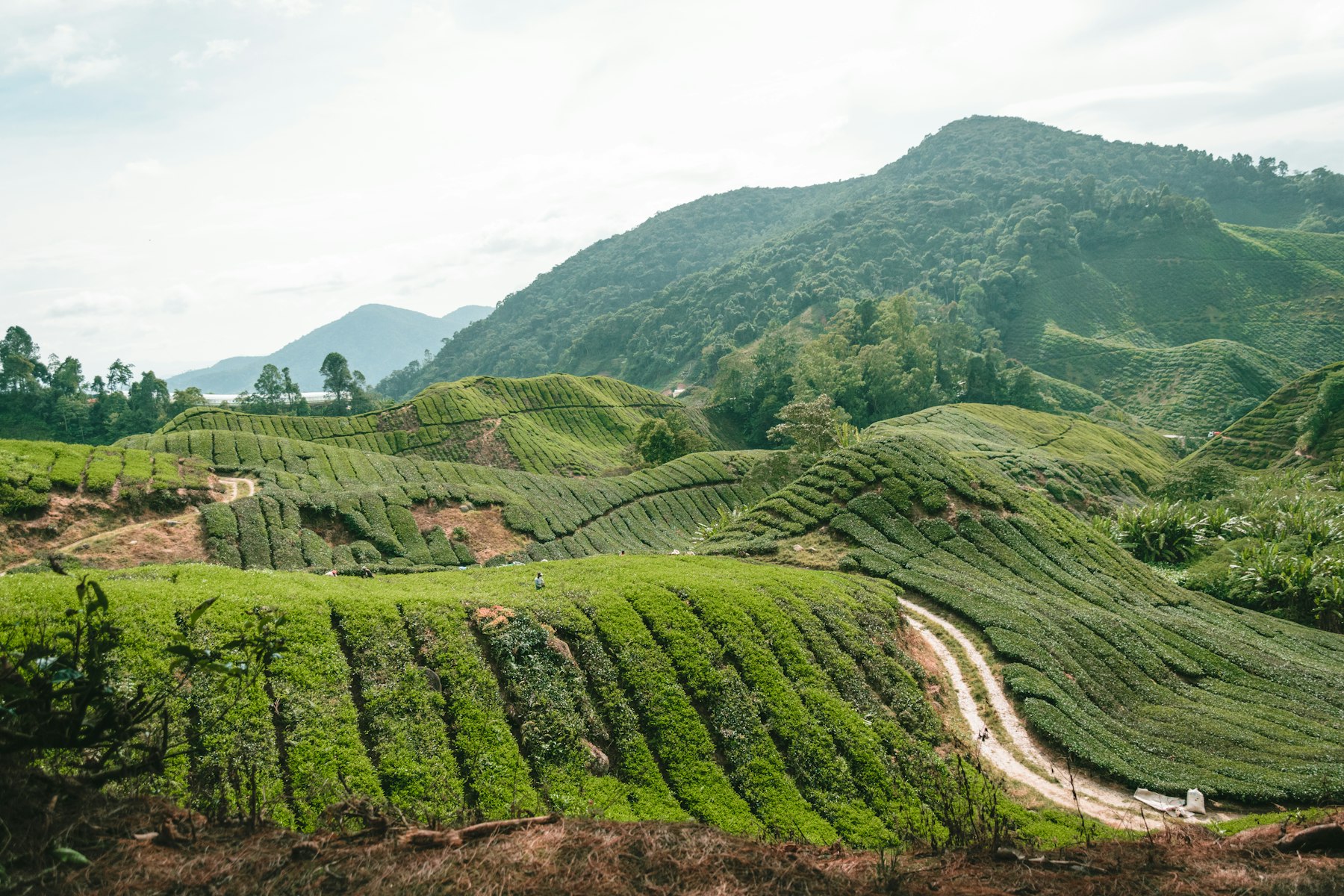
Cameron Highlands
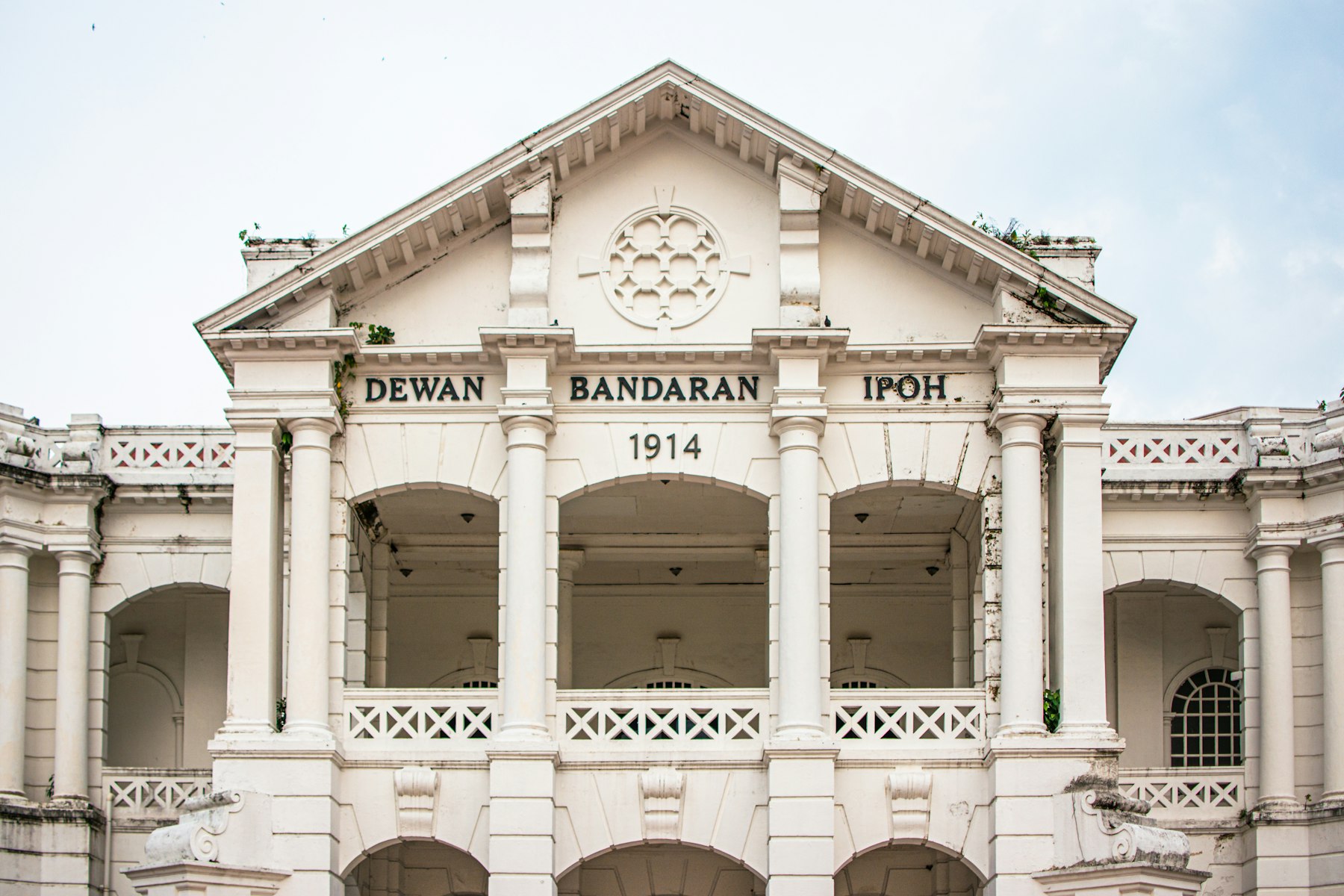
Ipoh

Kota Kinabalu

Kuala Lumpur
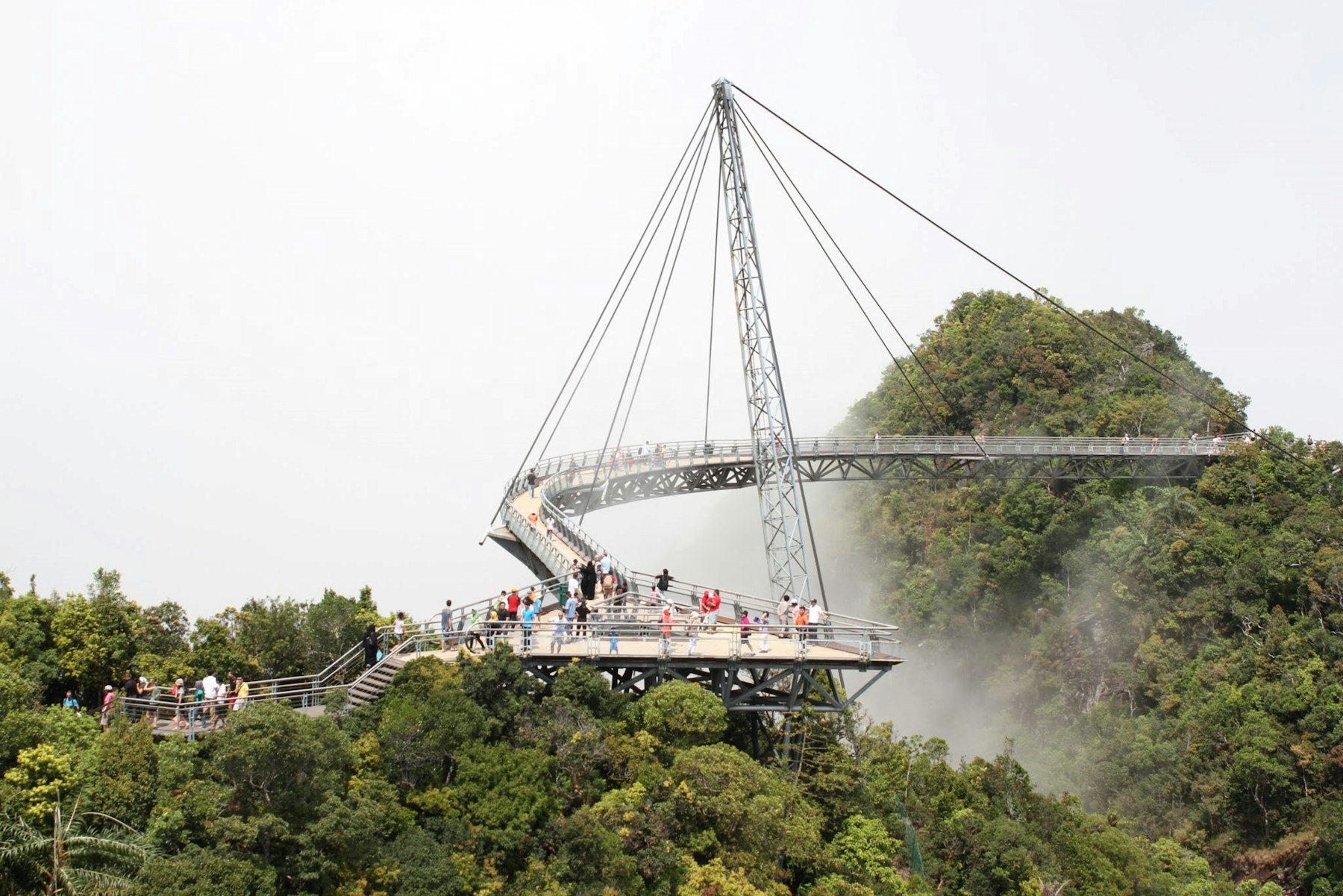
Langkawi

Melaka

Penang
Malaysian Culture
A country built from three major traditions living side by side, not blended into one.
Malay, Chinese and Indian cultures run in parallel. a mosque, a Chinese temple and a Hindu temple can all sit within a few blocks of each other, each fully itself.
The food tells the same story as the culture. nasi lemak, char kway teow and roti canai each trace back to a different community, all eaten at the same hawker stalls.
George Town wears its trading port history openly. shophouses, street art and colonial buildings layer centuries of Chinese, Indian, Malay and British influence into a few walkable blocks.
Badminton matters here the way football matters elsewhere. Malaysia has produced some of the sport’s best players, and a local match draws a real crowd.
Food
Three cuisines in one country and the good ones are all at the hawker center. Malay, Chinese and Indian, with Peranakan cooking sitting between them. Most of it is mild by default and the chili comes as sambal on the side, which makes it one of the easier places in Asia to feed a cautious child.
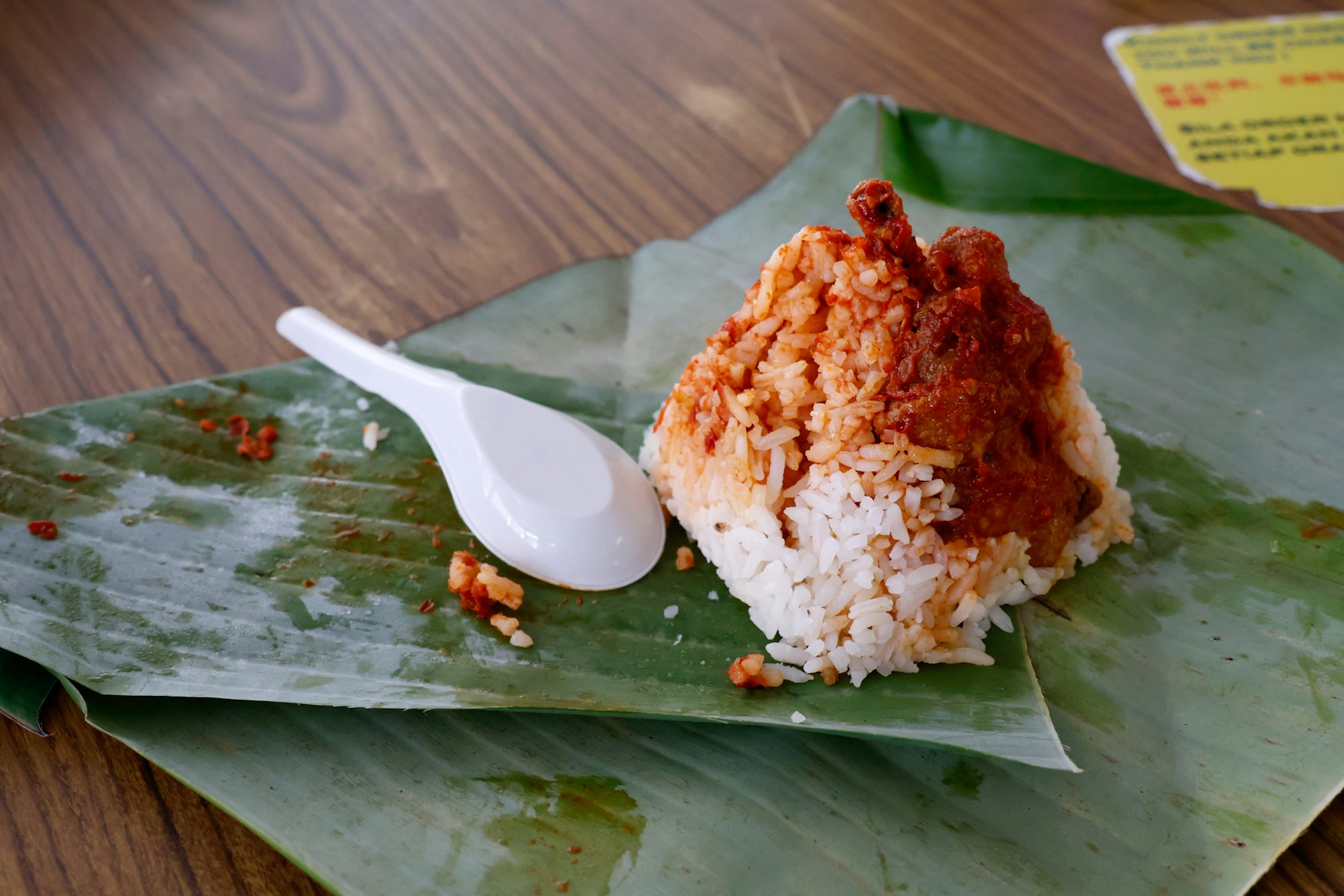
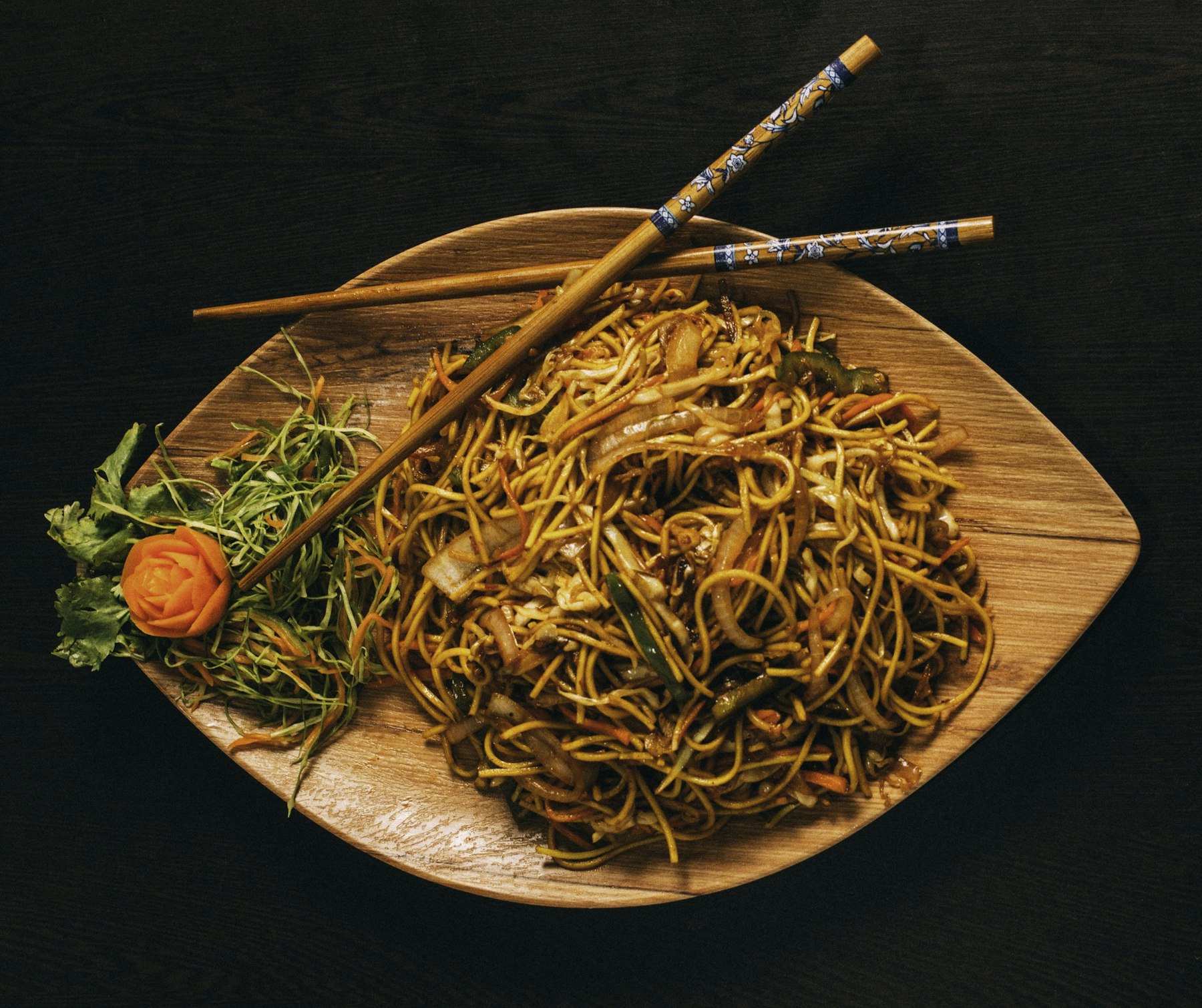

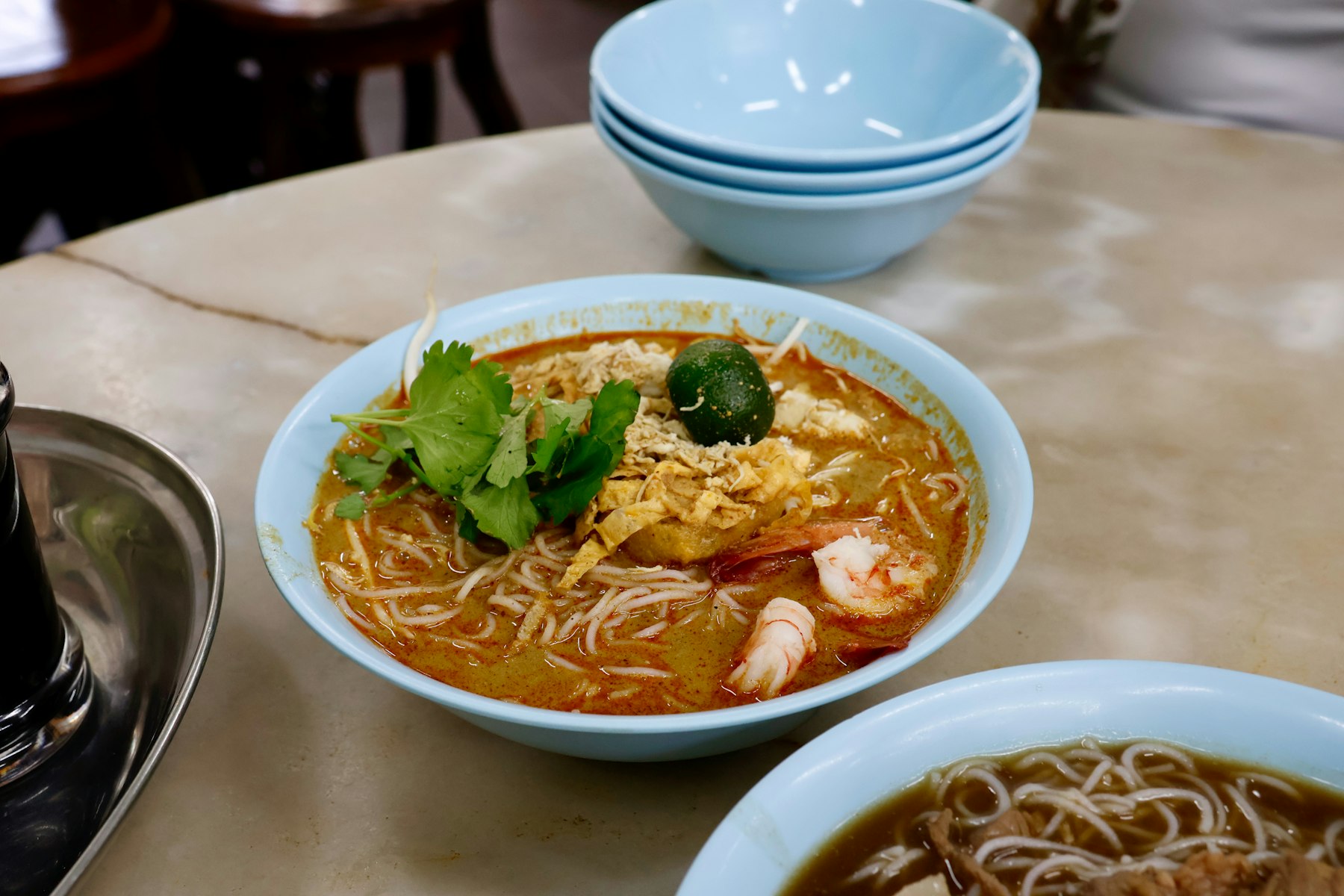
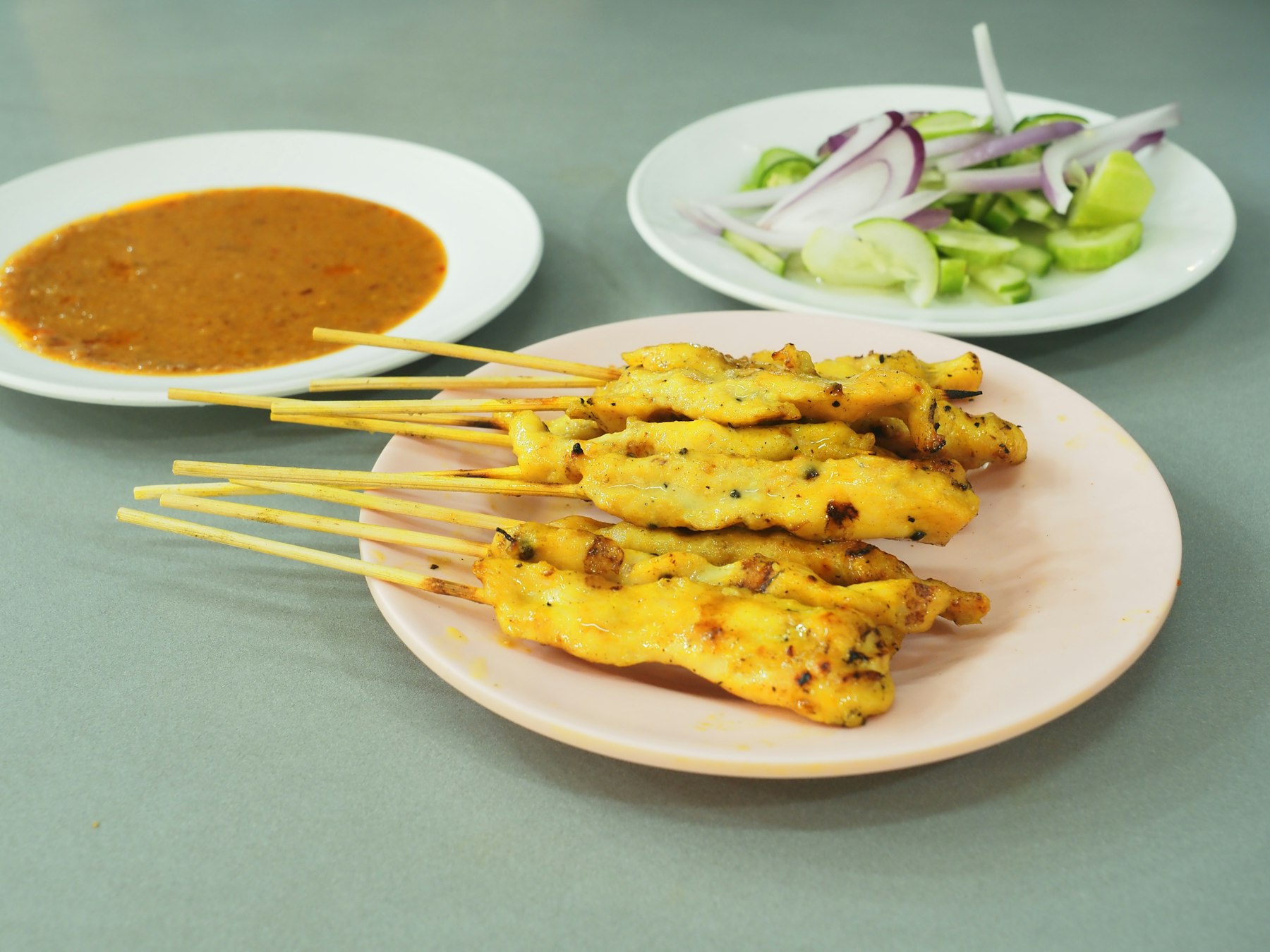
And the fruit juice. Every hawker center has a juice stall pressing whatever is in season, and it is where a lot of our money went. Ambla, sugarcane, calamansi, watermelon. Cheap, cold, and the reason a child will sit still through a two hour dinner.
Borneo Is a Different Trip, and the Honest Sanctuary Question
Borneo is the part of Malaysia clients ask about most and it is the part they most often underestimate.
Treat it as a separate trip, not an add on. Sabah and Sarawak are a two and a half hour flight from KL across the South China Sea. Ten days on the peninsula plus four days in Borneo is two trips crammed into one trip. Give Borneo a week of its own or leave it for next time.
What it is actually for. Orangutans, proboscis monkeys and pygmy elephants on the Kinabatangan river, turtles at Selingan, the diving at Sipadan, and Mount Kinabalu if you have a teenager who wants to climb something serious. None of that exists on the peninsula.
The sanctuary question, answered. Sepilok and Semenggoh are real government run rehabilitation centers. Orangutans there are wild or semi wild, they come to a feeding platform or they do not, and you watch from a distance behind a rope. That is what a real one looks like.
What a bad one looks like, in four questions. Can you hold, feed or photograph yourself with the animal. Is there a guaranteed sighting. Are there babies available for cuddling. Does it use the words rescue and show in the same sentence. Any single yes and I would not book it, and I would say why to my children rather than quietly changing the plan.
Understand the palm oil context before you go. A great deal of Borneo’s lowland forest is now plantation, and you will fly over hours of it. That is the honest reason the orangutans need rehabilitating in the first place, and it is a real conversation to have with an eleven year old on the plane.

Shirley, in the middle. She worked the front desk at our guesthouse, took us to dinner on her own money, and came back on her day off to show two Americans her city
Getting Around
This is the easiest country in the region to move around. Motorways that work, intercity coaches that are comfortable and cheap, and a north south train line. After Laos and Cambodia the difference is startling. A hire car is viable here, which it is not next door.
Budget flights are the way to cover distance. KL is a major low cost hub. Penang, Langkawi, Kota Kinabalu and Kuching are all short cheap hops. Book them early and check which of KL’s two terminals you are flying from, because they are not next door to each other.
Ride hailing works everywhere and is the right default with children. Metered fares, no negotiation, no argument, and you can request a car seat in some cities. This alone removes most of the daily friction of traveling Asia with a family.
City buses are cheap and usable. We crossed Penang island several times on public buses for a couple of ringgit. Routes are signed in English. Just check that the number you are on goes where you think it does.

The Cameron Highlands. Cool air and tea country, a break from the heat below.
Money, Dress and Customs
The ringgit is straightforward and prices are fixed. Shops, restaurants and hawker stalls have set prices and there is no haggling to do beyond the night markets. Cards are widely taken in cities. Carry small notes for hawker centers, which are cash only.
Malaysia is a Muslim majority country and modest dress matters at religious sites. Shoulders and knees covered for everyone at mosques, and a headscarf for women, which is normally lent at the door. Ordinary streets and beaches are relaxed. This is a small courtesy that buys a great deal of goodwill.
Alcohol is restricted, heavily taxed and simply absent in some places. Not a problem, but do not plan an evening around it, and never carry durian into a hotel or onto public transport. Both rules are enforced and only one of them is a joke.
Fake goods are everywhere and are not a bargain. The night markets are full of them. I bought a knock off handbag and a wallet in Penang and enjoyed myself enormously, and I would still tell you that customs at home take a dim view of it.
When to Go
Malaysia sits on the equator, so it is hot and humid every day of the year and the seasons are about rain rather than temperature. The two coasts and Borneo are on different schedules, which is the part people get wrong.
Dec to Feb
Best on the west coast, so Penang, KL, Melaka and Langkawi. The east coast islands are closed or unreachable in the northeast monsoon. Chinese New Year falls in this window and books out fast.
Mar to May
The best all round window and my usual recommendation. Hot, mostly dry, and everything is open on both coasts. Ramadan moves through the calendar, so check the dates, because daytime eating options change.
Jun to Aug
Peak season for the east coast islands, Perhentian and Tioman, and a good window for Borneo. Busier and slightly pricier, and the west coast gets short heavy afternoon storms.
Sep to Nov
What we had. Wet on the west coast in the afternoons and completely fine to travel in. Cheapest, quietest, and September and October can carry haze from regional burning. Bring a small umbrella and stop worrying about it.
You see children of different races, adults in every kind of traditional dress, more colors of skin, more places of worship, all in small cities, coexisting as one nation of people.
Nicole Damiano, written in Malaysia, September 2010Routing Malaysia
Peninsular Malaysia and Borneo are separated by the South China Sea, and that split should shape the plan.
Kuala Lumpur is the natural start and end. most international flights route through here, and it connects easily to everywhere else in the peninsula.
Ipoh, the Cameron Highlands and Penang connect well by road. this northern loop covers colonial towns, tea country and Malaysia’s best food city in one drive.
Borneo is a separate flight and a separate trip. orangutans and rainforest are worth the extra leg, but treat it as its own block rather than a quick add on.
Langkawi is an easy beach extension. a short flight from either Kuala Lumpur or Penang adds an island stop without much extra planning.

Kota Kinabalu, the gateway to Borneo.
Regions at a Glance
Penang and the North
Georgetown’s street food and murals, Langkawi’s beaches. The best first stop.
Kuala Lumpur and the Center
The capital, the Petronas towers, the Batu caves, the Cameron Highlands tea.
Melaka and the South
A colonial port town, night markets, Singapore next door.
Borneo
Sabah and Sarawak. Orangutans, river lodges, Mount Kinabalu. A separate flight and a separate trip.
Where to Go in Malaysia
Malaysia is two countries, the peninsula and Borneo. Five places, and ten days does three.
Penang. Four nights. Georgetown on foot, hawker food every night, Penang Hill by funicular, the clan jetties. We stayed five in 2010 by accident.
Kuala Lumpur. Two nights. The towers at night, the Batu caves at opening, KLCC park for the fountains.
Sepilok and the Kinabatangan. Three nights. Orangutans at feeding time, a river lodge, proboscis monkeys from a boat at dusk.
Langkawi. Three nights. The cable car, a mangrove boat, a resort beach. The rest at the end.
Melaka. One night. Jonker Street night market, the river walk, the Dutch square.
With Kids
We traveled Malaysia as two adults. But of everywhere on that 2010 route, this is the country I would take our three to first, and I want to be specific about why. Malaysia with kids is one of the easiest first Asia trips a family can book, and a malaysia family travel guide built around Kuala Lumpur and Penang covers most of what people ask me about. The things to do in malaysia with kids list is long, and almost none of it is complicated to pull off.
It is the softest landing in Southeast Asia. English is spoken everywhere, tap water is safe in the cities, medical care is good and cheap, the traffic is orderly and nobody hassles you. If your family has never done Asia, start here rather than in Bangkok or Hanoi.
Hawker centers solve the fussy eater problem completely. Twenty stalls, one table, everyone orders separately. There is no negotiation and no restaurant standoff. This is a real, practical reason to choose Malaysia over its neighbors with children.
The real lesson here is the coexistence and it is worth naming out loud. I arrived in Southeast Asia carrying prejudices I am ashamed of now, and Malaysia is where they came apart. A mosque, a Chinese temple and a Hindu shrine on one street, and nobody making anything of it. Point that out to your children. It is the most valuable thing in the country.
Build in the pool and the mall, guilt free. It is thirty two degrees and humid every day. Hotel pools are cheap here and the air conditioned malls are part of Malaysian life rather than a tourist failure. We spent a whole afternoon in one in Penang pretending we lived there, and it was one of the better days.
Monkeys are the actual daily hazard. Batu Caves, Penang National Park, the Botanical Gardens. They are bold, fast and will take food from a small hand. No food out, no plastic bags visible, and do not let a child feed them.
Spend on the hotel
Malaysia is where your accommodation budget goes furthest of anywhere on the route. A pool and a family room cost very little and change the shape of the day.
Spend on the internal flight to Borneo
If Borneo is on the list, fly it and give it a week. Doing it badly is worse than not doing it.
Save on every single meal
The best food in the country is at plastic tables for two dollars a plate. Hotel restaurants are the worst value in Malaysia by a distance.
Worth the Splurge in Malaysia
A few places where paying more changes what the day actually looks like.
A proper Borneo rainforest lodge. the better lodges include guided river cruises and orangutan viewing that a budget stay simply cannot arrange.
A private George Town food tour. a local guide who actually grew up eating at these hawker stalls gets you past the tourist-facing stands.
A night in a restored Peranakan shophouse hotel. sleeping inside George Town’s history beats viewing it from the outside for a day.
A private guide for the Langkawi Sky Bridge and cable car. skipping the queue and getting the timing right for clear views is worth arranging ahead.
Things That Surprised Us
How far a stranger will go. Shirley took us to dinner, paid, refused to be repaid, and then gave up her day off for us. Manfred rerouted our entire trip, drove us round KL for three days and had a chef put a Happy Honeymoon flag on a steak. Neither of them wanted anything.
That rubber is still a serious industry. Manfred’s father in law owns a plantation and took us through it. Latex drips out of a cut in the bark into a little bowl, which we did not know, and the mosquitoes there are the worst I met in Asia.
How big and how green Penang island is. We thought it was a town. It has a coastline, a national park, a rainforest and a monkey beach, and we spent a whole day on a bus finding that out.
A guesthouse can be ruined by one person. Our first Penang guesthouse played Pink Floyd at full volume until nearly one in the morning and then started again at three. We left, found the Red Inn, and found Shirley. Read recent reviews rather than a guidebook entry, and move if a place is wrong.
Where I Would Start
First time in Malaysia with kids? Penang, then Kuala Lumpur, then Borneo if you have the days. Two countries in one, the peninsula and the island.
Penang. Four nights. Georgetown on foot, hawker food every night, the murals, Penang Hill by funicular, the clan jetties.
Kuala Lumpur. Two nights. The towers at night, the Batu caves at opening, KLCC park for the fountains and the playground.
Sepilok and the Kinabatangan. Three nights. Orangutans at feeding time, a river lodge, proboscis monkeys from a boat at dusk. A flight to Sandakan gets you there.
Numbers Worth Knowing
Malaysia, by the numbers
Ways to travel
Malaysia is not one kind of trip
How you move through it changes the trip more than which places you pick.
Ocean Cruising
Penang and Langkawi are regular Southeast Asia cruise stops, an easy way to add Malaysia onto a bigger regional itinerary.
For example: a Southeast Asia cruise with a call in Penang.Road Trips
The drive from Kuala Lumpur up through Ipoh and the Cameron Highlands tea country to Penang is an easy multi day loop with real variety along the way.
For example: a drive from Kuala Lumpur through the Cameron Highlands to Penang.Independent Travel
Kuala Lumpur, Penang and Melaka are easy to self plan, with good trains, English widely spoken and a tourism industry built around visitors.
For example: a self planned rail trip linking Kuala Lumpur, Ipoh and Penang.Guided and Small Group
Borneo’s rainforest and orangutan sanctuaries go further with a local guide who knows where the wildlife is and how to move through it responsibly.
For example: a guided orangutan and rainforest trip in Malaysian Borneo.Explore by interest
What families come to Malaysia for

Sports
Badminton
Close to a national obsession here, and Malaysia has produced some of the sport’s best players on the world stage.

History
George Town
A UNESCO World Heritage site, its shophouses and street art telling the story of centuries of trading port history.

Food and Drink
Three cuisines, one street
Nasi lemak, char kway teow, roti canai, laksa and satay, a food culture built from Malay, Chinese and Indian traditions eating off the same street.

Nature and Wildlife
Borneo and Taman Negara
Taman Negara’s rainforest is roughly 130 million years old, older than the Amazon, and Borneo is one of the last places on earth to see wild orangutans.
Something unexpected
Only in Malaysia

See it in the wild
Wild Orangutans in Borneo
Malaysian Borneo is one of the last places on earth where you can see wild orangutans, feeding and moving through rainforest canopy that has stood for millions of years.

Walk out above it
The Langkawi Sky Bridge
A curved walkway suspended high above rainforest and mist gives a view over the island that no beach on Langkawi can match.

Climb the steps
The Batu Caves
A 140 foot gold statue guards the base of limestone cliffs riddled with cave temples, reached by climbing 272 brightly painted steps just outside Kuala Lumpur.

Walk through it
Cameron Highlands Tea Country
Cool mountain air and rolling tea plantations feel like a different country entirely, a welcome break from the heat of the lowlands.
Pair it up
Countries That Pair Well With Malaysia


Plan Malaysia with Nicole
Tell me who is coming, and when.
Malaysia can be a week focused on Kuala Lumpur, Penang and the Cameron Highlands, a Borneo focused trip built around orangutans and rainforest, or a longer trip that combines both with a Singapore or Thailand extension. Which one makes sense depends on how much flying you want to do and how long you have. Send me the ages, the dates, and what you are hoping this trip feels like. I will come back with what is really available.
Nicole Damiano, ASTA Verified Travel Advisor · Certified Family Travel Advisor with FG Luxury Travel.
Questions families ask about Malaysia
The ones that come up in almost every planning call. If yours is not here, ask me.
Do we need a visa?
No. Passport with six months left and you get ninety days. Fill in the Malaysia Digital Arrival Card online within three days of flying, it is free.
Where first?
Penang. Georgetown is walkable, the street food is the best in Asia, and the kids can eat their way through it for a few dollars a plate. We meant to stay two nights in 2010 and stayed five.
Is Borneo doable with kids?
Yes, from about six. Fly to Sandakan for the orangutan center at Sepilok and a river lodge on the Kinabatangan. Three nights. It is the wildlife trip of a lifetime for a ten year old and it is not expensive.
Can the kids eat the food?
Roti canai, satay, chicken rice, nasi lemak without the chili. Every hawker center has a stall a picky eater can handle, and the fruit is extraordinary. Prices are fixed and there is no haggling.
When should we go?
The west coast, Penang and KL, is best December through March. The east coast islands are best March through September. Borneo is year round with a wetter stretch in December and January.
Keep exploring from Malaysia
Cities, neighbors, and the wider region.
Click any card to open that page
More of Asia
 Cambodia
 China
 India
 Indonesia
 Japan
 South Korea
 Laos
 Philippines
 Singapore
 Taiwan
 Thailand
 Vietnam
 All of Asia
 Explore the world
 The Travel Library
